Rocky Georgio
Cindy O’Neil understands the ebb and flow of industrial economies, having witnessed her husband’s decades-long career in Carbon County’s namesake coal mines. For generations, energy production has been the lifeblood of this central Utah region, often at a significant cost to its residents. "We’ve had the coal. We’ve dealt, the whole community, with black lung," O’Neil stated, recalling the inherent dangers of mining, "The explosions, the fires, and all the things that came along with it." Now, a new wave of industry and a novel form of energy generation is poised to arrive near her rural home, sparking anxieties that O’Neil and her neighbors feel are even more profound than those associated with their coal-mining past.
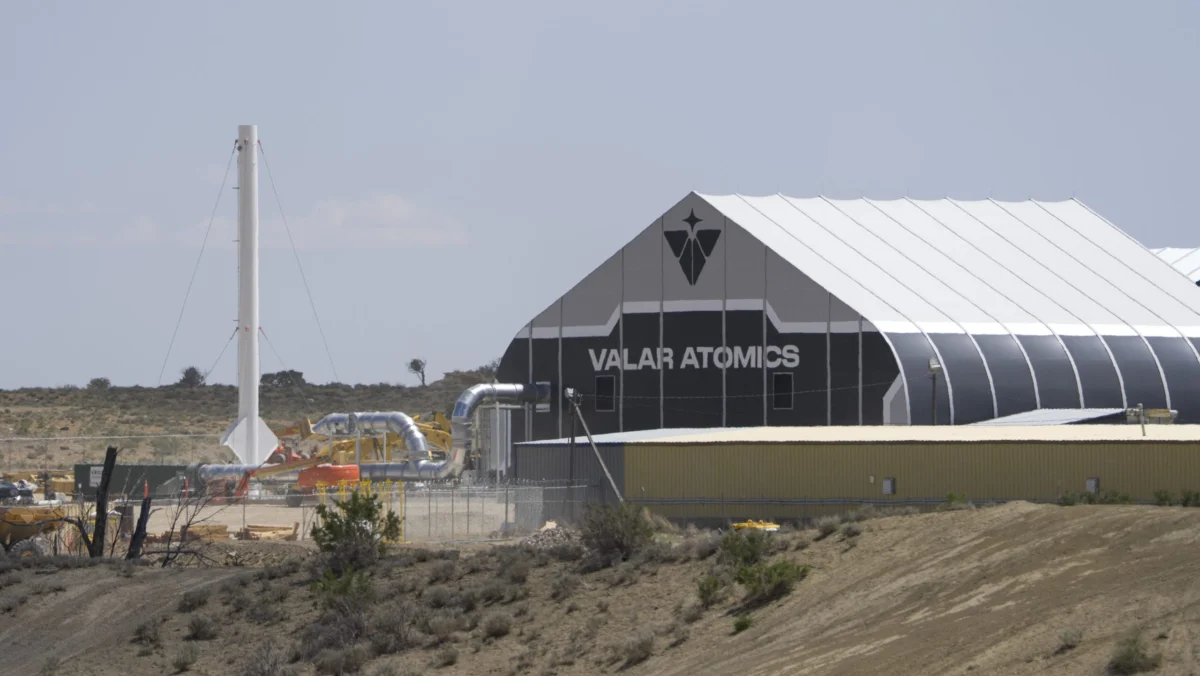
"It’s all descending, these data centers," O’Neil observed, meticulously tracking emerging projects and sharing updates on local Facebook forums. "They’re setting these things within a couple of miles of homes." Her latest community discussions are dominated by chatter surrounding Valar Atomics, a nuclear energy startup with ambitious plans to construct a sprawling complex of 456 small modular reactors (SMRs) on vast tracts of Bureau of Land Management land within the county. SMRs represent a largely untested and unproven technology in the United States, and the Valar project, dubbed "Project Beehive," is slated to manage radioactive waste and power a diverse range of industrial activities, including data centers. The initiative has garnered support from the state of Utah, which has agreed to lease a square mile of state-owned trust lands to the company for potentially up to 100 years.
Adding to the industrial influx, Altigen Energy plans to develop a separate data center complex named "Jurassic Spark," which will encompass hundreds of acres and incorporate a substantial natural gas power plant. This represents a dramatic pivot for Carbon County, which saw its coal mines produce nearly 10 million tons in 2006. However, a confluence of factors, including the rise of cheaper energy alternatives like renewables and natural gas, coupled with the depletion of accessible coal seams, led to the precipitous decline of the region’s primary economic driver within a few decades. By 2023, coal mining had ceased entirely in Carbon County.
"They say everything’s left us, and if we don’t grab these table scraps we’re not going to get anything," O’Neil lamented, expressing her belief that the county deserves more than just residual opportunities. "I don’t think our county has to take the table scraps."

The Valar project’s proposed use of Utah Trust Lands Administration property is multifaceted. The company intends to leverage the leased land to operate some of its SMRs, process uranium fuel (TRISO-fuel) for the reactors, establish water desalination facilities, manufacture steel, refine critical minerals, and ultimately support data center operations. According to information presented to the Trust Lands Administration board, the Valar site is projected to generate $35 million in lease revenues over a 50-year period, with these funds earmarked for Utah’s schools. While the state agency declined to comment directly on the Valar project, at a September board meeting, three Carbon County residents employed or expecting employment with Valar spoke in favor of the proposal, as did all three Carbon County commissioners.
Commissioner Larry Jensen acknowledged the current sensitivity surrounding nuclear energy and data centers, stating, "It’s important that you understand that the Carbon County commissioners are committed to allowing these things to move forward." He added, "Even with the pushback – we realize that there are a few in our community who will push back – but the silent majority are the ones that we really represent."
This assertion was challenged by Cheryl Lupo, a long-time Carbon County resident and candidate for the county commission. Lupo, who had to gather 300 signatures to qualify for the ballot as an unaffiliated candidate, reported that her interactions with residents during the signature-gathering process revealed overwhelming opposition to both data centers and nuclear plants. "People are up in arms," Lupo declared, describing the sentiment as akin to "torches and pitchforks" because they feel their voices are not being heard.
The development has attracted high-level attention, with Utah Governor Spencer Cox and U.S. Senator John Curtis among other state officials who welcomed Valar earlier this year. The company was permitted to test its "Ward250" microreactor at the San Rafael Energy Lab in neighboring Emery County. In June, Valar announced it had achieved "self-sustaining criticality," a milestone in maintaining a stable nuclear fission chain reaction. Furthermore, Valar has outlined plans for a 30-megawatt nuclear-powered AI data center in Emery County, in collaboration with computer chip giant Nvidia.
Despite these advancements, the commercial deployment of SMRs in the United States remains a future prospect. During a recent Trust Lands Administration meeting, board chair Mike Nelson candidly admitted the uncertainties surrounding the Valar deal, stating, "We weren’t always sure what to ask about, and probably still aren’t sure of everything to ask about because this is a first, right?"

Utah’s historical relationship with nuclear activities carries a heavy legacy for some residents. Lupo attributes her mother’s early death at age 38 to the downwind effects of radioactive weapons testing in nearby Nevada during the 1950s, noting her mother resided in Carbon County at the time. She also believes fallout from those tests contributed to her grandfather’s death. "I will never, ever be a proponent of nuclear," Lupo stated firmly.
Even before the Valar proposal generated significant discussion, rumors of another data center campus in Carbon County were circulating. Altigen, a company specializing in building natural gas power plants for data centers, has designated an area east of Wellington for its "Jurassic Spark" project, spanning approximately 1,200 acres – nearly twice the size of the Valar campus. Initial plans include a 250-megawatt natural gas plant to power the facility, with potential for expansion to 3 gigawatts, a capacity comparable to the entire state of Utah’s current energy consumption. Altigen did not respond to requests for comment.
The increasing reliance on natural gas by data center developers stems from the challenges utilities face in meeting the immense electricity demands of artificial intelligence servers. Last year, the Utah Legislature enacted Senate Bill 132, which allows private companies with energy needs exceeding 100 megawatts to construct their own self-contained power generation facilities. This legislation was intended to foster business development, including data centers, without overburdening the public utility grid. The consequence has been a surge in proposals and permit applications for gas-fired power plants. However, natural gas, primarily composed of methane, is a potent greenhouse gas contributing to climate change and air pollution in surrounding communities. Furthermore, natural gas plants generate significant amounts of waste heat.
Robert Davies, a physics professor at Utah State University, points out that nuclear plants can produce even more heat than natural gas plants due to their lower efficiency. "If you’re in a contained valley, it concentrates the problem," he explained. The Wellington area, situated in a valley bordered by the Wasatch Range to the west and the Book Cliffs to the north and east, is particularly susceptible to this phenomenon.
"The heat island that the data centers produce, that concerns me," shared Aspen Westenskow, a lifelong resident of Carbon and Emery counties. "They go clear all this land, the brush, the trees. What helps cool the planet down? Not flat dirt." Water scarcity is another major concern for Westenskow, given that the region is already water-stressed with existing allocations. Valar claims its reactors utilize closed-loop helium cooling, requiring minimal water, and data developers have asserted their intention to employ similar low-water-demand closed-loop cooling systems.

On July 3, Carbon County issued a statement addressing residents’ concerns, acknowledging the difficult economic realities stemming from the coal industry’s decline, which has shifted a greater property tax burden onto homeowners and remaining businesses. The statement affirmed the commissioners’ support for data centers as a means to bolster tax revenues. The county also addressed the use of non-disclosure agreements (NDAs), explaining that such agreements are often necessary for companies considering projects in the county, and without them, some businesses might forgo investment opportunities. While it remains unclear if NDAs were specifically used with Altigen or Valar, former county planning commission member Oran Stainbrook confirmed their prevalence in attracting business to Carbon County. Stainbrook, who resigned from these positions to accept a job in Colorado, believed the commissioners were acting in the county’s best interests by pursuing jobs and investment.
From her home along U.S. Highway 6, O’Neil maintains a different perspective. "You shouldn’t be hiding what you and the company are going to bring to a community," she argued, "and not tell the community until it’s too late and a done deal." Her sentiment underscores a broader tension between the urgent need for economic revitalization in communities like Carbon County and the potential environmental and social costs associated with rapid, large-scale industrial development, particularly when transparency and community engagement are perceived to be lacking.