

 Rocky Gerung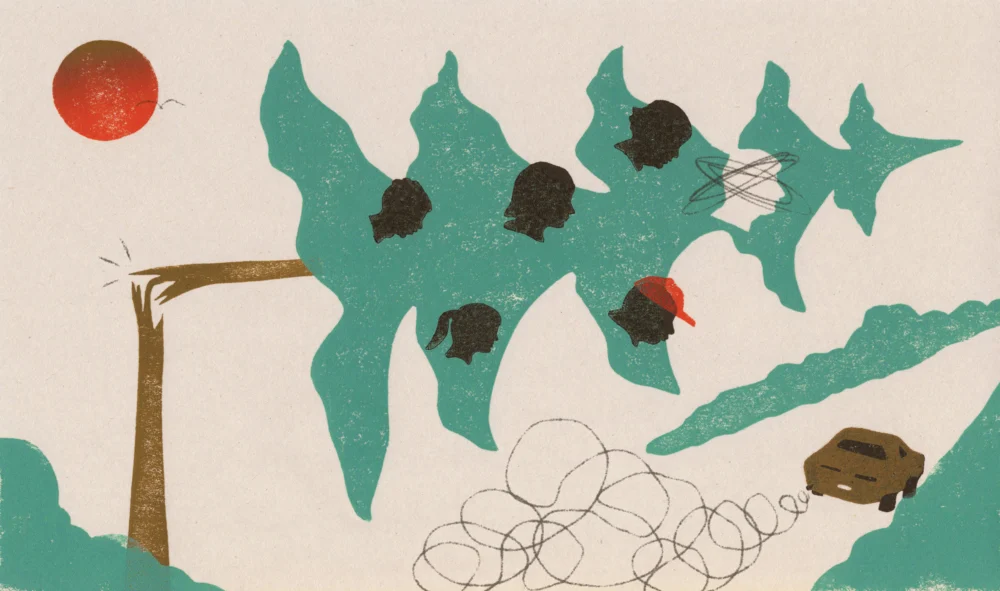
Thirty years ago, in the summer of 1992, journalist Jess Walter, then a staff writer for The Spokesman-Review in Spokane, Washington, found himself at the epicenter of a national firestorm. Word reached him of an armed standoff unfolding at an isolated mountaintop cabin in northern Idaho, an event that would soon be etched into the American consciousness as the Ruby Ridge standoff. Walter’s on-the-ground reporting captured the harrowing details of an incident that began when Randy Weaver, an adherent of the Aryan Nations with fervent apocalyptic religious beliefs, failed to appear in court to face charges concerning the sale of a sawed-off shotgun. In the ensuing escalation, federal agents converged on his remote cabin. The ensuing 11-day siege culminated in a tragic loss of life: Weaver’s wife, their young son, and a U.S. Marshal were killed. Ruby Ridge rapidly became a rallying cry for the burgeoning anti-government militia movement, its legacy continuing to cast a long shadow over contemporary political discourse and societal anxieties.
The dramatic siege was previously chronicled in Every Knee Shall Bow, Walter’s sole work of nonfiction. Now, three decades into a distinguished career as a bestselling and award-winning novelist, Walter is once again grappling with the profound and lasting impact of Ruby Ridge on a nation whose very notions of freedom, values, and the role of government were irrevocably altered by the events of that fateful summer.
His latest novel, So Far Gone, introduces readers to Rhys Kinnick, a middle-aged man adrift in a sea of disillusionment following a divorce. Kinnick watches with growing alarm as his son-in-law, Shane, descends into a labyrinth of conspiracy theories, leaving Kinnick bewildered by his daughter’s continued devotion. Compounding his personal struggles, Kinnick finds himself a victim of corporate downsizing, having been laid off from his newspaper, while the political landscape of his country shifts dramatically with the election of Donald Trump as president. Overwhelmed by these converging pressures, Kinnick seeks refuge in an off-the-grid cabin, attempting to disconnect from a world that feels increasingly alien.
His self-imposed exile is disrupted when his grandchildren, whom he hasn’t seen in years, arrive unexpectedly. Their mother—Kinnick’s daughter—is missing, and Shane has embarked on a search for her, venturing into the very world of fringe beliefs that so troubles Kinnick.

While So Far Gone is not a direct fictional retelling of the Ruby Ridge saga or the Weaver family’s story, it vividly portrays characters who might have once found common cause with them. Set in and around Walter’s hometown of Spokane, the novel serves as a profound exploration of disillusionment and its far-reaching consequences. “I think that disillusionment is one of the most human things that happens to us,” Walter remarked, explaining his impetus for the story. “So, for Rhys to suddenly find himself the disillusioned one and feeling pushed out of society struck me as a great starting point for a novel.”
Kinnick is not the sole character grappling with alienation in the narrative. His daughter struggles to comprehend Shane’s worldview, particularly his embrace of a community among Idaho’s well-armed religious separatists. Walter revealed that his own mounting anxiety about the current political climate, starkly illuminated by his phone’s screen time usage report, served as a significant inspiration. “It informed me that I had been spending five and half hours a day on my phone, doomscrolling,” he shared. “I realized I couldn’t go on like this, imagining the demise of the country. I imagined myself going into a metaphoric woods to write the novel, turning my back on all of it.”
Despite delving into weighty themes such as the proliferation of conspiracy theories and the rise of hybrid militia-slash-churches, Walter masterfully infuses So Far Gone with moments of sharp humor, courtesy of his distinctively quirky cast of characters. In one early scene, Kinnick is incensed by Shane’s fervent belief in an elaborate conspiracy within the National Football League, wherein the world’s most powerful individuals are allegedly orchestrating a takeover of both players and spectators. Later, the narrative takes a darkly comedic turn when a violent confrontation erupts over a set of brand-new truck tires.
Walter posits that this blend of the absurd and the tragic imbues the story with a unique realism, ultimately making its darker aspects all the more impactful. “People do get shot over things like tires,” he explained. “I believe so fully in the folly and fallibility of human beings; in many ways, it’s the only constant. So I don’t write humor as an effect; I write it as a philosophical underpinning of the world as I see it.”
In the three decades since he personally witnessed the anti-government protesters who gathered at Ruby Ridge, Walter has observed a disconcerting shift: once fringe conspiracy theories have increasingly permeated mainstream discourse. “Now, we live in such a conspiracy-rich world,” he noted. “I don’t think Ruby Ridge was the cause of this so much as a harbinger of what was to come.”

So Far Gone artfully captures this contemporary moment, a period characterized by Americans grappling with a pervasive sense of lost purpose amidst a deepening and increasingly intractable political divide.
In a parallel development, Walter is revisiting his foundational work, Every Knee Shall Bow, which has been retitled Ruby Ridge for its latest edition, marking its first update since 2008. The new edition will include an afterword reflecting on the passing of Randy Weaver in 2022 and Gerry Spence, Weaver’s renowned and formidable attorney, who died this past August. Concurrently, Walter is re-examining the historical trajectory that has allowed anti-government sentiment to flourish in the American West since the Ruby Ridge incident. “Part of the update is looking at the way in which conspiracy theories have not only been absorbed into the mainstream, but have really become a winning political formula,” he stated.
While these profound and often somber subjects have occupied his life and writing for many years, Walter maintains a resilient sense of optimism. “My son calls me a toxic optimist because I am so optimistic in general,” he confessed. “I’m optimistic about human beings and their capacity for change and decency.” This enduring belief in the inherent goodness and potential for growth within individuals underscores his continued engagement with the complex social and political currents that emerged from that pivotal moment in Idaho.







