Joko Susilo
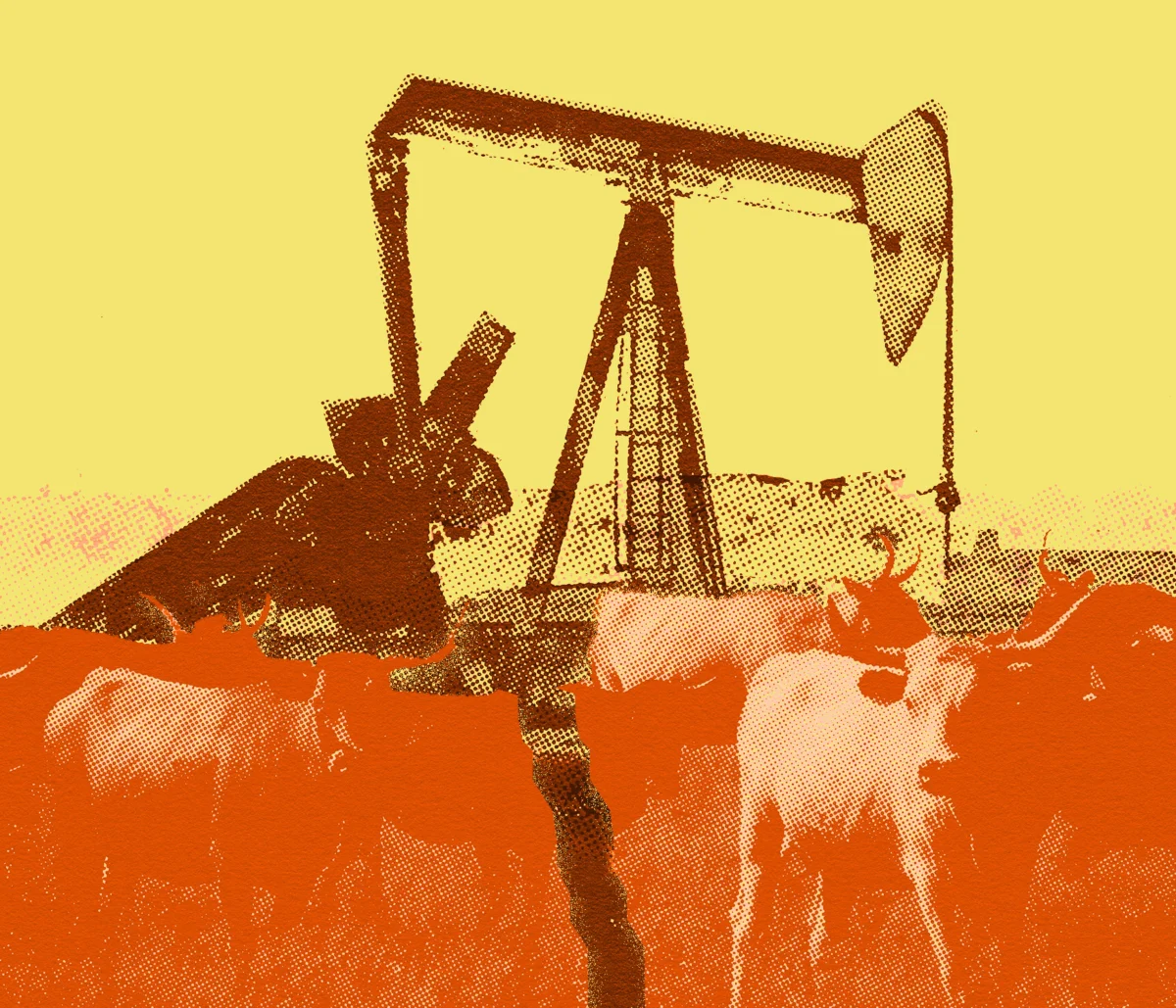
America’s vast public lands, spanning hundreds of millions of acres across the West, have long served as a cornerstone of the nation’s agricultural heritage, providing grazing opportunities for livestock. However, a deepening investigation reveals that this bedrock federal program, initially designed to prevent ecological catastrophe and support modest ranching operations, has evolved into a substantial subsidy system primarily benefiting ultra-wealthy individuals and large corporate entities, often at significant taxpayer expense and environmental cost. At the forefront of this paradox stands figures like Stan Kroenke, an individual with an estimated net worth of $20 billion, whose sprawling business empire includes major sports franchises like the Denver Nuggets and Arsenal soccer club, alongside extensive property holdings that rank him among America’s largest landowners. Despite his immense fortune, Kroenke, whose family connections extend to the Walmart dynasty, leverages a federal program to graze his cattle on public lands for a fraction of the market rate, paying less than 15% of what he would on private acreage.

The Winecup Gamble Ranch, a massive operation east of Elko, Nevada, owned by Kroenke, exemplifies this dynamic. More than half of its nearly one million advertised acres consist of federal public land, supporting approximately 9,000 head of cattle. Last year, Kroenke paid merely $50,000 in grazing fees to the Bureau of Land Management (BLM) for this privilege, representing an 87% discount on prevailing market rates. This arrangement, far from an isolated incident, highlights a systemic issue where public land resources are allocated at deeply discounted rates, a practice that has persisted and expanded far beyond the original intentions of the program. Records indicate that the land under Kroenke’s operation has suffered degradation from overgrazing, a concern flagged by the BLM itself, yet permits continue to be granted.

The public-lands grazing program traces its origins to the 1930s, a period marked by the devastating Dust Bowl, exacerbated by rampant overgrazing on Western ranges. In response, President Franklin D. Roosevelt signed the Taylor Grazing Act in 1934, creating a permit system to manage livestock on public domain lands and mitigate ecological collapse. This act aimed to stabilize the struggling livestock industry while protecting vital watersheds and grasslands. Decades later, Congress modernized public land laws with the Federal Land Policy and Management Act of 1976, mandating federal agencies to balance various competing uses, including grazing, mining, timber, and recreation. Shortly thereafter, in the late 1970s, lawmakers attempted to align grazing fees with open market prices. However, this crucial link withered, and fees have largely stagnated ever since. Today, the government charges ranchers a mere $1.35 per animal unit month (AUM) – a standard measure representing the forage consumed by a cow and her calf in a month – which constitutes an average discount of 93% compared to private land grazing rates. This substantial disparity represents a massive transfer of public wealth to private hands.

Beyond the deeply discounted grazing fees, a comprehensive analysis reveals that the federal government injects billions into additional subsidy programs accessible to public-lands ranchers. In 2024 alone, these programs amounted to at least $2.5 billion, excluding the forage discount. These benefits encompass a wide array of support, including disaster assistance for droughts and floods, heavily subsidized crop insurance, funding for critical infrastructure such as fences and watering holes, and compensation for livestock lost to predators. While proponents argue these subsidies are vital for sustaining the ranching industry and rural economies, critics contend they disproportionately benefit a select few, perpetuating a system that has long favored larger operations over smaller, family-run ranches.

Data indicates a significant concentration of control within the program. Approximately two-thirds of all livestock grazing on BLM acreage falls under the purview of just 10% of ranchers. On Forest Service land, the top 10% of permittees control over 50% of all grazing. This concentration is not a recent phenomenon; a similar study in 1999 by the San Jose Mercury News found comparable levels of control within BLM jurisdiction. This structural reality means that billions in taxpayer dollars flow predominantly to a powerful minority within the agricultural sector.

Adding to these concerns, oversight of livestock’s environmental impact on public lands has dramatically declined in recent years. Lawmakers have increasingly allowed grazing permits to be automatically renewed, even in instances where crucial environmental reviews remain incomplete or when the land itself has been identified as being in poor condition. The Trump administration, in particular, has advocated for an even more generous approach, proposing to open more of the 240 million acres of BLM and Forest Service grazing land to livestock while simultaneously reducing environmental oversight. Secretary of the Interior Doug Burgum articulated this philosophy, framing federal lands as America’s "balance sheet" and suggesting that their restricted use hinders economic potential and debt reduction. In May, the BLM reportedly sent a draft of proposed revisions to federal grazing regulations—the first significant updates since the 1990s—to the U.S. Department of the Interior. Further solidifying this direction, the administration released a 13-page "Plan to Fortify the American Beef Industry" in October, explicitly calling for amendments to grazing regulations governing permit acquisition and environmental damage assessment, alongside increased subsidies for drought, wildfire relief, and predator-related losses.

The environmental consequences of this approach are profound and far-reaching. The reduction in BLM rangeland managers by 39% between 2019 and 2024, with a further 9% decline by June 2025, has left an average of 716 square miles per manager. This makes annual inspections of entire territories an impossible task, leading to unchecked degradation. Examples abound, from the overgrazed lands of Kroenke’s Winecup Gamble Ranch to specific allotments like Long Creek AMP, which fail environmental standards. In Nevada’s Toiyabe Range, areas managed by BTAZ Nevada—a large operation linked to the Barta family and the Sav-Rx prescription medication company—show clear signs of damage: trampled ground, cow feces, and discarded infrastructure near vital mountain streams. These riparian habitats, once crucial for species like the threatened Lahontan cutthroat trout, now see their populations occupy only 12% of their historical range, a direct consequence of habitat degradation from activities including grazing.

The beneficiaries of this system extend beyond traditional ranchers. Corporate giants like J.R. Simplot Co., a multinational agricultural conglomerate that made its fortune in potatoes, stands as the largest rancher on BLM land. It reaps significant benefits from subsidized forage, paying $2.4 million below market rate last year to graze nearly 150,000 AUMs. Media mogul Rupert Murdoch, who acquired the Beaverhead Ranch in Montana for $200 million, also benefits, paying less than $25,000 for federal land grazing last year, a 95% discount. His ranch’s operations, like others, have led to environmental failures in allotments such as the picturesque Centennial Valley’s Long Creek AMP.

Beyond direct agricultural production, public-lands grazing permits serve diverse corporate interests. The Southern Nevada Water Authority, for instance, purchased ranches hundreds of miles from Las Vegas primarily to acquire associated groundwater rights, inheriting grazing permits as a byproduct. Mining companies, including industry titans like Freeport-McMoRan, Hudbay Minerals, and Rio Tinto, are also significant public-lands ranchers. Nevada Gold Mines, a joint venture between the world’s two largest gold mining companies, holds millions of acres of grazing permits around its northern Nevada operations. Chris Jasmine, the company’s manager of biodiversity and rangelands, explicitly states their purpose: "We own them for access. Access to mineral rights, water rights and mitigation credits." These permits provide strategic control over land surrounding their mines, facilitating environmental restoration projects that yield credits, which can then be sold or used to offset their own environmental impacts and expand operations.

This multifaceted use of public lands for private gain prompts strong criticism. Jeff Burgess, who monitors grazing subsidies through the Arizona Grazing Clearinghouse, questions the economic rationale, asking, "When does the spigot stop? When do we stop throwing away money? It’s a tyranny of the minority." He argues that the massive government assistance provides little tangible benefit to the average taxpayer.

Despite the criticisms, the ranching community and its advocates emphasize the industry’s contributions. They point to the production of meat, leather, and wool, which supports the nation’s food supply chain. Furthermore, they argue that ranching preserves a uniquely American way of life, acts as a pillar of rural economies, and prevents private lands from being sold and developed, thereby safeguarding open spaces and critical wildlife habitats. Bill Fales, a Colorado rancher whose family has grazed cattle in the White River National Forest for over a century, asserts that "The wildlife here is dependent on these ranches staying as open ranch land." He notes that public lands often consist of less productive forage, requiring ranchers to invest in infrastructure like fences and water tanks, costs not typically borne by private leases.

Yet, even among ranchers and critics, there is a shared understanding: without these subsidies, many smaller operators would face insurmountable challenges and likely cease operations. Public lands grazing accounts for only 2% of the nation’s beef cattle, a vanishingly small proportion of the overall agriculture industry. Smaller operations, comprising the bottom half of permittees, manage less than 4% of AUMs on BLM land and under 10% on Forest Service land. They lack the economies of scale available to corporate giants and are more vulnerable to shifting environmental conditions. Climate change-fueled droughts strain water supplies, and competition from over 70,000 wild horses and burros further exacerbates forage scarcity. Consolidation in the meatpacking industry, with the four largest operations controlling over 80% of the market, also allows them to dictate lower prices to ranchers, squeezing profit margins.

University of Iowa economist Silvia Secchi advocates for a radical reimagining of federal grazing subsidies. She suggests capping the size of ranching operations that qualify for below-market rates, subsidizing co-ops to empower smaller ranchers with economies of scale, and ending disaster payments for droughts that are becoming a permanent feature of the climate. "We have baseline subsidies that are going up and up and up because we are not telling farmers to change the way you do things to adapt," Secchi argues.

For small ranchers like Mike and Danna Camblin of northwest Colorado, the dilemma is acute. Years of drought have forced them to downsize their herd, and despite record beef prices, they cannot turn a profit without subsidized drought insurance and access to cheap federal grazing. They invest in environmental stewardship, monitoring soil health, and rotating their cattle using virtual fencing technology to protect the land and wildlife. However, these practices add costs, such as the nearly $18,000 annual lease for their cattle collars. Mike Camblin acknowledges the system’s flaws, noting how subsidies "tether us to those subsidies" and suggesting that income-based metrics should limit access for wealthier producers. He laments that the system’s origins in the Dust Bowl era inadvertently "screwed up" by subsidizing larger ranches that don’t need the assistance.

The potential ramifications of ending public support are significant for rural communities and the very landscapes these ranchers inhabit. Without a revised approach, the American West faces a future where smaller ranches disappear, potentially leading to increased land development or further consolidation under ultra-wealthy owners and corporate interests, altering the region’s character and ecological balance irrevocably. As Mike Camblin puts it, "You’re going to lose your small rancher," signaling a profound cultural and economic shift on the horizon.