Rocky Georgio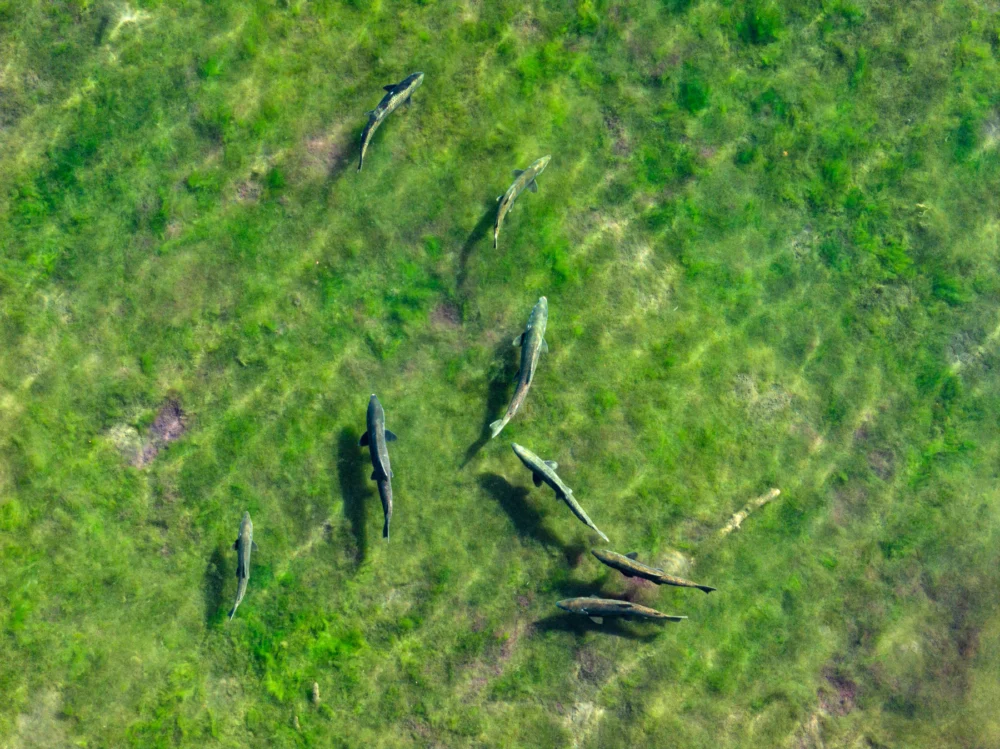
One year after the largest dam removal project in history, salmon have successfully navigated the Klamath River’s currents to reach its headwaters, a feat unseen in these upper reaches for approximately 115 years. This remarkable resurgence is a testament to the decades-long struggle and unwavering dedication of Indigenous communities, particularly the Yurok Tribe, whose ancestral lands and cultural practices are intrinsically linked to the health of this vital waterway. The return of the salmon signifies a profound turning point for the river and a powerful symbol of ecological restoration and Indigenous resilience.
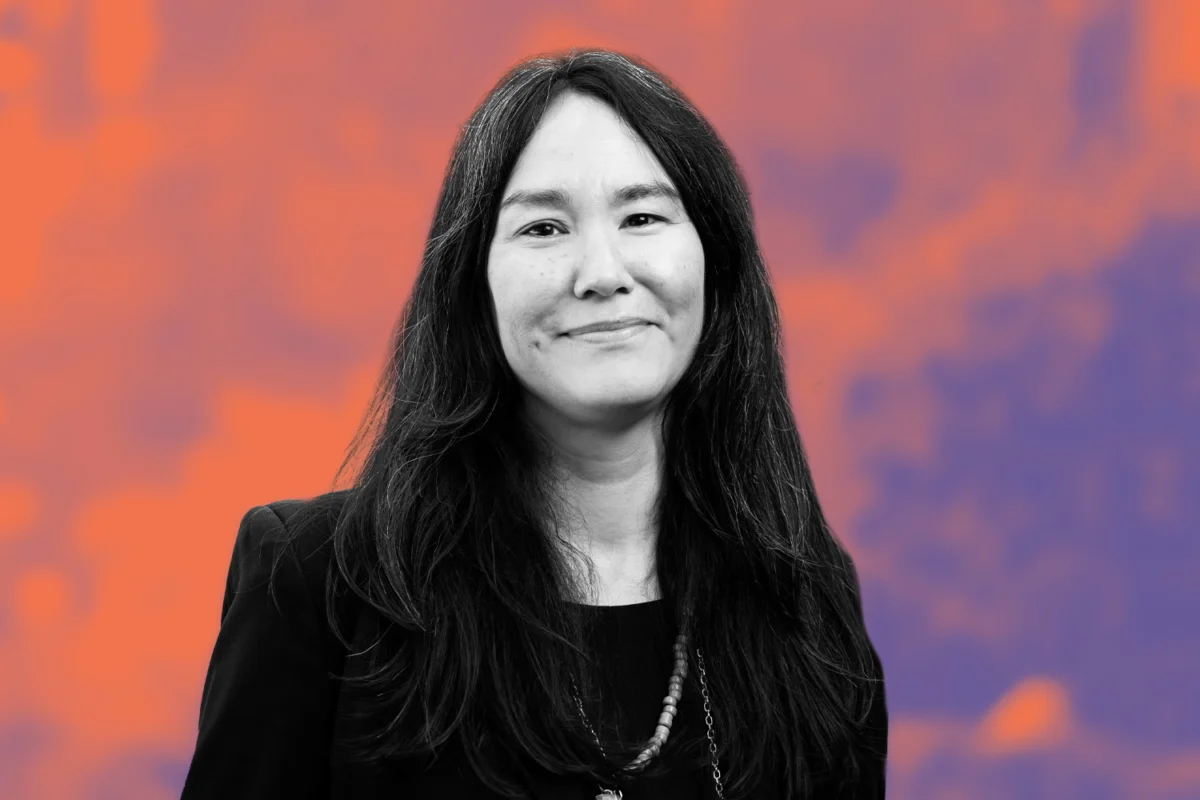
This monumental achievement is chronicled in Amy Bowers Cordalis’s newly released book, "The Water Remembers," a deeply personal and meticulously researched narrative that intertwines memoir, historical accounts, legal analysis, and Yurok storytelling. Cordalis, who serves as general counsel for the Yurok Tribe, traces the intergenerational fight to protect the Klamath and the Yurok way of life. Her journey began as a tribal fisheries intern witnessing a devastating fish kill in 2002, an event that galvanized her commitment to the cause and ultimately led her to become a leading voice in the dam removal movement. "I felt really compelled to write this at a time when it could end on such a high note, so that we could show the world how Indigenous resistance, Indigenous resilience, Indigenous knowledge, can lead to these massive victories," Cordalis stated. "It’s a story of hope."

The impact of this victory is already being felt on the ground. Just a day prior to a recent conversation, Cordalis was actively involved in salmon habitat restoration efforts, tagging fish alongside members of her nonprofit, Ridges to Riffles, and Karuk Tribe staff. These collaborative initiatives are a crucial component of the ongoing recovery process. Collective efforts have resulted in the replanting of an astounding 19 billion native seeds within the former reservoir areas, and ambitious projects are underway to restore 20,000 acres of vital spawning grounds. This extensive restoration work is projected to continue through 2028 and beyond, underscoring the long-term commitment required for full ecological recovery.
Cordalis’s reflections on her family’s history, shared during an interview, reveal the depth of emotion and the profound respect she holds for her ancestors’ arduous fight. The research for "The Water Remembers" unearthed even more details about their struggles, reinforcing her understanding of their sacrifices. "Researching the book was extremely emotional," she explained. "It just gave me even deeper respect for the work of my ancestors and previous generations because they fought so hard and put themselves in harm’s way just so that they could continue to be Yurok people." She emphasized that the current successes are a direct consequence of their relentless advocacy.
She recounted the harrowing "fish wars" of the past, a period of intense conflict that deeply traumatized the Yurok people, including her own family. Despite possessing an inherent right to fish, Yurok individuals faced aggressive intervention from federal marshals. These encounters often involved heavily armed officers in riot gear, utilizing large jet boats to confront fishermen attempting to exercise their traditional practices. "We did win the day, because eventually they left and we continued our fishing way of life," Cordalis noted, "but what a great injustice that (we) even had to fight that way when everybody else around (us) was allowed to fish." She described these actions as arbitrary, unjust, and a clear instance of the criminalization of their way of life, akin to racial profiling.

The book also draws upon oral history transcripts from the 1980s, featuring interviews with her family members. These historical records provided critical details that inform the narrative. Cordalis’s own story, presented in the third part of the book, offers a contemporary perspective on how previous generations paved the way for the monumental dam removal. "We did this amazing thing: we removed these dams. It’s the largest river restoration project in history," she said, expressing her hope that readers will experience the journey as a multi-generational epic culminating in a significant victory.
A poignant parallel emerges between Cordalis’s experiences and those of her great-grandmother, Geneva. Geneva’s clandestine salmon fishing, or "bootlegging," during a time when Yurok land was being systematically destroyed by canneries and timber companies, echoes the environmental degradation Cordalis witnessed with the devastating fish kill. This shared experience of witnessing destruction and feeling powerless prompts reflections on sustaining hope and action in the face of overwhelming challenges.
"Writing the book was a tremendous opportunity for reflection," Cordalis shared. "I realized, for me, that injustice was a huge source of trauma." She explained that her personal response to trauma was channeled into action, driving her through law school with an intensity fueled by the belief that her family’s and her people’s future depended on her success. This dedication, she asserted, was critical to achieving their goals.

Cordalis sees her book as a potential antidote to the current political and environmental crises. She highlights the power of marginalized communities to effect substantial change and underscores the vital importance of building coalitions. "Finding our commonalities and uplifting each other and being OK with failing, because you only need one right path to work," she emphasized. "When people work that way, you can accomplish amazing things. And we’ve done that on the Klamath. The dams are out, and the fish are in Oregon. The river is fiercer." She views the book as a blueprint, detailing the grassroots movement, legal strategies, and political relationships that facilitated the dam removal, while also aiming to inspire a belief in individual impact. "Maybe the world is in a fish-kill moment right now, but we’re also going to keep fighting, and we’re going to work together, and we’re probably going to fail, but we’re going to keep going until we win," she declared with resolute optimism.
The concept of stewardship is central to the ongoing work. Cordalis noted that even after her great-uncle, Ray Mattz, won a landmark Supreme Court fishing rights case, the federal government continued to impede Yurok fishing access. Once that hurdle was cleared, the focus necessarily shifted to the collapsing salmon runs and the imperative of dam removal. This cyclical nature of advocacy underscores the perpetual need for vigilance and action. "What you’re talking about is being a steward, right?" Cordalis posited. "If you are a steward of a place, you make that choice to step up and respond to the needs of that river or that forest or that wetland or that mountain."
She drew upon the collective experience of Indigenous peoples globally, who have historically served as stewards of the land. "We are taught that Yurok Country was made for humans, but also the land and the water and the creatures, and it’s our job to live in a balance with them," she explained. This worldview emphasizes sustainability, recognizing that a harmonious relationship with nature ensures abundance for all. "I hope that people will think about that perception, because it’s a way that we could re-evaluate our relationship with the natural world and how we live here. We can all choose to adopt that value and then implement that as a steward."

With the dams now removed, the river’s immediate need is restoration. Through her nonprofit, Ridges to Riffles, Cordalis is actively involved in restoration projects within the former dam areas. An intertribal group, integrating traditional knowledge with modern science, serves as an advisory committee for this restoration work. Efforts are also focused on re-establishing a more natural hydrograph for the river. "We’re responding to whatever that place needs. And that’s our role as stewards in order to keep the balance, right? It’s an honor to do that," she affirmed.
Cordalis described the surreal experience of pressing the detonator for the demolition of COPCO 1 Dam on her birthday. This moment was particularly resonant, recalling childhood dreams with her siblings of somehow destroying the dams. "Never in my wildest dreams would I have thought that would have happened," she admitted, reflecting on those long-ago conversations filled with a desire for liberation. The emotional weight of seeing the dams, which had represented a source of deep pain, finally come down was immense. "I swear, seeing it, I felt like I was crying the tears of multiple generations of my family," she confessed. She believes that this success offers a measure of peace to ancestors who fought tirelessly for this outcome. "Anybody can do that hard work, anybody can create real, meaningful change when we work in partnership, when we work with nature, when we’re good to each other," she concluded.
The early signs of recovery since the dam removals are profoundly encouraging. Cordalis reported receiving frequent updates from colleagues confirming the widespread presence of salmon. In August, she had the opportunity to harvest salmon from her home village, Rek-woi, located at the river’s mouth. These salmon were described as larger, more robust, and more resilient than any she had observed in the past five to six years. Critically, the salmon have now journeyed upstream past Iron Gate Dam, reaching Keno Dam, Link River Dam, Upper Klamath Lake, and into the Williamson and Sprague Rivers – a migration of approximately 300 river miles from Rek-woi.

The salmon’s successful journey, which took several months, is attributed to the river’s improved health. "The river itself is fiercer; the water is cooler. It’s cleaner," Cordalis stated. The removal of the dams has also fostered a renewed sense of unity among the people of the Klamath Basin. "Now that the dams are gone, the people are reunited in a way we haven’t been in 100 and some years." She highlighted the interconnectedness of the river’s ecosystem and its people, noting that events at her home village now directly impact the same fish that travel to the Wood River. This reunion provides an opportunity to re-evaluate relationships and work towards healing the historical "water wars" that have plagued the region.
Cordalis expressed a deep hope that the Klamath Basin communities will leverage this moment to rebuild and reconnect. She drew a powerful analogy between the healing of the river and the healing within individuals, suggesting that the water within us is also connected to the hydrologic cycle. "Seeing the Klamath, which is this beautiful big river with all this water, heal, I think it makes the water in us heal too," she reflected. This reconnection to a healthy planet and the pursuit of meaningful causes, like environmental stewardship, can lead to profound internal healing and a rediscovery of what it means to live in balance with nature. "When we work with nature, when we devote ourselves to these really important causes, when we decide we’re going to be stewards like we were talking about, it creates this internal healing, and it allows us to remember. And it feels really good," she concluded.