

 Rocky Gerung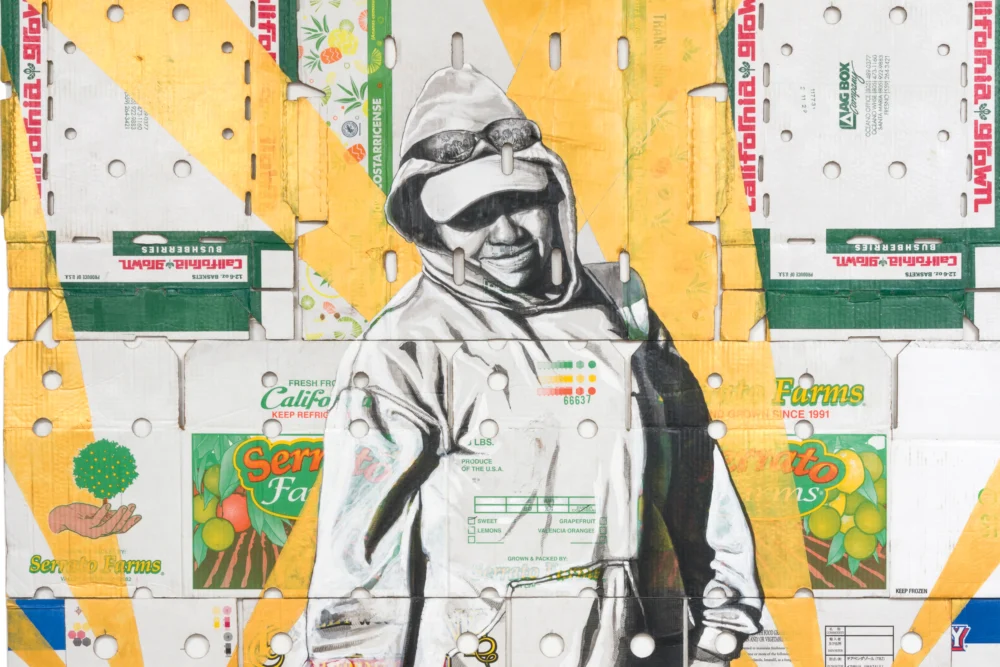
Narsiso Martinez, a visual artist whose work powerfully illuminates the lives and labor of farmworkers, was born in Oaxaca, Mexico, in 1977. He arrived in the United States at the age of 20, eventually earning a master of fine arts degree in drawing and painting from California State University, Long Beach. His impactful creations have been showcased in exhibitions both locally and on the international stage, and are held in the prestigious collections of institutions such as the Hammer Museum, the Amon Carter Museum of American Art, the University of Arizona Museum of Art, the Jordan Schnitzer Museum of Art at the University of Oregon, and the Santa Barbara Museum of Art. Martinez shared his insights from his studio in Long Beach, California.
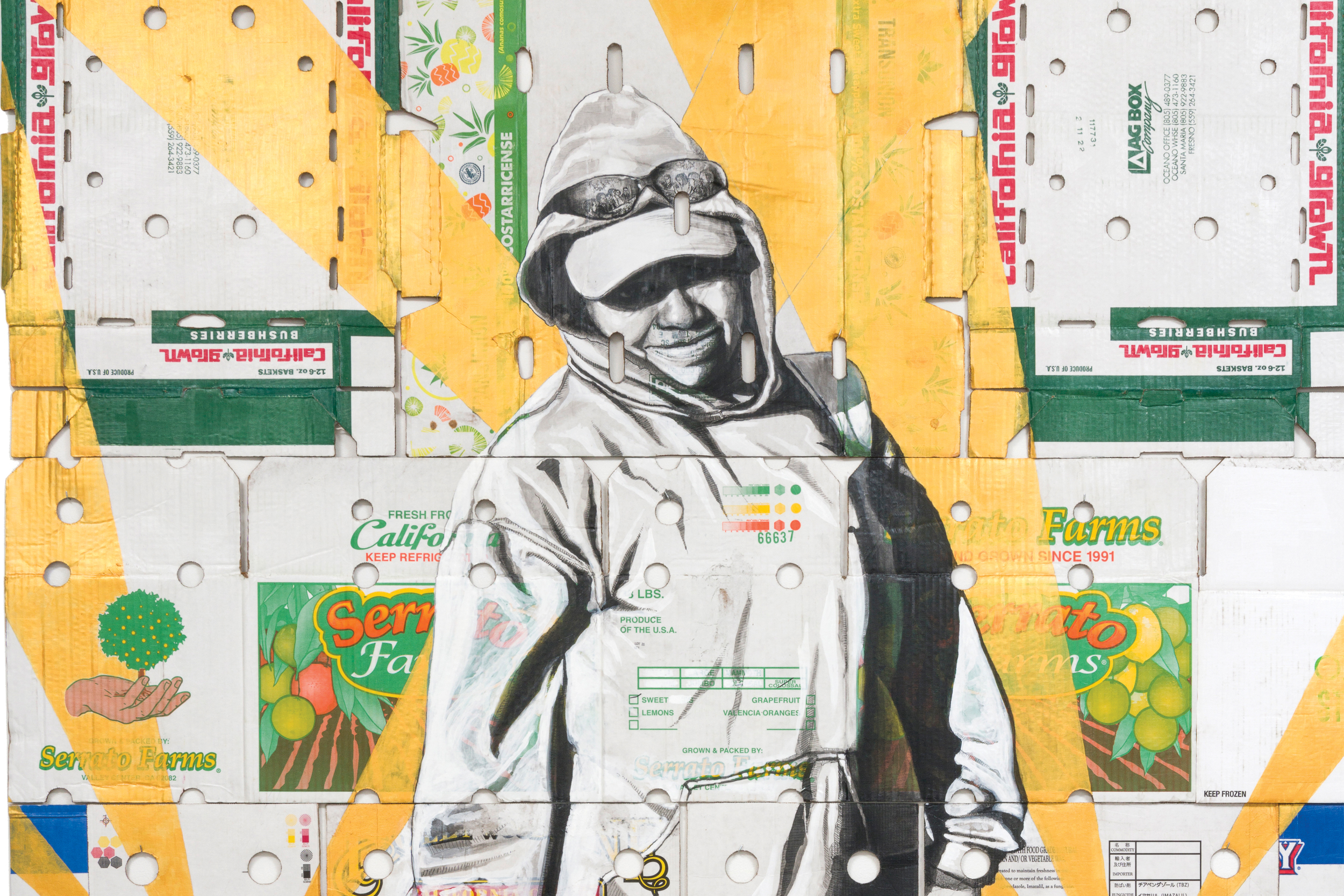
Martinez began his unique artistic journey of using discarded produce packing materials in late 2016 or early 2017. His initial inspiration stemmed from his time working in the agricultural fields of Washington state for three years between undergraduate and graduate studies. During this period, he lived with his sister, who would bring home used produce boxes from Costco. While he drew and sketched on the plain cardboard, often utilizing the unmarked undersides, the idea of incorporating the vibrant, branded labels had not yet occurred to him.
The pivotal shift occurred when Martinez returned to graduate school in 2015 and found himself unable to continue with oil painting on canvas due to space and cost constraints. He collected a banana box from a Costco in Los Angeles and, on impulse, drew a "banana man" on it. This personal exploration, born from necessity and artistic impulse, was not an assigned project. When he presented it in class, his peers and faculty recognized a deeper narrative. They helped him articulate that his work was about representing the working class, and more specifically, due to the materials he was using, it became focused on agribusiness and the vital role of farmworkers. This realization marked the true beginning of his signature artistic practice.

Martinez explained that his inherent shyness fueled his pursuit of art, and he discovered its potential as a powerful medium for communication and raising awareness. He saw art as a way to bring attention to the people working in the fields, to his community, and to his own lived experiences. His involvement in agricultural labor began in 2009, shortly after he completed community college and transferred to Cal State Long Beach. Facing financial difficulties with tuition, his family, who were already working in the fields, offered him support with lodging and food if he joined them. He dedicated himself to saving his paychecks, working seasonally during his undergraduate studies and then full-time for three years. He continued to work in the fields every summer throughout his graduate studies, accumulating approximately nine years of hands-on experience. He would travel by bus to Washington after school ended, maximizing his time there before returning just in time for classes to resume.
His work in the fields involved a variety of crops. He recalled the arduous task of picking asparagus, which required constant bending in the sun with no shade. He also harvested cherries, multiple varieties of apples such as Gala, Red Delicious, Golden Delicious, and Fuji, as well as peaches and blueberries.

Martinez’s body of work aims to inform the public about the individuals behind their food production. His primary goal is to highlight farmworkers, increase awareness of their presence, acknowledge their significant contributions, and underscore their inherent humanity. He feels that farmworkers have been historically overlooked, both in the United States and globally, and his overarching objective is to "Dignify farmworkers."
The response from the farmworker community to his art has been deeply moving. While working in the fields, he connected with many individuals who became familiar with him and his sketchbook. They would often ask when he would draw them. Martinez believes that being acknowledged and represented in art provides a profound sense of belonging and validation, akin to the feeling of self-worth he experienced upon receiving his first identification card. He has organized exhibitions specifically for farmworkers, and the reactions have been overwhelmingly positive, sparking rich exchanges of stories and experiences. He hopes his art enables them to see themselves and recognize the indispensable value they bring to the nation.

Reflecting on the power dynamics within the food system, Martinez observes that the economic and political structures in the U.S. often seem designed to perpetuate the oppression of farmworkers. He notes that historically, the most vulnerable communities have been tasked with the demanding labor of cultivating the food that sustains society. It strikes him as profoundly unjust that these individuals, who are essential to our sustenance, have been denied a dignified life. He perceives farmworkers as having been politically exploited, serving as scapegoats, and laments that their lives have seldom been characterized by dignity throughout history. He expresses a hope that the public will advocate for legislation that promotes a more equitable and fulfilling existence for farmworkers.
When asked what the public might misunderstand about farmworkers, Martinez emphasizes their fundamental humanity. Beyond their crucial contributions to agriculture, he stresses that farmworkers possess the same range of emotions, aspirations, struggles, joys, and sorrows as anyone else. He believes it is long overdue for this basic recognition to be widely accepted.

Considering the contemporary political climate, particularly actions targeting agricultural workers, Martinez finds the situation deeply unfair and unacceptable. He expresses disbelief that individuals performing such essential labor are being subjected to persecution. He draws a parallel to historical movements for change, such as the United Farm Workers movement, initiated by leaders like Larry Itliong, Cesar Chavez, and Dolores Huerta, who fought for a more dignified life for farmworkers. He acknowledges and appreciates the organizations actively supporting farmworkers, providing education and resources for self-defense against deportation and other threats. The sight of military personnel in agricultural fields is, to him, an unbelievable but unfortunately real consequence of political maneuvering for gain.
Martinez has been pleasantly surprised by the reception of his work. He admits he initially had no clear vision of how far his artistic endeavors would reach. He expresses deep gratitude that his art, which addresses the inclusivity of farmworkers as subject matter, is now being recognized and collected by major museums. This inclusion, he feels, is a testament to the universal appreciation of art created by an immigrant, an Indigenous immigrant, and its ability to resonate with diverse audiences, from fellow farmworkers to academics and museum professionals.

Having arrived in the U.S. as a young adult, Martinez experienced profound culture shock, transitioning from a small village to the bustling urban landscape of America, with its towering buildings, vast freeways, and diverse cultures. While he appreciates the richness of this multicultural environment and the availability of diverse foods and people from around the globe, adjustment took time. He credits learning English through adult education classes as a crucial step in navigating the complexities of American society and enabling him to pursue higher education.
His educational journey revealed a deeper understanding of his own heritage and the historical context of the United States. He realized the interconnectedness of people with the land, acknowledging the colonial history of both Mexico and the U.S. and the imposition of systems through force. This understanding has solidified his commitment to advocating for equity, particularly for Indigenous peoples who he feels are often marginalized and face ongoing struggles for inclusion. Despite these challenges, he remains hopeful about the possibility of achieving greater equity.

Martinez sees a strong connection between his work in the U.S. and Mexico’s rich tradition of art addressing sociopolitical and labor issues, citing the muralist movement as a significant influence. He notes that his engagement with the muralists occurred during his education in the United States. The concept of muralism, particularly the idea of connecting disparate images on a large scale, informs his larger works, which often involve collaging various elements. He was particularly impacted by the powerful work of David Alfaro Siqueiros, whose mural "América Tropical" resonated deeply with him, especially coming from a Zapoteca community. He aspires to create art that evokes similar emotional and intellectual responses in viewers, prompting reflection and empathy.
Looking ahead, Martinez plans to expand his artistic exploration to encompass the struggles of farmworkers in other parts of the world. He has observed that the challenges faced by agricultural laborers are global, noting his own experiences in the fields of Oaxaca and the current globalization of commerce, where large corporations often acquire land worldwide. He intends to visit orchards and engage with or even work alongside farmworkers in different countries, drawing connections between their experiences and those in the United States. His aim is to uncover the common threads that contribute to the ongoing struggles of farmworkers globally, from Nicaragua to Colombia.







