Roger Danuarta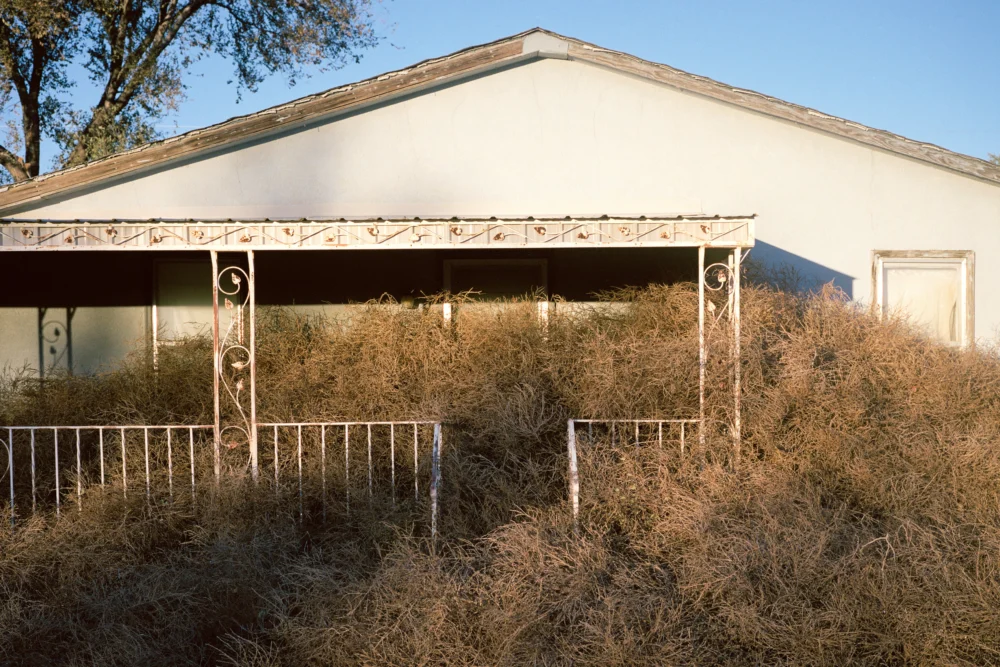
The seemingly ubiquitous tumbleweed, often seen bunched along highway fences, sprouting against office buildings, or flourishing in desiccated backyards, holds a surprising complexity. Though commonly known as Russian thistle, a misnomer suggesting a thorny, unwanted plant, it botanically aligns more closely with members of the Amaranthaceae family, sharing kinship with edible staples like quinoa and beets. Its life cycle begins deceptively, a bright green and tender plant, almost succulent in its early stages, which some might mistake for a harmless edible, despite its potential toxicity if consumed in large quantities. As it matures, it transforms, developing a spiny, tough exterior, often adorned with scarlet stripes and tiny, papery white flowers, before ultimately withering into a pale, brittle skeleton. By the time this plant begins its iconic journey across arid landscapes, it is biologically dead, yet it serves as a crucial vector for life, carrying thousands of seeds, each a living embryo poised to take root and grow with the slightest touch of moisture. Individually, these wind-borne plant carcasses appear inconsequential, yet their collective power is formidable; masses of them can engulf entire houses, block vital roadways, and disrupt communities, particularly across the American West, demonstrating an unexpected force that transcends their humble origins. In an era marked by societal anxieties, from challenges to civil liberties to the global implications of humanitarian crises, the relentless spirit and collective impact of the tumbleweed offer profound lessons in adaptability and persistent influence.
The journey of Salsola tragus, the scientific name for the common tumbleweed, to the Americas began subtly in the 1870s, when its seeds, native to the arid steppes of the Russian Empire, inadvertently arrived in North Dakota, mingled within a shipment of flaxseeds. This innocuous introduction marked the genesis of a biological invasion that would reshape vast swathes of the American landscape. As settlers pushed westward, the tumbleweed’s seeds proved remarkably adept at hitchhiking, falling out of railcars to colonize new territories along train tracks, traveling in bales of hay destined for burgeoning lumber camps, and even stowing away in the wool of migrating sheep, carrying its genetic payload as far as Idaho and beyond. This accidental dispersal illustrates a pattern seen globally with invasive species, where human activity inadvertently facilitates the spread of non-native organisms, often with unforeseen ecological and economic consequences.

The rapid proliferation of this unfamiliar plant quickly caught the attention of agricultural authorities. By the turn of the 20th century, California’s agricultural commissioners viewed the burgeoning tumbleweed population with alarm, fearing it would devastate the state’s vital wheat industry by rendering fertile fields unfarmable. In response to this perceived threat, California enacted legislation in 1905, mandating state and local agricultural inspectors to locate and destroy any tumbleweeds they encountered. This early attempt at eradication, however, was fraught with confusion, as few officials or citizens in the state had sufficient experience with the plant to accurately identify it, underscoring the challenges inherent in managing a newly introduced invasive species. The incident serves as a historical footnote on the initial, often fumbling, responses to biological invasions, a global phenomenon that continues to plague ecosystems and economies worldwide.
Ironically, the very infrastructure of development—railroads and an expanding agricultural footprint—that propelled California’s growth also inadvertently laid the groundwork for the tumbleweed’s deep entrenchment in the state. Decades later, scientists made a remarkable discovery in 2002: a new, distinct species of tumbleweed had evolved in California. This hybrid, a result of the complete genomic combination of two different Salsola species originating from distant corners of the globe, showcased an extraordinary evolutionary leap. The resulting plants were not merely larger but significantly more prolific than their ancestral forms, possessing an increased number of chromosomes that conferred heightened vigor and adaptability. This polyploid hybrid, often dubbed a "superweed," demonstrated the profound evolutionary capacity of invasive species to adapt and even thrive in new environments, posing even greater challenges for management and control.
Despite its designation as an invasive pest, the tumbleweed’s history is not without its surprising paradoxes and instances of unexpected utility. Following the American Civil War, white settlers, many inexperienced in the nuances of prairie farming, aggressively plowed up the native grasslands of the Great Plains. This agricultural upheaval, coupled with successive drought years in the 1930s, led to the catastrophic environmental disaster known as the Dust Bowl, where fertile topsoil literally blew away in massive dust storms. In this desolate landscape, where traditional crops failed and native flora struggled, the hardy tumbleweed, a plant adapted to marginal, disturbed spaces, remarkably thrived. It sprang up in the barren dirt, providing a crucial, albeit coarse, source of sustenance for starving cattle and, in desperate times, even for humans, illustrating how an unwelcome invader could, under extreme circumstances, play an unexpected role in survival. This chapter in history highlights the complex and often contradictory relationship between humans and the natural world, where perceived pests can sometimes offer an unforeseen lifeline.

The challenges posed by tumbleweeds are only set to intensify. As the climate across the Western United States grows hotter and drier, conditions become increasingly favorable for the proliferation of this resilient plant. Furthermore, in key agricultural regions like Washington, Oregon, and Montana, populations of tumbleweed have developed resistance to glyphosate, a widely used herbicide. This resistance underscores a growing global crisis in agriculture, where the overuse of chemical controls drives the evolution of "superweeds" that defy conventional management strategies, demanding new approaches to sustainable farming. Given its tenacious presence and expanding footprint, scientists have begun exploring innovative applications for tumbleweeds. Research has investigated its potential as a feed source for livestock, particularly for fattening lambs, albeit with careful management due to its oxalate content. Other researchers have uncovered the plant’s capacity to absorb heavy metals, including uranium, from the soil, leading to considerations of its potential in bioremediation efforts for contaminated land. However, the practical implementation of such solutions requires effective methods for collecting these wind-dispersed plants before they scatter their toxic cargo. Beyond terrestrial concerns, the tumbleweed’s unique shape and wind-driven dispersal mechanism have even inspired engineers designing a new generation of Mars rovers. Named "Tumbleweed," these proposed probes are envisioned to roll across the Red Planet’s surface, powered by the Martian winds, offering a novel approach to planetary exploration.
Yet, amidst these scientific endeavors and ecological reflections, a profound unease pervades the global consciousness. In an era where news cycles are dominated by reports of government actions challenging human rights, such as aggressive immigration enforcement, crackdowns on dissent, and widespread social unrest, many grapple with feelings of paralysis and despair. For some, the struggle to reconcile the beauty and resilience of the natural world with the harsh realities of human conflict becomes a daily challenge. When the weight of global events threatens to overwhelm, a return to the physical world, a walk outside, can offer unexpected perspectives.
Turning a street corner, one might encounter the surprising sound of cowbells, not from livestock, but from a gathering of people. Crowding intersections, neighbors chant, cars honk in solidarity, and drivers wave. Like the tumbleweed, communities themselves are full of surprises, capable of mobilizing unexpected collective power. Across cities and towns, from the bustling metropolises to the more remote communities, people are tumbling into public spaces, demanding due process, safety for immigrants and their supporters, and fundamental human rights. They take root along roadways, displaying signs that declare "Resist," "No Kings," and other defiant messages. They gather on highway overpasses, unfurling large banners, and throng the streets, sometimes employing creative costumes and megaphones to amplify their voices. In cities like Sacramento, and indeed across the broader Western landscape and globally, protesters are consciously or unconsciously drawing lessons from the tumbleweed’s relentless nature, its capacity to gather into an unstoppable force, and its disruptive "mischief" that challenges the status quo.

The question of how to engage meaningfully, how to "dig in and write" when feeling "blown over by windstorms of bad news," remains a potent one. However, the observation of these collective human actions, mirroring the enduring spirit of the tumbleweed, reveals a powerful truth: that the pursuit of justice, like the tumbleweed itself, grows, blooms, shatters, and ultimately saves. This truth flowers most vibrantly in blighted spaces, in moments of challenge and despair. It whispers: "When you can no longer bear to watch the world unfold on a screen, join me. Gather outside. Let’s do more than merely survive; let us thrive and transform."