Roger Danuarta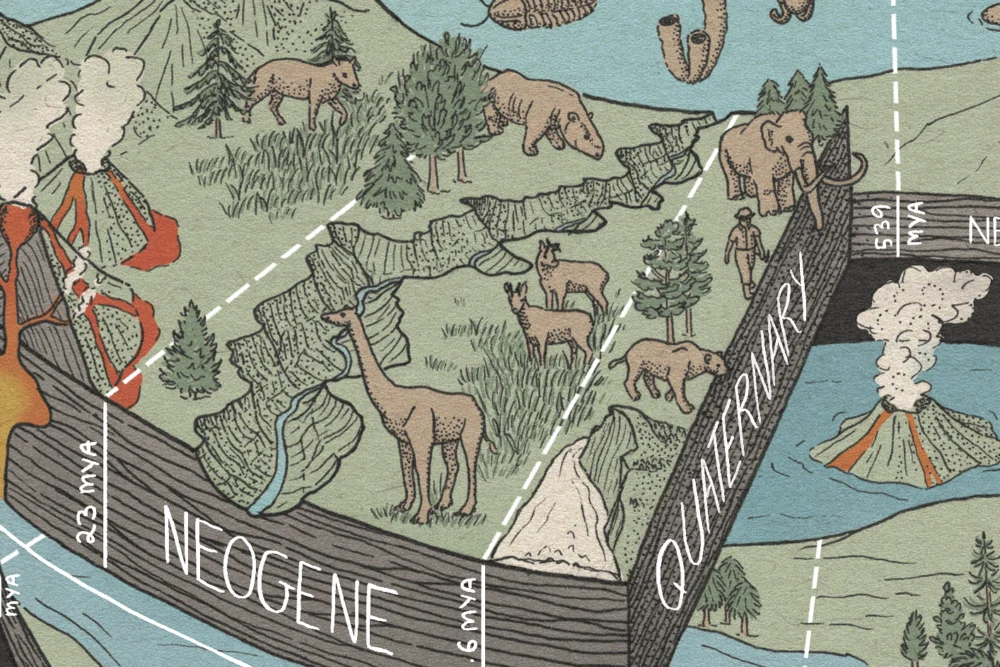
The vast, ancient narrative of the American West, spanning billions of years, continues to shape its majestic landscapes, underlying resources, and even its contemporary environmental challenges. A recent comprehensive project has embarked on a profound journey through "deep time," seeking to illuminate how the region’s geological and biological evolution, from its nascent crust to its present-day ecosystems, remains visibly consequential. This ambitious undertaking delves into the fundamental questions of what the West was like across millennia, eons, and epochs, providing crucial context for understanding its current state and future trajectory.
Central to this exploration is the concept of deep time itself – the immense span of geological history that dwarfs human perception, often rendering millions of years as a mere flicker. By examining this grand scale, scientists and historians can trace the profound transformations that have sculpted the continent, revealing the interconnectedness of ancient processes with modern realities. The project features a distinctive stylized geologic timescale, meticulously crafted by illustrator Alex Boersma, which visually encapsulates the dynamic evolution of the Western United States, highlighting its unique landscapes, flora, and fauna across various epochs. This intricate artwork serves as a visual primer, inviting audiences to explore the strata of history embedded within the region’s very bedrock.
The journey into the West’s deep past begins in the Proterozoic Eon, billions of years ago, when the Earth was a vastly different planet. The North American continent, then part of ancient supercontinents like Rodinia, was a mosaic of volcanic islands, nascent continental crust, and shallow seas. The earliest rocks, metamorphic and igneous, bear witness to immense pressures and temperatures, hinting at the violent collisions and rifting that laid the foundation for what would become the Western landmass. These primordial events set the stage for subsequent geological dramas, influencing where mountain ranges would rise and fall, and where basins would accumulate sediments.
Moving into the Paleozoic Era, roughly 540 to 250 million years ago, the Western United States experienced periods of extensive marine inundation. Warm, shallow seas repeatedly advanced and retreated across the continental interior, depositing vast layers of limestone, sandstone, and shale. These ancient seas teemed with early life forms, from trilobites and brachiopods to primitive fish. It was during the later Carboniferous and Permian periods, approximately 350 to 250 million years ago, that immense swampy temperate forests flourished across parts of the continent, including regions that would become the modern West. These luxuriant ecosystems, dominated by giant ferns, lycopods, and horsetails, thrived in hot, humid conditions. When these dense plant materials died and accumulated in oxygen-poor (anoxic) environments, they did not fully decompose, instead undergoing compaction and chemical alteration over millions of years to form the vast coal deposits that underpin much of the Western economy today. The legacy of these ancient swamps is palpable, driving energy production and, simultaneously, contributing to contemporary climate change concerns through the release of stored carbon.

The Mesozoic Era, often dubbed the "Age of Dinosaurs," from about 250 to 66 million years ago, brought dramatic changes. The supercontinent Pangea began to rift apart, leading to increased tectonic activity. Throughout the Jurassic and Cretaceous periods, a vast inland sea, known as the Western Interior Seaway, intermittently split North America, covering much of what is now the Great Plains and extending into parts of the intermountain West. This epicontinental sea deposited thick sequences of marine shales and sandstones, preserving a rich fossil record of marine reptiles, ammonites, and early fish. On land, dinosaurs roamed diverse environments, from coastal plains to upland forests. Iconic fossil sites across the West, such as those found in the Morrison Formation, offer invaluable insights into these prehistoric giants, attracting paleontologists and tourists alike. Towards the end of the Mesozoic, the Laramide Orogeny began – a protracted period of mountain building that uplifted the Rocky Mountains and other ranges across the West, profoundly shaping the region’s topography and setting the stage for its modern river systems.
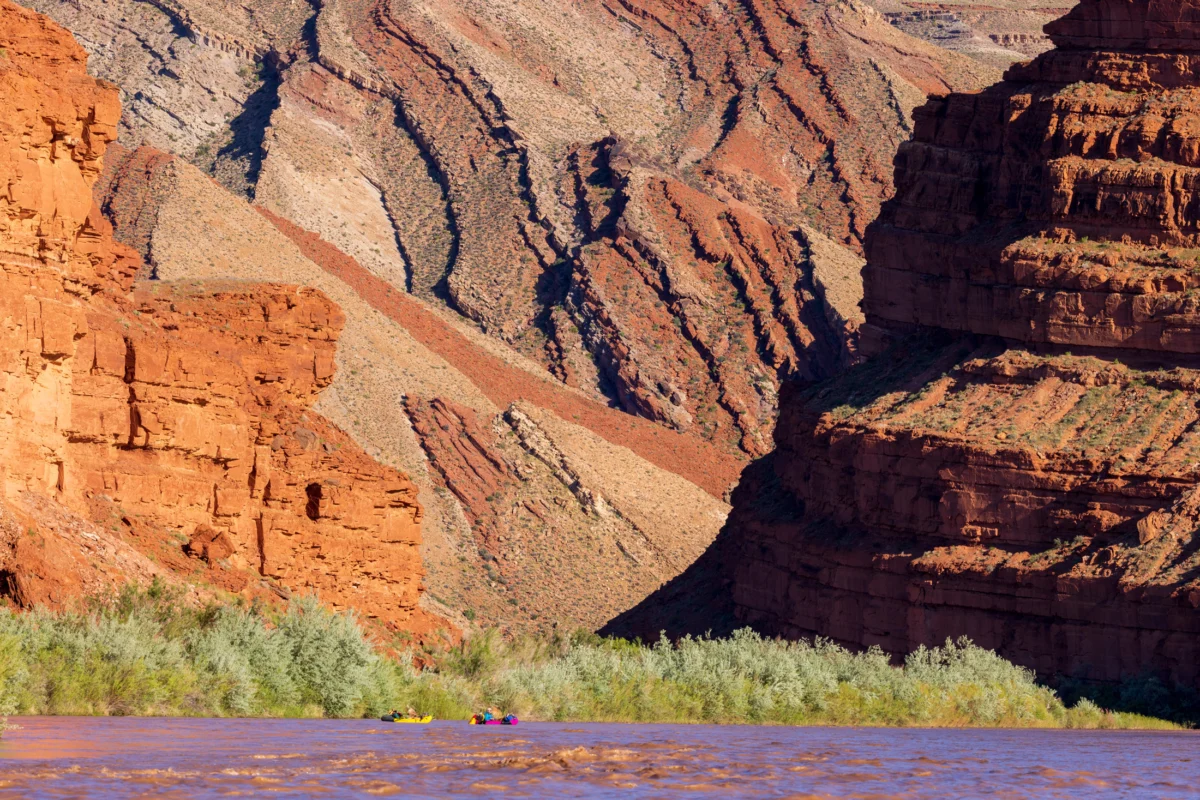
The Cenozoic Era, commencing approximately 66 million years ago after the mass extinction event that ended the reign of dinosaurs, ushered in the "Age of Mammals." This era saw the continued evolution of the West into the landscape we recognize today. Extensive volcanic activity characterized parts of the Cenozoic, with vast basalt flows covering areas like the Columbia Plateau and ongoing magmatism shaping the Yellowstone caldera, a supervolcano whose ancient eruptions have left indelible marks on the landscape. Simultaneously, the Colorado Plateau experienced immense uplift, a regional swelling of the Earth’s crust that created a high, relatively undeformed block. It was into this rising plateau that the Colorado River, a testament to the immense power of fluvial erosion, began to carve its iconic canyon.
The Grand Canyon’s genesis, starting a mere 5 to 6 million years ago – a geological "blink of an eye" – showcases the dramatic interplay between uplift and erosion. As the Colorado River continually incised into the rising plateau, it exposed billions of years of geological history layer by layer, revealing the ancient sedimentary rocks laid down in Paleozoic seas and the even older Precambrian basement rocks. This ongoing process of erosion continues to deepen and widen the canyon, a dynamic geological spectacle that draws millions of visitors annually and serves as a living laboratory for Earth scientists. Further west, the Basin and Range Province formed through crustal extension, creating parallel mountain ranges and valleys, while the Sierra Nevada mountains were uplifted and sculpted by glacial activity during the Pleistocene Ice Ages. These ice ages, which saw massive glaciers advance and retreat over the past 2.6 million years, also dramatically reshaped valleys, carved cirques, and created vast pluvial lakes like Lake Bonneville, whose remnants are still visible in Utah.
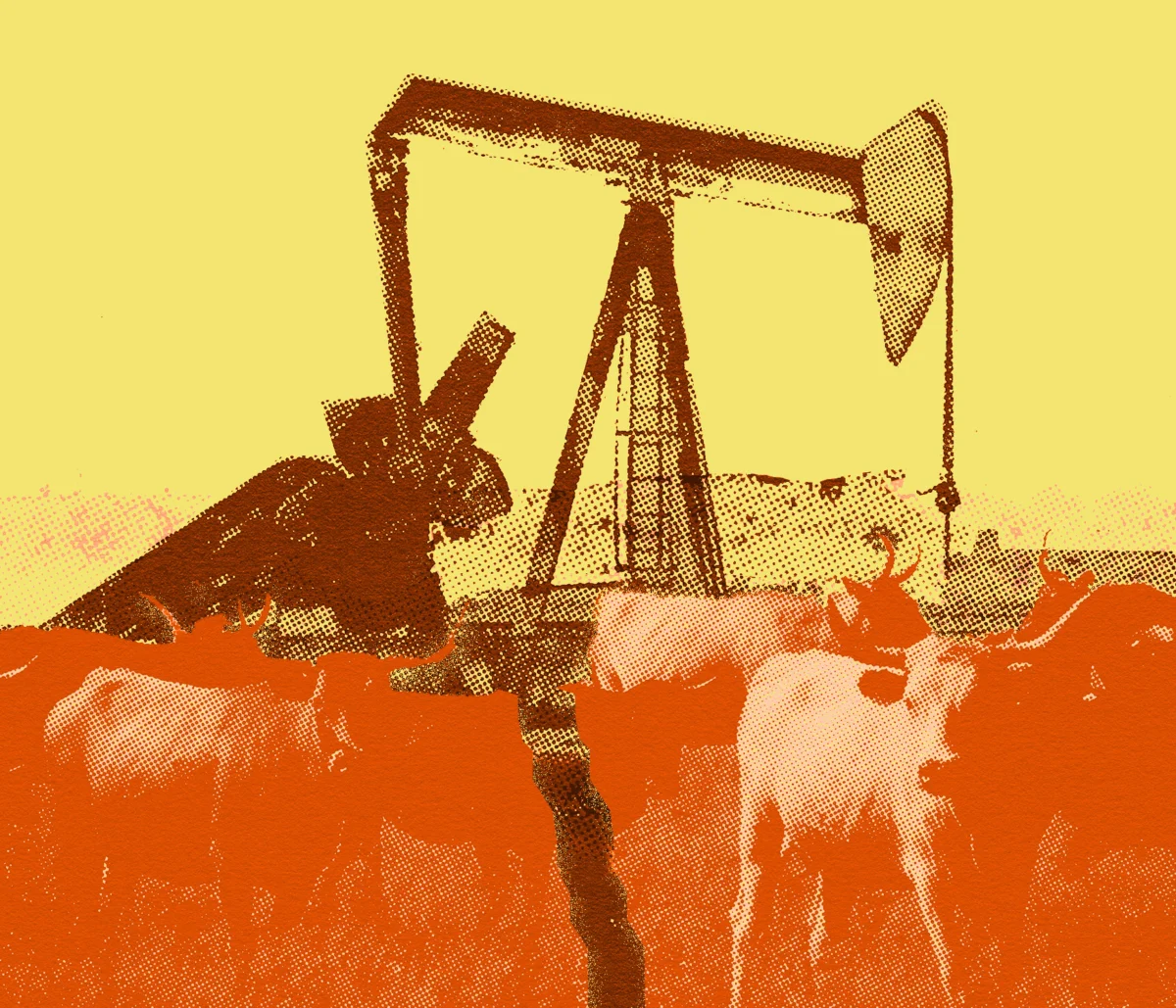
The consequences of this deep time history are profoundly visible and consequential today, extending far beyond scenic vistas. The geological forces that shaped the West have directly dictated the distribution of its natural resources. The ancient swamp forests yield coal, while deep sedimentary basins formed over millions of years trap vast reserves of oil and natural gas, fueling modern economies but also posing significant environmental challenges. Precious metals and minerals, vital for technology and industry, were concentrated in ancient volcanic and tectonic settings. The current hydrological systems, including the mighty Colorado River, are products of millions of years of geological uplift, erosion, and climatic shifts, influencing water availability for agriculture, urban centers, and ecosystems across the arid region.
Moreover, the West’s deep time history informs our understanding of geological hazards. Ancient fault lines, products of ongoing plate tectonics, remain active, making parts of the region prone to earthquakes. Volcanic areas, though dormant for millennia, remind us of the immense forces simmering beneath the surface. Beyond hazards, the study of past climates embedded in the geological record – from ancient glaciations to periods of extreme warmth – provides critical data for modeling future climate change scenarios and understanding ecological resilience. The distribution of species, the composition of soils, and the very character of the air and water are all products of this deep, unfolding story. By connecting the immense scales of geological time to the immediate present, projects such as this illuminate the profound and enduring legacy of Earth’s ancient past on the living, breathing, and ever-changing American West.