Rocky Gerung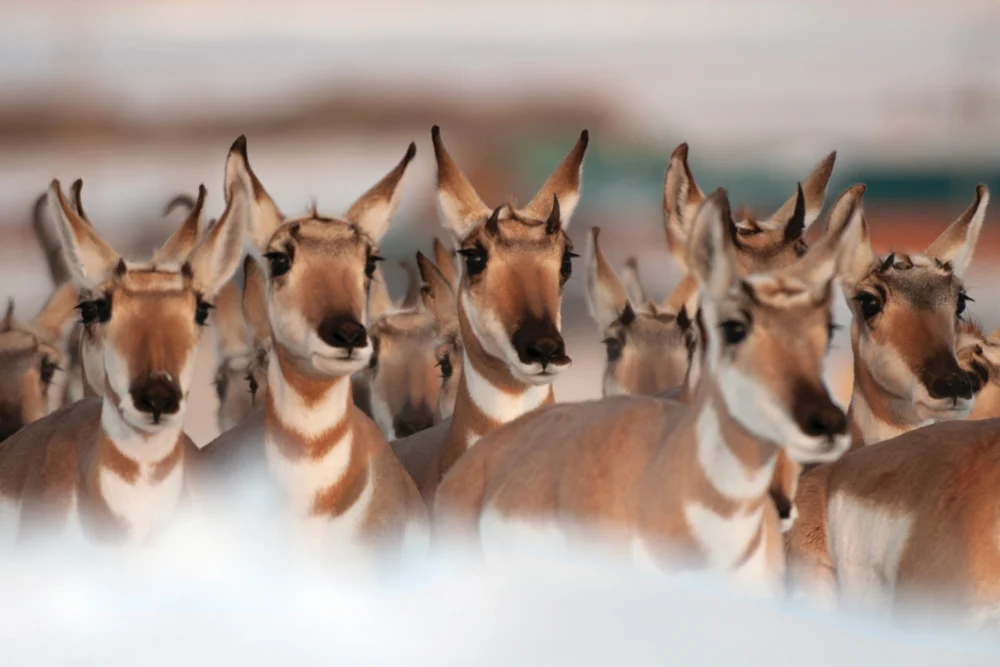
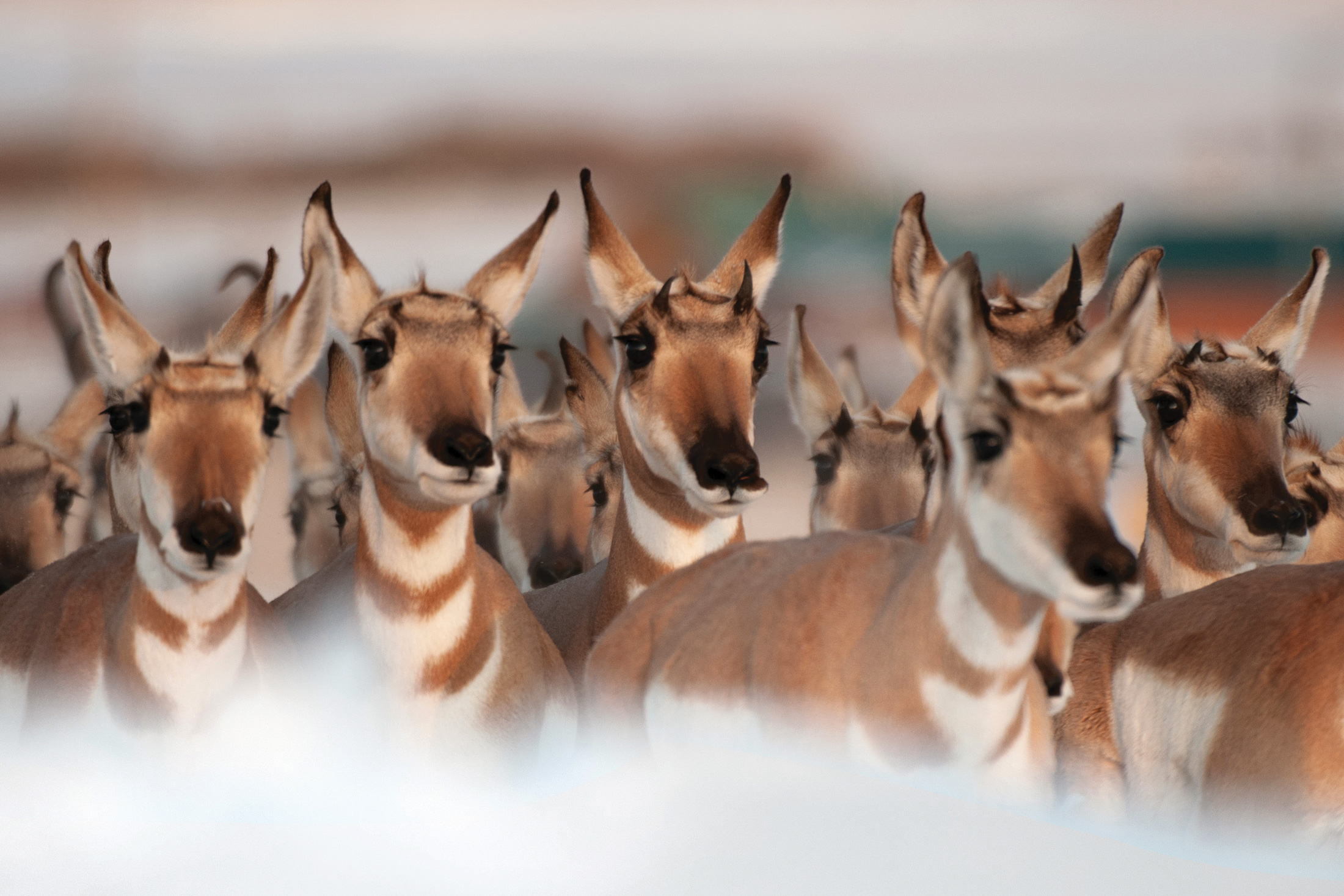
One sunny June morning, amidst the sagebrush of western Wyoming, a pair of pronghorn fawns erupted from near my feet, their spindly legs a blur as they sprinted away, vanishing into the vast landscape within seconds. These young animals, destined to become some of Earth’s fastest land mammals, embody an ancient lineage perfectly adapted to the open basins of Wyoming, a place they have called home for tens of thousands of years. Adult pronghorn, smaller than deer but capable of reaching speeds close to 60 miles per hour, possess an incredible stamina, able to cover seven miles in just ten minutes, a testament to their oversized hearts, lungs, and long legs. Yet, this iconic species now faces unprecedented challenges, navigating a world increasingly fragmented by rural housing and energy development, crossed by fences and highways, and profoundly altered by a warming climate. The West, once a stable environment for their evolution, is now significantly hotter than it was in their ancestral past, and the temperature continues to climb annually.
The familiar world where pronghorn have long thrived, and where generations have raised their children, is undergoing rapid transformation. Droughts are becoming more frequent and severe, winters are marked by less snow, and spring melt arrives earlier, leading to diminished stream flows by late summer. With fewer frost days, hotter summers, and more intense storms, conifer forests are drying out, succumbing to wildfires, while rangelands are increasingly overrun by invasive, fire-adapted grasses. In 2024 alone, over 1,300 square miles of Wyoming burned, more than double the area affected in recent major fire years, and the impact on wildlife, including pronghorn, is undeniable.
Evidence of this ecological stress was tragically illustrated in northeast Wyoming’s Powder River Basin, a sprawling expanse of grassland and shrub-covered bluffs. When a lightning-ignited fire swept across its western edge in August 2024, driven by high winds, it rapidly escalated into a raging inferno that consumed hundreds of square miles in a single day. After evacuation orders were lifted, ranchers returned to find landscapes deeply etched into their lives scorched beyond recognition. As the charred earth cooled, wildlife managers and landowners discovered the devastating toll: at least 70 dead and dying pronghorn, some found near fences, others overtaken in the open, stark reminders that even North America’s fastest land animal could not outrun the flames.
Witnessing images of the charred earth and learning of the lost Wyoming pronghorn, the author pondered the future her children would inherit. In September 2018, her first child was brought home under skies stained with the pervasive orange hue of lingering wildfire smoke, a somber introduction to the changing environment. While the precise appearance of this landscape decades from now remains unpredictable, its transformation is certain; her children will grow up in a world significantly different from the one generations have known.
This is not the first climatic upheaval pronghorn have encountered; their earliest North American ancestors appeared in the fossil record during the Miocene, approximately 20 million years ago, a period when the planet was considerably warmer. The modern pronghorn evolved later, during the much colder epochs of the ice ages. Following the end of the ice ages around 12,000 years ago, North America experienced a rapid warming event. This period of significant climatic shift led to the extinction of most large mammals, yet the pronghorn persisted, adapting to the new conditions.

Researchers suggest that ongoing climate change may precipitate "state shifts," where entire ecological systems, such as pine forests or sagebrush steppe, transform into entirely different ones. The critical question remains: will pronghorn be able to navigate this new set of climate-driven changes as successfully as they did 12,000 years ago? And will humanity? Perhaps the ancestors of the twin fawns that darted from the author’s path can offer insights. By understanding how pronghorn historically weathered such profound environmental transitions, we may glean valuable lessons for the adaptation of their descendants, and our own, in an uncertain future.
When spring snowstorms sweep across southeast Wyoming, groups of pronghorn are often observed near town edges, close to the airport, resting beyond highway fences and peering through the driving snow. These animals are undertaking their annual migration from wintering grounds to more verdant summer fawning areas, likely in the foothills. With their large eyes and distinctive, antenna-like horns, pronghorn possess an almost alien appearance, yet they are not creatures from another world so much as relics from another time, survivors of the vast array of now-extinct fauna that once roamed the icy, windswept basins of North America. Driven by a desire to understand the climate, flora, and fauna of these ancient eras, the author delves into the geological history of the region.
On the second floor of the University of Wyoming Geological Museum, a striking mural depicts the Laramie Valley during the Pleistocene epoch, a period of ice ages spanning from approximately 2.58 million to 11,700 years ago. The artwork, viewed from a bluff overlooking what is now the author’s hometown, portrays a muscular saber-toothed cat snarling at a colossal bison with spear-like horns, while three woolly mammoths stand warily in the background. The landscape is sparsely vegetated with scrubby plants, a fringe of willows lines the Laramie River, and glaciers descend from the treeless Medicine Bow Mountains, their familiar peaks emerging from deep ice and snow.

In a nearby university building, paleoclimatologist Bryan Shuman, a professor in the UW Geology and Geophysics Department, was settling into his new office, surrounded by stacks of books and papers holding stories of the past. Shuman’s research involves analyzing microscopic particles from lakebed sediment cores and mapping ancient shorelines to reconstruct the hydrology, climate, and ecology of environments dating back to the late Pleistocene. His work reveals that Pleistocene Laramie, while known for its cold, was even more frigid than today. During the coldest periods of the Pleistocene, average annual temperatures in the Central Rockies, where a significant portion of the world’s pronghorn population resides, were as much as 18 degrees Fahrenheit lower than present. This extreme cold fostered permafrost, creating wedge-shaped patterns on the ground that are still visible today.
The mural’s depiction of ice and sparse vegetation aligns with Shuman’s findings. "We know glaciers were much more extensive," he stated, referencing clear geomorphic evidence of their past presence. Trees were scarce in this frigid environment; Shuman presented a graph correlating temperature fluctuations with pollen extracted from lakebed sediment layers, demonstrating that during colder periods, the landscape was predominantly covered by grasses and sagebrush, with some evidence of low, shrubby willows, similar to those found in the Arctic today. The landscape was also considerably drier than it is now. Shuman’s use of ground-penetrating radar to map past lake shorelines indicates that the region is currently experiencing one of the wettest periods in at least the last 20,000 years. Furthermore, the late Pleistocene was characterized by high winds and significant dust accumulation. Glacial meltwater carried pulverized rock silt that dried and was carried by winds, shaping dunes across the Great Plains and depositing thick layers of glacial dust far into the Midwest. The author attempts to envision pronghorn, akin to those seeking shelter from modern snowstorms, navigating this ancient landscape, which was colder, drier, windier, and dustier than today’s.
In addition to environmental challenges, Pleistocene pronghorn faced predation from formidable carnivores. Fossils from Natural Trap Cave, a unique geological formation in northern Wyoming, reveal the presence of Miracinonyx, the American cheetah, a large predator adapted for pursuit; the powerful American lion, one of the largest cats to have ever lived; and the Beringian wolf, equipped with heavy jaws and robust teeth. Isotope analysis of their fossilized remains confirms that all three species preyed on pronghorn. Natural Trap Cave, with its vertical, bell-shaped shaft, has served as a natural trap for millennia, with animals falling over 80 feet to the cave floor, where their remains were preserved in the constant 42-degree Fahrenheit temperature due to the absence of scavengers and minimal disturbance from rising water or falling rocks.

Julie Meachen, a vertebrate paleontologist from Des Moines University, has led research at Natural Trap Cave since 2014. Upon her initial descent into the cavern, she was struck by the abundance of bones embedded in the walls. Although previous expeditions in the 1970s and 80s had uncovered remains of camels, cheetahs, horses, and mammoths, the cave had remained unexplored for decades, recognized as a rich repository of fossils. Alongside the remains of Pleistocene lions, wolves, and bears, the earlier explorations yielded pronghorn fossils dating between 17,000 and 20,000 years old, morphologically indistinguishable from modern specimens, along with evidence of at least 14 other large mammal species. These included modern bighorn sheep, coyotes, extinct stilt-legged horse relatives, musk oxen, camels, and giant short-faced bears, some more than twice the size of contemporary grizzlies. Meachen’s team recently unearthed mammoth scapulae, ribs, and vertebrae, suggesting the presence of at least three mammoths that perished in the cave during the Pleistocene.
Todd Surovell, an archaeologist at the University of Wyoming specializing in hunter-gatherers and late-Pleistocene extinctions, shared a small piece of mammoth ivory, a testament to the significant presence of these colossal animals in Wyoming during that era. Columbian mammoths, the largest mammoth species in the Americas, roamed widely along the front of the Rockies, from Canada to Mexico. Surovell described "tons of mammoths," painting a picture of these 22,000-pound giants interacting with pronghorn in a landscape shared with formidable predators. Such scenes played out for tens of thousands of years, until an unknown factor drove most of these megafauna to extinction.
On a geological timescale, the 7,000-year transition from the deep ice age to the Holocene epoch, the current era, occurred with remarkable speed. However, for pronghorn and other species, these changes unfolded over many lifetimes. Around 17,000 years ago, a gradual wobble in Earth’s axis, occurring on a 41,000-year cycle, led to increased summer solar radiation. This initiated the melting of ice caps, and as reflective ice receded, darker ground surfaces absorbed more solar heat. This planetary warming was amplified by a cascade of events: melting ice caps released vast quantities of freshwater into the oceans, altering currents and warming ocean waters, which in turn released carbon dioxide into the atmosphere. The resulting increase in atmospheric CO2 created a potent greenhouse effect, further trapping heat and accelerating warming.

Shuman explained this complex feedback loop: "This chain of orbital changes, ice sheet changes, dust and ocean changes, all causes carbon dioxide to go up and down." Carbon dioxide, he emphasized, "is probably the biggest single hammer on the system." By approximately 10,000 years ago, atmospheric carbon dioxide levels had risen by over 40%, leading to a global temperature increase of 7 to 11 degrees Fahrenheit. The central regions of North America became wetter, transforming arid grasslands into more verdant environments and allowing forests to expand northward, with pollen records indicating the flourishing of pine, spruce, and fir. While beneficial for arboreal species, this transformation proved detrimental to much of the megafauna. "A lot of the big things that used to be here just didn’t survive," Meachen observed.
Of the numerous large mammals inhabiting Pleistocene North America, an estimated 59 species, and possibly more, went extinct, leaving only 26 surviving today. One analysis suggests that 72% of large mammal species, including horses, mammoths, giant beavers, ground sloths, and many predators, disappeared from the continent. Surovell noted a pattern: "The bigger you are, the more likely you are to go extinct. Very few small things go extinct." His co-authored research from 2009 indicates that these extinctions likely occurred between 13,800 and 11,400 years ago, a mere blink of an eye in geological terms, and subsequent evidence has only strengthened this conclusion. The precise reasons for this widespread extinction event remain a profound mystery, with ongoing scientific debate exploring factors such as human influence, a potential asteroid impact, or interspecies disease transmission. However, scientists widely agree that rapid climate change played a significant role in driving this dramatic loss of biodiversity.
Among the species that have endured these profound shifts, the pronghorn antelope stands out. Antilocaprids have inhabited the continent for over four times the duration of cervids (deer, elk, moose, caribou), whose ancestors arrived around 4.8 million years ago. Ancestors of modern bovids (bison, bighorn sheep, mountain goats) appeared a mere 2.5 million years ago. The modern pronghorn, the sole living descendant of the earliest Antilocaprids, is a North American endemic, having evolved to thrive within this specific environment. "In fact, they were survivors," stated Christine Janis, professor emerita of ecology and evolutionary biology at Brown University, who studies animal evolution in relation to climate change over the past 20 million years. She noted that pronghorn ancestors navigated earlier extinctions of ancient deer-like animals around 5 million years ago, persisting alongside horses and camels until the end-Pleistocene extinctions.

While the exact mechanisms of their survival are not fully understood, several theories have been proposed. Meachen highlighted their remarkable ability to thrive with minimal water, stating, "They were able to eat dry, scrubby vegetation that other big herbivores, like horses and bison, were not able to eat and make use of, and they were able to do that and have less water stress than other animals." Surovell also pointed to the extinction of the American cheetah as a potential benefit for pronghorn. Janis attributed their success to high-crowned teeth, which allowed them to consume low-growing, gritty browse. These teeth, extending well above the gumline, could withstand constant wear from chewing dusty Pleistocene vegetation. She also cited their smaller size, enabling faster reproduction rates compared to larger animals like camels or mammoths, which typically produce one calf every few years, whereas pronghorn usually have two fawns annually. Janis summarized the key lesson from pronghorn survival: "Be small and be adaptable in your diet. That’s a good way to survive."
Pronghorn have demonstrated a remarkable capacity for survival through numerous environmental changes, and more are anticipated. Global surface temperatures continue to break records year after year, and the rate of greenhouse gas accumulation in the atmosphere is projected to drive global average temperatures far more rapidly than the 7,000-year transition that ended the ice ages. "That’s the type of magnitude change we’re talking about," Shuman remarked, "except it’s going to keep going into a warmer direction that’s still hard to imagine." The future appears precarious for both pronghorn and humanity, with planetary changes occurring at a speed not seen since the asteroid impact that caused the extinction of the dinosaurs approximately 66 million years ago. The question arises: can human societies adapt their own living systems to such swift and profound transformations?
As an inhabitant of this land and a mother of two Wyoming natives, the author finds this question deeply unsettling. Nevertheless, studying the survival strategies of pronghorn has offered a shift in perspective. The author acknowledges relief at not having lived through the arid, treeless, and bitterly cold conditions of the deepest ice ages. She recognizes that increased precipitation in some areas has supported the growth of forests and the flourishing of species, including pronghorn, in warmer modern times. The Earth’s dynamic nature, characterized by billions of years of life adapting to diverse climates—from periods when Wyoming harbored palm trees and crocodiles to millennia of ice and snow, and back again—is a source of wonder. This inherent dynamism and the continuous adjustment of living systems offer a degree of reassurance. The author also acknowledges that her children, more readily than most animals, can adapt their diets and potentially relocate, mirroring the pronghorn’s ability to survive and thrive across a range of climates and environments.

When the rangeland wildfire scorched nearly 275 square miles of Wyoming’s Powder River Basin in 2024, the 70 pronghorn that perished represented a fraction of the tens of thousands of survivors in the region. These survivors reproduced, and new fawns were born, feeding on the fresh grass that emerged in the burned areas the following spring. Perhaps the enduring lesson from pronghorn is not to dwell on the past or fret over an uncertain future, but rather to engage with the present moment with attentiveness and care, observing the subtle shifts in the wind and the scents carried on the air. Pronghorn teach us the importance of deeply understanding our home habitats and aligning our own behaviors and patterns with the forces of the land. They urge the author to note how the snow drifts, which plants emerge after a rainstorm, and to recognize that each spring will bring its own unique character. They inspire the teaching of her children to identify birdsong, understand the seasonal movements of animals, breathe deeply, and continue moving forward with their feet firmly planted on the Earth.