Rocky Gerung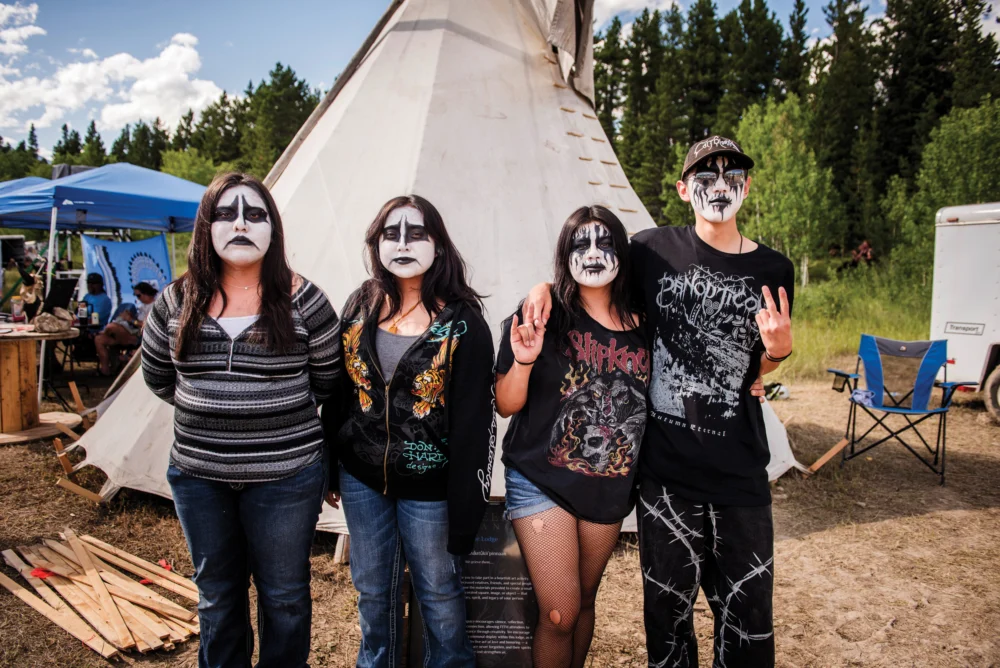
The air at the Blackfeet Nation’s Fire in the Mountains festival thrummed with a unique blend of raw sonic power and profound communal spirit, bringing together Indigenous youth and metal enthusiasts from across North America. Nestled against the breathtaking backdrop of the Montana Rockies, this groundbreaking event transcended its heavy music roots to foster connection, offer solace, and celebrate cultural exchange. Amidst the mosh pits and headbanging, a deeper narrative emerged: the powerful role of heavy music in addressing trauma, isolation, and the persistent challenges faced by Indigenous communities.

The festival, spearheaded by educators and community leaders, was more than just a musical gathering; it was a carefully curated experience designed to heal and empower. Buffalo Hide Academy, an alternative high school in Browning, Montana, had already initiated a heavy music symposium, a semester-long course exploring the genre’s history, cultural impact, and therapeutic benefits. Led by teachers like Robert Hall (Piikunii), who embraced the "darkness" and "ugliness" of life as a source of artistic expression, and Charlie Speicher, a clinical counselor and the academy’s director, the symposium aimed to provide a safe haven for students who might feel isolated or misunderstood. Speicher, often seen in his signature battle vest adorned with band patches, recognized the power of this music to connect with those struggling, stating his goal was "to create more safety and protection specifically from suicidal distress," a pervasive issue that has touched nearly every family in Browning.
The journey to this transformative event began with a deep-seated need. As COVID-19 swept the globe in 2020, a devastating wave of suicides struck the Blackfeet Nation, claiming young lives with alarming frequency. In response, a coalition of educators and musicians, calling themselves the Firekeeper Alliance, united with a singular mission: to support and protect their students. This alliance, which included Steve Von Till, a musician from the influential band Neurosis, alongside Hall and Speicher, envisioned a festival that could not only bring economic opportunities to the reservation but also serve as a beacon of hope. Their efforts gained traction when they approached the owners of the Fire in the Mountains festival, who were seeking a new home after being priced out of their previous location in Jackson, Wyoming.

Securing the approval of the Blackfeet Tribal Business Council was a crucial step. While the council had historically supported youth through athletics, embracing the arts, particularly the often-misunderstood genre of metal, was uncharted territory. Councilman Everett Armstrong, however, recognized the potential, stating, "Let’s try to go a different route to give our youth something that they can open our minds to, open our hearts to, find themselves." The economic implications were also significant. The reservation, situated near the lucrative Glacier National Park, grappled with widespread poverty, a factor contributing to the disproportionate rates of suicidal distress among Native communities. The festival offered a chance to redirect tourism revenue back into the reservation and provide tangible career pathways through internships within the music industry.
To ensure the festival’s success, the Firekeepers embarked on a mission to attract notable bands. In August 2024, they traveled to Boulder, Colorado, to meet with the acclaimed Norwegian folk band Wardruna. The meeting, held at the C.U. Boulder library, proved unexpectedly smooth. Wardruna’s lead singer, Einar Selvik, had already spoken with Speicher and was enthusiastic about the prospect of performing on Indigenous land. "A chance to stand with (the) Indigenous in a constructive, powerful way, and a chance to visit a beautiful place and to do something that is more than just a festival, more than just a concert," Selvik explained, highlighting how "all the pieces just fit so well together." This commitment from Wardruna marked a significant coup for the festival, aligning perfectly with the Firekeepers’ vision of a culturally resonant event.

The festival’s opening day, bathed in perfect late-July sunshine, saw hundreds of attendees arrive at East Glacier Park, Montana. The atmosphere was electric, tinged with both excitement and a sense of responsibility. Unlike many festivals, Fire in the Mountains was a strictly alcohol-free event, a deliberate choice aimed at fostering a more mindful and inclusive experience. The opening ceremony eschewed traditional land acknowledgments in favor of a vibrant "grand entry" led by Piikunii locals in traditional regalia. As young drummers laid down a powerful rhythm, dancers showcased intricate steps in fancy, traditional, chicken, and grass styles. Robert Hall, acting as emcee, kept the mood light with humor, bridging the gap between the festival-goers and the local community. For many attendees, this was their first encounter with Indigenous culture, a moment of profound connection.
The subsequent intertribal dance, an invitation for all to join, saw metalheads hesitantly but enthusiastically take to the grass. Clad in their battle vests and black jeans, they awkwardly, yet respectfully, attempted to mirror the graceful movements of the Indigenous dancers. This shared experience of movement and music fostered a sense of unity, a powerful testament to the festival’s goal of cultural exchange. Einar Selvik later described the powwow as a "powerful way to set the tone, to open the circle," emphasizing the vulnerability and deference required of attendees as guests on Piikunii lands.

The festival grounds transformed into a vibrant hub of activity. Workshops and panels explored topics ranging from Indigenous sovereignty and ethnobotany to the ongoing crisis of missing and murdered Indigenous people and, of course, the therapeutic aspects of heavy music. A dedicated stage area, nestled beside tipis serving as green rooms, hosted a diverse lineup of musicians. Food vendors offered local delicacies, including buffalo and duck, prepared by a Montana-based catering team. High school interns, integral to the festival’s operation, adorned the stages with symbolic decorations—skulls, antlers, and Indigenous art—creating an environment that was both aesthetically striking and deeply meaningful.
The music itself served as a powerful conduit for expression and healing. Sage Bond, a rising acoustic metal singer-songwriter from the Navajo Nation, captivated the audience with her blend of raw vocals and heartfelt lyrics. Her performance, her first at such a large festival, was a significant moment, showcasing the growing presence of Indigenous artists in the heavy music scene. Bands like Pan-Amerikan Native Front, a Chicago-based group blending black metal with Indigenous themes, invited students onstage, fostering a sense of shared identity and empowerment. The powerful, often cathartic, performances resonated deeply with attendees, many of whom have experienced significant personal and historical trauma.

"A lot of people are into metal because of how much trauma that we go through in our daily lives. And not only in our own daily lives, but our historical trauma," shared Damien Jones Jr. (Diné), whose meticulously decorated battle vest became a festival highlight. Like many, Jones found solace and a means of processing his emotions through music, whether it was the raw energy of metal or the disciplined structure of classical and jazz saxophone. This sentiment was echoed by Meg Skyum (Oji-Cree), who noted the shared "fringe" status of both Indigenous people and metalheads, finding common ground in their outsider perspectives. The music, with its often aggressive yet deeply emotional soundscapes, provided an outlet for feelings that might otherwise remain unexpressed.
The festival also provided a platform for bands like Liłith, a Navajo Nation blackened doomgaze duo, and Blackbraid, the solo project of Jon Krieger, whose viral single "Barefoot Ghost Dance on Blood Soaked Soil" had brought him widespread attention. Krieger, who identifies with the spiritual aspects of black metal, found common ground with Indigenous traditions, noting a shared "anti-Christianity" sentiment with its Scandinavian roots. His performance, a mesmerizing blend of harsh vocals and flute melodies, left audiences spellbound.

As the festival progressed, the connection between artists and attendees deepened. Musicians mingled with fans, participated in workshops, and shared stories. The performance of Converge, a band deeply admired by Speicher, culminated in a powerful moment when frontman Jacob Bannon invited a Piikunii youth onstage to share vocals on their song "Dark Horse." This act of collaboration symbolized the festival’s core ethos: a fusion of cultures and a shared journey toward healing. The intense energy of the mosh pit, described by Hall as "consensual fucking violence," offered a cathartic release, a space where individuals could confront their inner turmoil and emerge feeling strengthened.
The final night brought an unexpected twist when a sudden thunderstorm plunged the festival into darkness. Yet, even in the face of adversity, the spirit of the event endured. As the storm raged, the iconic riff of Black Sabbath’s "War Pigs" unexpectedly filled the air, performed acoustically by the drummer of Inter Arma, drawing cheers and singalongs from the huddled crowd. The impromptu performance, a collective homage to Ozzy Osbourne, underscored the profound impact of music and community in overcoming challenges. When the power was restored, Old Man’s Child, a Norwegian black metal act making their U.S. debut, took the stage, delivering a powerful performance that felt like a cathartic exorcism, driving home the festival’s overarching theme of confronting darkness and embracing light.

The aftermath of Fire in the Mountains was marked by an outpouring of positive feedback. Social media buzzed with testimonials of "pure magic," "transformational," and "life-changing" experiences. Attendees lauded the alcohol-free environment for enhancing their connection to the music and each other. Frank Godla, co-founder of Metal Injection, remarked on the profound learning experience about Native culture, stating he gained more insight at the festival than from any book or documentary. Wardruna’s Einar Selvik expressed his gratitude, calling the event a "ceremony" where "our ancestors held ceremony together and their meeting is rippling as we speak."
The reciprocal nature of the exchange was evident in the words of Tribal Chairman Rodney "Minnow" Gervais, who praised the metalheads for their respect and cleanliness, declaring, "What you see here is proof that music transcends religion, color, whatever you want. It brings us all together." Councilman Armstrong, initially apprehensive about the "scary" appearance of metalheads, found them to be "some of the nicest people" and "so welcoming." The success of Fire in the Mountains has prompted discussions about hosting future events across various musical genres, signaling a new era of cultural and economic engagement for the Blackfeet Nation.

For many, the festival represented a "strange road to joy," a testament to the resilience of the human spirit and the unifying power of music. As attendees departed, the shared experience lingered, a powerful reminder that even in the face of profound struggle, connection, understanding, and hope can emerge from the most unexpected of places. The Fire in the Mountains festival had not only provided a platform for heavy music but had also forged a vital sanctuary where Indigenous youth and a diverse community of music lovers could find solace, celebrate their identities, and dare to imagine a brighter future.