Rocky Gerung
The journey to unearthing Idaho’s cinematic past began unexpectedly in a library, igniting a passion project that would span over a century of history and face modern-day bureaucratic hurdles. In 2023, Colin Mannex, executive director of the Kenworthy Performing Arts Center (KPAC) in Moscow, Idaho, encountered a piece of local film history previously lost to obscurity: the 1919 silent film Told in the Hills. This groundbreaking motion picture holds the distinction of being the first feature-length film ever shot in Idaho, a testament to the state’s burgeoning role in early American cinema.
Adapted from Marah Ellis Ryan’s 1891 novel of the same name, Told in the Hills is a Western romance that chronicles the westward journey of an Idaho settler named Genesee Jack, and the subsequent quest by his estranged brother to locate him. The production itself was a significant undertaking, filmed on location in the picturesque Lawyer’s Canyon, situated south of Lewiston, Idaho. More remarkably, the film featured a cast of over 100 Nimiipuu (Nez Perce) actors, offering a unique glimpse into the community’s involvement in the nascent film industry.
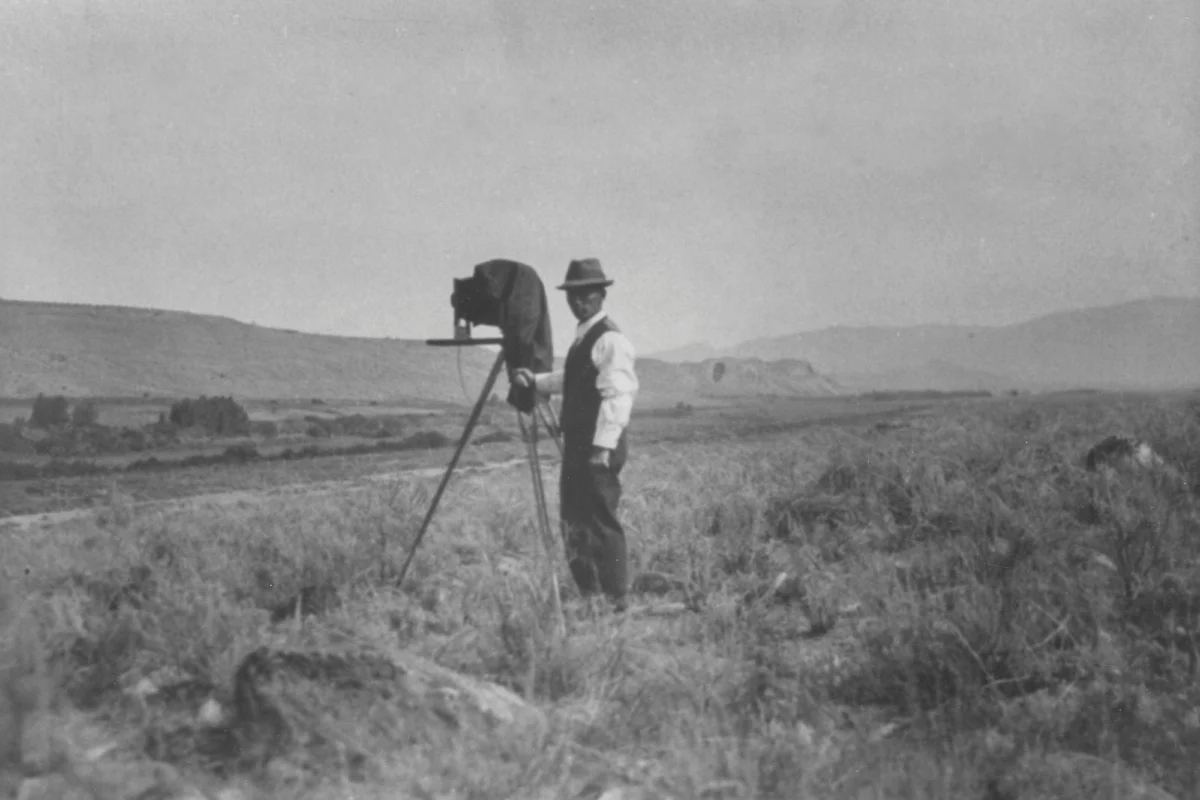
Mannex, whose long-standing fascination with the silent film era had already spurred the creation of KPAC’s annual Silent Film Festival, was immediately captivated by the prospect of seeing this forgotten work. His enthusiasm grew upon learning that the film’s legacy was not entirely lost; two fragile reels of film, along with the original shooting script and a wealth of still photographs from the production, were carefully preserved within the Idaho Film Collection housed in the archives of Boise State University.

Within the hallowed halls of the university archives, Mannex’s quest intersected with another dedicated preservationist: Tom Trusky, a poet and English professor known for his eccentric dedication to forgotten art. Trusky had previously produced a short documentary in 1989, titled Retold in the Hills, detailing his own arduous journey to the Gosfilmofond State Film Archive in the then-Soviet Union to retrieve the original nitrate prints of Told in the Hills. His documentary also chronicled his subsequent efforts to restore and preserve these delicate film elements. Mannex was struck by Trusky’s "electric energy and excitement" and recognized a kindred spirit, eager to continue the vital work of bringing Told in the Hills back to the public eye.
Driven by this renewed purpose, Mannex, through KPAC, applied for a $7,500 grant from the Idaho Humanities Council (IHC) in January 2024. The council, recognizing the cultural significance of the project, awarded the necessary funding for the film’s restoration. This crucial grant enabled Mannex to commission a new musical score from the award-winning Diné composer Connor Chee, who envisioned a score that would complement the silent film’s emotional landscape. A specialized company was engaged to undertake a meticulous 4K restoration of the fragile film, a process that requires immense technical skill and care to preserve the delicate nitrate stock. Additionally, an editor was hired to meticulously piece together the surviving narrative fragments.
A vital component of the restoration involved engaging with the Nez Perce Tribe. Mannex sought to understand the tribe’s connection to the film’s creation and to consult with them regarding the restoration process, ensuring cultural sensitivity and accuracy. Further fundraising efforts were initiated, and a premiere date was tentatively set for September 2025, marking a significant moment for Idaho’s cultural heritage.
However, just as the project was gaining momentum, an unexpected and severe blow struck in April. An email arrived in the dead of night from the National Endowment for the Humanities (NEH), delivering devastating news: the project’s grant had been terminated. Camille Daw, a program officer at the IHC, confirmed to High Country News that the decision stemmed from actions taken by DOGE—the Department of Government Efficiency. This entity, reportedly founded by billionaire Elon Musk and granted sweeping authority by the Trump administration, was tasked with broadly reducing federal agency budgets and personnel.

"It was a big surprise for our office," Daw stated, highlighting the abrupt nature of the cuts. The Idaho Humanities Council, which annually distributes NEH funds across Idaho, found itself in a precarious position. Within two days of DOGE’s intervention, a staggering 70% of the IHC’s funding was eliminated. These drastic cuts sent ripples throughout Idaho, forcing the council to scramble to downsize or postpone grants it had already committed to, including the vital funding for the Told in the Hills restoration. With the film’s premiere only months away, this funding disruption threatened to derail the entire project. "It just totally derailed everything," Mannex lamented, underscoring the profound impact of the unexpected financial setback.
The narrative of Told in the Hills and its restoration unfolds against a backdrop of historical parallels, highlighting the enduring resilience of Indigenous peoples in the face of external pressures. Over a hundred years prior to the DOGE disruptions, the Nimiipuu people were grappling with their own significant federal challenges. By 1919, the era in which Told in the Hills was filmed, federal boarding schools were actively removing Indigenous children from their families, government policies were systematically dispossessing tribes of their ancestral lands, and their traditional ways of life were under severe threat. An entire generation of Nimiipuu individuals had grown up under government bans that prohibited their cultural practices and traditions.
Nakia Williamson-Cloud, director of the Nez Perce Cultural Resource Program and a key consulting partner on the film restoration project, provided crucial context. "Many of those individuals (in the film) were in armed conflict with the U.S. federal government in the 1877 (Nez Perce) War," he explained, drawing a direct line between the film’s cast and the historical struggles of his people. "When you look into the faces of those individuals on film and in the photographs, you know that they faced challenges to their very existence." In this profound sense, Told in the Hills transcends its status as a mere film; it serves as a powerful artifact, vividly preserving the spirit of resistance and the struggle for survival of the Nez Perce people against attempts at cultural erasure.
Williamson-Cloud offered a powerful perspective on the DOGE funding crisis by situating it within the vast sweep of Indigenous history. "Nez Perce people have been on this landscape in excess of 16,500 years," he stated, emphasizing the deep temporal connection his people have with the land. "We’ve seen a lot of changes. Our memory is not only ancestral over generations, our memory is on par with geological events that we observed on the landscape." He underscored the relatively brief presence of the current federal government: "This federal government has only been here just a speck amount of time. Tiny amount of time. And that’s what we’re here to remind the broader society," he concluded, "is just the resilience of our people."

Despite the significant setback from the DOGE funding cuts, the Told in the Hills restoration team demonstrated unwavering determination. "After the funding cuts," composer Connor Chee recounted, "things got scaled back." The ambitious vision of a full chamber orchestra accompanying the film was scaled down to a quintet. Chee noted the challenging timeline: "I didn’t get to see the finished film, and I had to get this music to the performers in time for them to rehearse it and learn it." Ultimately, the conductor and musicians had a mere two weeks for practice. The editing process was temporarily halted, awaiting the restoration of funding. Chee ingeniously crafted flexible musical cues that could adapt to the evolving and incomplete final cut of the film, ensuring that the music could remain dynamic and responsive. "I don’t know how it’s going to sound," Chee admitted, acknowledging the inherent unpredictability. "It could be different every time it’s performed. This kind of music can stay alive, it can change. It’s like a living thing."
As the meticulous work on the film’s restoration progressed, the team compared the newly scanned 4K footage with the older tape produced by Trusky in the 1980s. In one particular scene, the older footage depicted two actors whose faces were obscured by deep shadows. However, in the restored 4K version of the same scene, their features emerged with remarkable clarity and detail. This enhanced visual fidelity, combined with the extensive collection of still photographs, allowed Williamson-Cloud and his team at the Cultural Resources Office to finally identify and credit dozens of Indigenous actors who had previously remained unacknowledged.
Mannex and editor Tom Frank faced the considerable challenge of reconstructing the film’s narrative, given that only approximately one-third of the original footage had survived. They meticulously consulted the original shooting script and strategically incorporated the trove of still photographs to fill the gaps in the surviving film. "We have essentially 20 minutes of footage for a 60-minute film," Frank explained, outlining the scale of the reconstruction effort. "We ultimately realized that using just one or two photos to represent the scene with text from the script was the way to make it most clear."
Throughout this period of uncertainty, Mannex engaged in a relentless pursuit of alternative funding. Contracts for editing and score composition, which were contingent on the precarious funding, hung in the balance. In the critical final months leading up to the premiere, the Mellon Foundation provided a crucial lifeline, stepping in with significant support. Local donors also contributed generously to KPAC, demonstrating community commitment to the project. Then, a significant legal development occurred: a court reversed DOGE’s decision, reinstating the original funding and providing the necessary resources to complete the restoration. After a summer marked by confusion and uncertainty, with less than a week remaining until the scheduled premiere, the film was finally ready for its public debut.

On a crisp Friday evening in September, conductor Danh Pham and the musicians took their positions at the base of the stage in the Kenworthy theater. As the audience began to fill the seats, the digital projection of the film commenced, replacing the nostalgic click of unspooling celluloid, yet the elegant, cursive title still illuminated the screen in shimmering silver. For the first time in over a century, Told in the Hills was presented to an audience. Mannex, however, felt it was important to provide context and prepare viewers for the historical nuances they were about to witness. Standing near the musicians, he acknowledged, "You’ll see some old tropes and casting decisions that are uncomfortable for contemporary audiences. Despite its flaws, Told in the Hills remains an important cultural resource."
Indeed, the film’s portrayal of and language used to refer to Native characters, alongside the minstrel-like presentation of its Black characters, elicited audible reactions of discomfort from the audience. Williamson-Cloud addressed these elements, stating, "Context is everything. It’s an important discussion for the time we live in now. We have to take these things head-on and shed light on the ignorance that drives this sort of language." He emphasized that the film, as a product of its time, naturally reflects the societal norms and prejudices of the era.
While the film features white actors in traditional Native American makeup alongside Cherokee actor Monte Blue, who would later rise to stardom in supporting roles, and Joe Kentuck, a Nez Perce performer who portrayed Kalitan’s father, it also offers a counter-narrative that challenges the prevailing stereotypes of its time. The film depicts peaceful relations between Native Americans and early settlers, and notably, its climactic battle scene, a section that had been lost to time, is triggered not by intertribal conflict but by a misunderstanding attributed to an American cavalry unit.
The hundreds of Nimiipuu extras who participated in the film, though portraying a different tribe (the narrative centers on the Kootenai people), were presented with a rare opportunity to showcase their authentic traditions to a wider audience. Unscripted and uncostumed, the Native actors appeared in their own traditional attire, performing their own dances and ceremonies, offering a genuine glimpse into their cultural heritage.

Over a century later, Told in the Hills is being reimagined, and its evolution continues. Mannex expressed a wistful regret that the film’s original ending, which prominently featured Nimiipuu actors and likely contained significant cultural insights, remains lost. "It would be really cool to see that," he stated, acknowledging the missing pieces of the narrative. He expressed a desire to move beyond strict fidelity to the original script, embracing more artistic license in future interpretations. Mannex hopes to build upon the collaborative relationship established with the Nez Perce Tribe, aiming to create a project that integrates the culturally significant production imagery with insightful audio commentary. Plans include a DVD release and further screenings, with the possibility of reinterpreting the film in new forms, such as a museum exhibit.
Williamson-Cloud shared the profound hope that Told in the Hills can serve as "a living document for us to add to," and that the ultimate takeaway from the restored film is the enduring survival of the Nimiipuu people against attempts at erasure. "Our existence today is sometimes seen as an inconvenient fact," he remarked. "But this (version of the film) is a starting point to revisit this time and place while looking to the future." The rediscovery and restoration of this pioneering Idaho film, despite its challenges, offers a powerful bridge between past and present, illuminating both the history of filmmaking and the enduring strength of Indigenous cultures.