Roger Danuarta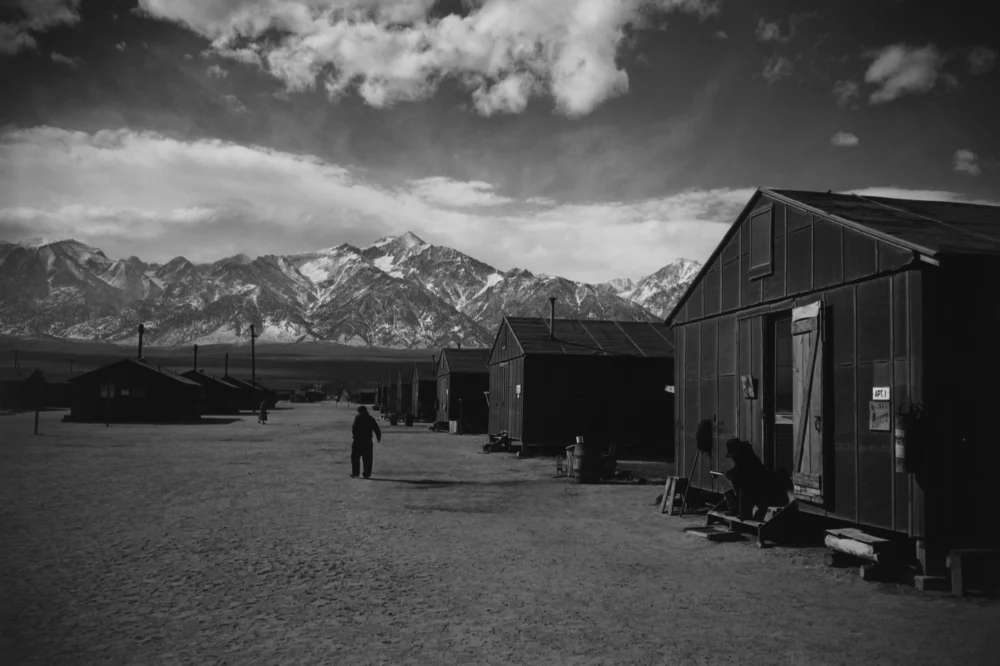
For decades, the name Ansel Adams has been synonymous with the breathtaking grandeur of the American wilderness, his iconic black-and-white photographs of Yosemite and the Sierra Nevada defining a romanticized vision of nature’s untouched majesty. Many, like this observer in younger years, found profound solace and inspiration in his meticulously crafted images, often adorning calendars and personal spaces, drawing the eye to distant, pristine landscapes, particularly those nestled within his home state of California. Yet, a recent exhibition has cast a revealing light on a lesser-known, often uncomfortable facet of Adams’ prolific career, challenging admirers to reconcile the artist’s famed aesthetic with his poignant documentation of human suffering and industrial encroachment.
The exhibition, "Beyond the Wilderness," recently opened at Westmont College’s Ridley-Tree Museum in Santa Barbara, delves into a body of work Adams undertook for Fortune magazine in the period leading up to World War II. This assignment, far removed from the towering peaks and tranquil valleys that cemented his legacy, saw Adams turn his lens towards the burgeoning urban and industrial landscapes of Los Angeles. These photographs, largely unfamiliar to the public and reportedly not among Adams’ own preferred works, reveal a starkly different artistic sensibility. Among them, an image that Adams himself purportedly favored captures the incongruous sight of a cemetery statue, an angelic figure, framed against a dense thicket of oil derricks in Long Beach, California. This composition, and others displayed at Westmont, underscore Adams’ unexpected fascination with these symbols of industrialization, one photograph even placing a looming derrick adjacent to an amusement park quaintly named "Children’s Paradise," a jarring juxtaposition of innocence and industry.

Crucially, while not explicitly featured in the exhibition, significant discussion revolved around Adams’ profoundly important, yet initially controversial, photographic series from Manzanar. This relocation center, situated in the high desert of California, became home to over 10,000 American citizens and residents of Japanese ancestry, forcibly incarcerated during World War II under the provisions of Executive Order 9066. In a remarkable act of conviction, Adams volunteered his time and artistic skill to document the daily lives within the camp, granted unprecedented access to its residents and facilities. The resultant collection, published in the book Born Free and Equal and later presented in an exhibition of the same name, stood in stark contrast to the prevailing wartime narrative that demonized Japanese Americans. Adams sought to portray the resilience, dignity, and ingenuity of those imprisoned, believing this work to be among his most vital contributions, a powerful testament to individuals "suffering under a great injustice."
The reception to Born Free and Equal was decidedly mixed, even hostile, at the time of its release in 1944. Public sentiment, fueled by fear and prejudice following the attack on Pearl Harbor, largely supported the internment policy. Adams’ humanistic portrayal of the internees challenged the official government narrative, which often depicted them as a potential security threat. Critics accused him of being unpatriotic or naive, failing to grasp the perceived necessity of the camps. Despite this backlash, Adams remained steadfast in his belief in the project’s ethical and artistic importance, viewing it as a critical act of witness against a grave civil liberties violation. His photographs captured not only the physical conditions of the camp—the barracks, the dust, the barbed wire—but also the spirit of community, the efforts to establish schools, cultivate gardens, and maintain cultural practices amidst profound adversity. These images have since become invaluable historical documents, offering a nuanced and empathetic perspective on a dark chapter in American history, contributing significantly to the eventual understanding and redress for Japanese American internees.
The geographical proximity of Manzanar to some of Adams’ most iconic wilderness subjects creates a profound and unsettling irony. During one of his visits to the relocation center, Adams captured "Winter Sunrise, Sierra Nevada, from Lone Pine," an image now revered as a quintessential portrayal of Mount Whitney and its surrounding peaks. This masterpiece of natural beauty was created mere miles from where thousands of American citizens lived under armed guard, their freedom curtailed, yet still under the vast, indifferent gaze of those same majestic mountains. The juxtaposition forces a reckoning: the sublime beauty of the natural world existing alongside the stark reality of human injustice.

This "whiplash" of experiencing profound beauty while simultaneously confronting profound suffering resonates deeply in the contemporary global landscape. We live in an era characterized by escalating social and political tensions, widespread human rights concerns, and increasingly visible disparities. From geopolitical conflicts displacing millions and humanitarian crises stretching across continents, to domestic challenges encompassing systemic inequalities, environmental degradation impacting marginalized communities, and ongoing debates over civil liberties, the daily news cycle often presents a relentless stream of fresh horrors. In response, many instinctively seek refuge in nature, drawn to its restorative power, its ability to provide solace and a sense of grounding amidst chaos. There is an undeniable human need to connect with the natural world, to find moments of peace and rejuvenation that affirm our humanity.
However, the imperative to seek solace must not overshadow the moral obligation to confront injustice, no matter how distant or seemingly intractable it may appear. The lesson from Adams’ Manzanar work is clear: we are called to hold both realities in our view – the "angels and the oil derricks," the serene majesty of the Sierra Nevada and the barbed wire of an internment camp. This demands a conscious effort to integrate appreciation for beauty with an unwavering commitment to awareness and action against cruelty. It means allowing ourselves a moment each morning to meditate on the profound beauty that still exists in the world, recognizing its power to sustain and inspire, before delving into the often-disturbing realities of the day.
The threats to human dignity, justice, and the environment are persistent and unlikely to simply abate. Like Ansel Adams, who chose to deploy his artistic vision not just to capture landscapes but to bear witness to the profound human cost of prejudice and fear, we are similarly called to observe, to understand, and most importantly, to respond. This response can take many forms: advocacy, informed dialogue, support for those affected, or simply a refusal to turn a blind eye. The legacy of Manzanar, illuminated by Adams’ unflinching gaze, serves as a powerful reminder that true engagement with our world requires acknowledging both its enduring splendor and its persistent capacity for injustice, demanding from us not just admiration, but active participation in shaping a more equitable future.