Roger Danuarta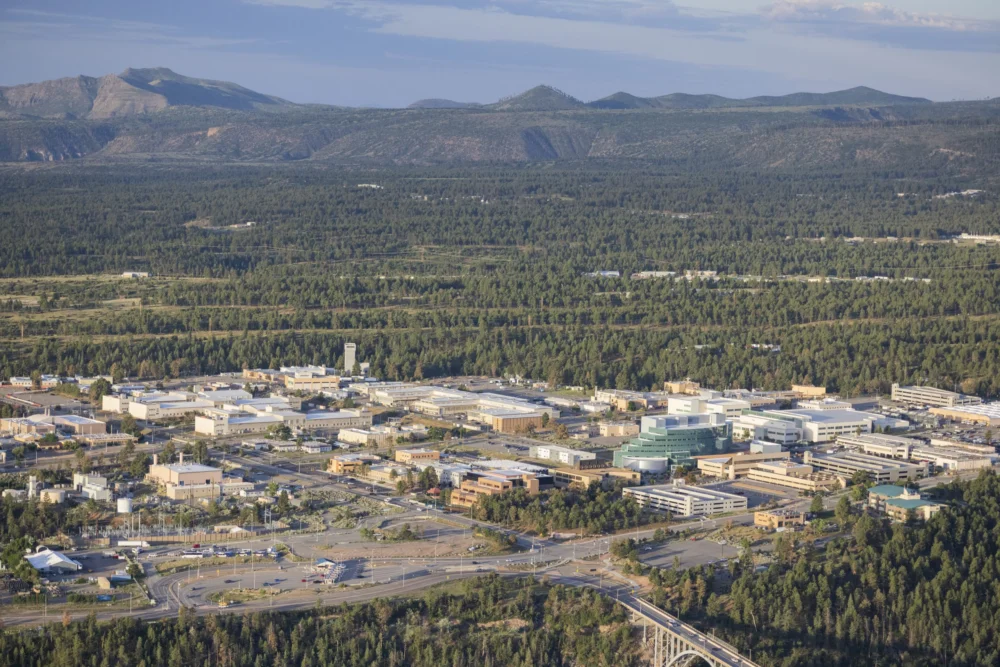
State environmental regulators on Wednesday issued a stark ultimatum to the U.S. Department of Energy (DOE), demanding the immediate acceleration of cleanup efforts for vast quantities of "legacy" nuclear and hazardous waste at the Los Alamos National Laboratory (LANL), the historic birthplace of the atomic bomb. This forceful intervention comes accompanied by significant civil penalties, with New Mexico threatening to fine the federal agency up to $16 million for persistent violations of groundwater safety standards in the vicinity of the sprawling northern New Mexico facility. The series of regulatory enforcement actions underscores a growing frustration within the state over what it perceives as a chronic lack of urgency from federal authorities in addressing decades of accumulated radioactive and chemical contamination.
Regulators articulated their concerns in a pointed statement, asserting that "The continued presence of a large volume of unremedied hazardous and radioactive waste demonstrates a longstanding lack of urgency by the U.S. Department of Energy, and elevates the risk of waste storage failures" at the lab. This critical assessment emerges against a backdrop of escalating global tensions, including renewed fears of a nuclear arms race following the recent expiration of the last remaining nuclear arms control treaty between the United States and Russia. The lapse of this key agreement has effectively removed bilateral limits on the world’s two largest nuclear arsenals, adding a layer of urgency and complexity to the operations at facilities like Los Alamos.
Indeed, LANL finds itself at the very nexus of this evolving global security landscape, currently serving as the linchpin of a massive $1.7 trillion federal initiative aimed at modernizing the nation’s aging nuclear weapons infrastructure. A core component of this modernization strategy involves the production of plutonium bomb cores, or "pits," at Los Alamos. This critical mission, however, directly contributes to the generation of new radioactive waste, exacerbating the existing environmental challenge even as dangerous legacy byproducts from the Cold War era remain improperly mitigated. This accumulating waste often contains highly hazardous materials such as plutonium, uranium, and other radioactive and chemical contaminants, all of which pose significant, long-term environmental and human safety risks. James Kenney, who heads the New Mexico Environment Department, succinctly summarized the situation, calling it "a legacy of failed legacy waste cleanups."
In response to the state’s actions, a representative for the Department of Energy issued a statement affirming the agency’s commitment to "public safety, efficiency, and transparency," adding that it was actively reviewing the regulatory actions taken by New Mexico. However, the issues cited by the state regulators are deeply rooted, tracing back to the nascent stages of nuclear weapons development. For decades, Los Alamos engaged in practices that would be unthinkable by today’s environmental standards, including the burial of nuclear and hazardous waste in unlined landfills, septic tanks, and even open firing sites. The Department of Energy estimates that approximately 500,000 cubic meters of this legacy waste – a volume equivalent to roughly 200 Olympic-sized swimming pools – still remains on the campus, a stark reminder of the long shadow cast by Cold War activities.
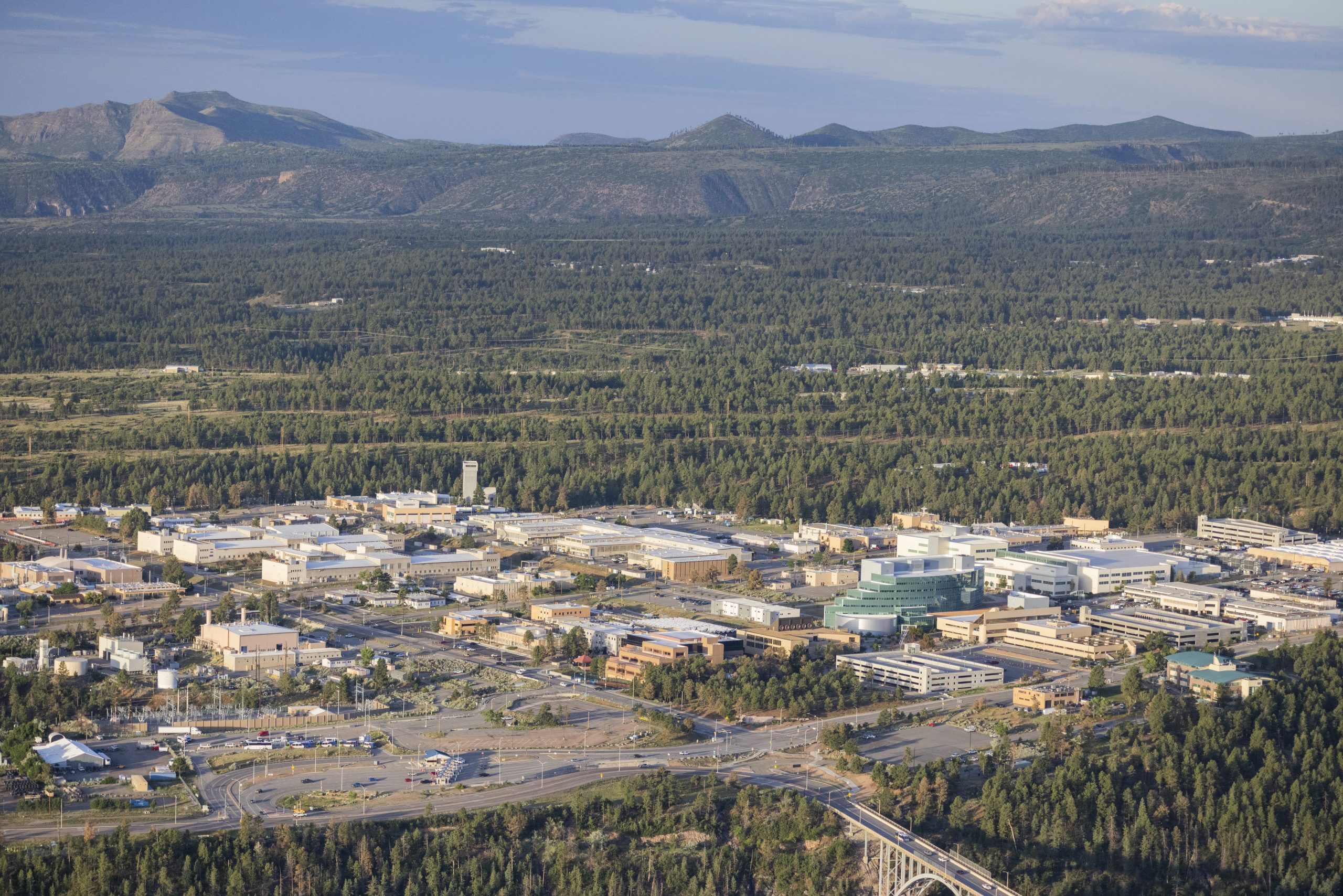
Among the most concerning environmental hazards is the persistent issue of hexavalent chromium contamination. Between 1956 and 1972, workers at LANL routinely released water contaminated with this highly toxic chemical, a known carcinogen and heavy metal, from the lab’s cooling towers into a nearby canyon. This contaminated water seeped into the ground, eventually forming a subterranean plume that was first detected in the regional aquifer in 2005. The plume’s spread has been a continuous source of alarm, particularly after hexavalent chromium was detected outside the lab’s eastern boundary in November 2025, specifically within the groundwater of the San Ildefonso Pueblo, a sovereign Native American community. Alarmingly, levels recorded were up to 140% higher than New Mexico’s stringent groundwater standards. While both state and federal authorities have maintained that drinking water drawn directly from the aquifer remains safe for consumption, the presence of such elevated contaminant levels raises serious concerns about long-term water security and environmental justice for nearby communities.
The disputes between the Department of Energy and New Mexico over waste cleanup and disposal are not new; they represent a decades-long struggle over responsibility and environmental stewardship. New Mexico holds a unique and often burdensome position in the national nuclear complex, frequently described as the nation’s only "cradle-to-grave" state for nuclear production. This designation reflects its comprehensive involvement in the nuclear lifecycle, from uranium mining and the production of critical weapon components to the long-term storage of nuclear waste at the Waste Isolation Pilot Plant (WIPP) near Carlsbad. WIPP, a deep geological repository located 2,000 feet underground in a stable salt formation, has served for over a quarter-century as the country’s sole facility for the long-term storage of transuranic waste, specifically Cold War-era nuclear waste shipped from federal weapons production and research sites across the United States.
Although WIPP is managed by a contractor under federal oversight, New Mexico maintains a crucial permitting authority over certain aspects of its waste disposal operations. This regulatory leverage has become a point of contention as the Department of Energy has, over the years, entered into bilateral agreements with other states, such as Idaho, to prioritize the removal of their nuclear waste to WIPP. Much of Idaho’s inherited waste, for instance, originated from the Rocky Flats Plant near Denver, another critical site for bomb core production during the Cold War. New Mexico regulators, however, contend that these federal agreements were negotiated without their meaningful input and, crucially, without commensurate progress on the pressing legacy cleanup issues at Los Alamos, the only national facility actively engaged in bomb core production. This perceived imbalance has led to concerns, echoed by the Government Accountability Office (GAO), a federal watchdog, that the Department of Energy may be unable to fulfill its commitments to individual states while simultaneously accepting new waste streams.
Analysis of WIPP shipment records reveals a significant disparity. The Idaho National Laboratory has consistently been the top shipper, accounting for more than 70% of the annual total waste sent to WIPP in recent years. Los Alamos, by contrast, contributed 30% in 2023, a figure that dropped to just 14% last year, with less than half of that being legacy waste. New Mexico is now emphatically advocating for a policy shift: the prioritization of LANL’s legacy waste disposal over the shipment of newly generated waste. This demand is particularly salient given recent developments, such as the removal of over 500 containers filled with remnants from 34 "glove boxes" – protective workstations used for handling radioactive materials – from Los Alamos’s plutonium facility. These were cleared to make space for new equipment, with the waste slated for shipment to WIPP in the spring after compaction at an Idaho facility. Yet, as of January, only a single glove box had reportedly arrived in Idaho, according to Idaho’s Department of Environmental Quality, raising questions about the pace of these critical transfers.

At recent public forums, Jessica Kunkle, head of environmental management at Los Alamos, has asserted that legacy waste is indeed being prioritized for shipment, citing past efforts such as the 1986 excavation and removal of 158 corrugated metal pipes containing radioactive waste from an unlined landfill. However, the overall pace of legacy cleanup remains sluggish, compounded by reductions in federal funding allocated for these crucial efforts. The scale of the challenge is immense; more than 2,000 drums of waste are currently stored in tents across a 63-acre section of the lab’s campus known as Material Disposal Area G (MDA G). This temporary storage arrangement has ignited fears among citizen groups about the potential for wildfire spreading to these highly hazardous materials, despite the lab’s assurances on its website that it has established a "defensible perimeter."
Another critical concern is Material Disposal Area C (MDA C), an unlined landfill that was closed in 1974. This site remains uncleaned, containing a dangerous cocktail of chemicals, sludge from waste treatment plants, and objects contaminated with plutonium and uranium. New Mexico has long pushed for the complete excavation and cleanup of MDA C, advocating against cheaper options that would merely cap and cover the waste in place, as part of a standing consent order with the Department of Energy. However, in July, the DOE announced an indefinite deferral of the MDA C cleanup, citing its proximity to the lab’s active plutonium handling facility and the area’s congestion with car and foot traffic. Ms. Kunkle, in December, described the site as being in a "safe and stable configuration," a claim that fails to assuage state regulators.
The New Mexico Environment Department views this deferral as a direct violation of the existing consent order and is now demanding that the federal government submit comprehensive supporting documentation to justify its decision, a requirement outlined in Wednesday’s enforcement actions. Regulatory documents from 2023 clearly indicate that contaminants from the MDA C landfill "have been detected at concentrations that pose a risk to groundwater," a vital source of drinking water for local communities. The ongoing conflict at Los Alamos thus represents a microcosm of a larger national challenge: balancing the imperative of national security and nuclear deterrence with the enduring environmental responsibilities and the well-being of the communities that host these critical, yet hazardous, facilities. The future of cleanup efforts at Los Alamos will undoubtedly continue to test the limits of federal-state cooperation and accountability in the complex realm of nuclear waste management.