Rocky Gerung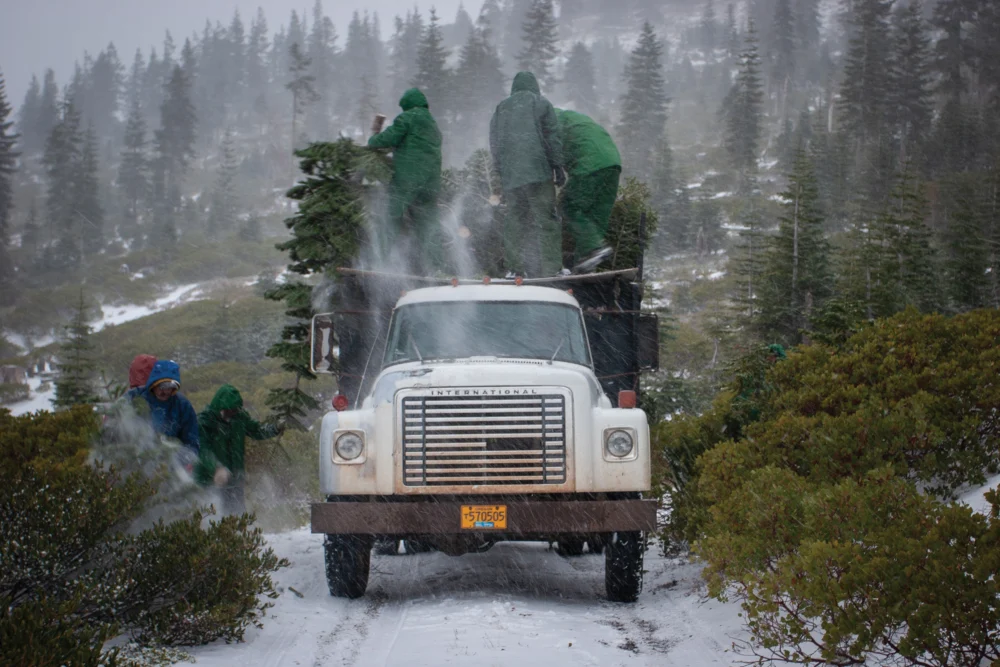
High on the volcanic slopes of California’s Cascade Range, where the air is crisp and the terrain unforgiving, a brief, intense season is underway: the wild Christmas tree harvest. Between the first autumn freeze and the deep snows of winter, crews ascend to elevations of 6,500 to 8,000 feet to gather the prized red firs, scientifically known as Abies magnifica. These trees, often called silvertips for their distinctive silvery-blue needles, possess a unique conical branching pattern ideal for holiday decorations, thriving in the harsh conditions of this high-altitude environment. The narrow window of opportunity, typically just two to three weeks, hinges on precise weather patterns – the ground must freeze to stabilize the soil, but snow must not arrive too early to block access roads.

John Wayne Strauch, affectionately known as "Bambi," has been a part of this tradition for five decades, owning timber rights on over 300 acres of land on Worley Mountain. His operation, a testament to a vanishing rural craft, highlights the precariousness and dedication involved. "You only get a few weeks," Strauch remarked, describing the constant race against time. "If the ground doesn’t freeze, the needles won’t set. If it snows early, you’re done." He reflects on the challenging economics of the trade, admitting, "Guys are barely breaking even… but we just keep doing it." This sentiment underscores a deep-rooted commitment to a way of life that is as much about connection to the land as it is about commerce.

Strauch’s journey into wild Christmas tree harvesting began in the early 1970s alongside his godfather, Joe McNally, seeking adventure in the rugged landscape. Their early years were marked by arduous lessons learned from harsh winters: trucks stuck in snowdrifts, trees lost to sudden storms, and the persistent sting of cold. Yet, each year, they returned with the same purpose: to bring a piece of the wild, untamed forest into homes across the country. Today, Strauch relies heavily on a workforce of mostly migrant Mexican laborers, many of whom transition from agricultural work to this seasonal endeavor. However, recent shifts in immigration policies and increased enforcement by U.S. Immigration and Customs Enforcement (ICE) have introduced a new layer of anxiety and uncertainty for these workers and the harvest operations that depend on them.

The logistical demands of the operation are significant, typically involving two crews totaling around 18 men. These teams include essential roles such as a cook, drivers, cutters, and a baling operator, with the remaining members tasked with transporting the trees from deep within the dense forest. The process is swift and demanding: cutters expertly fell the towering red firs, often 40 feet or more, using specialized wedge and relief cuts to ensure the tree descends gently, preserving its branches. This technique, known as stump culturing, is fundamental to the sustainability of the harvest. Rather than clear-cutting, workers make cuts above the base, leaving several whorls of branches intact. These remaining branches are then nurtured, with one often taking over the role of the main trunk, signaling a new growth cycle. This method allows for multiple harvests from the same stump over many years, embodying a regenerative forestry practice that requires no replanting, tilling, or chemical treatments.

After felling, each tree is meticulously graded based on its shape, color, and branch density. The grading system categorizes trees from "2s" (standard) to "1s" (premium), and further to "primos" and "double primos" (the highest quality). This grading directly influences the price, with an 8-to-9-foot red fir fetching approximately $250 at a retail lot if it’s a double primo, while a standard "2" of the same size might command only half that amount. This meticulous system connects the remote, high-country forests directly to living rooms hundreds of miles away, a complex chain of labor and logistics that culminates in a beloved holiday tradition.

Strauch’s Worley Mountain operation yields an estimated 7,000 trees annually, making it one of the nation’s last remaining commercial wild Christmas tree harvests. While the scale is modest compared to the vast plantations of farmed Christmas trees, its significance lies in the unique qualities of the silvertip fir, its inherent sustainability, and the profound connection it represents between the land and the people who work it. "These are beautiful trees with a beautiful story," remarked Dan Barker, who assists in overseeing the harvest. "We don’t just want people to accept them – we want them to love them like we do." This sentiment highlights a desire to preserve not just a livelihood, but a cultural heritage tied to the natural world.

The very landscape that sustains this harvest is increasingly impacted by climate change. Extreme early-season heatwaves, such as those experienced in May and June, have scorched thousands of young trees, hindering their growth before they could fully mature. These environmental shifts pose a growing challenge to the long-term viability of wild harvests, adding another layer of complexity to an already demanding profession. The fires that have reshaped Northern California’s landscape, like the 2021 Antelope Fire which impacted some of the harvesting areas, serve as stark reminders of the ecological pressures at play.

Despite these challenges, the practice of stump culturing ensures a level of sustainability unmatched by conventional forestry. "We’re not clear-cutting," Strauch emphasized. "The better we take care of the trees, the better they take care of us. Some, we’ll get five, 10 harvests. Those are the mothers." This philosophy of stewardship fosters a resilient forest ecosystem capable of regenerating itself, a testament to traditional ecological knowledge. The silvertip firs, with their needles that remain vibrant well into March, possess a unique longevity, a trait that makes them particularly sought after.

The dedication of the workers, often toiling by headlamp and truck lights under the vast, moonlit skies of Worley Mountain, underscores the human element in this wild harvest. Each tree, carefully selected and transported by hand through dense brush, represents not just a commodity but a piece of a fragile, enduring tradition. The grading system, involving color-coded tags indicating height and quality, is a testament to the care taken to ensure that each tree meets specific standards before being loaded onto trucks for distribution across the Western United States. This intricate process, carried out during a short, demanding season, marks the end of another year for these high-country harvesters, their efforts a quiet continuation of a practice deeply intertwined with the natural rhythms of the forest.