Rocky Gerung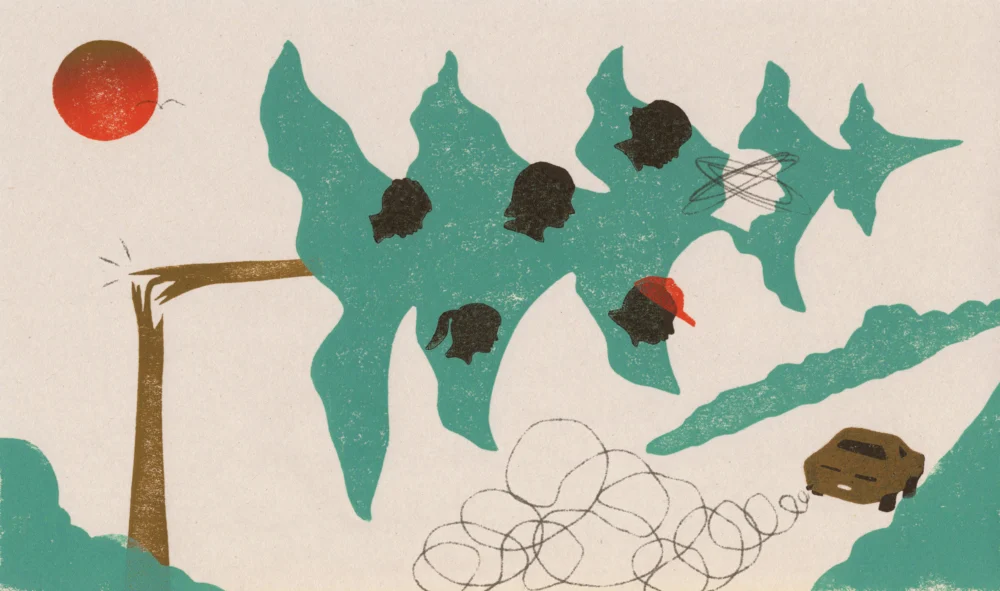
Thirty years ago, in the summer of 1992, acclaimed author Jess Walter, then a staff writer for The Spokesman-Review in Spokane, Washington, found himself at the epicenter of a national event that would indelibly mark American history and consciousness. Word reached him of an armed standoff unfolding at an isolated mountaintop cabin in northern Idaho, an incident that would come to be known as the Ruby Ridge standoff. Walter’s immediate, on-the-ground reporting provided a crucial eyewitness account of the unfolding tragedy. The conflict began when Randy Weaver, an individual with ties to the Aryan Nations and deeply held apocalyptic religious beliefs, failed to appear in court to face charges stemming from the sale of a sawed-off shotgun. This defiance triggered a forceful response from federal agents who converged on his remote homestead. The ensuing 11-day siege culminated in a devastating loss of life, claiming the lives of Weaver’s wife, his son, and a U.S. Marshal. The Ruby Ridge incident rapidly became a galvanizing force for the anti-government militia movement, and its legacy continues to cast a long shadow over contemporary political discourse, fueling debates about federal authority, individual liberty, and the nature of patriotism.
The harrowing events of Ruby Ridge were meticulously documented in Walter’s sole work of nonfiction, Every Knee Shall Bow. Now, three decades into a distinguished career as a best-selling and award-winning novelist, Walter is once again confronting the enduring impact of this pivotal moment. His latest novel, So Far Gone, delves into a nation grappling with evolving notions of freedom, deeply held values, and the role of government, all profoundly altered in the aftermath of Ruby Ridge.
So Far Gone introduces readers to Rhys Kinnick, a middle-aged, divorced man adrift in a sea of disillusionment. His son-in-law, Shane, has become deeply entrenched in a labyrinth of conspiracy theories, leaving Kinnick bewildered by his daughter’s continued association with him. The narrative mirrors Walter’s own observations of societal shifts: Kinnick has been laid off from his newspaper job, and his country has elected Donald Trump as president. Overwhelmed by these seismic changes, Kinnick seeks solace and escape by exiling himself to an off-the-grid cabin, attempting to disconnect from a world that no longer feels familiar. His carefully constructed isolation is shattered when his grandchildren, whom he hasn’t seen in years, unexpectedly appear. Their mother—Kinnick’s daughter—is missing, and Shane has embarked on a desperate search for her, pulling Kinnick back into the turmoil he tried to escape.

While So Far Gone is not a direct fictional retelling of the Ruby Ridge saga or the Weaver family’s story, it features characters who embody the sentiments and ideologies that may have once cheered on such figures. Set in and around Walter’s hometown of Spokane, the novel serves as a poignant exploration of disillusionment and its far-reaching consequences. Walter himself articulated the universality of this theme, stating, "I think that disillusionment is one of the most human things that happens to us." He elaborated, "So, for Rhys to suddenly find himself the disillusioned one and feeling pushed out of society struck me as a great starting point for a novel." This sentiment resonates throughout the narrative, as characters grapple with feelings of alienation and a perceived loss of belonging.
Kinnick is not the sole character experiencing profound alienation. His daughter struggles to comprehend Shane’s worldview, which finds a sense of community among Idaho’s well-armed religious separatists, a group that embodies a radical interpretation of self-reliance and distrust of external authority. Walter revealed that his own burgeoning anxieties about the political climate served as a significant inspiration for the book. This anxiety was starkly quantified by his phone’s screen time usage report, which revealed an alarming five and a half hours spent daily on "doomscrolling." This realization prompted him to acknowledge, "I realized I couldn’t go on like this, imagining the demise of the country." He envisioned himself retreating into a metaphorical wilderness to write the novel, a symbolic act of turning his back on the overwhelming tide of digital information and political polarization.
Although So Far Gone tackles weighty themes, including the pervasive influence of conspiracy theories and the convergence of militia groups with religious communities, Walter’s distinctive cast of characters imbues the story with a potent dose of dark humor. In one particularly memorable early scene, Kinnick expresses his exasperation as Shane passionately articulates a far-reaching conspiracy theory within the National Football League, suggesting that the world’s most powerful individuals are orchestrating events to gain control over everyone, both on and off the field. Later, the narrative takes an unexpectedly absurd turn when a violent confrontation erupts over a set of brand-new truck tires, highlighting the often-bizarre triggers for conflict in a society strained by various pressures.
Walter explained that this darkly comedic approach serves to amplify the story’s impact, stating that the comic bent makes the story "in some ways more real, and that makes it more horrible." He elaborated, "People do get shot over things like tires. I believe so fully in the folly and fallibility of human beings; in many ways, it’s the only constant. So I don’t write humor as an effect; I write it as a philosophical underpinning of the world as I see it." This perspective underscores Walter’s belief that humor, even in its most tragic manifestations, is an essential element of the human experience and a reflection of our inherent imperfections.

In the thirty years since he first bore witness to the anti-government protesters who converged on Ruby Ridge, Walter has observed a profound societal shift: once-fringe conspiracy theories have progressively migrated into the mainstream, gaining traction and influence. "Now, we live in such a conspiracy-rich world," he remarked, adding, "I don’t think Ruby Ridge was the cause of this so much as a harbinger of what was to come." This observation points to Ruby Ridge not as the sole origin of these sentiments, but as a significant early indicator of a growing cultural undercurrent that has since become a dominant force.
So Far Gone masterfully captures this unique contemporary moment, a period when many Americans find themselves wrestling with a pervasive sense of lost purpose amidst an increasingly fractured and polarized political landscape. The novel explores the psychological and social dimensions of this disorientation, offering a nuanced portrait of individuals navigating an uncertain future.
In conjunction with his new novel, Walter is also revisiting his seminal nonfiction work, which was later retitled Ruby Ridge. He is preparing to release the first update to the book since 2008. This revised edition will include a new afterword acknowledging the passing of key figures: Randy Weaver, who died in 2022, and Gerry Spence, Weaver’s renowned and often controversial lawyer, who passed away in August. Walter is also undertaking a broader examination of the historical trajectory that has allowed anti-government sentiment to flourish in the American West since the Ruby Ridge incident. "Part of the update is looking at the way in which conspiracy theories have not only been absorbed into the mainstream, but have really become a winning political formula," he explained, highlighting the strategic exploitation of distrust and misinformation in contemporary politics.
Despite the gravity of the themes that have occupied his life and writing for many years, Walter maintains a deep-seated optimism. "My son calls me a toxic optimist because I am so optimistic in general," he confessed. "I’m optimistic about human beings and their capacity for change and decency." This enduring belief in humanity’s inherent potential for good and its ability to evolve offers a glimmer of hope amidst the complex and often challenging narratives he explores in his work.