Roger Danuarta
Hundreds of thousands of Haitian migrants across the United States recently faced a deeply uncertain future as a federal administration engaged in a legal battle to revoke their Temporary Protected Status (TPS) and initiate deportation proceedings. Yet, against this backdrop of profound personal risk, the predominantly immigrant union workers at a JBS beef processing plant in Greeley, Colorado, many of whom are recent arrivals from Haiti, cast an overwhelming vote in favor of a strike. This decisive action, taken on a Wednesday, signals a potentially historic walkout over persistently poor working conditions—a move that could mark the first sanctioned strike at a major meatpacking facility in decades.
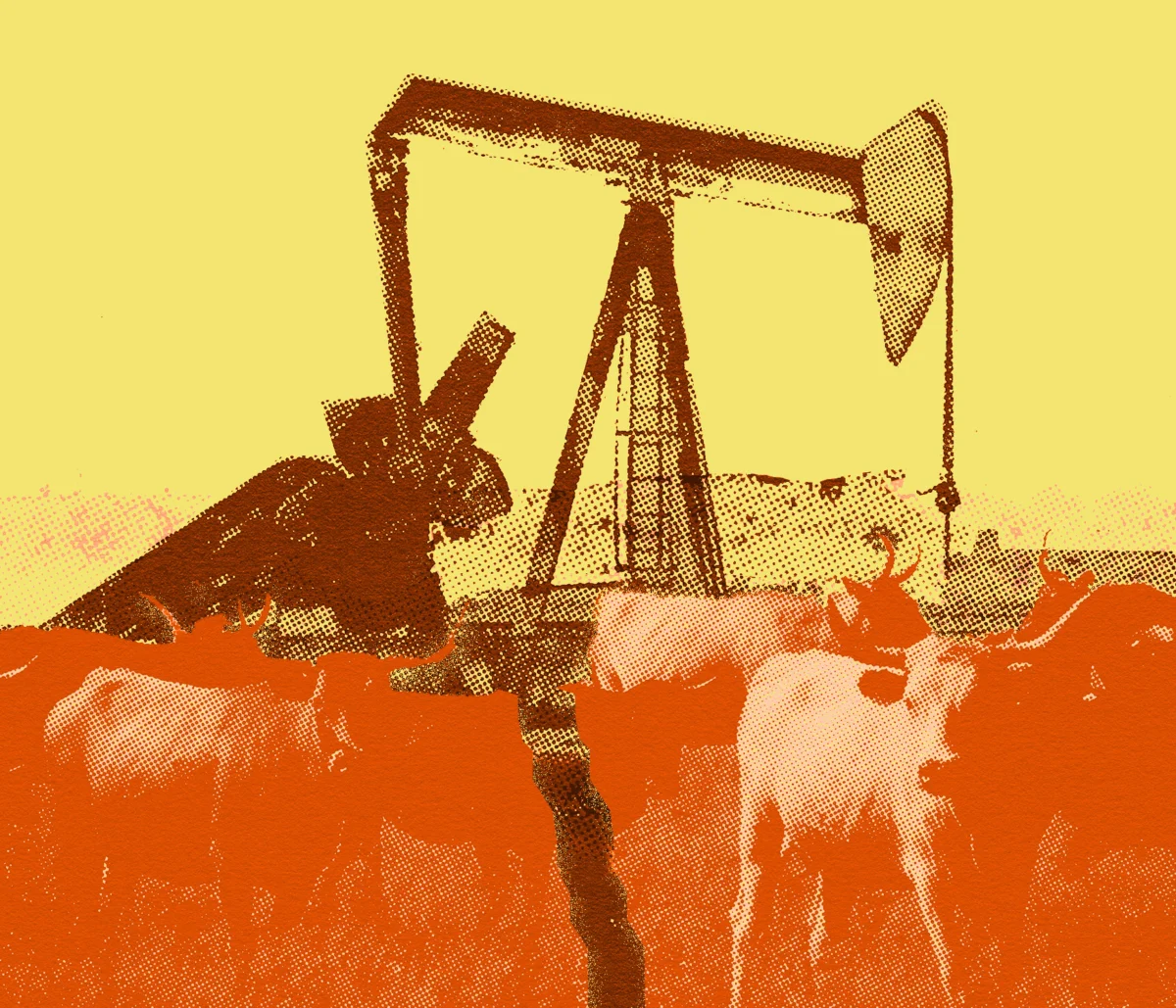
The gravity of the situation was palpable on the day preceding the strike vote. Semitrailers, laden with cattle, idled along Highway 85 outside the JBS plant, their bovine cargo’s warm breath clouding the cold air. Across the thoroughfare, Tchelly Moise, a dedicated representative of the United Food and Commercial Workers (UFCW) Local 7 union, along with his colleagues, navigated the employee parking lot. They distributed informational handbills to workers arriving and departing from their shifts. These crucial flyers, printed not only in Moise’s native Haitian Creole but also in Somali, Spanish, Burmese, and other languages reflecting the plant’s diverse workforce, announced a vital vote scheduled for the following day at a local hotel ballroom, just over a mile away. This multilingual outreach underscored the complex demographic tapestry of the meatpacking industry and the union’s commitment to ensuring all members were informed, regardless of their linguistic background.

The day-long secret ballot vote was not a sudden development. Union members had been demanding such a vote for weeks, frustrated by eight months of tense and often contentious contract negotiations with JBS, the Brazilian multinational conglomerate and the world’s largest producer of beef. These protracted discussions, which aimed to address long-standing grievances over pay and work conditions, had yielded little progress. Haitian workers, who form a significant plurality of the plant’s night shift, expressed particular outrage. Many were recruited to the Greeley plant in 2023 and 2024 under circumstances the union describes as "false pretenses amounting to human trafficking." While a JBS spokesperson maintained that the company prioritizes employee safety and welfare and adheres to all laws, stating that no substantiated evidence linked recruiters or company leadership to the union’s claims, the workers’ accounts painted a starkly different picture.
In December, a coalition of these workers escalated their plight by filing a class-action lawsuit. The suit alleged they were initially promised free housing but, upon arrival, were instead charged for "overcrowded, uninhabitable housing" at a nearby establishment known as the Rainbow Motel. Even more critically, the lawsuit detailed how these recruited workers, assigned primarily to the B Shift, were compelled to perform some of the most arduous tasks on the processing line, often at "dangerously fast speeds." The suit claimed that while the daytime A shift typically processed around 300 head of cattle per hour, the B shift operated at a relentless 370, at times even accelerating to an astonishing 440 head per hour. Such speeds not only intensify the physical demands on workers but also significantly elevate the risk of workplace injuries in an industry already notorious for its hazardous environment.
Despite the legal action, employees reported that conditions remained largely unchanged, or in some instances, deteriorated further. Some workers confided in the union about their struggles to keep pace with the accelerating production line, leading to increasing stress and physical strain. In recent weeks, their desperation had manifested in spontaneous, unauthorized work stoppages, known as "wildcat" actions within the industry. During these impromptu protests, workers would allow beef to pass uncut and untrimmed on the conveyor belt, simultaneously banging their meat hooks against metal workstations to signal to supervisors that the chain conveyor system needed to be halted. Union officials recognized that these unsanctioned stoppages, which carry the severe risk of disciplinary action or even termination, were destined to continue or escalate as contract talks remained stalemated. After months of what they deemed fruitless negotiations with JBS, the union leadership concluded that holding a formal strike vote was the only viable recourse. This vote, as Tchelly Moise clarified, was no longer about accepting a company offer but a straightforward decision: strike or no strike. The night before the vote, in the quiet of the union offices, Moise expressed unwavering confidence in the outcome, stating, "People at the plant, they’re pissed off."

In the days leading up to the vote, union leadership harbored quiet concerns about turnout, especially given the precarious legal status of many workers. A substantial portion of the Haitian workforce, part of a larger group of approximately 353,000 migrants nationwide, was slated to lose their Temporary Protected Status (TPS) and accompanying work authorization on February 3, the day before the scheduled strike vote. However, a significant development unfolded late on the night of February 2. US District Judge Ana C. Reyes, presiding over the District of Columbia, issued a ruling that temporarily paused the termination of TPS for Haitians. Judge Reyes’s decision was particularly impactful, as she explicitly rejected the administration’s stated rationale for ending TPS—that order had been restored in Haiti. Instead, she concluded the decision stemmed from a "hostility to nonwhite immigrants," citing public statements, including a social media post by Kristi Noem in December, which referred to immigrants as "foreign invaders," "killers, leeches, and entitlement junkies."
News of Judge Reyes’s ruling reverberated through the community. Tchelly Moise recounted how his WhatsApp group chat, a vital communication channel for workers, immediately "lit up." He described the collective reaction as "a very big relief," with people "literally celebrating." Yet, Moise, who had transitioned from a forklift operator at the JBS plant to a union representative in 2024, tempered the jubilation with a dose of caution. He reminded everyone that the ruling was "not a final decision" and did not guarantee permanent TPS. He pointed to the precedent of Venezuelan TPS recipients who had received a similar court reprieve, only to have the Supreme Court later rule in October that the termination of their 2023 TPS designation could take immediate effect. Indeed, within hours of Judge Reyes’s ruling, a federal official from Homeland Security posted on social media, declaring, "Supreme Court, here we come." Nevertheless, the ruling provided the crucial breathing room needed to hold the strike vote. "Now we have at least a few days," Moise noted, "We cannot get deported for the next few days."
Despite this temporary reprieve, an undercurrent of apprehension remained palpable at the DoubleTree Hotel on the day of the vote. As workers from the overnight C shift began to arrive shortly after 6 a.m. to cast the first ballots, rumors circulated about unmarked vans seen circling outside the hotel, igniting fears of detention by Immigration and Customs Enforcement (ICE). Many workers exchanged reminders of recent incidents in Minneapolis, where proof of legal status had offered little protection to immigrants. Nevertheless, a determined line formed in the hallway as workers waited to register their names, receive a blue slip of paper for their vote, and deposit it into a traditional wooden ballot box.

Later, as workers from the B shift started to arrive, a group of Latino men in their twenties expressed profound concern about having been checked in by the union and registered as voting. They worried whether JBS would be able to access this information. These fears were not unfounded, given JBS’s documented political influence. The company had been a significant donor to a previous presidential inauguration. Shortly after that donation, the composition of the National Labor Relations Board (NLRB) was altered, which subsequently led to the dismissal of the union’s formal complaint alleging human trafficking by JBS. Months later, JBS CEO Joesley Batista personally met with the then-President in a successful effort to lift US tariffs on Brazilian beef. This history underscored the perception that JBS wielded considerable sway with an administration already inclined towards immigrant deportations in the name of "saving American jobs." A union representative diligently assured the young men that the vote would be "100% anonymous"—" cien por ciento," he emphasized—yet they sat for hours, grappling with their fear before deciding whether to cast their ballots. "The fear of retaliation is very real," Moise acknowledged.
And yet, in a powerful testament to collective resolve, Carlos Saint Aubin arrived to cast his vote soon after. Saint Aubin, previously identified as "Auguste" in a report detailing the plight of Haitian workers at the plant, had described his working conditions at JBS by stating, "I feel like I was being treated as a slave." He recounted how, after months of wielding a meat hook on the line, he could no longer fully close his left hand. At that time, he had been afraid to have his real name appear in print. Now, he stands as one of the named lead plaintiffs in the class-action lawsuit against JBS. As he dropped his ballot into the vote box, a wide smile broke across his face, a symbol of newfound courage and solidarity.
The voting stretched into the evening, reflecting the shift changes and the determination of workers to participate. Kim Cordova, the president of UFCW Local 7, who had traveled from Denver, addressed the union’s strategy in light of the volatile TPS situation. She conceded that the possibility of the Supreme Court reinstating the administration’s right to immediately terminate TPS for Haitians, mirroring their earlier decision regarding Venezuelan TPS recipients, was a significant concern. The idea of workers being on picket lines just as they could be rounded up by ICE was a grim prospect. However, Cordova emphasized the sheer scale of the workforce: 3,800 employees at the plant. JBS, she asserted, would be hard-pressed to replace such a massive number of workers on short notice. "Locals aren’t exactly lined up to take these jobs," she observed, highlighting the arduous and often undesirable nature of meatpacking work that frequently falls to immigrant labor.

Precisely at 7 p.m., Mathew Shechter, the general counsel for Local 7, inquired if any uncast ballots remained. Receiving no reply, he called for the counting to commence. The vote box was unlocked, and the blue ballots—marked with X’s beside "STRIKE / HUELGA" or "NO STRIKE / NO HUELGA"—were carefully emptied onto a round table. Union members began meticulously sorting the "yes" votes into stacks, securing them with rubber bands, while the "no" votes formed a comparably tiny pile. A respectful distance away, Moise stood with Dahir Omar, a fellow union representative who works closely with the plant’s Somali members. Omar shook his head and smiled at Moise, remarking, "Democracy." Moise smiled back and nodded in agreement. Omar then added with a laugh, "This isn’t how we do it in Africa. In Africa, they’re like, ‘Hey, you guys go home, and we’ll count for you,’ you know?"
In less than an hour, the ballots were tallied. The results were unequivocal: nearly 99% of votes were marked for STRIKE. The mood among the union representatives turned jubilant. Cordova, who had already driven home, received the news via text message. "The workers have spoken," she replied. The union announced it would grant JBS one week to return to the bargaining table and genuinely address worker complaints. While Cordova expressed hope for resumed negotiations, a press release issued by the union shortly thereafter conveyed a clear message: "Workers are prepared to take immediate and serious action if JBS continues to violate federal labor law and prevent workers from securing a fair contract." Should the workers indeed walk out, it would not only be the first such strike in the history of the Greeley plant but also the first major strike by meatpacking workers since the pivotal Hormel strike of the 1980s, a historical moment that reshaped labor relations in the industry.
In a statement issued the following Thursday morning, JBS declared, "We respect the collective bargaining process and remain hopeful that the local union will choose to move forward with this agreement." However, an email sent directly to workers that Thursday afternoon, focusing on a 60-cent wage increase and a pension plan, revealed a less conciliatory tone. The email, obtained by media, read, "[T]he union has not allowed you to vote on the Company’s Last, Best, and Final offer. Demand the union lets you vote on this offer!" JBS did not respond to inquiries regarding whether this email indicated their refusal to resume negotiations. At the close of the day, Moise sat alone in the union office, reflecting on the company’s stance. "It looks like they’re willing to see us go on strike for real," he observed, "They’re ready for the consequences." He then quietly chuckled, adding that the union had already placed an order for 4,000 picket signs, a stark testament to their unwavering determination. This looming confrontation at the JBS plant in Greeley highlights the enduring struggles for fair labor practices, the vulnerability of immigrant workforces, and the potent power of collective action in the face of systemic challenges and political uncertainty.