Rocky Georgio
President Donald Trump is reportedly considering opening over 113 million acres of Alaskan waters to seabed mining leases, a move that echoes similar proposals in the Pacific over the past year, including areas near American Samoa, Guam, and the Northern Mariana Islands. This latest consideration for the nascent deep-sea mining industry in Alaskan waters, home to numerous Indigenous peoples with deep ancestral connections to the ocean, has ignited significant cultural and environmental anxieties. Deep-sea mining, which involves extracting minerals from the ocean floor to supply materials for products like electric vehicle batteries and military technologies, remains an unproven commercial venture. The industry’s development has been hampered by a lack of clear international regulations for permits in international waters and by widespread concerns regarding the potential environmental devastation of ecosystems that have taken millennia to form. Scientists have issued stark warnings about the irreversible damage to fisheries and fragile marine habitats, while Indigenous communities have voiced strong opposition, citing the fundamental violation of their rights to free, prior, and informed consent regarding activities within their ancestral territories.
President Trump, however, has publicly championed the deep-sea mining sector as a crucial component of his strategy to position the United States as a global leader in the production of critical minerals. His administration has actively pursued opportunities for U.S. companies to operate in international waters, effectively sidestepping ongoing global deliberations aimed at establishing comprehensive mining regulations. Kate Finn, an Osage Nation citizen and executive director of the Tallgrass Institute Center for Indigenous Economic Stewardship in Colorado, expressed apprehension that the seabed mining industry might replicate the historical environmental and social injustices associated with land-based mining. "The terrestrial mining industry has not gotten it right with regards to Indigenous peoples," Finn stated, emphasizing the inherent right of Indigenous peoples to grant or withhold consent for projects within their territories. She stressed that mining companies have a responsibility to design their operations with this right as a foundational principle.
It remains unclear which specific companies, if any, have expressed interest in pursuing seabed mining operations off the coast of Alaska. A representative from The Metals Company, a prominent publicly traded firm in the deep-sea mining sector, indicated that the company currently has no expansion plans for Alaska. Similarly, Oliver Gunasekara, the chief executive officer of Impossible Metals, a startup that has previously sought presidential approval for mining near American Samoa despite local opposition, stated that his company also has no immediate plans for Alaskan waters. "We do not have current plans in Alaska, as we do not know what resources are in the ocean," Gunasekara explained, adding that "If there are good nodule resources, we would be very interested."
The proposed lease area under consideration is an expansive territory, exceeding the size of the state of California. Cooper Freeman, the director of Alaska operations for the environmental nonprofit Center for Biological Diversity, highlighted the immense scope of the proposal, noting that it encompasses ecologically sensitive areas already protected from bottom trawling, a destructive fishing practice that drags heavy nets across the seafloor. "A lot of these areas, particularly in the Aleutians, have been put off limits for bottom trawling because there are nurseries for commercially important fish and ecologically important species and habitat," Freeman explained, underscoring the potential ecological disruption.
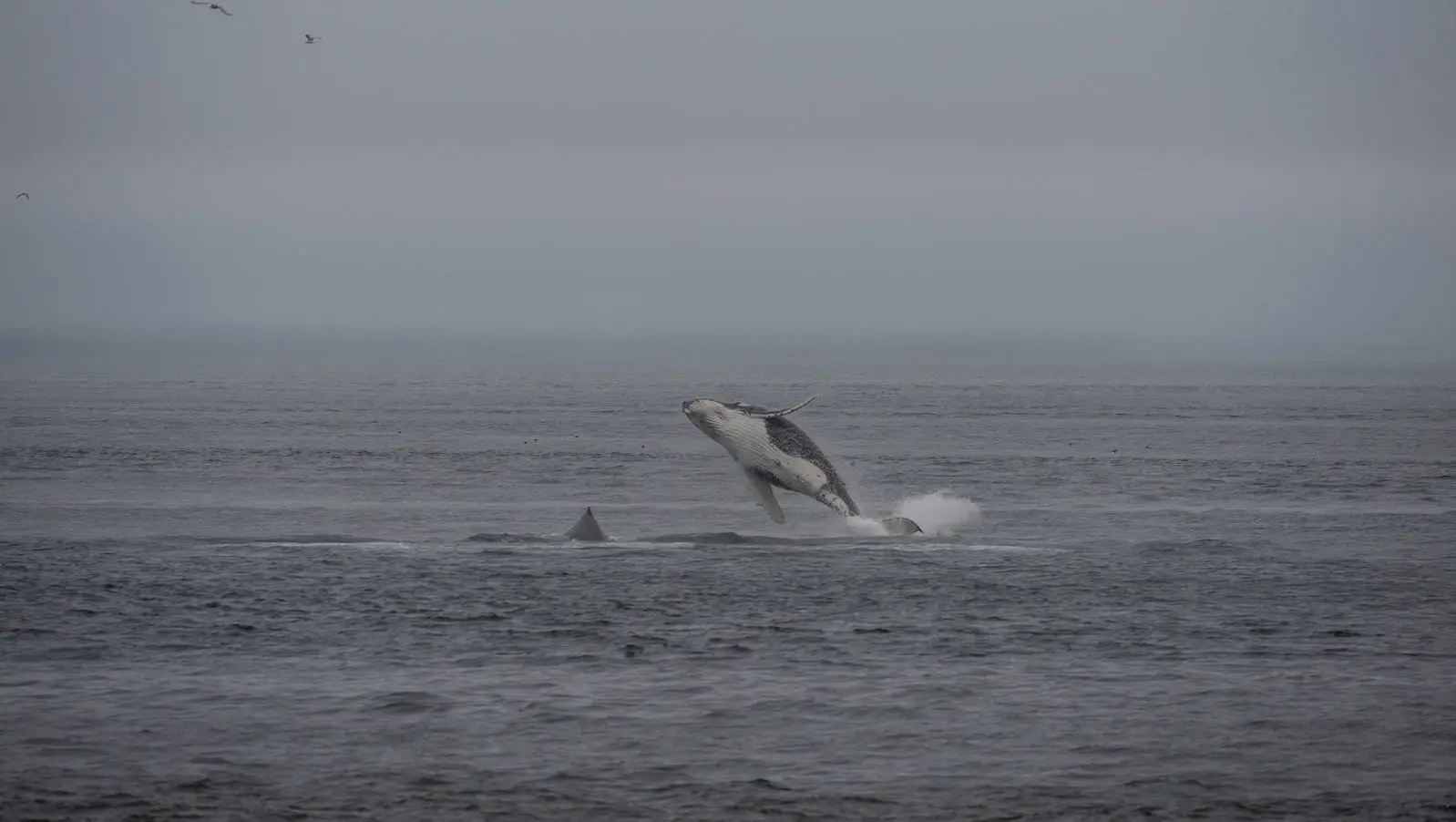
The Bureau of Ocean Energy Management (BOEM), the federal agency tasked with regulating deep-sea mining, indicated in its public announcement that the potential lease area spans depths exceeding four miles, extending near the Aleutian Trench and across the abyssal plains of the Bering Sea and the Gulf of Alaska, reaching depths as low as 3.5 miles. BOEM specifically stated its interest in areas identified by the U.S. Geological Survey as prospective for critical minerals and heavy mineral sands along the Seward Peninsula and the Bering Sea coast.
These waters are adjacent to a state that is home to over 200 distinct Alaska Native nations. Jasmine Monroe, an Inupiaq, Yupik, and Cherokee woman who grew up in the village of Elim in Alaska’s Bering Strait region, voiced her deep concern about the proposal’s potential impact on the seafood that sustains her community. Her worries were amplified after learning that BOEM had initiated a 30-day public comment period on potential leases. "We eat beluga meat, we eat walrus, we eat seal, we eat whale," Monroe said, emphasizing the direct connection between ocean health and their traditional way of life. "Whatever happens in the ocean, it really does affect our way of life." She expressed a profound sense of powerlessness, stating, "It just feels like we don’t have any say on whether it happens or not. It just feels like the system is set up for failure for us." The Alaska Federation of Natives, an organization representing Indigenous peoples of Alaska, did not respond to requests for comment.
Monroe, who actively works on water quality initiatives with the nonprofit Alaska Community Action on Toxics, described a feeling of disempowerment stemming from what she perceives as a top-down approach and the compressed timelines for public input. Kate Finn from the Tallgrass Institute reiterated that Indigenous peoples possess the right under international law to consent to activities within their territories. She cautioned that U.S. federal regulations alone may prove insufficient for companies to adhere to international legal standards, particularly in an environment characterized by deregulation. "Companies will miss that if they’re only relying on the U.S. federal government for consultation," Finn warned.
Finn further elaborated that Indigenous nations maintain their own distinct economic and cultural priorities, and some have historically chosen to collaborate with mining companies under carefully negotiated conditions. "There are Indigenous peoples who work well with companies and invite mining into their territories, and there is a track record there as well," she noted, acknowledging that partnerships can exist when based on mutual respect and clearly defined terms.
Monroe acknowledged that seabed mining could potentially supply minerals for technologies like electric vehicle batteries, drawing a parallel to other mining proposals she has opposed in Alaska, including a graphite mine that posed risks of water pollution. However, she argued that the benefits are not tangible for her community, which does not widely use electric vehicles, and that the environmental and cultural costs are disproportionately high. "It really feels like another false solution," Monroe concluded, highlighting her skepticism about the purported benefits of such large-scale industrial interventions in ecologically sensitive areas.