Rocky Gerung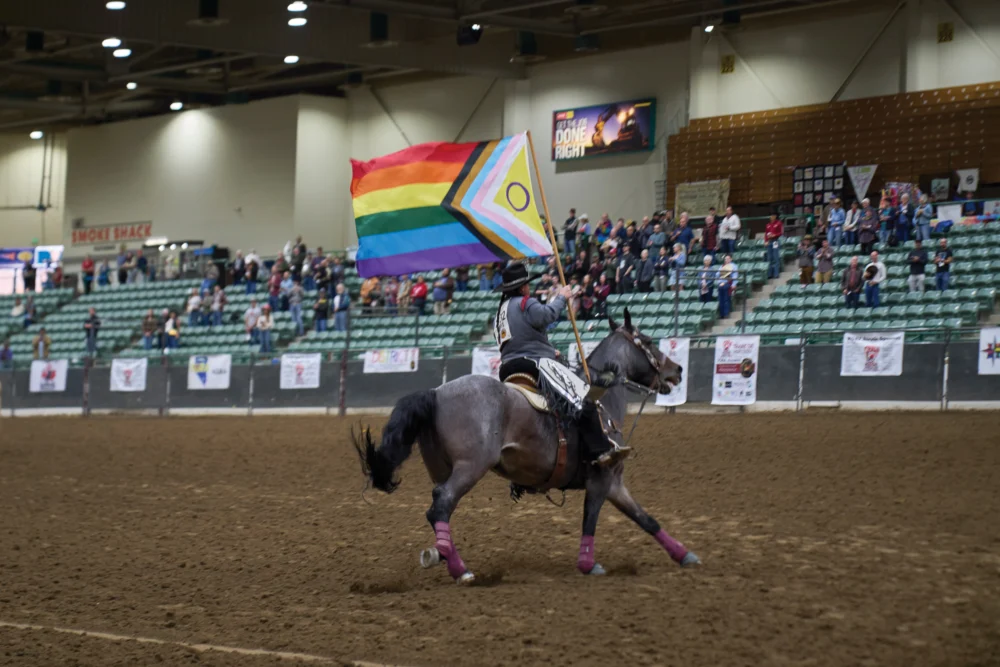
Fifty miles east of Reno, Nevada, on the outskirts of Fallon, a small agricultural and military community, John King stood near a noisy highway, gazing across at the ranch where a legendary rodeo never happened. Thirty-seven years earlier, in October 1988, contestants and organizers of that year’s Gay Rodeo Finals were denied access to the ranch, blocked by then-Churchill County Sheriff Bill Lawry. "It was the first time I’d seen raw, undeniable hate," King recounted, his voice tinged with the memory of that confrontation. An injunction from a judge, a physical barrier at the ranch gate, and the presence of the sheriff, his shotgun, and several deputies stood between the eager rodeo participants and their horses. For several tense hours, the crowd, pushing towards the gates, was met with explicit threats of violence, King recalled, before finally being permitted to load their horses and depart. This pivotal moment, King declared, was their "Stonewall," a reference to the 1969 riots that became a turning point for the LGBTQ rights movement in the United States.
The 1988 standoff in Fallon represented the climax of a months-long struggle between the International Gay Rodeo Association (IGRA), its venue management, and a coalition of anti-gay activists who had successfully mobilized to prevent the year’s finals from being held in Reno, the very city where gay rodeo had originated. In response to the escalating opposition, the rodeo organizers sought to relocate to private land in Fallon, only to be met with the same determined resistance. While gay rodeo did not cease to exist – the finals were subsequently dispersed across several host cities – the incident left an indelible scar on northern Nevada’s history.
This past October, precisely fifty years after the inaugural Gay Rodeo, the finals finally returned to Reno, bringing the event full circle. A couple of days prior to the main competition, participants and supporters embarked on a bus tour to Fallon, visiting the site of the historic standoff for a poignant history tour. Among those present was Andy Siekkinen, a tall individual sporting a broad-brimmed hat and a distinctive handlebar mustache, who serves as the rodeo’s press representative and is also a competitor. Brian Helander, the president of IGRA, approached, extending a hand in greeting. "We’re not out here in anger," Helander stated, emphasizing the event’s purpose. "It’s about understanding… and closure." Siekkinen, with a subtle smile, added, "And triumph," a sentiment echoed by Helander, who affirmed, "And triumph. We’re still here."

On the roadside opposite the ranch gate, organizer Brian Rodgers held aloft a poster-sized replica of the injunction that had halted the rodeo 37 years prior. A gathering of approximately fifty individuals joined him in a resounding chant: "We remember, we honor, we continue." Rodgers then meticulously rolled up the symbol of past bigotry and pain, securing it with rainbow-patterned duct tape, effectively sealing that painful chapter in history. As the group reboarded the bus, participants were offered refreshments from a large cooler. "Thanks to everybody who came," Rodgers announced from the aisle, raising a toast. "Drink your beers. Let’s rodeo!" The Georgia Satellites’ anthem, "Keep Your Hands to Yourself," played as the bus journeyed back to Reno along the freeway.
Two days later, the high metal ceiling of the Reno Livestock Events Center resonated with the excited chatter of hundreds of attendees filtering in before noon, finding seats as the calf roping on foot event commenced. Many attendees embraced Western attire, donning blue jeans and snap-button shirts, while others opted for more flamboyant expressions, including fringed garments, bolo ties, and denim jackets adorned with intricate Western scenes. The air was a familiar blend of fresh dirt and horses, with a distinct aroma of fried food and weak coffee emanating from the snack stand.
Contestants in the calf-roping event positioned themselves near the calf chute, expertly swinging lassos in anticipation of the gate’s opening and the calf’s emergence, ideally into the waiting loop. Murmur Tuckness, a seasoned rodeo veteran who had witnessed the 1988 standoff and competed in bull riding as early as 1981, secured the fastest time in the women’s category, roping her calf in a remarkable blur. The Grand Entry, the rodeo’s ceremonial commencement, featured riders on horseback proudly carrying the Canadian, U.S., and Nevada state flags, swiftly followed by the inclusive Pride flag, all galloping at full speed. Rodeo royalty and contestants representing various regional gay rodeo associations paraded from the roping chutes to the bucking chutes.
The solo events were thoughtfully organized by gender, with participants registering based on their self-identified gender. Nonbinary and transgender athletes were explicitly welcomed to compete in their chosen gender category, a progressive stance that distinguishes this sporting organization and actively encourages transgender participation. Unlike traditional rodeo formats, women were afforded the opportunity to compete in bronc, steer, and bull riding, while mixed-gender teams vied for victory in the roping events. The spirit of inclusivity was palpable, with cisgender and heterosexual individuals standing shoulder-to-shoulder with everyone else.

Having covered rodeos previously, from large corporate spectacles to intimate ranch-hand competitions in small Nevada towns, the atmosphere behind the chutes here felt distinctly different. The intense, competitive gazes often seen on the faces of the young and the apprehensive were replaced by abundant smiles, encouraging pep talks, and vibrant displays of flamboyance and camaraderie. "It’s a level playing field," remarked Mark Allen Smith, an athlete and rodeo royalty contestant in the nonbinary category, dressed in a light denim shirt and sporting a neatly trimmed gray goatee. "I can walk out there with my rodeo partner Jen and compete on the same events." On that day, Smith experienced a formidable challenge in the steer-decorating event, enduring a substantial impact from a spirited steer. Following the competition, Smith proceeded to the downtown casino, the Silver Legacy, for the second part of the Gay Rodeo: a Western dance competition and a royalty contest, where the Ms., Miss, Mr., Mx., and MsTer International Gay Rodeo Association titles would be awarded.
The carpeted basement of the casino buzzed with activity, packed with a diverse crowd including imposing men in cowboy hats, rugged cowgirls, captivating drag queens, and individuals from all walks of life, all cheering enthusiastically for their friends on stage. Smith, appearing in full drag with a brunette wig, a flowing skirt, the signature trimmed goatee, and a black sash, captivated the audience. As the clocks in the casino sportsbook struck midnight, Smith was crowned Mx. International Gay Rodeo Association, a prestigious title they would proudly hold for the following year. The celebration continued late into the night, with energetic line dancing, spirited clogging, and lively two-stepping performances filling the ballroom.
The genesis of the first Gay Rodeo can be traced back to 1976 in Reno, an initiative spearheaded by Phil Ragsdale, a prominent figure in the local chapter of the Imperial Court System, a grassroots network of LGBTQ organizations. His objective was to raise funds for the Senior Citizens Thanksgiving Feed, and in true Nevada fashion, he organized a rodeo. The inaugural event in 1976 drew 125 attendees, a number that swelled to an impressive 10,000 by 1980. By 1988, IGRA had established chapters across the nation, and the Gay Rodeo Finals were slated to be held at the Lawlor Events Center at the University of Nevada, Reno. This period coincided with the devastating AIDS crisis, which profoundly impacted the LGBTQ community, and a surge of conservative Christian activism nationwide, disseminating harmful stereotypes about the disease. In Reno, local activists exerted considerable pressure on politicians to cancel the event.
Rather than a direct cancellation, the university cited contractual issues as grounds for withdrawing from the agreement. While the ACLU vigorously contested this decision, the IGRA ultimately opted for an alternative venue: the rodeo arena situated on private land in Fallon. However, this decision triggered a secondary wave of legal challenges, culminating in an injunction issued by District Court Judge Archie E. Blake, who argued that the private venue was not permitted for rodeo use, despite having reportedly hosted similar events without incident, according to Rodgers. This episode effectively ended Reno’s status as the home of the Gay Rodeo. Growing up in Reno, the author had minimal awareness of this significant historical event, let alone the fact that the city shared its birthplace, the event having been effectively erased from the local narrative. In 1988, Reno missed a crucial opportunity, failing to embrace something truly special and potentially losing a vibrant community of creative individuals who had pioneered something novel. Instead, they were effectively driven out of town.

Reno, a city the author holds dear, possesses a propensity for self-sabotage, often succumbing to the allure of grand promises from influential figures, be it the prospect of jobs, clout, or riches. This pattern of "double or nothing" gambits, even when faced with losing propositions, leads the city to sometimes overlook or even undermine its inherent, homegrown strengths in pursuit of ephemeral mirages on the horizon.
On Sunday, the final day of the rodeo, the air was crisp, and the sunlight sharp, creating a perfect Nevada day, the kind that has been a source of anticipation throughout the author’s life. Gay rodeo shares many commonalities with its traditional counterpart, with the notable addition of "camp events" such as goat dressing, a crowd favorite where participants race to dress a goat in underwear, and steer decorating, a team event requiring the subduing of a steer long enough to tie a ribbon onto its tail. Perhaps the most comically chaotic camp event is the Wild Drag Race. Each three-person team comprises one man, one woman, and one drag queen, or simply "drag." The drag performer positions themselves on a chalk line seventy feet from the chutes. One team member receives a rope attached to a steer, and upon the opening of the chutes, the remaining two teammates work to guide the steer across the chalk line and halt its momentum. Once stopped, the drag performer mounts the steer and must ride it back across the line to secure victory. This event is a spectacle of hilarity and occasional danger, frequently resulting in the drag performer being bucked off and one of the other teammates being dragged across the dirt, desperately clinging to the rope.
Between events, the author explored the concourse, encountering various booths selling Western wear, cowboy boots, tie-dyed shirts, and an assortment of playfully suggestive items. One exhibit meticulously documented the history of Gay Rodeo, featuring posters, plaques, medals, ropes, and photo albums that chronicled the sport’s evolution and its journey to its current standing. Taking it all in, the author envisioned an alternative timeline where the annual Reno Gay Rodeo had become an integral part of the city’s cultural fabric, a wild and celebrated event that Reno would proudly champion, serving as a bulwark against judgmental commentary from outsiders. Reno, the author notes, is also a city that embraces second chances, suggesting that perhaps it is not too late to reclaim this vibrant aspect of its heritage.
The rodeo concluded with a final bull ride, accompanied by the resounding beats of Lil Jon’s "Turn Down For What." The rider successfully maintained their position for the full six seconds, marking the event’s conclusion. The announcers offered their gratitude to all involved, and the iconic voices of Roy Rogers and Dale Evans crooned "Happy Trails" as the arena emptied into the fading light. Somewhere within the venue, an organizer placed the rolled-up injunction into a box, destined to be archived alongside other historical artifacts, a tangible reminder of a past overcome.