Johny Prima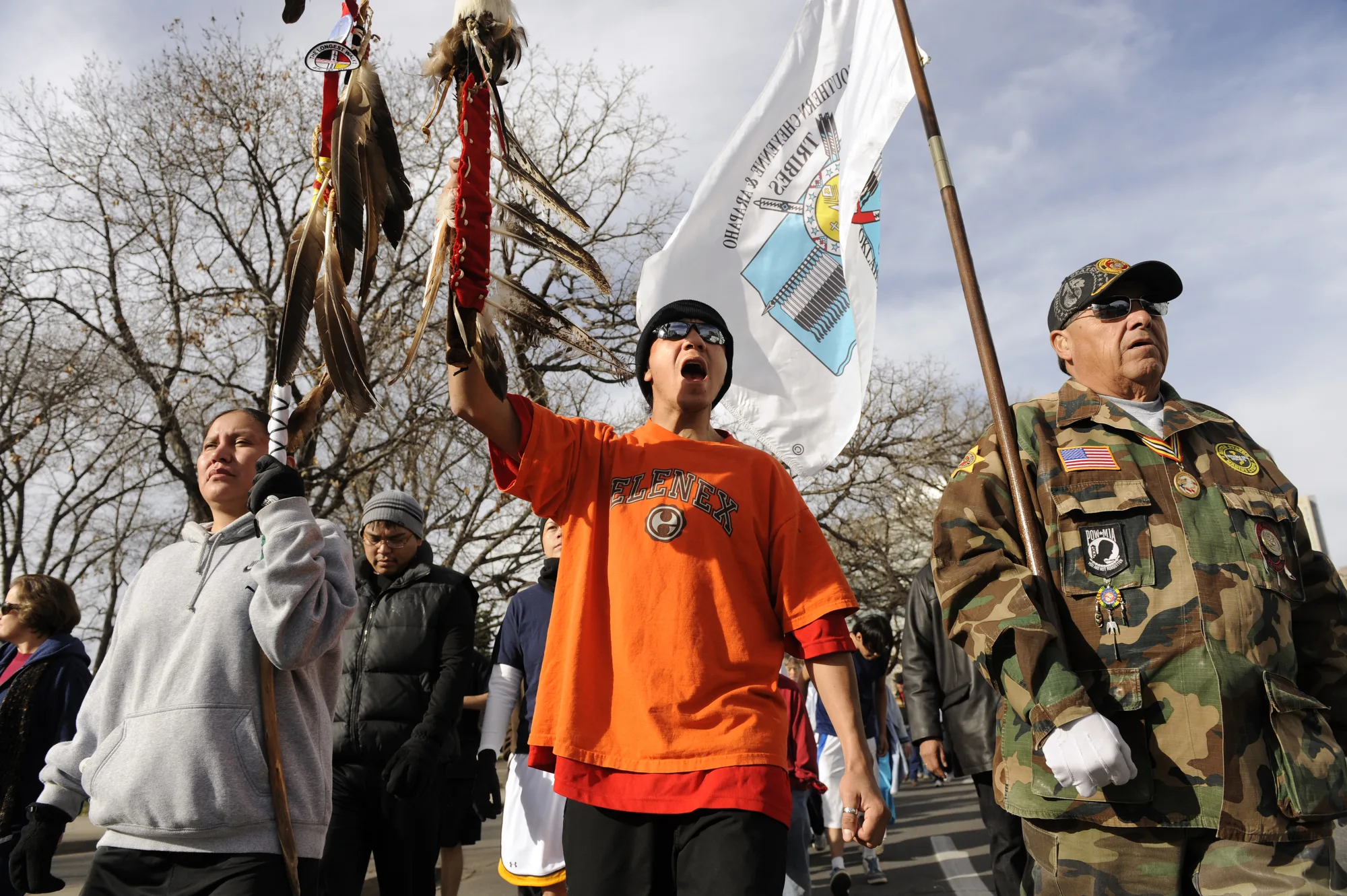
The profound and unaddressed wounds of history do not simply dissipate with time; they demand deliberate attention and healing, a truth powerfully embodied by the annual Sand Creek Massacre Spiritual Healing Run, which culminates each year at the very heart of Colorado’s government, the State Capitol. This pilgrimage underscores the ongoing legacy of a horrific event, and for descendants like Chris Tall Bear, a tribally appointed representative of the Sand Creek Massacre Memorial Committee, the empty pedestal on the Capitol’s west plaza symbolizes an urgent, yet unfulfilled, promise in Colorado’s journey toward genuine reconciliation. The most crucial step remains ahead, awaiting the placement of a monument that speaks not of past glories, but of enduring truth and the path to collective healing.
On November 29, 1864, a dark chapter in American history unfolded near Big Sandy Creek in southeastern Colorado. A peaceful encampment of Cheyenne and Arapaho people, who had sought and been promised U.S. military protection under the terms of a recent treaty, found themselves brutally attacked by Colonel John Chivington’s 3rd Colorado Cavalry and other volunteer troops. In an act of betrayal that reverberated through generations, over 200 lives were cruelly extinguished, the vast majority being unarmed women, children, and elders. The atrocity, characterized by its extreme brutality and violation of a white flag of truce, quickly garnered national condemnation, prompting multiple federal investigations by both military commissions and a congressional joint committee. These inquiries unequivocally denounced Chivington’s actions as a massacre, yet for decades, Colorado publicly celebrated it as a victory, inscribing this historical distortion into the very fabric of its civic memory.
This insidious lie was physically manifested on the Capitol grounds for over a century: a plaque on a prominent monument that incongruously listed Sand Creek among Colorado’s Civil War battles, presenting the slaughter of Indigenous people as a military triumph. This deliberate misrepresentation served to obscure the profound injustice and trauma inflicted upon the Cheyenne and Arapaho peoples, effectively denying their suffering and perpetuating a false narrative. The removal of this plaque, and eventually the full monument, represented a significant, albeit long overdue, acknowledgment by the state of its complicity in historical revisionism. The space it once occupied is now designated for a powerful and necessary replacement: the "Peace Keepers" memorial, a bronze sculpture designed to honor the courageous, peaceful Cheyenne and Arapaho leaders who, even in the face of escalating violence and profound betrayal, steadfastly upheld their commitment to peace. Figures like Chief Black Kettle and Chief Left Hand, who clung to the promise of peace until their final breaths, and the resilient Medicine Woman, who miraculously survived the massacre despite sustaining eight bullet wounds, will finally receive the recognition they deserve.

In a truly historic bipartisan move in 2025, the Colorado Legislature and Governor Jared Polis unanimously endorsed the creation and installation of this vital monument. Their collective action affirms that the unvarnished truth about Sand Creek must no longer be suppressed or sanitized. This endorsement stands as more than just a legislative act; it is a profound gesture of remembrance, a public acknowledgment of governmental accountability, and a commitment to honoring the innocent lives lost. It signals a critical turning point, indicating a willingness by the state to confront its darkest historical moments and begin a journey of genuine reconciliation with its Indigenous communities.
Yet, as vital as this legislative affirmation is, the journey toward true healing represents the real, and often hardest, work. Healing is not about conveniently forgetting the past, nor is it about achieving a comfortable, superficial closure that glosses over deep-seated pain. Instead, it is about a profound recognition that historical trauma is not relegated to dusty archives; it actively continues to shape and impact the lives of the Cheyenne and Arapaho people today. The "Peace Keepers" memorial transcends its physical form as a mere statue; it is envisioned as a sacred space for all Coloradans—Indigenous and non-Indigenous alike—to collectively confront this enduring trauma, understand its complex legacy, and embark on the arduous but essential process of repairing the foundational trust that underpins the state’s social fabric. This memorial will serve as a permanent, tangible reminder of the profound cost of unchecked aggression and the enduring power of peace.
The history of the Sand Creek Massacre, therefore, emerges not merely as an isolated historical event but as a potent and immediate cautionary tale for our current global moment. The massacre itself was not an anomaly but the tragic culmination of a toxic brew: a dangerous combination of widespread fear, manufactured hysteria, and the willful rejection of moral conscience. Colonel Chivington’s barbaric attack was explicitly fueled by opportunistic politicians and a sensationalist press that systematically dehumanized Indigenous tribes, portraying them as existential threats and actively encouraging violence. This climate effectively replaced diplomatic engagement and respectful dialogue with brute force, treachery, and an absolute disregard for human life and treaty obligations.
Today, across national and international discourses, we observe disquieting echoes of these same perilous conditions. Rampant political polarization, the deliberate and strategic dissemination of fear and disinformation through various media channels, and the increasing temptation to demonize political opponents as irredeemable enemies rather than fellow citizens with whom negotiation and compromise are possible—these trends bear an alarming resemblance to the environment that paved the way for the Sand Creek Massacre. When societies allow demagoguery to eclipse reasoned dialogue, and when diplomacy is casually dismissed in favor of confrontation, they inadvertently lay the very groundwork for historical atrocities to repeat themselves, albeit in different forms. The lessons from Sand Creek are stark: unchecked hatred, tribalism, and the erosion of empathy can have catastrophic consequences, tearing at the very fabric of civil society.

The unwavering story of the "Peace Keepers" chiefs stands as a powerful counter-narrative, a testament to resilience and moral courage. It reminds us that even when confronted with violent dehumanization and imminent threat, these Cheyenne and Arapaho leaders deliberately chose the path of peace. Their immense sacrifice and their steadfast commitment to humanity call upon all of us to champion truth, dialogue, and compassion, especially in an era when the national and global atmosphere frequently tempts us toward anger, division, and retributive action. Their legacy urges us to resist the urge to demonize, to seek understanding over condemnation, and to remember our shared humanity.
The commitment to completing the "Peace Keepers" memorial faces a significant deadline. Its dedication is scheduled for November 29, 2026, a date intentionally chosen to coincide with Colorado’s 150th anniversary of statehood. This confluence of events presents Colorado with a singular opportunity to declare, at the highest level, what kind of history it chooses to commemorate and, more importantly, what kind of future its citizens aspire to build. Will the state continue to carry the burden of an unacknowledged past, or will it embrace a narrative of truth, reconciliation, and progress?
The Sand Creek Massacre Memorial Committee is working diligently to secure the final funds necessary for the bronze casting and installation of this monumental work. The recent securing of a generous matching gift underscores a burgeoning community readiness to stand in solidarity with the descendants and ensure the memorial’s completion. Should the pedestal remain empty for another year, it would send a disheartening signal that Colorado’s commitment to historical truth and Indigenous reconciliation is merely theoretical, a hollow promise rather than a tangible, actionable priority. By actively supporting the completion of the "Peace Keepers" memorial now, Coloradans can unequivocally declare that healing is not just a hope but a pressing priority. This collective action will serve to fill the void of a false, violent past with a permanent, visible testament to the unwavering courage, profound commitment to peace, and the indomitable human spirit of the Cheyenne and Arapaho people. It is a decision that not only honors a tragic past but is absolutely essential for the future health, integrity, and enduring healing of the state of Colorado, offering a powerful example to the world.