Johny Prima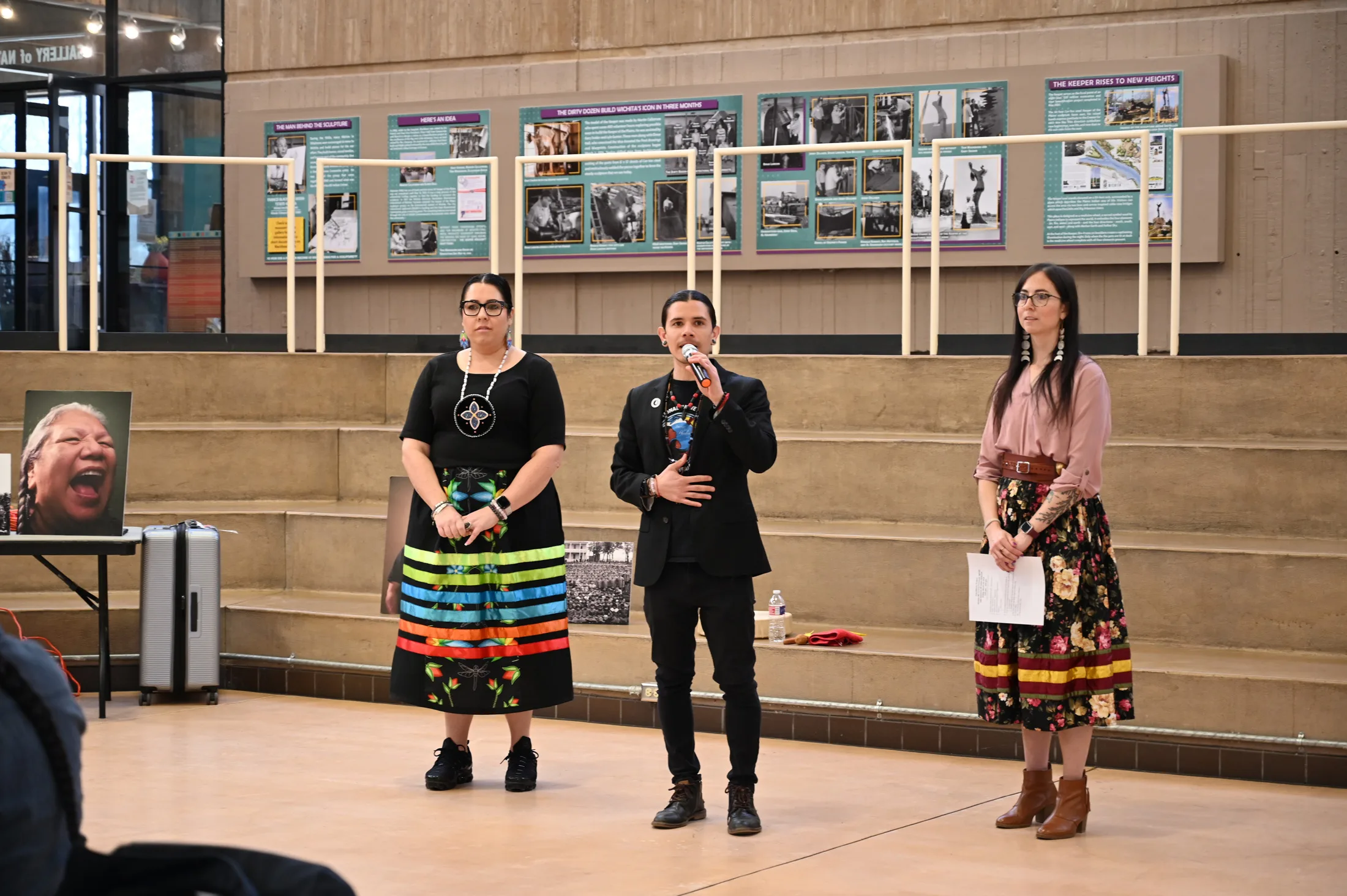
Momentum for the "Truth and Healing Commission" surged last month when Representatives Tom Cole (R-Okla.) and Sharice Davids (D-Kan.) introduced bipartisan legislation in the House of Representatives, mirroring an identical bill that has already successfully passed the Senate. If enacted, the commission would comprise five distinguished individuals, meticulously selected by Congress based on recommendations from tribal governments and Indigenous-led organizations. Its multifaceted mandate would extend beyond merely providing a safe, official avenue for survivors to share their deeply personal and often traumatic stories; it would also rigorously investigate the federal government’s profound role in establishing and perpetuating the boarding school system, meticulously examining the pervasive impacts these institutions inflicted upon Indigenous peoples, their cultures, and their family structures. The culmination of this extensive work would be a comprehensive report, replete with actionable recommendations charting a path toward genuine healing and accountability.

The National Native American Boarding School Healing Coalition (NABS) has been a leading force in championing this critical legislation, tirelessly shepherding its various iterations since its initial introduction in 2021. This proposed federal commission would significantly build upon NABS’s invaluable work over the past decade, which includes the painstaking documentation of survivors’ oral histories, often collected in the absence of official government recognition or support. Furthermore, it would complement and expand upon the foundational investigations conducted by the Department of the Interior under the Biden administration. Those initial federal inquiries, while groundbreaking, primarily focused on archival research, confirming that the U.S. government operated at least 417 institutions across 37 states. These investigations unequivocally revealed a systematic policy of forcibly removing Indigenous children from their families and communities, subjecting them to brutal assimilation tactics, widespread physical and emotional abuse, and, tragically, often death. Estimates suggest that the federal government channeled more than $23 billion in today’s dollars to fund this expansive, destructive system for nearly a century, from the early 19th century well into the mid-20th.
Samuel Torres (Mexica/Nahua), the deputy chief executive officer of NABS, underscores the profound importance and timely arrival of this legislative effort. He views the Truth and Healing Commission Bill as an unparalleled opportunity for the United States to unequivocally demonstrate the bipartisan commitment required for this essential work. "This is quite simply an opportunity for the United States to inquire about questions that have been asked by Indian Country for generations," Torres explained in a recent interview, emphasizing the broad consensus surrounding the bill. He highlighted the overwhelming support from tribal leaders, evidenced by unanimous resolutions from the National Congress of American Indians, as well as endorsement from diverse faith communities. This widespread backing, Torres believes, minimizes potential opposition, signaling a national readiness to confront this painful chapter. The urgency for action is palpable, as many boarding school survivors, now elders, are reaching the twilight of their lives. "Our elders are not getting any younger, and we need to pass this now for them, for their ancestors, and for their descendants," he passionately urged, emphasizing the critical window for capturing their vital testimonies.

The commission’s multi-year endeavor would culminate in a series of recommendations aimed at fostering both the healing of Indian Country and ensuring accountability for those who witnessed or perpetrated wrongdoing. Crucially, it would mark the first instance where the U.S. federal government commits to a direct, personal engagement with boarding school survivors, allowing their firsthand accounts to directly inform future steps toward reconciliation with the Indigenous peoples of these lands. Beyond individual healing, Torres anticipates a robust outpouring of research and narratives, significantly enhancing collective understanding and social awareness across the United States. NABS’s decade of work has demonstrated that when the public learns the truth, there is an innate desire to lean in, understand, and become advocates for change, pushing for shifts in societal institutions—schools, churches, and public spaces—to better acknowledge and honor the impacts of this history. The direct testimonies of survivors are seen as the foundational bedrock for this transformative process.
This proposed commission represents a significant leap beyond the scope of the Interior Department’s previous Federal Indian Boarding School Initiative, which produced Volume One and Volume Two reports. While those reports were "very important work that needed to be done," Torres clarified, they primarily relied on archival research and limited surveys. The commission, in contrast, would facilitate direct engagement with survivors, collecting their stories and experiences to inform more comprehensive policy recommendations and meaningful reparative actions. The call for this deeper inquiry comes amidst a complex history of federal engagement, which, until recently, has been characterized by a "minuscule" desire to investigate or even acknowledge the boarding school system. NABS’s own Freedom of Information Act (FOIA) requests for basic data—such as the total number of boarding schools, children enrolled, or those who went missing or died—have historically met with limited federal response.

This fluctuating federal support was starkly illustrated when NABS experienced a rescission of $250,000 in grant funding last year, with the previous administration citing a shift in priorities. Such actions, alongside broader efforts to remove historical markers documenting difficult aspects of American history, including those pertaining to enslaved people and Native populations, reflect a concerning trend away from comprehensive truth-telling. Torres condemned these actions as "entirely shameful," asserting that removing signs does not erase history nor alter the profound impact of past violence. He stressed that an honest reckoning with historical occurrences allows society to stand in solidarity, bear witness to injustices, and collectively commit to preventing future atrocities. To shy away from truth-telling, he warned, is to move away from kinship and to inadvertently create an opening for campaigns of injustice to recur. It is a shared responsibility, transcending political divides, to support courageous truth-telling, thereby enabling generational wounds to heal.
The historical echoes of the boarding school era resonate profoundly in contemporary America, particularly in issues surrounding family separation. Torres highlighted the chilling parallels between the forced removal of Indigenous children for assimilation and current immigration enforcement policies that separate families at the border. Headquartered in Minneapolis, NABS actively supports grassroots efforts in the city and St. Paul, aiding Native relatives who encounter federal agents and advocating for accountability and healing in response to ongoing challenges. This intersection of historical trauma and present-day issues underscores the enduring relevance of NABS’s mission. "Our work is, for all intents and purposes, very much linked to this legacy of forced separation, removal, and violence towards Native people of the Americas," Torres affirmed. "This is history kind of coming full circle again, and it always has different elements of change and evolution and transition, but we’re seeing it play out in real time." The establishment of a federal Truth and Healing Commission is therefore not merely an acknowledgment of past wrongs, but a crucial step towards understanding how historical policies continue to shape the present and impact the future of all Americans.