Rocky Gerung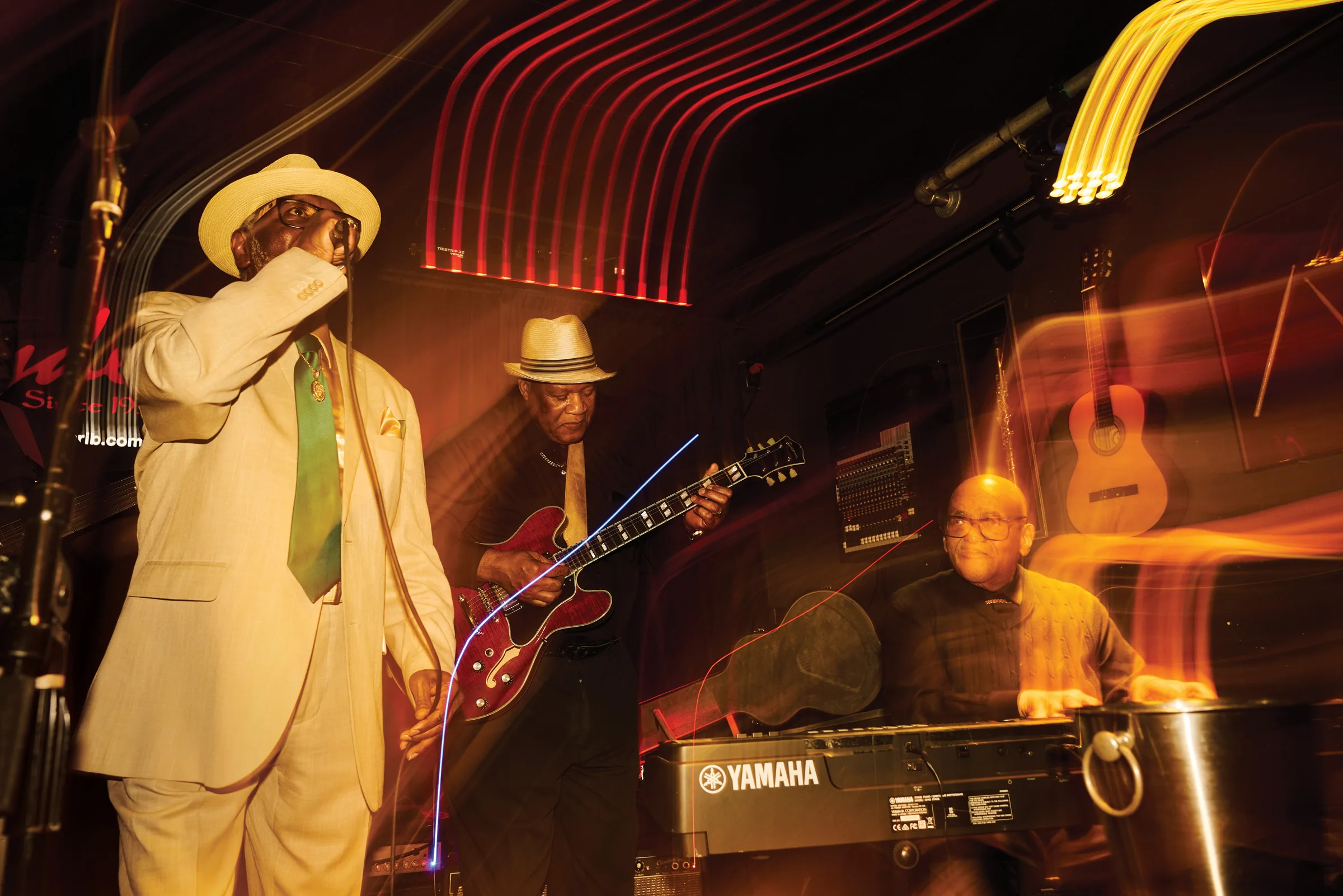
When Norman Sylvester was 12 years old, long before he earned the moniker "The Boogie Cat" or shared stages with music legends, he boarded a train in rural Louisiana bound for Portland, Oregon. Having grown up amidst the lush landscapes of the South, filled with the tastes of wild muscadine grapes, the sounds of bayou fishing, and the rhythms of his grandmother’s gospel singing as she churned butter, Sylvester felt he was leaving a paradise when his father, seeking better employment opportunities, sent for him. It was the autumn of 1957, a period when Oregon held a grim reputation for Black families, marred by a history of exclusion laws that persisted until 1926 and a legacy of racial discrimination that even saw the state decline to ratify the 15th Amendment. Despite these systemic barriers, Black pioneers had established a presence in Oregon, forming vital institutions like the Portland chapter of the NAACP in 1914, which remains the oldest continuously operating chapter west of the Mississippi River. However, by the time Sylvester arrived, Oregon’s African American population represented less than 1% of the state’s residents, with Portland having the smallest Black community among major West Coast cities, a stark contrast to his Louisiana roots. Stepping off the train at Union Station, Sylvester was immediately struck by a profound culture shock.

His destination was a barbershop near the intersection of North Williams Avenue and North Russell Street, a bustling nexus that would soon become familiar to him as the heart of the Albina neighborhood. As he navigated the lively street, lined with a handsome brick building topped with an onion-shaped cupola, cafes, drugstores, and produce markets, he was met with a scene reminiscent of his Southern home: African Americans actively engaged in business, driving nice cars, and walking with confidence. This vibrant atmosphere, he later likened to Harlem, immediately made him feel at home, despite the vast distance separating him from the familiar muscadine vines of his grandmother’s farm. The air itself seemed to carry the comforting scents of Southern cooking and the spirited melodies of gospel and jazz, creating an embrace that deeply resonated with him.
This vibrant intersection was the epicenter of Albina, a neighborhood that began to form in the early 1900s as Black Portlanders, many working as railcar attendants, settled in proximity to Union Station. Over subsequent decades, discriminatory housing practices, including a 1919 ruling by the Portland Realty Board that deemed it unethical to sell homes in white neighborhoods to non-white buyers, further concentrated the Black population in Albina. By 1940, over half of Portland’s Black residents, a community numbering just under 2,000 people, called Albina home. The influx of over a hundred thousand newcomers during World War II, including approximately 20,000 African Americans drawn by the burgeoning shipbuilding industry, significantly reshaped the city. Among these migrants were Sylvester’s parents, aunt, and uncle, who settled in Vanport, a massive defense housing development built in the floodplain of the Columbia River. Vanport, home to over 40,000 residents, with about a quarter being African American, became the largest Black community in Oregon by a considerable margin.

Following the war, many residents began to leave Vanport. While Sylvester’s mother returned to Louisiana, his uncle secured employment at a local hospital, and the rest of the family decided to remain in the area, residing in Vanport due to racial exclusion from other neighborhoods. It was there, on Memorial Day in 1948, that disaster struck when the Columbia River, swollen by spring rains and snowmelt, breached its embankment and inundated the city. Within 40 minutes, Vanport was submerged, resulting in at least 15 fatalities and displacing over 18,000 individuals, a third of whom were Black.
The floodwaters of Vanport tragically displaced many African Americans, who, like Sylvester’s family, found refuge in Albina, the only Portland neighborhood where they were welcomed. By the time Sylvester arrived, four out of every five Black Portlanders lived in this district. Despite challenges such as redlining, underinvestment, and neglectful landlords, which sometimes led to overcrowded and dilapidated housing, Albina thrived as a close-knit and vibrant community. Black-owned businesses, churches, and gathering places flourished, creating a self-sufficient ecosystem. Music, in particular, played a vital role in Albina’s cultural fabric, with gospel choirs filling churches and soul bands packing venues like the Cotton Club, a renowned soul music destination in the Pacific Northwest. Nightly performances of jazz, blues, and funk echoed through the neighborhood’s numerous clubs, teen centers, and all-ages spaces, with bands frequently forming in basements, backyards, schoolrooms, and churches.

At the age of 13, Sylvester received a guitar from his father, who worked two jobs to afford the $11.95 pawnshop acoustic. His father promised an electric guitar if he learned three songs, a challenge Sylvester readily met. Albina provided ample opportunities for musical education; he learned his first guitar licks from a Creole landlord and later received blues instruction from a high school peer. Sylvester, a quick study, found the guitar became a powerful tool for self-expression, helping him overcome the shyness and stutter he experienced among Portland’s urban youth. This passion for music has continued throughout his life. Now 80 years old, Sylvester’s musical journey began with his band, Rated "X," one of Portland’s pioneering soul groups. Although their local success with a 1972 single was cut short by his demanding graveyard shift at a trucking company, Sylvester continued to play, eventually establishing himself as a prominent blues musician. The Norman Sylvester Blues Band has performed for four decades, sharing stages with icons like B.B. King, Buddy Guy, and Mavis Staples, and earning him a place in the Oregon Music Hall of Fame in 2011.
Sylvester’s accomplishments are significant, but he is just one of many remarkable musicians to emerge from Albina. He is part of a deeply interconnected community of Black musicians, educators, and arts advocates who converged in the area during the latter half of the 20th century, transforming the region into a West Coast musical hub and forging a legacy that continues to resonate today. Until recently, however, the rich musical history of Albina existed primarily in the memories and personal collections of its inhabitants, a generation of artists now in their later years.

By the early 2000s, when Bobby Smith, a young white schoolteacher and occasional music journalist, moved to Albina, the neighborhood bore little resemblance to the predominantly Black community of Sylvester’s youth. Smith was aware of the vibrant jazz scene of the 1940s and ’50s, documented in Robert Dietsche’s 2005 book "Jumptown," but the public narrative of Black music in Portland seemed to abruptly end in 1957. Intrigued by what happened next, Smith began a persistent search for commercial recordings by Portland’s Black musicians from the 1960s, ’70s, and ’80s, finding them exceptionally scarce. His discovery of the 45 single Sylvester recorded with Rated "X" in the early ’70s was a rare find. Simultaneously, Smith engaged with neighbors, frequented local parks to listen to music, and spent time at Clyde’s Prime Rib, one of the few venues consistently featuring elder Black performers.
In 2014, Smith began DJing for XRAY-FM, a nascent community radio station broadcasting from Albina. By then, he had amassed a small collection of regional recordings and started inviting local musicians to the station to discuss them. Calvin Walker, a drummer, bandleader, and self-proclaimed "child of Albina," was one of his initial guests. What was intended as a 30-minute interview evolved into a three-hour conversation, during which Walker shared his life story and mapped out the extensive network of musicians and educators who had shaped, and been shaped by, Albina. He provided Smith with a crucial list of individuals to contact, offering his assistance in the endeavor.

Smith’s weekly radio show soon became a vital platform for elder Black musicians to share their stories. Despite facing systemic barriers to the recording industry, Albina’s musicians had diligently preserved their work, amassing a wealth of unreleased recordings, including demos, reel-to-reels, cassettes, and VCR tapes. This growing trove of music and memorabilia revealed an extraordinary legacy of Black arts and culture in Portland, an untold chapter of Oregon’s history.
In 2015, Walker, Smith, and Ken Berry, another local musician and community leader, established the Albina Music Trust (AMT) with the ambitious goal of preserving thousands of obsolete and decaying media items and making them accessible to the public. Volunteers, guided by elder engineers, learned to operate archaic equipment to digitize each item, meticulously uploading them into a categorized database. In 2024, after a decade of dedicated effort, AMT launched the Albina Community Archive, believed to be the only community archive in the United States devoted to restoring the musical culture of a Black community. The online repository boasts over 13,000 items from 180 sources, encompassing not only music—live recordings, out-of-circulation albums, and unreleased demos—but also film, newsprint, posters, handbills, and oral histories. This extensive collection serves as the foundation for the archive, functioning more as a seedbank for historical artifacts that are then brought to life through various projects. The art installation "Wall to Wall Soul" features restored posters and photography, exhibited widely and now permanently displayed at Clyde’s Prime Rib. Under the record label of the same name, AMT releases vinyl albums of previously unheard music from Albina’s past, as well as new works by contemporary artists. The audio tour, "The Albina Soul Walk," guides listeners through Albina, highlighting former venues and gathering places with the voices of musicians and club owners recounting the neighborhood’s history, effectively bringing an unseen dimension into focus.

During a visit to AMT’s modest office in Northeast Portland, Smith, Walker, and Berry shared their collaborative journey. The space, filled with shelves of labeled boxes and a diverse array of audio equipment, exuded a warm, familial atmosphere reminiscent of a close-knit gathering. Their conversation, as it unfolded, mirrored the organic flow of a musical jam session, with each individual contributing their unique perspective to create a cohesive narrative. Ken Berry, who moved to Oregon from Kansas in 1953, recounted his family’s displacement from a home in Southeast Portland due to anti-integration sentiments, leading them to settle in Albina. There, he began his musical journey playing piano in Sunday school and later joined the choir at Jefferson High. After graduating, he played the Hammond B3 organ at The Upstairs Lounge, Albina’s prominent jazz club, where he met trumpeter Thara Memory. Captivated by Albina’s vibrant community, Memory stayed in Portland, and he and Berry formed Shades Of Brown, one of many collaborations that would shape Albina’s musical landscape.
Walker also crossed paths with Memory at the Albina Arts Center, a vital community hub. As a teenager, Walker performed there with his jazz-infused funk band, The Gangsters. Memory’s prodigious talent on the trumpet, witnessed by Walker during a jam session, inspired Walker to focus on drums, with Memory joining him on trumpet. In 1970, The Gangsters, driven by Memory’s assertion that the city lacked all-Black bands for the state-sponsored Vortex 1 rock concert, managed to secure a performance slot, playing for an hour and a half and even receiving payment. Despite the significance of this event, it was largely omitted from retrospective coverage, a testament to how much of Albina’s history resided within the community itself rather than in institutional archives. AMT’s efforts have since become the largest digital repository of Black arts and culture in Oregon, a testament to the trust placed in them by the community to accurately document their stories.

AMT is part of a growing movement of community archives nationwide, dedicated to preserving histories often overlooked by mainstream institutions. These archives document diverse narratives, from LGBTQ+ experiences in the Deep South to the activism of Indigenous women. In an era where historical narratives are increasingly politicized, community-based archives like AMT broaden the spectrum of voices authoring history, fostering a more inclusive and multifaceted understanding of America. The Gangsters’ unreleased recordings, discovered by AMT 40 years after they were made, exemplify the hidden treasures preserved within the archive. Even Thara Memory’s daughter, Tahirah Memory, an acclaimed vocalist and songwriter, gained a deeper appreciation for her father’s legacy and the challenges faced by Albina’s musicians through the archive. The archive serves as a crucial tool for understanding the perseverance and resilience of Black communities who used art as a means of survival and self-expression, especially in the face of adversity.
The fabric of Albina began to change dramatically with the "urban renewal" projects initiated after World War II. Similar to initiatives in cities across the country, Portland used federal funds to demolish perceived "slums," often disproportionately impacting Black and minority neighborhoods, to make way for commercial and institutional developments. In Albina, the construction of Interstate 5 and the Memorial Coliseum in the late 1950s led to the demolition of hundreds of homes. In the late 1960s, a further expansion of Legacy Emanuel Hospital was planned, slated to raze 76 acres, including residences, community spaces like the Seven of Diamonds teen club, and the commercial heart of Albina at Williams and Russell. While Black leaders organized and successfully halted some demolitions through the Albina Neighborhood Improvement Project, advocating for rehabilitation and the creation of parks, other projects proceeded. Lower Albina neighborhoods were replaced by the Portland Public School District’s headquarters and the Water Bureau. The hospital expansion, approved in the early 1970s, resulted in the condemnation and demolition of the Williams and Russell intersection, with only the onion-shaped cupola salvaged and relocated to Dawson Park. This project displaced 171 households, predominantly Black families, yet the hospital expansion never materialized, leaving the land vacant for decades. In total, over 1,100 housing units and numerous businesses were destroyed in Albina under the guise of "urban renewal."

The subsequent redlining by banks in the remaining areas of Albina made it difficult for residents to secure mortgages or home improvement loans, forcing many to leave or seek private, often predatory, lenders. This disinvestment led to a proliferation of abandoned buildings by the 1980s. Amidst these physical and economic changes, racial tensions escalated across Portland following the assassination of Martin Luther King Jr., further impacting the city’s music scene. Black bands faced exclusion from downtown venues, and competition from new entertainment forms, coupled with stricter drunk driving laws and increased police scrutiny, reduced opportunities for live music. Despite these challenges, music remained a vital source of camaraderie and spiritual sustenance for the community. Albina’s musicians, educators, and community leaders redoubled their efforts to sustain Black music culture in Portland.
In 1976, Ken Berry co-founded the World Arts Foundation, a nonprofit dedicated to celebrating African American culture through various musical ensembles and educational programs. The annual "Keep Alive the Dream" event became one of the nation’s longest-running tributes to Martin Luther King Jr. Thara Memory, aiming to reconnect musicians with their craft and introduce new audiences to Black music traditions, spearheaded a concert series called TimeSound. The inaugural performance in 1981, featuring a 24-piece ensemble at the Civic Auditorium, successfully broke down racial barriers to downtown venues. Inspired by TimeSound, Albina’s musicians initiated a similar program for youth, YouthSound, which brought together hundreds of students for weekly rehearsals at the New Hope Missionary Baptist Church. This inclusive program, spanning genres from jazz to classical, exposed many white youth to gospel music and provided vital music education to underserved children. Several alumni of these programs have achieved international acclaim, including Grammy winners Esperanza Spalding and Domo Branch. The ultimate aim of these initiatives extended beyond musical skill development; as Berry noted in an oral history, the programs fostered a sense of connection and collective responsibility, promoting social justice, peace, and joy through music.

The Albina Music Trust’s work, while focused on preserving the past, is deeply invested in the future. Calvin Walker articulated a vision where future generations would continue the legacy of Albina’s music, not just reminiscing about the past but actively building upon it. AMT collaborates with Portland schools and nonprofits to expand arts education and connect young people with Albina’s rich Black music heritage. "Rhythms of Tomorrow," a collaborative event between AMT and Portland Public Schools, marked the first district-wide celebration of Black Music Month. This event, held at the school district headquarters—a building erected on land once occupied by Albina residents—underscored the enduring spirit of the community. Norman Sylvester opened the event, his blues performance a testament to dedication and perseverance, drawing parallels to the artistry of blues pioneers. The music, he suggested, serves as a repository of life experiences, a living archive in itself.
The event showcased a diverse lineup of musicians and speakers, bridging generations and genres. Following Sylvester, a gospel quartet featuring MaryEtta Callier, Arietta Ward, Nafisaria Mathews, and LaRhonda Steele performed. Ward, daughter of the legendary pianist and educator Janice Scroggins, spoke of her mother’s journey and the empowerment of women in music, despite industry biases. Many other influential female musicians, though sometimes less visible in historical records, were central to Albina’s music scene. Their resilience in the face of gender discrimination, a persistent issue in the music industry, continues to inspire. Ward, performing as Mz. Etta, embodies this spirit, drawing on the rich legacy of Black composers and the supportive Albina community to fuel her dynamic music career. Her mentorship of young musicians, collaborating with AMT on programs that amplify the contributions of female artists, ensures that their indelible imprint on Albina’s musical tapestry is recognized.

The performance of Walter Hawkins’ song "Be Grateful" by the gospel quartet resonated deeply, filling the auditorium with a powerful, layered sound that evoked a sense of shared experience. The event concluded with producers Tony Ozier and Jumbo, who remixed archival recordings for AMT’s album "Soul Assembly," a project named after a 1968 musical theatre production by the Black Student Union at Jefferson High. Ozier, who discovered Portland’s deep-rooted Black music scene through Janice Scroggins, emphasized the importance of connecting young people to Albina’s musical past, noting how music profoundly shapes cultural identity. The performance of "Searchin’ for Love," a 1970s track by Shades Of Brown, remixed by Jumbo with contemporary beats, blurred the lines between past and present, creating a soundscape that honored history while embracing innovation. This fusion of old and new, performed within the very grounds that once housed Albina’s vibrant community, served as a potent reminder of the enduring power of music to connect generations and transcend adversity.
The TimeSound concert, revived by AMT as part of the Albina Library’s grand reopening, marked a significant moment of reclamation and celebration. Calvin Walker’s poignant observation, "Is this not a miracle?" underscored the profound significance of having such a facility in a neighborhood that had once been marginalized. He spoke of Albina’s transformation from a place few wanted to inhabit to a vibrant community that had endured and was now poised for renewed growth. The concert, directed by Arietta Ward, featured an intergenerational ensemble performing works by Albina’s Black composers, with a special focus on female artists. Ward’s selection of her mother’s composition as the opening piece evoked a powerful emotional response from the audience, many of whom had personal connections to the music. Ken Berry’s tearful recollection of seeing Ward as a child at a similar concert decades prior highlighted the enduring strength of the community and its ability to remain whole despite historical attempts to fracture it. The music, in these moments, spoke volumes, bridging generations and reaffirming the deep-rooted cultural resilience of Albina.