Rocky Gerung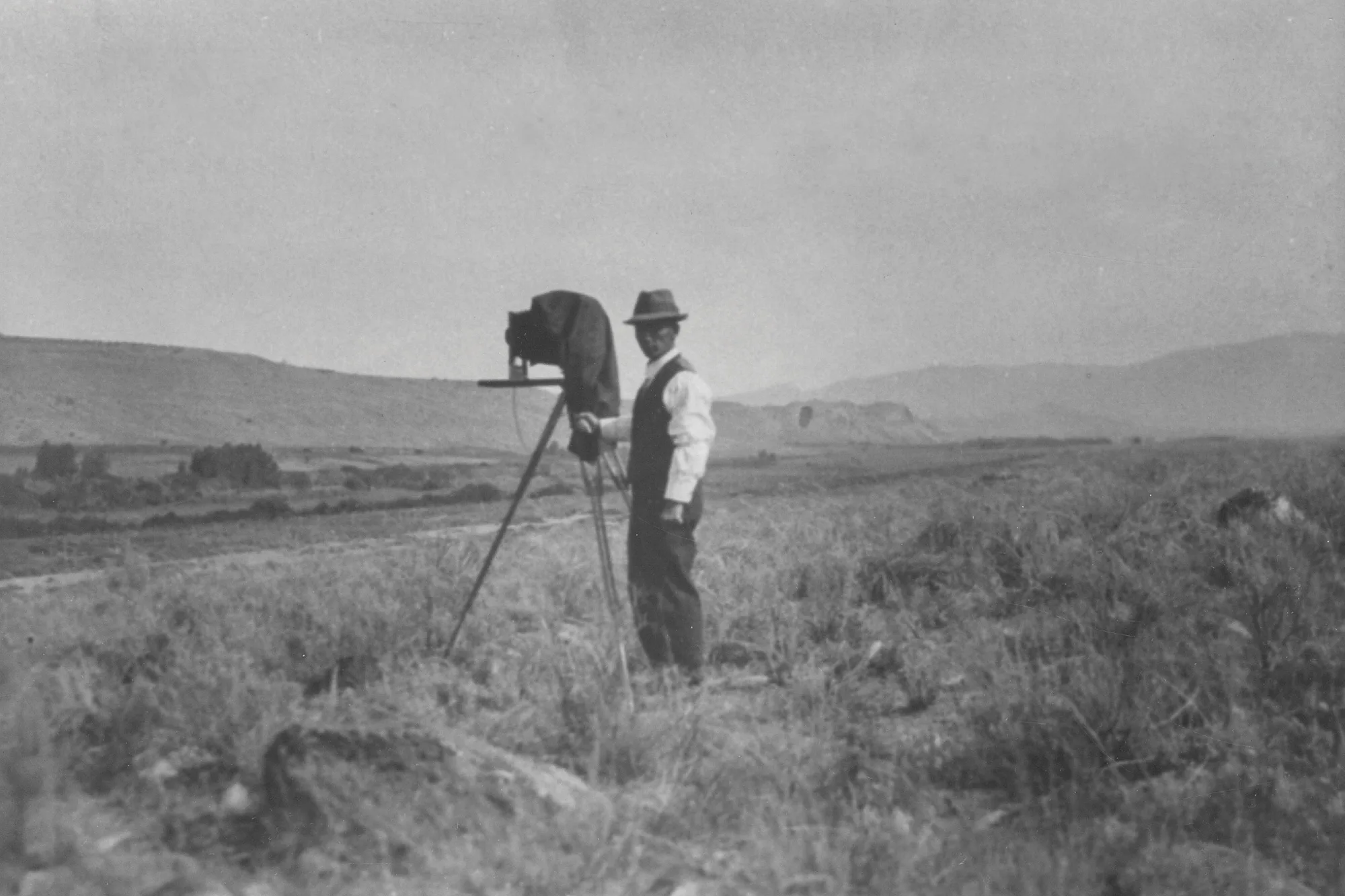
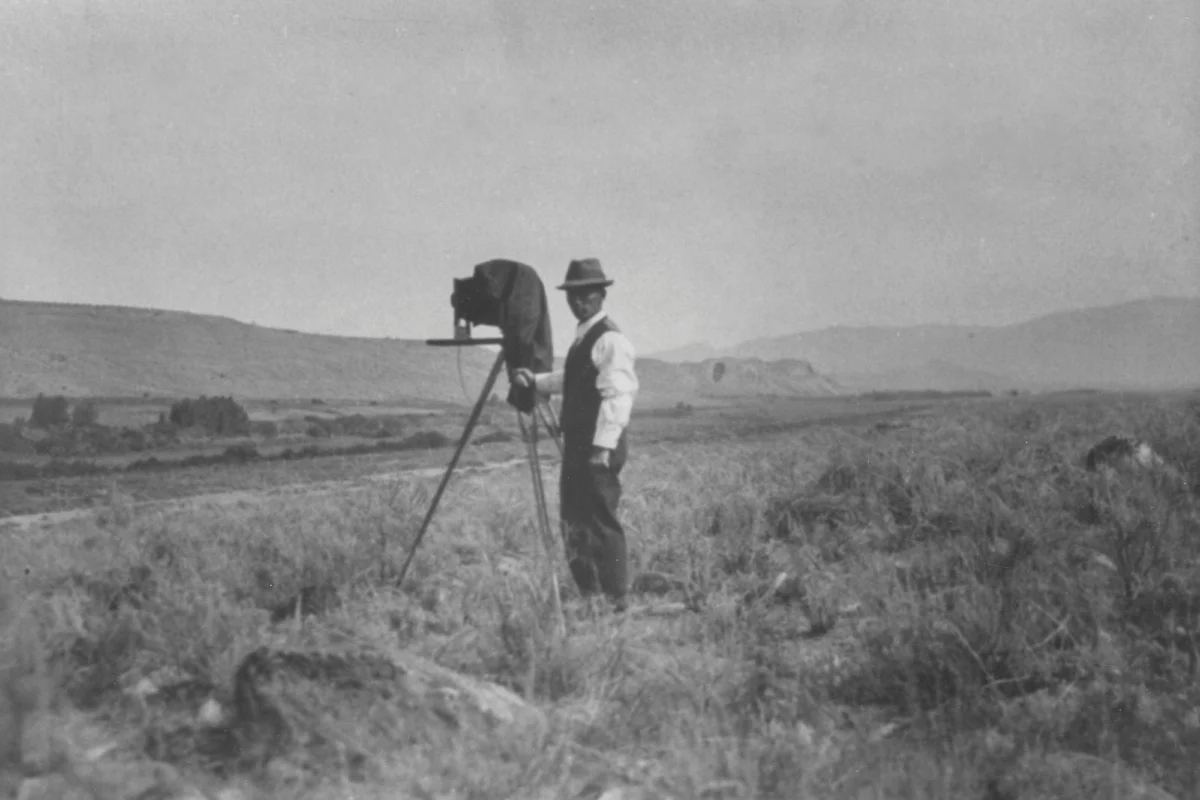
Filmmaker Beth Harrington’s encounter with the work of Frank Matsura at the Washington State History Museum in 2002 proved to be a pivotal moment, sparking a deep interest in the lesser-known contemporaries of Edward S. Curtis. Among them, Matsura’s photographs possessed a distinct and captivating character that immediately drew her in. His evocative black-and-white images, imbued with a palpable charisma and a profound connection to his subjects, offer a unique window into a rapidly changing American West. As a Japanese immigrant who settled in Okanogan, Washington, Matsura forged genuine relationships with the people he photographed, a diverse community comprising white settlers and Indigenous individuals from the nearby Colville Indian Reservation. His willingness to playfully engage with his subjects, even posing alongside them, infused his portraits with an unparalleled warmth and authenticity.
Matsura lived and worked in Okanogan County between 1903 and 1913, a decade that left an indelible mark on the region through his extensive body of photographic work. He succumbed to tuberculosis at the young age of 39, and beyond these stark facts and the thousands of images he created, details of his life remain scarce. Yet, over a century later, the communities he so diligently documented continue to hold his memory in high esteem, a testament to the powerful human connection he fostered.

“Frank Matsura is just somebody that you fall in love with,” Harrington remarked, reflecting on the enduring appeal of the photographer. Having relocated to the Pacific Northwest from Boston in the early 2000s, Harrington found herself drawn back to Matsura’s enigmatic legacy, a pursuit that culminated in her feature-length documentary, Our Mr. Matsura, completed in 2025. The film’s title itself encapsulates Harrington’s understanding of how individuals connect with Matsura’s story: “The idea behind the title is that everybody has a point of entry,” she explained. “Everyone thinks they have a little window into who he is. And there’s a collective sense of who he is because of those little impressions.”
The resonance of Matsura’s work extends deeply into the local fabric of Okanogan County. Douglas Woodrow, a lifelong resident, was among the approximately 300 people who gathered at the beautifully restored Omak Theater for a screening of Harrington’s documentary. Woodrow’s childhood in Okanogan was punctuated by the local newspaper’s regular publication of historical photographs, many of them by Matsura. As a young boy in the late 1950s, he would cycle to the very locations depicted in these vintage images, struck by the dramatic transformations that had taken place. He particularly recalled the imposing Bureau Hotel, a once-grand three-story structure that burned down in 1924, imagining it as a symbol of elegance in what was otherwise a modest, dusty town.
Upon returning to Okanogan decades later, Woodrow found himself rekindling his connection with “Frank,” a familiar moniker used by many who cherish Matsura’s work. While volunteering with the Okanogan County Historical Society, Woodrow stumbled upon a treasure trove of unprocessed Matsura photographs, literally contained within a shoebox. As he meticulously sequenced these images, they revealed the construction of the Conconully Dam in 1910, an early undertaking by the Bureau of Reclamation on Salmon Creek. This discovery ignited his passion, leading him to present these photographs to community groups and initiating his first significant project dedicated to preserving Matsura’s legacy.

Woodrow’s dedication propelled him to Tokyo, where he visited Matsura’s birthplace alongside his friend and fellow enthusiast, Tetsuo Kurihara, a Japanese photographer he had initially met in Okanogan during a research trip. Back in Washington, Woodrow spearheaded efforts to memorialize Matsura, contributing to the establishment of an interpretive site near the photographer’s former studio and championing a walking tour featuring mural-sized reproductions of 21 of his photographs. He recognized Matsura’s extraordinary social mobility, noting how the photographer was an integral part of virtually every significant event and social stratum in town, capturing the lives of tribal members, newly arrived businessmen, miners, and saloon patrons alike.
Among those whose family history is intertwined with Matsura’s lens is Randy Lewis, a respected Wenatchi (P’Squosa) elder and member of the Confederated Tribes of Colville Reservation. Lewis, a descendant of Matsura’s subjects, features prominently in Our Mr. Matsura, sharing his family’s enduring connection to the photographer’s work. He has been instrumental in organizing regional screenings of the film, including a memorable "barn screening" in Winthrop, Washington, which was followed by a traditional salmon bake. His family’s story vividly illustrates the continuity of the world Matsura so artfully captured.
The film showcases a poignant photograph of Lewis’s great-uncle, Sam George, and his family traveling in a buckboard wagon – a mode of transportation akin to the “F-250 of the time.” Lewis recounted how this photograph graced the walls of his family home during his years caring for George in his final years. “He’d be sitting there staring at that picture,” Lewis recalled, explaining that George used the photograph to recall the names and birthdays of everyone depicted, a cherished memento that kept his mind sharp. Sam George lived to be 108, his birth in 1860 predating the formal establishment of the Colville Indian Reservation in 1872. Throughout his remarkably long life, he witnessed immense societal shifts, including the reservation’s reduction, the allotment era, and the influx of prospectors and homesteaders. His family, like Lewis, maintained ancestral traditions of seasonal fishing, including a platform at Celilo Falls, a vital fishing ground on the Columbia River that was ultimately submerged by the construction of The Dalles Dam in 1957.

Matsura arrived in the region during a period of profound cultural transition. As Lewis observed, both Native and settler communities were undergoing significant evolution. “We were into a new century, and he was capturing that. It wasn’t the death toll of the Indians. It was life going on,” Lewis stated, highlighting Matsura’s focus on the vitality and continuity of life.
Harrington’s documentary, Our Mr. Matsura, serves as a powerful exploration of Okanogan County itself, mirroring the isolated and rugged beauty of a landscape that has remained remarkably unchanged since Matsura’s time. Jean Berney, a seasoned rancher and farmer residing just outside Conconully, describes her home as a place that is “off the beaten track for a lot of people.” An enrolled member of the Colville Confederated Tribes, Berney married into a non-Native cattle-ranching family and subsequently built her own successful herd, earning national recognition for her conservation-minded approach to ranching and her dedication to the 4-H program.
Berney’s property was once the site of the Conconully Naturpathy Institute, more commonly known as Casselmann’s Sanitarium. Dr. Casselmann, a German immigrant, established the facility in 1906 to treat tuberculosis patients, a condition that may have drawn Matsura to the region’s dry climate, though his exact connection to the sanitarium remains speculative. Berney often contemplates Matsura’s journeys across the challenging terrain, musing, “Did he ever talk to Dr. Casselmann about his condition? How long was he sick? We wonder about Frank and everything that happened a long time ago, and we can’t ask.”

Harrington’s film joins a growing body of scholarship and appreciation for Matsura’s work, building upon the dedicated efforts of volunteers at the Okanogan County Historical Society and the academic contributions of Michael Holloman, a tenured art professor at Washington State University. In 2023, Holloman co-curated an exhibition of Matsura’s photographs at Spokane’s Northwest Museum of Arts and Culture, followed in 2025 by the publication of his book, Frank S. Matsura: Iconoclast Photographer of the American West. Holloman, an enrolled member of the Confederated Tribes of the Colville Reservation, emphasizes the enduring relevance of Matsura’s approach: “We need people to be like Frank right now, to engage multiple communities and be able to find life, vibrancy, in a world that is in transformation and change.”
The planned wide release of Our Mr. Matsura on PBS’s The American Experience was unfortunately impacted by federal funding cuts that led to the show’s discontinuation last summer. Nevertheless, Harrington remains optimistic that the film will find its audience through film festivals, streaming platforms, and dedicated screenings, such as the one held in Omak last fall, acknowledging that this path may be more challenging. “There’s a lot of worthy things that we can’t put a dollar value to,” Harrington stated, “These stories… we’re poorer for them when we don’t have them.”
During the Omak screening, Harrington was deeply moved to be thanked for “mirroring” the trust and rapport that Matsura had cultivated with his subjects over a century prior. However, she was quick to reciprocate the sentiment. “The story is not just about Frank and his charisma and his incredible body of work,” she asserted. “It’s about the way people uphold his memory and still talk about him 112 years after his death.” This enduring appreciation underscores the profound and lasting impact of Frank Matsura’s photographic legacy on the communities he so lovingly documented.