

 Joko Susilo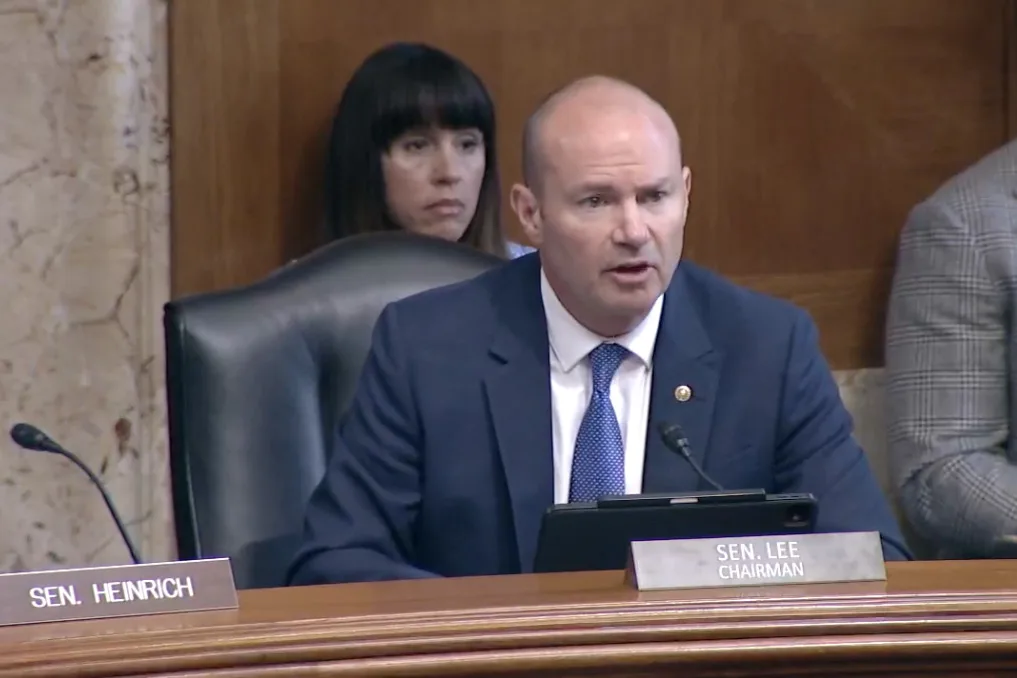
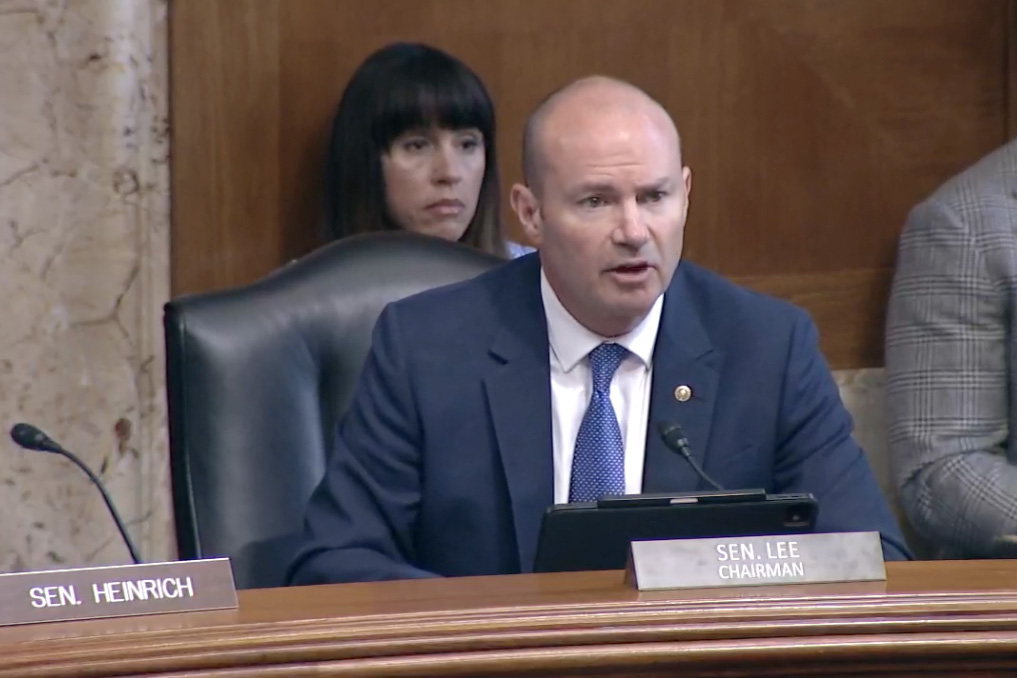
Internal documents have exposed a close collaboration between Senator Mike Lee’s committee and the Trump administration’s Department of the Interior just prior to the Utah Republican introducing a highly controversial bill aimed at divesting up to 3.2 million acres of federal public lands across the Western United States. Emails reveal that the Department of the Interior (DOI) not only supplied research but also actively assisted in crafting the public relations messaging and talking points that Senator Lee subsequently deployed to promote his unpopular legislative proposal. This revelation casts a new light on the interplay between legislative initiatives and executive branch strategy, particularly concerning an issue as politically charged and ecologically significant as the future of America’s vast public lands.
Senator Lee formally unveiled his measure in June, presenting it as an amendment to the then-President Donald Trump’s ambitious budget bill. His justification centered on addressing America’s pressing housing crunch, framing the federal land sell-off as a pragmatic and "common-sense solution." While many observers initially perceived Lee as a singular proponent of an extreme public lands privatization agenda, the newly surfaced communications suggest a more integrated effort. This timeline is particularly noteworthy given that the Trump administration had, months prior, initiated its own task force to explore the potential sale of up to 400,000 acres of federal land specifically for housing development, indicating a broader, albeit less publicized, governmental interest in this approach.
The proposal swiftly ignited a firestorm of public backlash from conservation groups, outdoor recreation enthusiasts, and a significant segment of the general public who view federal lands as an invaluable national heritage. Amidst this rising tide of opposition, Interior Secretary Doug Burgum publicly sought to distance the Trump administration from Senator Lee’s contentious endeavor. Speaking to Scripps News in late June outside the White House, Burgum asserted, "I don’t think anybody is really spending much time thinking about it up there," adding emphatically, "it doesn’t matter to me at all if it’s part of this bill because that wasn’t part of the president’s agenda to be part of the bill in the first place." These remarks were echoed and amplified by figures like Representative Ryan Zinke, a former Trump Interior Secretary, who had previously garnered credit for thwarting a similar House effort to sell off federal lands weeks earlier. Zinke publicly applauded Burgum’s statement on X, the social media platform, declaring, "the great Interior Secretary Doug Burgum says public land sales are not part of the Trump agenda."
However, the recently unearthed emails present a starkly different narrative, directly contradicting Burgum’s public disavowal. Just two weeks prior to his public comments, Secretary Burgum’s own team provided Senator Lee’s committee with critical technical data regarding the potential ramifications of the land sale proposal. More significantly, they offered direct feedback and approved specific language that Lee’s office ultimately utilized to downplay the scope and impact of his controversial initiative.
The detailed email exchange provides concrete evidence of this coordination. On June 10, Chris Prandoni, a legislative assistant on Senator Lee’s Senate Energy and Natural Resources Committee, reached out to two Interior staffers. His email contained draft language for their review, explicitly stating, "This is the quote I’ve been working up with your guys to accurately reflect your research: ‘The Department of the Interior estimates that the Bureau of Land Management has about 1.2 million acres of land within 1 mile of a population city center and another 800,000 acres within 1-5 miles of a population center. Much of this land may qualify for disposal under this section.’" Prandoni further noted, "We also are going to dedicate five percent of the revenue to maintenance backlog." The subject line of this email—"[EXTERNAL] DRAFT / PRE-DECISIONAL RE: land disposal for housing—new question"—strongly implies an ongoing and deeper level of engagement between Interior officials and Lee’s staff that extended beyond the content of this specific exchange.
Later that same evening, Greg Wischer, then Interior’s deputy assistant secretary for land and minerals management, and a former critical minerals consultant, formally endorsed the drafted quote. "Good to go on the quoted content. Thanks for running it by us!" Wischer confirmed. This precise talking point subsequently appeared verbatim at the very top of a Frequently Asked Questions (FAQ) document released by Senator Lee the following day, concurrent with the public unveiling of his sweeping public land sell-off proposal. The coordination extended further, as Jeremy Arendt, Interior’s deputy assistant secretary of natural resources and infrastructure, advised Lee’s staff to "include a % of total acres this represents for BLM, which is about 0.7% of the total, or about 30% of lands within 5 miles of population centers." This framing was clearly designed to minimize the perception of a large-scale land transfer. Indeed, the committee’s FAQ document directly dismissed the notion of the proposal being a "massive sell-off of federal land," instead asserting that it "requires disposal of only 0.5%-0.75% of the [Bureau of Land Management] and [Forest Service] estates. It leaves the remaining 99.25% untouched."
Further evidence of the close collaboration emerged from the email chain, indicating that several Interior employees were slated to meet with Lee’s staff on June 11, the very day the controversial proposal was officially introduced. "Thanks, guys. See some of you all tomorrow," Prandoni wrote after receiving Wischer’s approval for the draft quote. Matt Schafle, a former National Rifle Association employee who currently serves as Interior’s congressional and legislative affairs director, responded enthusiastically, "Thanks Chris, looking forward to it!" This scheduled meeting underscores the depth of coordination and strategic alignment between the legislative and executive branches on this highly sensitive policy matter.
The cache of internal emails was obtained by The Wilderness Society, a prominent environmental conservation organization, through a public records request directly linked to the Trump administration’s housing task force. The organization subsequently shared these revealing documents. Michael Carroll, the Bureau of Land Management (BLM) campaign director for The Wilderness Society, expressed profound concern, stating that the documents "paint a troubling picture." Carroll elaborated, "Rather than engaging the public or pursuing real housing solutions, the administration appears to have spent that time coordinating messaging with the same members of Congress who pushed large-scale public land sell-offs last summer. That’s not problem-solving—it’s laying the political groundwork to sell off America’s public lands."
In response to inquiries, both the Interior Department and a spokesperson for Senator Lee’s committee characterized the internal communications as routine governmental practice. An Interior spokesperson asserted that "The Bureau of Land Management has, for decades, used Congress’s existing land-disposal authorities to address local needs—including creating opportunities for affordable housing—through a careful, public process that includes land-use planning, environmental review, and appraisal." The statement continued, "Providing routine, factual briefings to Congress about how these long-standing authorities work is standard, non-partisan practice and does not indicate support for any particular legislation." Similarly, a spokesperson for the Senate Energy and Natural Resources Committee maintained that "Committees regularly seek input from subject-matter experts across the executive branch to ensure proposals are informed by existing law, program experience, and a clear understanding of potential impacts." The committee’s statement also reaffirmed President Trump’s consistent support for utilizing "underutilized federal land for housing," citing his pledge in Nevada to open new tracts for large-scale development and his directive for the Departments of the Interior and Housing and Urban Development (HUD) to establish a joint task force to identify suitable federal lands for housing. Despite these explanations, neither the Interior Department nor Lee’s committee offered specific responses to questions concerning the meeting referenced in the June 11 emails.
Critics, however, remain unconvinced by the official explanations. Aaron Weiss, deputy director of the Center for Western Priorities, a conservation advocacy group, reviewed the documents and concluded, "This shows Doug Burgum’s top people were literally writing talking points for Mike Lee’s attempt to sell off America’s public lands." Weiss further criticized the Secretary’s perceived philosophy, stating, "This shouldn’t come as a surprise. Burgum has been clear that he only sees our lands as dollars on a balance sheet, not a promise to be kept for future generations. The fish rots from the head, and these emails make it crystal clear: Doug Burgum is only here to degrade, exploit, and eventually sell off America’s public lands. Our parks and park rangers deserve so much better." This sentiment highlights the deep ideological divide over the management and purpose of federal lands, a perennial debate in the American West where vast swathes of land are federally owned and managed.
The coordination extended beyond congressional offices to influential external groups. The emails indicate that the Interior Department also engaged with the American Enterprise Institute (AEI), a prominent conservative think tank known for its advocacy of free-market principles, including the privatization of federal lands for private sector development. In May, Ed Pinto, a senior fellow and co-director of AEI’s housing center, provided Interior officials with an analysis of a separate House amendment proposed by Representatives Mark Amodei (R-Nevada) and Celeste Maloy (R-Utah). This amendment sought to sell thousands of acres of federal public lands in their respective states for residential development. AEI’s analysis projected that the sale of 544,000 acres of BLM land in Nevada and Utah could generate "100 billion for the U.S. Treasury" over a decade, emphasizing that this House amendment "could be the first step toward further BLM land release in nine other Western states (AZ, CA, CO, ID, MT, NM, OR, UT, and WY)." Ryan Hofmann, an advisor at the Interior Department, acknowledged receipt of the document, writing, "This analysis is very helpful to have on hand, going forward," underscoring the administration’s receptiveness to such policy recommendations.
In the months following the Republican-led attempts to push federal land sell-offs, the Interior Department and the Department of Housing and Urban Development have maintained a notable silence regarding their own administrative efforts to privatize federal acres. The joint task force, formally launched in March, was specifically charged with identifying "underutilized federal lands suitable for residential development." A memorandum signed by Secretary Burgum and HUD Secretary Scott Turner stipulated that the two agencies were to submit a comprehensive report to the White House’s National Economic Council by April 15 (though the specific year was left ambiguous). This report was intended to detail "the number of land parcels identified, the number of housing units developed, infrastructure progress, and any policy recommendations for improving the program." When pressed for an update on this significant interagency initiative, an Interior spokesperson offered only a vague assurance that information would be shared "once the interagency process concludes and any materials become publicly releasable."
The revelation of these internal communications underscores the complex and often opaque processes through which public land policy is formulated and advanced. It highlights the persistent tension between stated public policy goals, such as addressing housing shortages, and the methods employed to achieve them, particularly when those methods involve the disposal of irreplaceable public assets. For conservationists and advocates for public access, the coordination between Senator Lee’s office and the Trump administration’s Interior Department represents a profound betrayal of public trust and a strategic effort to dismantle long-standing protections for America’s natural heritage. The debate over the optimal use and stewardship of federal lands, a defining feature of the American political landscape, is likely to intensify, with these new revelations adding further fuel to the ongoing struggle between development interests and conservation imperatives. The implications extend far beyond land parcels and balance sheets, touching upon the very identity of the nation’s natural legacy and the integrity of its governmental processes.







