

 Rocky Gerung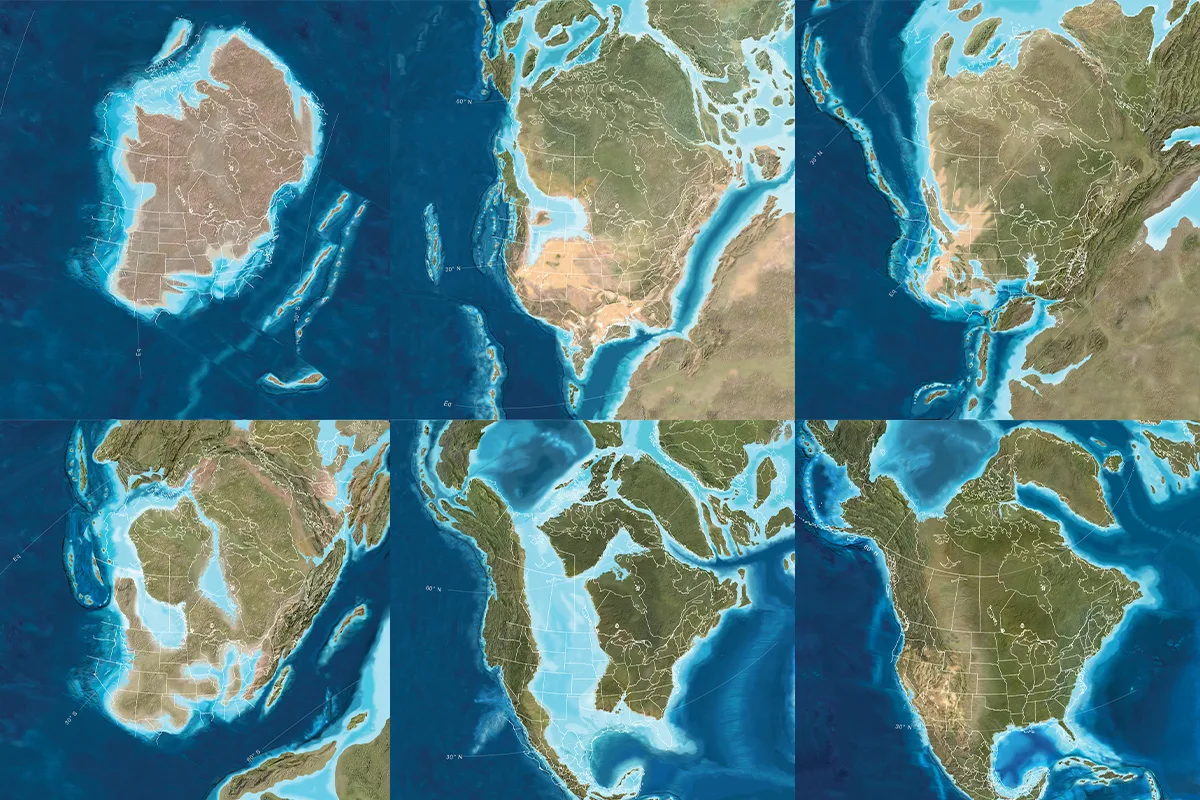
The shifting sands of the Gran Desierto de Altar, a vast dune sea east of the Colorado River’s former delta, offer a tangible link to Earth’s ancient history, mirroring the processes that formed geological formations like the Grand Canyon’s Coconino sandstone. The diagonal striations etched into these rocks, visible across thousands of square miles, reveal the direction of winds that swept across landscapes 280 million years ago, a testament to the geological principle that "the present is the key to the past." However, the planet’s rock record also bears witness to far more dramatic events, including the "Big Five" mass extinction episodes that fundamentally reshaped life on Earth and continue to influence its trajectory. Understanding these incremental geological shifts and catastrophic past events, by delving into the concept of "deep time," provides crucial context for comprehending the implications of our current actions and forecasting potential futures. Three seminal books offer distinct yet complementary pathways into this profound geological past.
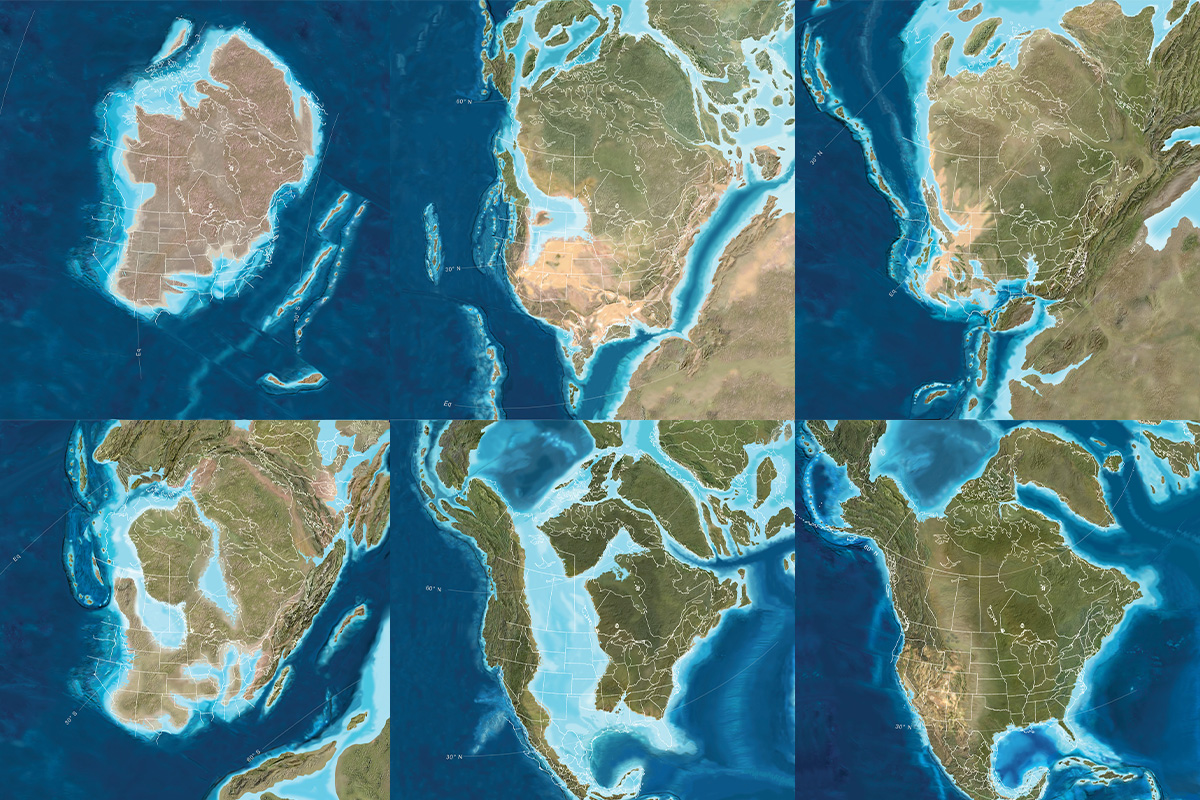
John McPhee’s seminal work, Basin and Range, first published in 1981 and later included in his Pulitzer Prize-winning anthology Annals of the Former World, popularized the term "deep time." While revised editions have updated some data, McPhee’s narrative, chronicling his journey with geologists across North America, remains remarkably relevant. His aim was to interpret the billions of years of Earth’s history as written in its rocks, focusing on landscapes and events that geologists study. Traveling along Interstate 80 from New Jersey to Nevada, McPhee explores the dramatic topography of basins and ranges, understanding how geological faulting creates depressions that are subsequently filled with sediments over millions of years – a geological story far younger than the age of dinosaurs but still ancient by human standards.
McPhee details how the North American continent is actively being stretched and pulled apart between the Rocky Mountains and the Sierra Nevada, a process that has occurred before, most notably 200 million years ago when the supercontinent Pangea began to fragment, eventually giving rise to the Atlantic Ocean. This ongoing tectonic activity raises intriguing questions about future continental configurations, such as whether Californians and Nevadans might one day find themselves separated by a new sea. McPhee’s narrative also includes fascinating detours, such as a visit to an abandoned silver mine in Nevada, where he learns about the historical extraction of precious metals and the potential value left behind.

Central to McPhee’s exploration is the challenge of comprehending geological timescales, which vastly exceed human generational memory. He notes that people typically think in terms of five generations – two before, two after, with the present generation as the focal point. Geologists, however, grapple with measuring and understanding epochs spanning millions of years, a feat that requires a profound shift in human perspective. McPhee’s book serves as an accessible introduction to geology, enabling readers to visualize ancient landscapes and appreciate the enduring presence of Earth’s past, even as these formations transform and "almost disappear."
Science journalist Laura Poppick, in her July 2025 publication Strata: Stories from Deep Time, approaches the same deep geological history with a different, yet equally captivating, methodology. Her book is structured thematically around elements crucial to Earth’s evolution: air, ice, mud, and heat. Poppick delves into the composition of ancient rocks, some dating back 2 to 3 billion years, which hold clues to the emergence of oxygen in our atmosphere. Her investigation takes her to Minnesota, where iron-rich rocks from a period of global anoxia – a time before oxygen was abundant – provide evidence for an Earth that existed for billions of years without a breathable atmosphere. This ancient air, Poppick emphasizes, laid the groundwork for all subsequent life, including the development of iron, a material essential for modern technologies ranging from automobiles and kitchen appliances to medical devices and aircraft.

The fossil record, meticulously studied by paleontologists, reveals the dramatic shifts in life’s history, particularly the astonishing proliferation of life during the Cambrian explosion around 540 million years ago, when nearly all major animal groups that exist today first appeared. Poppick dedicates significant attention to two of the "Big Five" mass extinctions: one occurring 250 million years ago and another approximately 50 million years later. Unlike the more widely known extinction event that wiped out the dinosaurs, attributed to an asteroid impact, these earlier catastrophes are believed to have been triggered by massive volcanic eruptions. Poppick explains how magma rising from Earth’s mantle erupted beneath vast deposits of fossil fuels, igniting them and releasing colossal amounts of carbon dioxide, along with toxic gases like butanes and benzenes, and ozone-depleting compounds. This historical account of environmental devastation offers a potent parallel for understanding contemporary climate change and exploring potential solutions.
Poppick also examines periods of extreme heat, such as the Mesozoic Era, when dinosaurs roamed the Earth. Scientific models suggest that this era was significantly warmer than today, with temperatures between 14 and 25 degrees Celsius (25 to 45 degrees Fahrenheit) higher. To understand how large animals survived these hothouse conditions, Poppick joined scientists in Wyoming searching for fossil evidence of the largest land animals ever to exist: the long-necked sauropods, including genera like Diplodocus, Brontosaurus, and Apatosaurus.

The scientists’ focus extends beyond the skeletal remains to the ecosystems that sustained these colossal herbivores and how those environments, along with their inhabitants, evolved over time. Their research often centers on the Morrison Formation, a vast geological deposit stretching from New Mexico to Montana, renowned for yielding an unparalleled number of dinosaur fossils. The rock layers within the Morrison Formation were deposited over approximately 9 million years, thus preserving a detailed chronicle of dinosaurian life during that period. Poppick highlights the relative brevity of human evolution, noting that a similar timeframe of roughly 12 million years saw the divergence of humans, gorillas, and chimpanzees from a common ancestor. By studying the Morrison Formation’s strata, scientists aim to unravel how sauropods and other dinosaurs thrived in the Jurassic warmth, thereby deepening our understanding of Earth’s resilience to extreme heat.
For an even more immersive experience of the Morrison Formation’s ancient ecosystems, readers can turn to Riley Black’s February 2025 book, When the Earth Was Green. Black, a science writer and paleontologist, masterfully blends scientific data with artistic prose to recreate the sensory experience of prehistoric life. Each chapter unfolds as a vignette, complemented by an appendix that details the scientific evidence, speculative interpretations, and the author’s personal insights.

Black transports readers to Utah approximately 150 million years ago, venturing beyond the fossil sites Poppick visited in Wyoming. She vividly depicts an Apatosaurus foraging in a lush woodland, consuming vast quantities of horsetail and an ancient ancestor of the modern ginkgo tree. The dinosaur’s immense size and powerful neck allowed it to access foliage at various heights, while its bulk provided a significant defense against predators. Black emphasizes that the sauropod’s existence was intrinsically linked to its unique habitat, characterized by towering conifers and a dense understory of ferns and cycads, a rich botanical environment that enabled their prodigious growth. This dynamic underscores an "evolutionary dance between herbivores and plants," where each species influenced the other’s development.
Black’s earlier work, The Last Days of the Dinosaurs, offered a harrowing account of the fifth mass extinction, meticulously detailing its impact over seconds, minutes, hours, days, and years. In contrast, When the Earth Was Green shifts the focus from cataclysm to the intricate interplay of co-evolutionary processes, exploring the daily lives of plants and animals whose intertwined stories are preserved in the rock record.

The reading experience offered by these authors varies significantly. McPhee’s Basin and Range provides a road trip narrative, reminiscent of traveling with an enthusiastic, if eccentric, geologist uncle, offering a wild and often humorous journey through geological concepts. Poppick’s Strata invites readers to participate in scientific discovery, joining field expeditions, research endeavors, and laboratory visits, revealing the engaging process of scientific inquiry. Black’s When the Earth Was Green immerses readers in almost dreamlike landscapes through her evocative descriptions of long-vanished worlds, employing imagination and scientific knowledge to bring deep time to life.
As Poppick aptly observes, "Our planet seems to be telling us to take a look back." These three books collectively guide readers through the vast expanse of geological time, prompting reflection on humanity’s place within the grand narrative of Earth’s history and its ongoing transformations.







