Johny Prima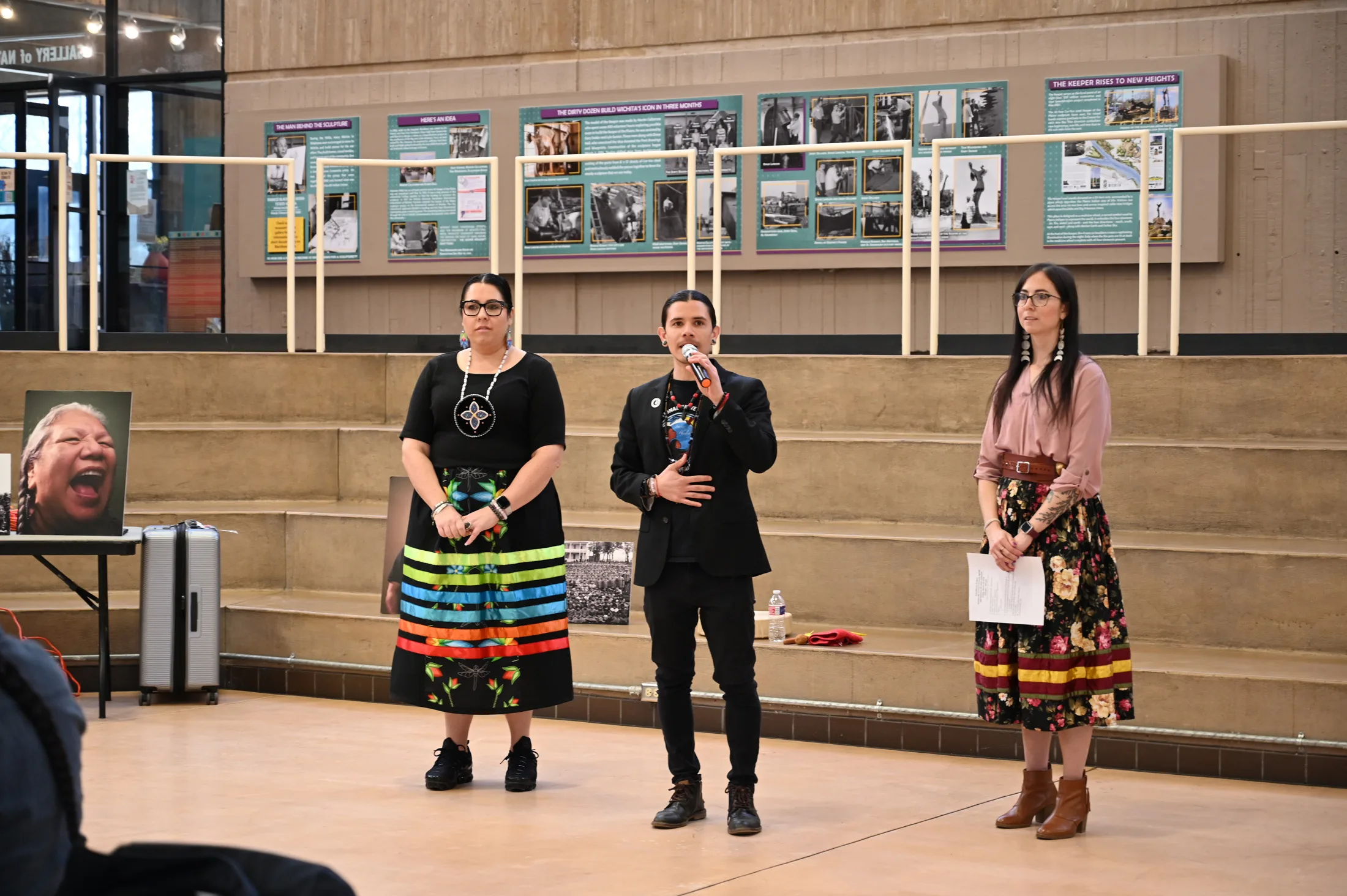
For generations, Indigenous advocates and leaders across the United States have tirelessly championed the establishment of a federal commission dedicated to documenting the harrowing testimonies of Native people who endured the traumatic system of boarding schools, institutions primarily funded and managed by the federal government and various religious organizations. This pivotal legislative effort, now advancing through Congress, marks a potentially transformative moment for the nation, positioning the U.S. to embark on a truth-telling journey akin to those undertaken by Canada and other countries grappling with similar colonial legacies.
Last month, legislation aimed at creating this groundbreaking commission gained significant momentum with its introduction in the House of Representatives by Reps. Tom Cole (R-Okla.) and Sharice Davids (D-Kan.), both prominent Indigenous voices in Congress. This House bill mirrors an identical measure that has already successfully passed out of the Senate, signaling a growing bipartisan consensus on the urgent need to confront this dark chapter of American history. The proposed Truth and Healing Commission would comprise five individuals, carefully selected by Congress based on recommendations from tribal nations and Indigenous-led organizations, ensuring that the commission’s leadership reflects the lived experiences and perspectives of those most affected. Beyond simply providing a vital platform for survivors to share their deeply personal stories, the commission would be tasked with a comprehensive investigation into the federal government’s profound role in establishing and perpetuating the boarding school system. Its mandate extends to meticulously documenting the devastating impacts these institutions inflicted upon Indigenous peoples and, crucially, culminating in a detailed report replete with actionable recommendations for a national path towards healing and reconciliation.

This legislative initiative stands as the culmination of years of persistent advocacy, particularly by the National Native American Boarding School Healing Coalition (NABS). NABS has been a driving force behind the bill, which has seen several iterations since its initial introduction in 2021. The proposed commission promises to significantly expand upon the coalition’s decade-long foundational work, which includes the painstaking process of collecting and preserving survivors’ invaluable oral histories. It also builds upon the recent, groundbreaking investigations initiated by the Department of the Interior under the Biden administration. These federal inquiries, for the first time, meticulously documented the sheer scale of the boarding school system, revealing that the U.S. government operated or supported at least 417 institutions across 37 states and territories. These schools systematically engaged in the forcible removal of Indigenous children from their families and communities, subjecting them to brutal assimilation policies, widespread abuse, and, in far too many documented cases, death. Shockingly, estimates suggest that the federal government funneled more than $23 billion (in today’s dollars) into sustaining this oppressive system for nearly a century, from the mid-19th to the mid-20th century.
Samuel Torres (Mexica/Nahua), Deputy Chief Executive Officer of NABS, recently underscored the profound importance of this legislation, emphasizing its unique potential to foster genuine bipartisan collaboration on an issue of immense national significance. "This is quite simply, an opportunity for the United States to inquire about questions that have been asked by Indian Country for generations," Torres stated, highlighting the overwhelming support the bill has garnered from tribal leaders, the National Congress of American Indians, and various faith communities. He stressed the critical urgency of its passage, noting that "our elders are not getting any younger, and we need to pass this now for them, for their ancestors and for their descendants." The commission, he explained, would represent the first instance of the federal government taking a direct, personal approach to listening to boarding school survivors, allowing their firsthand accounts to directly inform future national strategies for healing and justice with Indigenous peoples.
The commission’s work is anticipated to yield a robust body of research and narratives, significantly enriching the collective understanding and social awareness of the United States population regarding this obscured history. Torres observed that when this history is brought to light, "folks want to lean in, they want to step in, and they want to be advocates." This expanded awareness, he believes, is crucial for inspiring societal change in schools, churches, and other community spaces, fostering greater recognition and honor for the profound impacts of this history. This process, he asserted, must begin with the direct gathering and uplifting of survivors’ voices.

This proposed commission would unequivocally transcend the scope of the Interior Department’s previous "Volume One and Volume Two Federal Indian Boarding School Initiative" reports. While those investigations provided crucial archival research and a limited survey of the system, they were, as Torres described, "very important work that needed to be done, but it’s something that requires a great deal of follow-up to include the direct voices of boarding school survivors, in addition to the policy recommendations and ways in which we address meaningfully the impacts of boarding schools for relatives." The commission offers a deeper, more human-centered approach to understanding the intergenerational trauma and systemic injustices perpetrated by these institutions.
The journey towards this federal recognition has been fraught with challenges. NABS’s efforts to document oral histories faced a significant setback when the federal government, under the previous administration, rescinded a $250,000 grant, citing that the initiative no longer aligned with its priorities. This stark contrast underscores the historical reluctance of the U.S. federal government to thoroughly investigate or acknowledge the atrocities committed within the boarding school system. "The history of the United States demonstrates a very paltry intent to want to answer some of those questions," Torres lamented, recalling past unfulfilled Freedom of Information Act requests concerning the number of boarding schools, missing children, and fatalities. He emphasized that these are not partisan questions but fundamental inquiries that impact all Americans. "American taxpayers deserve to know how tax funding was utilized to wage violence against Native people over generations," he affirmed, demanding accountability for a history that has long been suppressed.
The broader context of historical truth-telling in the U.S. further magnifies the significance of this commission. Efforts to revise or obscure difficult historical narratives, such as the removal of signage in national parks documenting histories of enslaved people and Native Americans, represent a dangerous trend. Torres condemned such actions as "entirely shameful," asserting that "removing signs doesn’t change any of that history. Changing narratives because of political power does not change the impact of wielding that violence." He articulated that the very act of confronting historical occurrences head-on offers the profound possibility for collective healing and a shared commitment to preventing future atrocities. Conversely, moving away from truth-telling, he warned, "moves us away from kinship" and "allows an opening for campaigns of injustice to happen again." This necessitates courageous truth-telling across all political spectrums to facilitate the healing of deep-seated generational wounds.

The historical echoes of forced family separation, a cornerstone of the boarding school system, resonate powerfully in contemporary American society, particularly in the context of immigration enforcement. NABS, headquartered in Minneapolis, actively supports grassroots efforts in its community, assisting Native relatives who have experienced confrontations with federal agents and advocating for accountability and truth in these ongoing situations. Torres underscored the profound connection between the historical legacy of forced removal and violence against Native peoples and current events. "Our work is, for all intents and purposes, very much linked to this legacy of a forced separation, removal and violence towards Native people of the Americas," he explained. "This is as relevant as it gets, really. I mean, this is history kind of coming full circle again, and it always has different elements of change and evolution and transition, but we’re seeing it play out in real time." The establishment of a Truth and Healing Commission in the United States offers not only a chance to confront a painful past but also an opportunity to understand how historical injustices continue to shape the present, providing a vital framework for genuine reconciliation and a more just future for all.