Rocky Gerung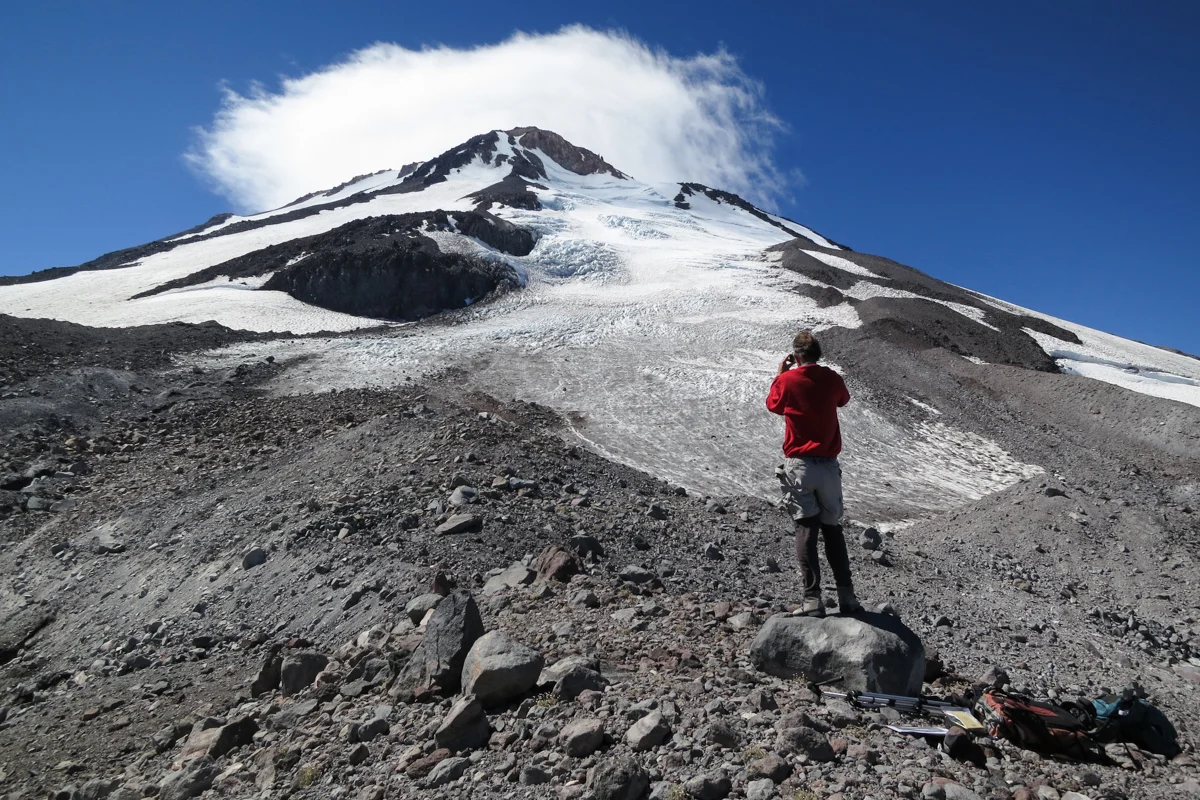
Mount Shasta, a solitary sentinel in Northern California’s dramatic western landscape, commands attention with its awe-inspiring isolation; its majestic, snow-capped summit pierces the sky, visible from over a hundred miles south, rising dramatically above the surrounding oak savanna. This solitary grandeur has inevitably drawn comparisons to J.R.R. Tolkien’s "Lonely Mountain," a sentiment even echoed by a 20-foot metal dragon sculpture placed on the plains to the north, a whimsical nod to the iconic peak. Beyond its visual drama, Mount Shasta is a repository of natural history, home to seven named glaciers, including the Whitney Glacier, California’s longest and the first in the continental United States to be scientifically identified by modern researchers. Clarence King, leading the inaugural U.S. Geological Survey expedition to the summit, christened the Whitney Glacier and described Shasta in The Atlantic Monthly as a "colossal cone of a burned-out volcano, springs upward from a plain… bearing upon its summit a cap of solid white." Historical photographs, such as one dated September 11, 1870, vividly depict the Whitney Glacier, its immense ice mass fractured by vast crevasses, a testament to its past scale.
Today, however, these magnificent glaciers, like their counterparts across the western United States, are in a state of significant retreat. For centuries, glaciers have symbolized permanence, their unhurried "glacial pace" a common metaphor for immense stretches of time; yet, these icy giants are now diminishing year by year. While this decline is happening at an astonishing rate from a geological perspective, it unfolds slowly enough by human reckoning to become imperceptible. A child born today might readily accept the current diminished, patchy appearance of Shasta’s glaciers as their natural state, a phenomenon scientists term "shifting baseline syndrome." This psychological adaptation to gradually worsening environmental conditions, a form of collective "great-getting-used-to," allows us to accommodate environmental degradation without necessarily recognizing its severity.
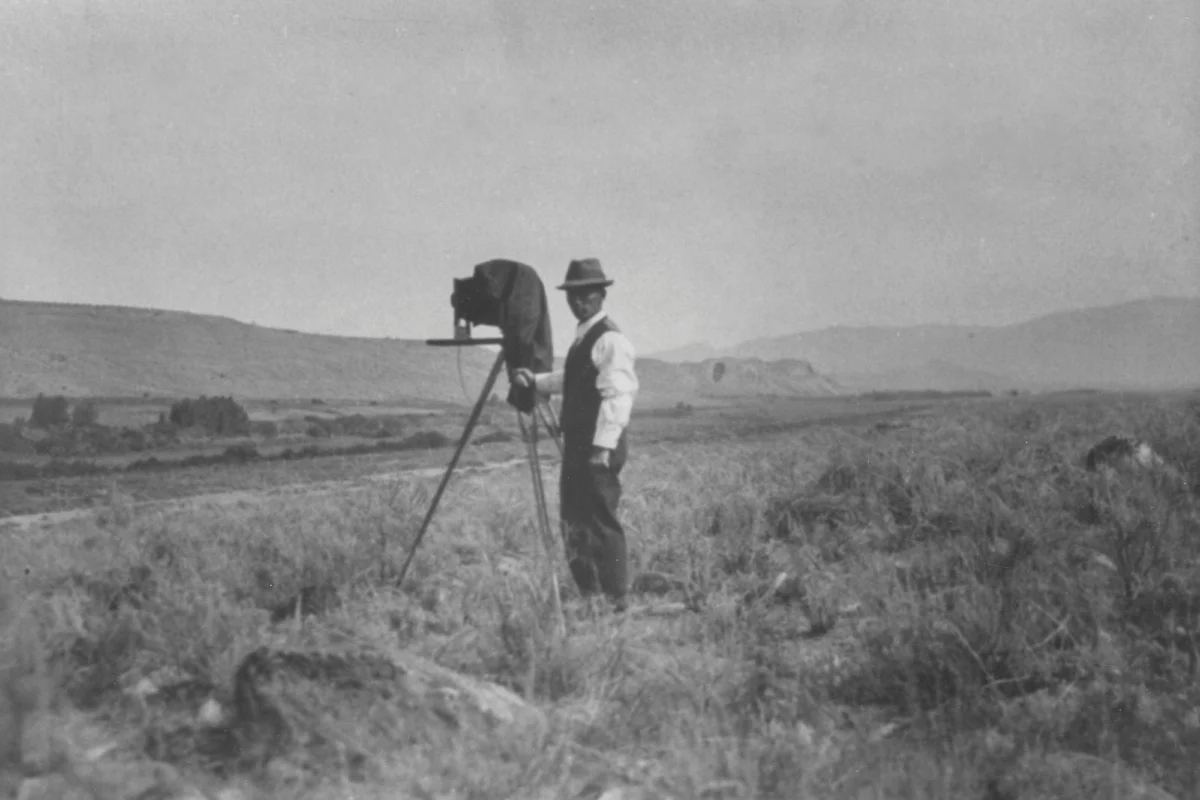
Fortunately, there are methods to illuminate such environmental transformations, to peel back the layers of time that obscure present-day realities. For approximately 140 years, dedicated individuals have revisited the same viewpoints to photograph Mount Shasta’s glaciers, decade after decade, creating a powerful, long-term photographic record. These "re-photo" projects offer irrefutable evidence of Earth’s ongoing transformation due to climate change. Even in an era saturated with sophisticated digital imagery, the stark visual narrative presented by a century-long photographic sequence is difficult to dispute. Such historical records are indispensable in combating the insidious "shifting baseline syndrome" that fosters acceptance of environmental loss. The most potent, indeed the essential, antidote to environmental amnesia lies in the diligent preservation of history. The foundational narratives of natural history can manifest in diverse forms: photographs, personal journals, scientific logs, landscape paintings, antique maps, old property deeds, and even seemingly mundane items like restaurant menus. The inherent vulnerability, however, is that these invaluable source materials may prove as transient as the very landscapes they chronicle.
A dedicated citizen-scientist named Phil Rhodes has been meticulously re-photographing the Shasta glaciers since the 1970s, amassing what is likely the most extensive private collection of these images. Rhodes, a tall, lanky, and earnest individual now in his seventies, cultivated a deep appreciation for the natural world during his childhood in Mill Valley, exploring Corte Madera Creek. His inaugural visit to the Whitney Glacier in 1972, while a geology student at Humboldt State University, ignited an immediate passion. "I quickly became aware that the glaciers on Mount Shasta were acting in a very unusual manner," Rhodes recounted, "And that led into a lot of scientific investigation as to why the glaciers were behaving the way they were." Inspired by the book Exploring Glaciers—With a Camera, Rhodes established his first photographic station near the Whitney Glacier in 1974. He subsequently expanded his project, setting up additional sites to document other glaciers on the mountain, including the Bolam, Hotlum, and Wintun, ultimately creating 14 distinct photographic locations. He viewed his work as a continuation of the tradition of amateur naturalists who have studied glaciers, drawing parallels to figures like John Muir, individuals recognized for their scientific acumen despite lacking formal professional credentials.

From 1983 to 1988, Rhodes resided in the town of Mount Shasta, spending his summers as the caretaker of a hut that served as a base for mountaineers ascending the peak. Even after relocating to the San Francisco Bay Area to manage his family’s shipping-export business, he remained steadfast in his commitment, undertaking the four-and-a-half-hour drive north alone, often hiking to his photo stations individually to capture the images. "What I did was try to make this definable by setting up these photo stations: taking the same photo year after year after year," he explained. "You can look at these photos, and you can see changes."
Eventually, the demands of life began to impede the photography project. In the 2000s, Rhodes passed the torch to a graduate student in Portland State University’s Geology Department. Then, around 2015, the exact year now difficult to pinpoint, the graduate student transferred responsibility to a group of U.S. Forest Service rangers who welcomed the endeavor. It was through this chain of custody that I found myself accompanying a Forest Service seasonal ranger named Forrest Coots, who generously agreed to guide me up the mountain one spring weekend to witness a photo station firsthand.
Coots, who grew up in the region, possesses an intimate knowledge of Mount Shasta, perhaps unparalleled among living individuals. His personal baseline for the mountain extends back to his earliest childhood memories, and as we traversed the rugged backroads on the mountain’s north side, he shared a wealth of ecological observations. Born in 1981, Coots has witnessed profound changes in his lifetime. "I remember, as a kid, you never doubted that winter would come," he recalled. The present reality, however, is starkly different; he noted a recent winter where "We went 36 days without any precipitation. Like, dry as a bone."
The dirt road eventually yielded to a sandy wash, not far from a weathered sign marking the boundary of the Mount Shasta Wilderness. Donning our boots and shouldering our packs, we began our ascent. While most climbers approach Shasta’s summit from the south, the north side offered a vast, untracked wilderness. Coots expertly navigated us uphill, relying on a combination of mountaineering intuition and ingrained memory. We wound our way through gullies and avalanche chutes, and past dense stands of pine, many of which showed signs of stress and mortality, their needles brittle and brown. He gestured towards the southeast. "That’s the Bolam Glacier," he stated with a somber tone. "I doubt it will be here at the end of my lifetime. The Hotlum—maybe. The Whitney—maybe. But not the Bolam. It’ll be gone."
Having ascended beyond the tree line, we entered a stark terrain of earth, rock, and ice. Coots led us to a rocky ledge overlooking a small ice pond. Above us, the Whitney Glacier sprawled, its ice gleaming with a brilliant white and vivid cerulean hue. "We’re here," he announced. "This is the spot." It took a moment for the significance to register. Coots pointed to a medium-sized, salmon-colored boulder at the edge of the shelf. Photo Station Whitney #1, it turned out, was an unremarkable, ordinary rock situated in the midst of this remote wilderness. It could have been any stone; yet, this particular boulder had served for decades as a silent witness and recorder of a changing world. The seemingly immutable rock, however, was itself transient, a physical anchor to understanding the history of one of California’s most iconic peaks, now held by little more than the fragile thread of lived memory.

During my time with Coots, I gained a deeper understanding of the Mount Shasta glacier comparative photography project—an admirable testament to citizen science and resourceful dedication, driven by individuals striving to resist the erosion of ecological memory. It was inspiring to contemplate the immense effort Rhodes, described by Coots as "the foremost expert on Shasta’s glaciers," had invested in documenting these vanishing natural forces, all at his own expense and during his personal time. This, I realized, is how environmental memory persists across generations: through the often-unheralded labor of those committed to preserving remembrances of value.
However, sometimes memory falters. Tragically, nearly all of the Shasta glacier photographs from 2015 to 2019 were lost when a thumb drive containing them was misplaced, a loss that, according to Coots, left Rhodes "distraught." The project faced further challenges when Coots, the following summer after our hike, resigned from his Forest Service position. Responsibility for the re-photography then fell to Nick Meyers, the lead climbing and wilderness ranger for Mount Shasta. However, staffing shortages and unfavorable weather conditions have hampered his and his team’s ability to maintain the photographic record. Meyers indicated in an email that only "a handful" of sites were photographed in 2023 and 2024, with many missed in 2025. While the project has not entirely ceased, he noted, "we don’t always have the capacity" to visit every location, though the agency remains committed and welcomes volunteer assistance. For now, the photo station at the base of the Whitney Glacier has reverted to its state of millennia past: simply an ordinary rock.
At one point, a partial collection of Rhodes’ Mount Shasta photographs was transferred to Andrew Fountain, a distinguished glaciologist at Portland State University. Yet, even this represented a form of evidentiary limbo. Fountain explained that over his career, he has amassed over 10,000 glacier photographs, some of which are accessible on his website, Glaciers of the American West. Many, however, remain unseen on data servers and hard drives. While Glaciers of the American West offers a glimpse into glacier loss through comparative photography, its interface is cumbersome, images are difficult to navigate, and the site has not been updated in years, a consequence, Fountain explained, of a lack of resources, particularly in his retirement. Navigating to the site’s Glacier RePhoto Project and selecting the Mount Shasta photo gallery results in a 404 error message, with similar issues affecting the Mount Hood and Mount Rainier galleries. "I’d like to get that site going again," Fountain expressed with a palpable weariness in his voice.
If a glacier melts from a mountain, and little publicly accessible visual evidence of its existence remains, did it truly exist? Fountain admitted that for much of his career, he maintained an "academic remove" from such existential questions. However, he eventually realized that "in the near future, like maybe 2070 or whatever, glaciers will get so small that nobody will read my work." This realization brought him "a certain depression," but also a renewed urgency. "In a way, frankly, it is encouraging me to work a little more feverishly, because right now what I’m doing is developing an inventory of all the glaciers in the Western U.S., trying to tie down where they all are and how big they are. It might be a map of what times used to be."
As Coots and I descended from the Whitney Glacier, the pervasive sound of running water accompanied us. The spring melt was in full swing, sending countless rivulets cascading downhill. The glacier was visibly melting beneath our feet, and we were the sole witnesses to this tangible manifestation of climate change. A story, much like a glacier, remains alive only when it continues to move and evolve. Our collective histories, if they are to endure, must similarly remain in motion, constantly retold and re-examined.