

 Joko Susilo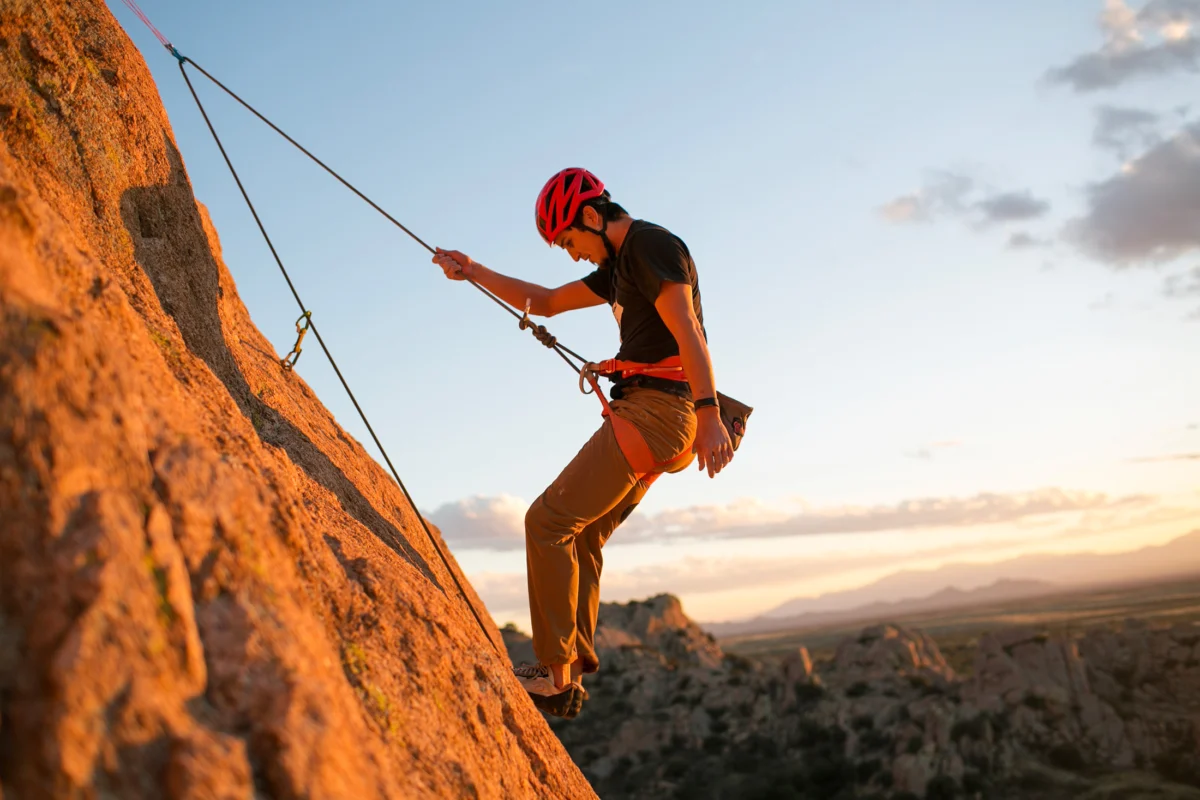
A decades-long, often contentious debate over the appropriate management of recreational climbing within federally designated wilderness is reportedly nearing a definitive resolution, following the release of comprehensive draft guidance from major land-management agencies. In a pivotal move, the U.S. Forest Service and various Department of the Interior entities, including the National Park Service (NPS) and the Bureau of Land Management (BLM), unveiled their proposed regulations in mid-June concerning the placement and maintenance of permanent anchors – critical metal points of attachment for ropes – in these pristine landscapes. This long-awaited guidance directly stems from the mandate of the 2025 Protecting America’s Rock Climbing (PARC) Act, a landmark piece of legislation passed by Congress that aimed to clarify climbing’s status on public lands.
For a sport deeply intertwined with the nation’s rugged geography, the question of fixed anchors has always represented a fundamental tension between access, safety, and the foundational principles of wilderness preservation. Erik Murdock, Deputy Director of Programs, Policy, and Government Affairs at the Access Fund, a prominent nonprofit dedicated to both climbing access and environmental stewardship, observed that "A lot of people and user types are vying for the same piece of real estate, and climbers are part of that." He expressed cautious optimism that the new framework helps to firmly secure climbing’s place within this intricate ecosystem of outdoor recreation. However, not all stakeholders share this view; some fervent wilderness advocates contend that the proposed rules offer insufficient oversight, potentially infringing upon the core intent of the 1964 Wilderness Act, which broadly prohibits permanent infrastructure within its designated areas, thus fueling the ongoing controversy.

The crux of the matter lies in the distinction between different types of climbing protection. When scaling sheer rock faces, climbers employ various devices to secure their ropes, ensuring safety in the event of a fall and enabling controlled descents. Removable protection, such as spring-loaded camming devices (cams) that expand to fit cracks, or traditional nuts wedged into fissures, are generally uncontroversial as they leave no lasting trace. The debate ignites, however, with "fixed" or permanent anchors. These include bolts drilled directly into the rock on long, featureless sections lacking natural placements for removable gear, often fitted with metal hangers for rope attachment. Another common type is the piton, a metal spike hammered into a crack, featuring a loop for clipping a carabiner. Additionally, ropes or slings might be installed around natural features like boulders or trees and left in place, particularly at the top of a route, to facilitate safe rappelling. While essential for certain climbing styles and frequently crucial for safe descent from challenging routes, these permanent fixtures represent a tangible alteration of the natural environment, a point of contention for those who champion an "untrammeled" wilderness.
The draft regulations exhibit variations across different federal agencies, reflecting the diverse mandates and management philosophies inherent to each. The National Park Service, known for its stricter conservation policies, proposes a requirement for climbers to obtain special-use permits or broad, advance authorization from a park superintendent before installing any new bolts. This approach underscores a proactive, permission-based model aimed at preserving the aesthetic and ecological integrity of the park’s wilderness areas. In contrast, the Bureau of Land Management, which manages vast expanses of multiple-use public lands, offers a more lenient stance, potentially allowing climbers to place a limited number of bolts without requiring explicit prior authorization. The U.S. Forest Service, responsible for overseeing approximately half of the nation’s public-land climbing opportunities, has outlined a strategy that directs its local offices to collaborate closely with climbers and established climbing organizations. This collaborative model aims to develop localized management plans tailored specifically for both wilderness and non-wilderness climbing areas under their jurisdiction, fostering a more adaptive and regionally responsive approach. While the Access Fund’s Erik Murdock and many within the climbing community acknowledge some nuanced disagreements with specific details, they largely characterize the collective proposals as "overall workable policies," signaling a constructive step forward.
However, a significant contingent of environmentalists and wilderness preservation groups view the new guidance with deep concern, fearing it could inadvertently trigger an unchecked proliferation of climbing infrastructure across the nation’s most protected natural spaces. Dana Johnson, Policy Director with the Montana-based environmental nonprofit Wilderness Watch, articulates these anxieties, particularly in light of recent governmental restructuring. Johnson highlighted that several Forest Service regional offices have experienced substantial reductions in their wilderness staff over the past 18 months, attributing these losses to deferred resignations and budget cuts enacted by the now-defunct Department of Government Efficiency (DOGE). She expressed serious doubts about the remaining staff’s capacity to effectively create new, comprehensive management plans for climbing areas, let alone adequately monitor the environmental impact of both new and existing routes that feature permanent anchors. "We’re squeezing wildlife into smaller and smaller pockets of protected space," Johnson warned, "and we have a lot of people waiting in line for more access." Her concerns echo broader anxieties within the Biden administration, which, in 2023, initially proposed a national directive to prohibit all new fixed anchors in wilderness areas and mandated a thorough review of existing climbing routes. This earlier proposal was driven by growing fears of ecological damage stemming from overcrowding and the proliferation of permanent bolts in sensitive environments. However, the subsequent passage of the PARC Act in 2025 fundamentally altered this trajectory, legally codifying recreational climbing – explicitly including the use, placement, and maintenance of fixed anchors – as an appropriate and permissible activity within wilderness areas.

Beyond the immediate debate over fixed anchors, some argue that the focus on climbing hardware distracts from a more pervasive challenge facing wilderness areas: the cumulative impact of all human activity. Zach Lentsch, owner of Wyoming Mountain Guides, an outfitter that frequently guides clients through designated wilderness, posits that while fixed anchors draw significant scrutiny, they represent a narrow facet of a much broader issue. Lentsch points out that hikers, backpackers, and other "quiet recreationists" also contribute significantly to wilderness overcrowding and environmental degradation. He cites concerning examples, such as Lonesome Lake near the iconic Cirque of the Towers in Wyoming’s Wind River Range, which has reported dangerous levels of E. coli contamination, primarily attributed to improper human waste disposal. Lentsch contends that simply banning a specific use like fixed anchors would be a superficial solution that fails to address the root causes of environmental strain. Instead, he advocates for a more holistic approach, urging agencies to collaborate with all categories of wilderness users to implement comprehensive permit systems that effectively manage and limit overall visitation where necessary. Furthermore, he champions initiatives that educate and require campers to utilize specialized waste bags for containing and packing out human feces, thereby mitigating widespread contamination.
Lentsch also emphasized a deeply ingrained ethical code within the climbing community itself. "If you’re not a climber, it might seem like climbers are going out there willy-nilly and putting ugly hardware into the walls," he acknowledged. "There are plenty of places in the wilderness where you don’t need a fixed anchor, and typically the ethic has been if you don’t need a fixed anchor, you don’t bring one." This self-imposed restraint and adherence to minimum impact principles are often overlooked in the broader public discourse. Globally, the challenge of balancing climbing access with wilderness protection manifests in various forms. In regions like the European Alps, for instance, a long history of mountaineering has led to an acceptance of certain fixed infrastructure, often managed through local clubs and strict guidelines, while more remote areas of Patagonia prioritize minimal impact and self-sufficiency. The varied international approaches underscore the complexity of harmonizing human recreational pursuits with conservation imperatives in unique natural settings.
The current public comment period for the U.S. Forest Service proposal concluded on July 20, providing an opportunity for diverse stakeholders to voice their perspectives. Meanwhile, the public can submit feedback on the proposals from the National Park Service, the Bureau of Land Management, and the Fish and Wildlife Service until August 14. The outcomes of these consultations will be instrumental in shaping the final policies, determining how future generations will engage with, and preserve, America’s irreplaceable wilderness landscapes. The enduring challenge lies in crafting regulations that honor both the spirit of adventure and the solemn commitment to protecting these wild places for their inherent ecological value and the profound solace they offer.







