Rocky Georgio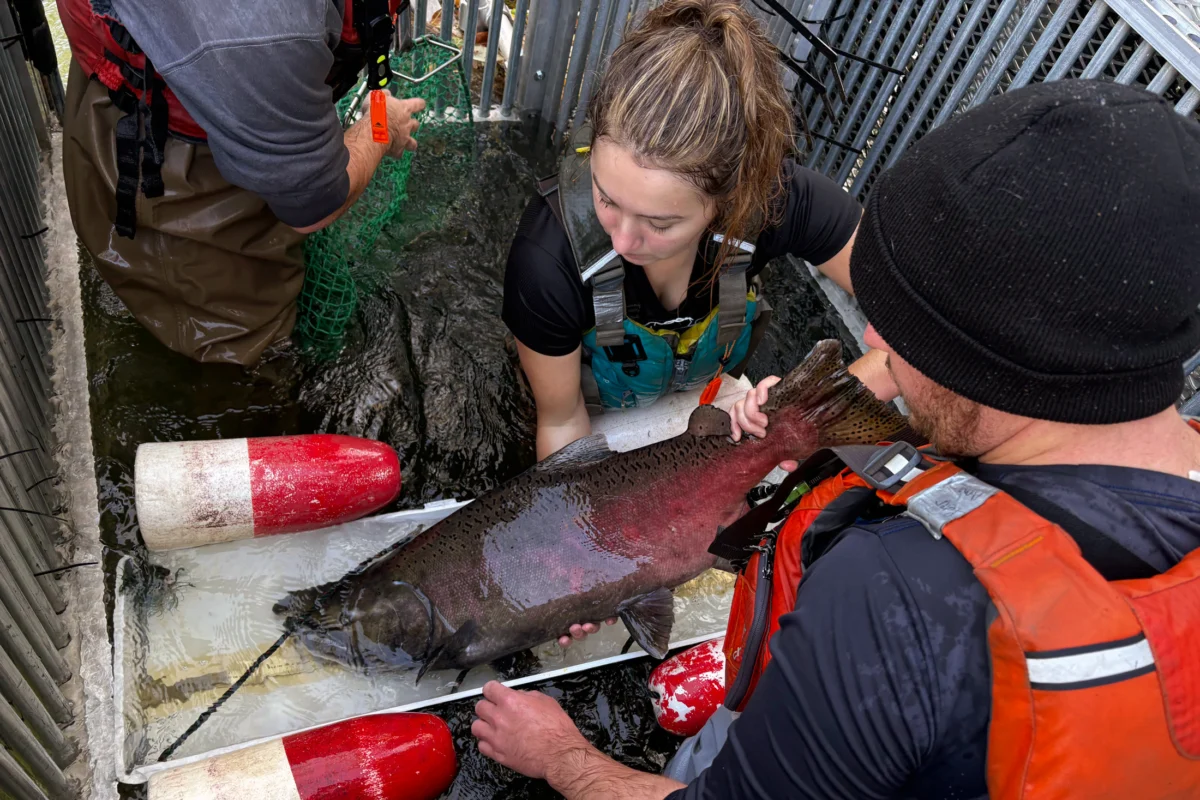
In a striking testament to ecological resilience and dedicated human intervention, Putah Creek in California, once a heavily manipulated waterway, is experiencing an astonishing resurgence of its native salmon population, far exceeding initial expectations. This transformation, achieved through a commitment to restoring natural flows and habitat, offers a powerful model for river recovery in anthropogenically altered landscapes. While the recent much-publicized deconstruction of four dams on the Klamath River has captured significant attention, the story of Putah Creek, though less heralded, provides an equally compelling narrative of a river’s rebirth and the return of its iconic inhabitants.

Flowing for approximately 85 miles from its headwaters in the Mayacamas Mountains to its confluence with the Sacramento River floodplain, Putah Creek’s journey historically involved a series of human-imposed obstacles. Its course was confined by dams, its waters diverted for agricultural and urban use, and its banks artificially straightened and hardened. For decades, these modifications rendered the creek inhospitable to salmon, with its flows becoming too warm and shallow to support their life cycle, leading to the proliferation of invasive, heat-tolerant species like bass. The creek’s ecological distress was starkly evident in 1989 and 1990 when sections of its lower reaches dried up completely, resulting in significant fish die-offs. At the time, the city manager of Davis, a community through which the creek flows, lamented that the local wildlife was "severely stressed, dying, or dead."
However, this period of ecological decline sowed the seeds for Putah Creek’s eventual recovery. In 1990, the Putah Creek Council, an environmental advocacy group, initiated legal action against the Solano County agencies responsible for managing the dams. They argued that California law mandated dam managers to maintain healthy fish populations. This lawsuit, later joined by the city of Davis and the University of California, Davis, ultimately led to a landmark settlement in 2000 known as the Putah Creek Accord. This agreement fundamentally altered water management practices, requiring releases that more closely mimicked the creek’s natural hydrological patterns. Crucially, the accord ensured the creek would no longer dry up during the summer months and introduced seasonal spring pulses designed to stimulate fish breeding. A key component of this strategy was the provision of a fall surge of water, termed an "attraction flow," specifically intended to entice salmon back to the creek.

"It was a speculative, ‘Well, maybe this is going to work’ kind of thing," recalled Phil Stevens, executive director of the Putah Creek Council, reflecting on the uncertainty surrounding the accord’s ambitious goals. "Nobody knew whether the salmon would come or not."
Despite the accord’s success in re-establishing minimal flows, a significant portion of Putah Creek’s water, approximately 95%, continues to be diverted for human consumption. Nevertheless, even these relatively modest water releases, coupled with other habitat restoration efforts such as riparian planting and community-led cleanups, yielded remarkable results. By 2012, scientists observed that native fish species, including Sacramento suckers and tule perch, had already "regained dominance" in the creek. The following year marked a watershed moment: eight chinook salmon, drawn by the carefully managed attraction flows, returned to Putah Creek to spawn, marking the first such occurrence in decades. This initial trickle grew into a significant influx, with several hundred salmon arriving the next year and approximately 1,500 making the journey in 2016. The return of these migratory fish was so profound that conservation groups established a Salmon Fest in the town of Winters, an event that would have been unimaginable just years prior. Christine Parisek, a postdoctoral scholar at UC Davis’s Center for Watershed Sciences, highlighted the significance of this recovery, stating that it proves "it’s possible to recover the ecology of a system" by reintroducing natural flows, even if it requires a patient, long-term commitment. The simple act of providing adequate water, it turned out, was fundamental to the fish’s survival and return.

As the salmon population on Putah Creek began to swell, a critical question emerged: from where were these fish originating? Salmon are renowned for their instinctual drive to return to their natal streams to reproduce. Given Putah Creek’s long absence of chinook, the returning fish were clearly "strays" from other locations. In 2020, researchers, including Andrew Rypel, a fish ecologist who was then at the University of California, Davis, and is now at Auburn University, elucidated this mystery. Their findings revealed that the vast majority of the new salmon population in Putah Creek were derived from fish released from Central Valley fish hatcheries. During dry years, these hatchery-raised salmon were trucked to the San Francisco Estuary, an experience that evidently left them with a weak imprinting on their original birth waters. Years later, as adults, they navigated into the Sacramento River and, by chance, entered the Toe Drain, a warm, channelized waterway that ultimately led them to Putah Creek. While the tendency of hatchery salmon to stray from their designated natal rivers is often viewed as a disadvantage, as it can dilute the gene pools of wild populations, this characteristic proved beneficial in Putah Creek, where no wild fish were present to be affected. Rypel noted, "If you do the hard habitat work, the hatchery fish can help you," suggesting that these seemingly disoriented strays played a pivotal role in establishing a unique, albeit unconventional, salmon population in the creek.
Further scientific investigation provided even more compelling insights into the evolving salmon community of Putah Creek. A 2025 study, led by Rypel and his colleagues, analyzed the otoliths – tiny ear bones that grow with elemental signatures reflecting the water an organism inhabits – of chinook salmon from Putah Creek. This analysis allowed researchers to trace the origins of individual fish. The otolith data revealed a significant development: some of the salmon found in Putah Creek were not solely reliant on hatchery releases. A portion of these fish had been born directly in the creek, migrated to the ocean, and successfully returned as adults, completing the full, natural salmon life cycle. This indicated that the "accidental" chinook population in Putah Creek was beginning to shed its domestic origins and genuinely rewild.

The broader context for this localized success is the dire state of salmon populations across the Central Valley. Decades of dam construction, water diversions, prolonged droughts, and other environmental stressors have led to a dramatic decline in chinook salmon numbers. Projections suggest that without significant intervention, these populations could face extirpation or minimal abundance by the end of the century. Putah Creek stands out as one of the rare streams where salmon runs are not only surviving but actively growing. Max Stevenson, Putah Creek’s streamkeeper – a position established by the accord and funded by the Solano County Water Agency – emphasizes the importance of an all-hands-on-deck approach, stating, "You can go ahead and pooh-pooh the hatchery fish, but it’s all hands on deck."
Despite these encouraging advancements, Putah Creek still confronts significant challenges. The creek bed in many areas suffers from compaction and siltation, which degrades crucial spawning grounds. Stevenson has actively worked to address this by mechanically breaking up gravel and introducing new material, though the task remains extensive. A more substantial impediment to salmon migration is a 10-foot-high check dam. This structure restricts upstream passage for salmon until late fall, coinciding with the end of the irrigation season. Only when water managers remove wooden boards can the chinook proceed upstream, a process described as an "antiquated form of fish passage." A severe incident in 2021 underscored the fragility of the system: torrential rains introduced a large volume of organic matter into the creek, leading to low-oxygen conditions that killed incoming salmon before the check dam was opened, decimating nearly an entire year’s spawning run. Stevenson is actively pursuing solutions, including the construction of a bypass channel or an underwater fish ladder to enable salmon to circumvent the check dam, or potentially upgrading irrigation infrastructure to allow for the dam’s complete removal.

The effort to restore salmon in such a profoundly altered environment, according to Rypel, exemplifies "reconciliation ecology" – the practice of creating space for nature within landscapes irrevocably shaped by human activity. The chinook salmon of the Central Valley are now often reared in flooded rice fields, navigate irrigation ditches, and spawn in artificially introduced gravel. These artificial conditions may represent a potential future for salmon in California’s anthropogenically transformed environment, a region where human engineering has reshaped nearly every landscape, yet where opportunities for nature persist if we actively choose to accommodate them. As Stevenson eloquently put it, "We can build cities, we can make factories, we can go to the moon. We can make a salmon run here if we want one."