Joko Susilo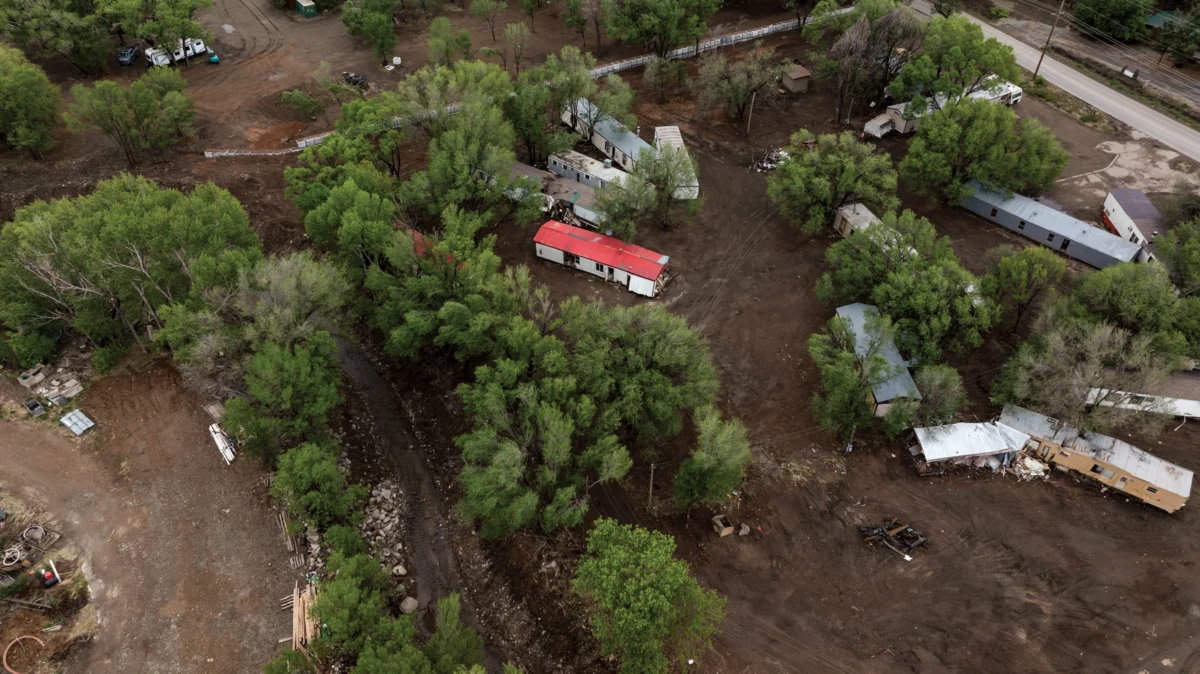
Lindsay Sexton and her husband, Corey, dedicated years to meticulously planning their move to Ruidoso, New Mexico, envisioning a tranquil life in the embrace of its majestic pine forests. This idyllic mountain town had long served as a cherished weekend sanctuary for the couple and their young son, offering respite from the desert heat with opportunities for hunting and skiing. In 2024, their dream materialized with the acquisition of a sprawling ranch house nestled along the meandering banks of the Rio Ruidoso, a property that promised a lifetime of serene moments. However, their aspirations quickly collided with the harsh realities of a rapidly changing climate.
On the very summer day they prepared to finalize the purchase, two ferocious wildfires, dubbed the Salt and South Fork fires, ignited just beyond the town’s periphery. These blazes, fueled by drought-parched landscapes, raged uncontrollably, ultimately incinerating an estimated 1,400 structures and leaving a trail of devastation across the region. Miraculously, the Sextons’ newly acquired home emerged unscathed from the inferno. Yet, their relief proved fleeting. The morning after they officially moved in, a firefighter delivered a stark warning: “Y’all need to go.” Just a few inches of rain had transformed the normally placid Rio Ruidoso into a raging torrent, signaling an impending flash flood. The fires had stripped the mountain slopes of vital vegetation and seared the soil, rendering it hydrophobic – incapable of absorbing rainfall. This ecological alteration turned the once-protective terrain around Ruidoso into dangerous conduits for mud and debris flows.
As New Mexico’s monsoon season intensified, the floods became a recurring nightmare. The Sextons valiantly constructed an eight-foot sandbag barrier between their home and the river, a desperate measure against nature’s fury. Then, last July, the community bore witness to a catastrophic event: a record-setting 20-foot wall of brown, churning water rounded the riverbend. Corey Sexton, demonstrating immense courage, plunged into the deluge to rescue two individuals trapped in its grip. But amidst the chaos and the river’s relentless rush, he watched in horror as a small child was pulled under and tragically swept away. That four-year-old girl was one of three lives tragically claimed by the devastating July 8 flood, which scarred hundreds of homes and profoundly disrupted the lives of a community already grappling with the immense challenge of post-wildfire recovery.
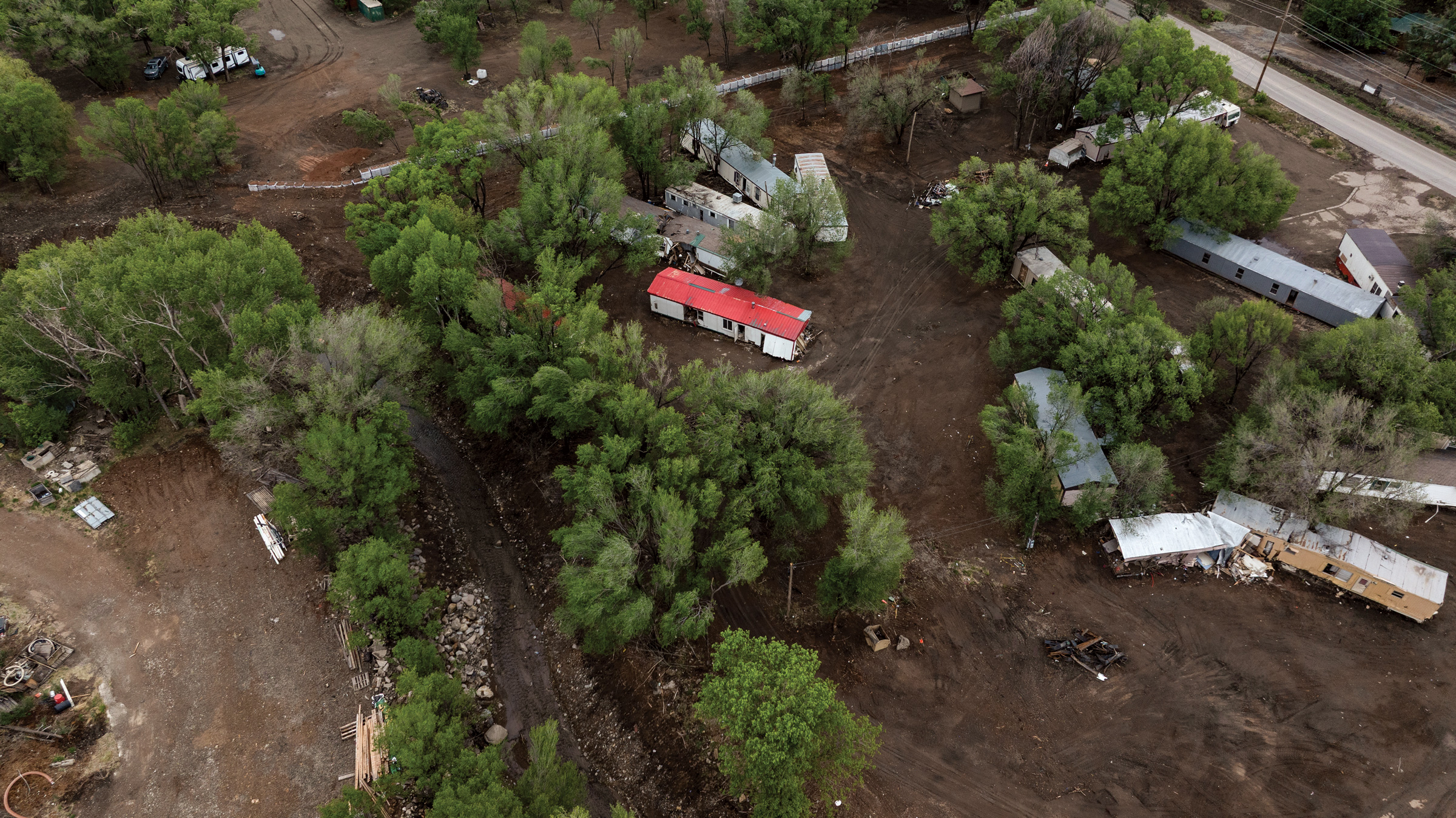
Experts universally warn that Ruidoso’s peril is far from over. The risk of intensified flooding typically persists for several years following a major wildfire, as the ecosystem slowly attempts to heal and regrow. Moreover, the increasing likelihood of heavier, more intense rainfall events, a signature of global climate change, threatens to unleash even more destructive deluges. The Sextons, emotionally and physically exhausted, now seek to escape their perilous situation. Yet, a deep moral dilemma weighs on them: they cannot in good conscience sell their home to another unsuspecting family. “Somebody else buys it, and then they’re in the same predicament,” Corey Sexton articulated, his gaze sweeping across the living room they had forsaken decorating. “I don’t think that anybody, honestly, should be on the river.” This sentiment underscores a profound shift in perception, moving from a dream location to an inescapable hazard.
Local officials echo Sexton’s profound concerns, recognizing the unsustainable cycle of destruction and rebuilding. In a bold and proactive move this spring, Lincoln County announced an innovative plan: with crucial assistance from the U.S. Department of Agriculture (USDA), the county is offering to purchase at-risk properties at their pre-damage valuations. The properties acquired under this initiative will see their houses either demolished or relocated, permanently converting the land into open space. This strategic conversion aims to create a natural buffer against future flood events, a critical measure for long-term community resilience. With an impressive $235 million in funding already secured, authorities harbor ambitions of acquiring approximately 400 properties from willing sellers, a proposal that could fundamentally reshape the 8,000-person town of Ruidoso. This ambitious undertaking represents a pioneering approach to disaster management.
Voluntary buyout programs, often termed "managed retreat" in climate adaptation circles, have offered a lifeline to tens of thousands of U.S. homeowners across all 50 states since the late 1980s. These programs typically enable residents to escape homes perpetually threatened by rising riverbanks and encroaching coastlines, particularly in the aftermath of catastrophic hurricanes like Sandy and Harvey. However, Lincoln County’s initiative stands out as one of the first in the nation to explicitly deploy buyouts as a targeted strategy to mitigate the complex and compounding risks of post-fire flooding. As the Western U.S. increasingly grapples with the intertwined scourges of extreme wildfires and subsequent flash floods exacerbated by climate change, Ruidoso’s comprehensive effort emerges as a potential blueprint for other vulnerable mountain communities striving for survival and long-term adaptation. This proactive stance marks a significant departure from traditional reactive disaster response.
Ruidoso, a community rooted in conservative values, initially presented an unlikely backdrop for a program some online commentators decried as a governmental "land grab." Harlan Vincent, the region’s Republican state representative, initially harbored skepticism regarding the efficacy and necessity of such extensive buyouts. Yet, a rigorous examination of the economic realities proved persuasive. Even before last summer’s catastrophic flood, New Mexico had already committed a staggering $100 million towards recovery efforts stemming from the South Fork and Salt fires. The Ruidoso mayor now estimates the total recovery costs could escalate to a staggering billion dollars. Faced with these astronomical figures, and with federal aid proving insufficient to cover repeated rebuilding, it became clear that continuous reconstruction in persistently vulnerable areas was neither fiscally prudent nor environmentally responsible. The economic imperative for change was undeniable.

Lincoln County had already been collaborating with the USDA’s Natural Resources Conservation Service (NRCS) on various mitigation strategies, including critical debris removal and aerial seeding aimed at stabilizing denuded landscapes. The NRCS, a federal agency dedicated to conserving natural resources, also administers a buyout program, though it had never been specifically invoked in the aftermath of a wildfire until now. Lincoln County’s unique circumstances, including the urgent need to restore its devastated watershed and protect human life and property from imminent danger post-disaster, met the stringent criteria. Consequently, the NRCS approved the county’s buyout proposal, committing to cover up to 75% of the associated costs. This partnership underscores the increasing recognition by federal agencies of the need for innovative solutions to complex environmental challenges.
Local officials harbor optimism that a newly established state fund can bridge the remaining financial gap. This spring, Representative Vincent, alongside other forward-thinking lawmakers, successfully advocated for the New Mexico Legislature to allocate $70 million for land acquisition, ecological restoration, and broader disaster recovery initiatives. This fund includes potential state matching contributions for local governments that have secured federal emergency grants. Vincent articulated the fundamental shift in strategy, stating, “When you go up against Mother Nature, it’s not going to work out so good for you. We’re trying to get along with her.” This philosophy represents a pragmatic acceptance of environmental realities and a move towards harmonious coexistence.
This strategic retreat from flood-prone areas does not signify an abandonment of Ruidoso’s cherished natural environment. On the contrary, Lincoln County officials contend that the buyouts could serve as a powerful catalyst for rejuvenating Ruidoso’s vital outdoor economy through the designation of new public lands. Vincent estimates that the community has already incurred losses exceeding $100 million in tourism revenue following the devastating floods. The vision includes transforming these acquired riverfront properties into a vibrant riverside park, complete with essential water retention and safety features such as strategically placed dams and detention ponds. “Think of the opportunities we can build around that,” Vincent passionately wrote in a January op-ed for the Ruidoso News, envisioning “more places for people to walk and picnic with their families, fish in the river, and see healthy wildlife populations.” This forward-thinking approach aims to transform a liability into a community asset.
While buyout programs in other states have successfully paved the way for the creation of trails, wetlands, and parks within floodplains, such proactive and integrated planning for post-buyout land use remains largely atypical, according to Liz Koslov, a University of California-Los Angeles sociologist specializing in buyouts. “A lot of the time, it just looks abandoned,” Koslov observed, highlighting a critical oversight in many past initiatives. “What happens to land has totally been an afterthought.” This lack of foresight often leads to neglected spaces rather than thriving ecological or recreational areas.

Thoughtful landscape design and ongoing management become especially paramount in wildfire-prone regions, Koslov emphasized. While open spaces demonstrably help mitigate flood damage, if left unmanaged, overgrown vegetation can ironically pose new and significant fire risks. In a community facing such a complex array of environmental hazards, simply abandoning acquired land is not a viable or responsible option. The necessity for a holistic approach to land management, integrating both flood and fire resilience, is critical for long-term sustainability.
One afternoon in early March, Lincoln County Manager Jason Burns navigated the winding back roads of Ruidoso, gesturing towards homes with shattered windows, their structures visibly sagging towards the swollen river. “We’re gonna open this all up,” he declared, his voice firm with resolve, “to make sure we don’t have more homes floating down the river.” This commitment underscores the county’s determination to prevent future tragedies.
To qualify for a buyout, applicants must meet specific NRCS requirements, including U.S. citizenship and demonstrable permanent access to the at-risk property. Following this initial screening, the onus falls on the county to strategically prioritize eligible applicants. Burns and his team meticulously categorized over a thousand vulnerable properties into five distinct tiers based on existing damage and projected future risk. The county intends to concentrate its efforts on applicants falling within the first two tiers—those whose homes have been entirely destroyed or severely damaged, reflecting an urgent need for intervention.
Yet, the implementation of buyouts inevitably introduces layers of complexity and emotional resonance. At a heavily attended public meeting in late March, residents peppered Burns with a barrage of incisive questions: How would an appraiser accurately assess the value of homes that had been completely swept away? Would second homes be eligible for the program? What about the plight of residents in mobile home parks, many of whom owned their homes but not the underlying land they occupied? These questions highlight the intricate social and economic challenges inherent in such large-scale relocation efforts.

By early May, the county had received more than 300 applications from property owners, Burns reported. Just over 150 of these applications had been deemed preliminarily eligible, and appraisers had commenced site visits to assess properties. However, the ultimate number of participants in the voluntary program remained uncertain, reflecting the deeply personal and often agonizing calculus residents faced.
Residents like Mike Abraham, whose property lies just across the river from the Sextons, wrestle with this complex decision daily. His backyard remains buried beneath a thick layer of silt and debris, and the floodwater line inside his house reached nearly three feet. “I’ve been through four disasters, each time trying to rebuild,” Abraham recounted, his voice heavy with the weight of repeated loss. “This last time has decimated me completely.”
Abraham spent months after the July flood oscillating between temporary hotel stays and the hospitality of friends. Now, he resides in the two remaining undamaged rooms of his house, living without heat or running water. Despite these arduous conditions, he remains reluctant to leave. The property has been a cherished part of his family for 45 years, and he has called it home for two decades. He clings to the hope that with enhanced mitigation infrastructure, the most severe impacts of future flooding could be averted. Furthermore, a significant concern is that a buyout offer might not adequately cover the cost of acquiring a new, comparable home in the Ruidoso area, where housing stock is already limited and increasingly expensive.
This particular concern is both real and widespread, according to Miyuki Hino, a climate adaptation researcher at the University of North Carolina at Chapel Hill. “Especially for lower-resourced households, just being handed a check is not enough to really make the move a success,” Hino explained. Without careful consideration of the holistic needs of displaced residents—including access to affordable housing, social support networks, and economic opportunities—a buyout program, despite its good intentions, can inadvertently exacerbate existing inequalities and fracture the very community it endeavors to preserve. The human element, beyond mere financial transactions, is critical for successful managed retreat.

Abraham remained unsure what it would ultimately take to convince him to relinquish his ancestral home. As they conversed in his devastated yard, two majestic elk gracefully wandered over, pausing just across the river. They watched in quiet awe as the animals folded their legs and settled into the warm sun. “What price do you put on that?” Abraham asked, his voice a poignant reflection on the profound, intangible value of his home. “What price do you put on waking up every day and seeing nothing but beautiful life?” This deep connection to place, often overlooked in policy discussions, presents one of the most significant challenges in the complex and emotionally charged process of managed retreat.