Rocky Gerung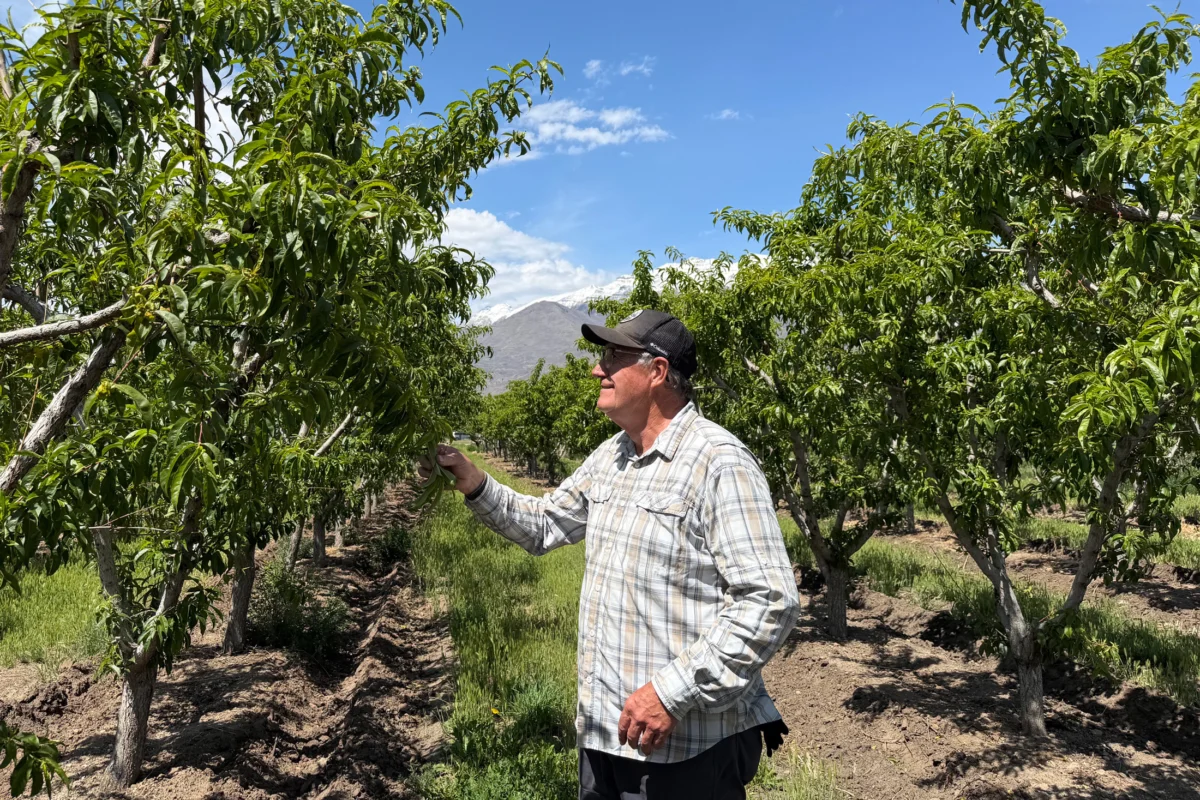
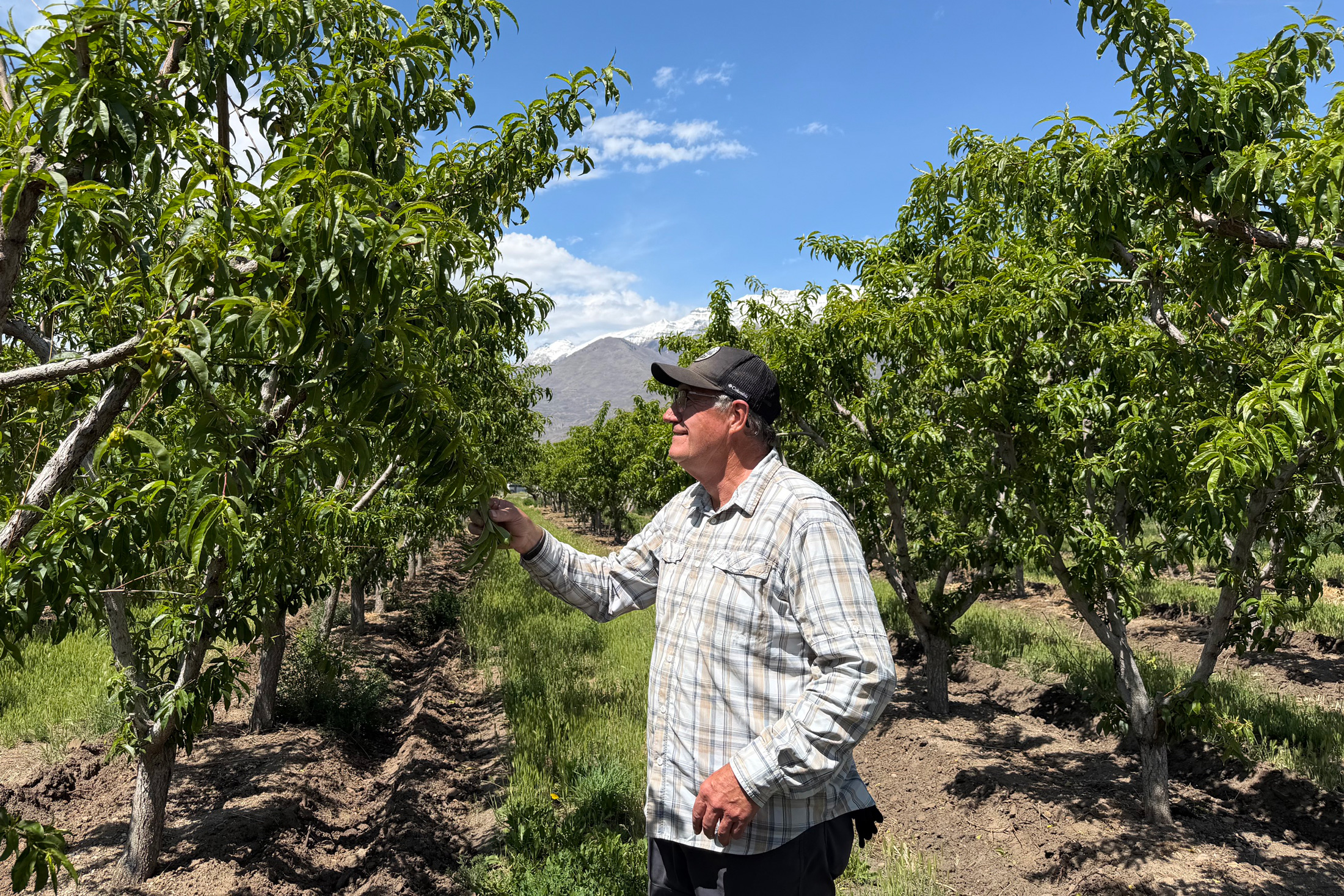
On a sun-drenched May afternoon, the usual task for Tim Crandall would be thinning the burgeoning peach crop in his family’s nearly 150-year-old orchard. Instead, the air in Utah County, deceptively cool under the bright sun with the majestic Wasatch Mountains capped in snow, carried a somber note as Crandall, his eyes warm beneath his baseball cap, scoured the leafy trees for any sign of surviving fruit. “In a normal year, you would just go up to a limb like this, and there would just be peaches and peaches,” he explained, gesturing to a branch that, in a typical season, would be heavy with nascent fruit. “I’m still looking for one.” This stark reality reflects a widespread crisis gripping Utah’s tree fruit growers, who are reporting near-total harvest losses across the state.
The current agricultural disaster in Utah stems from a confluence of unusual weather patterns. Following one of the warmest and driest winters on record for the state, an intense, record-breaking spring heatwave prompted orchards to blossom an astonishing three weeks ahead of schedule. This premature bloom, however, left the delicate fruit vulnerable when a series of severe frosts swept through in April, decimating much of the state’s anticipated harvest. Matt Hargreaves, vice president of communications for the Utah Farm Bureau, who has been touring orchards and speaking with numerous growers, estimates that crop losses are hovering around 95% statewide, a figure corroborated by multiple farmers interviewed.
Crandall’s 20-acre farm, situated on the Orem benches, is a testament to generations of agricultural dedication. His great-grandfather homesteaded the land in the 1880s, choosing a location historically lauded as prime fruit-growing territory. This particular strip of land benefits from a microclimate created by winds flowing from Provo Canyon, which circulates warmer air, and an elevation that sits just above the valley floor, where colder air tends to settle. The soil, rich and loamy, is a legacy of ancient lakebeds that once covered the valley. Before the expansion of residential developments across Utah Valley, orchards were a common sight, blanketing much of Orem and Provo. Despite these ideal conditions, Crandall reported a 100% loss of his peach crop. He remains uncertain whether he will open his farm stand this year, pinning his hopes on a potential apple harvest, though peaches are his most popular offering. Even larger operations, such as Allred Orchards, a 600-acre multigenerational farm specializing in peaches and apples, have announced they will forgo operations entirely this year due to the losses.
While late frosts have always presented a risk to fruit cultivation, the magnitude of this year’s devastation is described by growers as nearly unprecedented. In recognition of the severity of the situation, Utah Governor Spencer Cox declared a state of emergency on May 15th. This declaration aims to facilitate access to financial relief, including low-interest disaster loans, for affected agricultural producers. The impact is not confined to Utah; other fruit-growing regions in the Western United States have also experienced significant crop damage. Colorado’s Western Slope witnessed substantial freeze damage in several peach orchards, while California’s Central Valley, after enduring record spring heat, is anticipating an unusually early peach harvest.
In north-central Utah, peaches typically lead the charge in the annual fruit blossoming season, painting the landscape with vibrant pink hues. A dozen varieties mature in succession, beginning in August and continuing for six weeks, offering a cascade of rosy-hued globes that fill roadside farm stands. The Redhaven, with its vermillion skin and tender flesh, usually ripens first, followed by the sweet John Boys, the firm Diamond Princesses, and the golden Lemon Elbertas, a favorite for canning. The O’Henrys, often considered the premier eating variety, mark the end of the peach season. However, the precocious nature of peach blossoms makes them particularly susceptible to cold snaps. Blossoms and developing fruits are severely damaged or killed at temperatures around 28 degrees Fahrenheit, and a drop to 25 degrees can obliterate an entire crop within hours.
Crandall observed that all his fruit trees were already in bloom when the freezing temperatures arrived, with cherries having reached the size of small peas. He had noticed the early signs of a challenging season back in January, when buds began to emerge, anticipating that a full crop would be a near impossibility. Prior to a final freeze in mid-April, he estimated that the orchard still held the potential for half a peach crop and healthy apples. However, within a mere two hours, the majority of this potential was lost.
The phenomenon of earlier blooming in fruit trees is a consequence of a warming climate, which provides trees with temperature cues that encourage them to awaken and leaf out sooner. This trend, observed across thousands of plant species, lengthens the period during which they are exposed to the risk of frost damage. William Anderegg, a climate scientist at the University of Utah and former director of the Wilkes Center for Climate Research and Policy, explains that while a single frost event cannot be definitively attributed to climate change, the overall warming trend is undeniably increasing the frequency and severity of damaging frosts. He likens this to “loading the dice” for more frequent crop losses in the near future.

When frost is imminent, fruit farmers employ various strategies to mitigate the damage and gain a few crucial degrees of warmth. Larger orchards utilize wind machines to circulate warmer air from higher altitudes down to the trees, often supplemented by propane heaters. Another technique involves irrigating the base of the trees; as water freezes, it releases latent heat, which can help to warm the surrounding orchard environment.
Chris Riley, a 39-year-old farmer whose family manages 200 acres of fruits and vegetables at Riley Orchards in Genola, Utah, implemented all these protective measures. “We were trying everything we had to try and warm it up just enough,” he recounted, acknowledging the ultimate power of natural forces. “But Mother Nature’s in control.” He estimates a 95% loss across his farm, affecting peaches, cherries, nectarines, pluots, and apples.
The economic and human toll of these losses has been profound. Riley Orchards relies on the federal H-2A visa program to secure seasonal agricultural workers, many of whom return year after year. Following this year’s crop failure, Riley was forced to send 11 of his 15 workers back to their home countries, a decision that deeply affected him. To support his remaining staff and family without drawing income from the devastated farm, Riley has taken a temporary summer job delivering equipment for a local John Deere dealership. “Sending workers home really, really bothered me,” he admitted, “But we just weren’t going to have work for them.”
Despite the absence of a marketable crop, essential orchard maintenance continues. Pruning, spraying, and watering remain critical tasks to protect the trees and ensure the health of future harvests, even without the immediate income generated from this year’s anticipated yield.

Crandall, who is also a retired schoolteacher, is already looking ahead to next year. He views his role not just as a custodian of the land but as a steward of the community. He notes the importance of the brief conversations he shares with customers who visit his farm stand, finding that these interactions provide more than just a transaction. This year, however, the lack of fruit means fewer reasons for regulars and passersby to stop. Fortunately, the trees themselves remain alive, and both the peaches and their eager consumers will simply have to endure a longer period of anticipation.