

 Rocky Gerung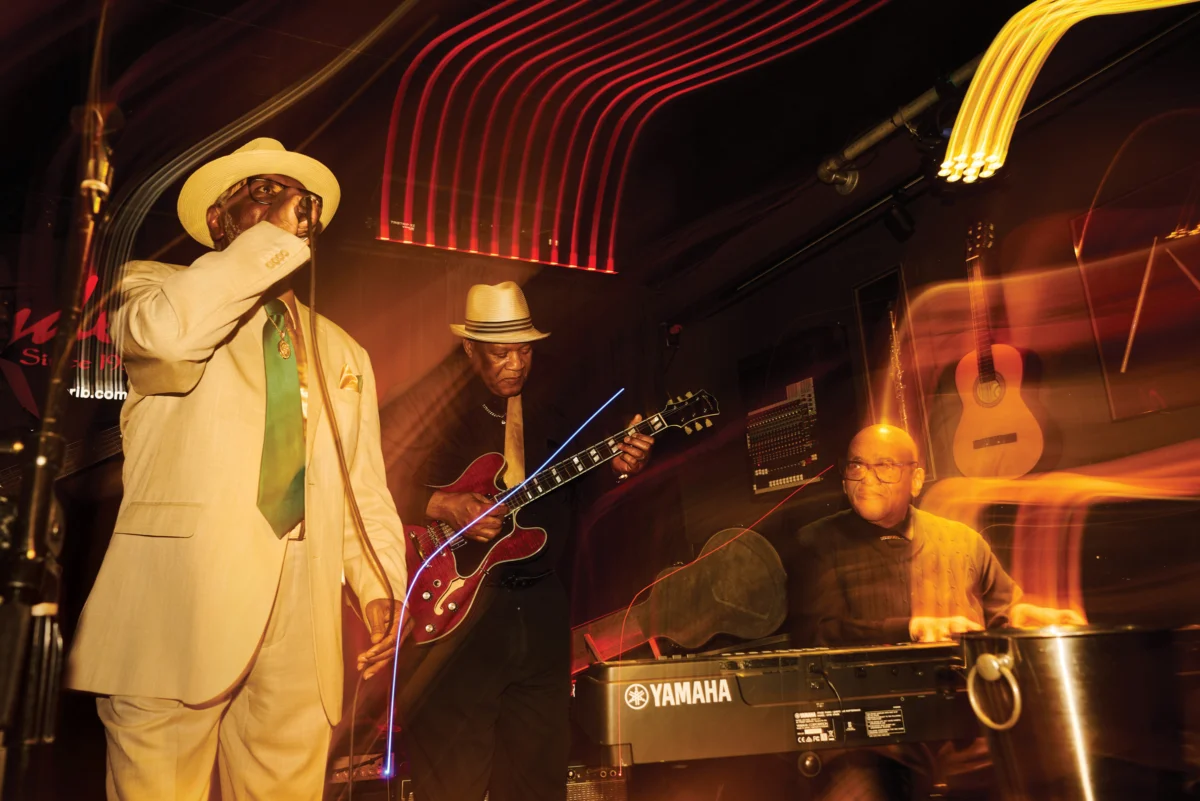
When Norman Sylvester, then just 12 years old, boarded a train in rural Louisiana bound for Portland, Oregon, in the autumn of 1957, he was leaving behind a world of bayous, muscadine grapes, and his grandmother’s gospel songs. His father had sought better opportunities in the Pacific Northwest, a region with a deeply ingrained history of hostility towards Black Americans. For over three-quarters of a century, from 1844 to 1926, Oregon enacted exclusion laws specifically designed to prevent Black people from settling within its borders. This discriminatory legacy was further cemented by the Oregon Donation Land Act of 1850, which granted vast tracts of land to white settlers while explicitly barring Black individuals from claiming any property. Oregon notably refused to ratify the 15th Amendment, and by the 1920s, the state housed one of the Ku Klux Klan’s largest chapters in the West, underscoring the pervasive anti-Black sentiment.
Despite these formidable obstacles, Black pioneers were among Oregon’s earliest inhabitants, striving to build lives and secure equality within a challenging landscape. The Portland chapter of the NAACP, established in 1914, stands as the oldest continuously operating chapter west of the Mississippi River. Nevertheless, the state’s discriminatory policies acted as a powerful deterrent. By the time Sylvester arrived, African Americans constituted less than one percent of Oregon’s population, with Portland’s Black community being the smallest among major West Coast cities. This stark contrast to his Southern roots led to profound culture shock as Sylvester stepped out of Portland’s Union Station.

His immediate need was a haircut, prompting a visit to a barbershop near the intersection of North Williams Avenue and North Russell Street in North Portland. Upon arrival, he was met with a scene of vibrant Black life. A handsome brick building with an onion-shaped cupola anchored one corner, while surrounding streets bustled with African American-owned businesses, including a cafe, a drugstore, and a produce market. Sylvester observed Black individuals confidently managing businesses, driving impressive cars, and exuding a palpable sense of pride. He later likened the atmosphere to Harlem, but in that moment, it simply reminded him of the home he had left behind. Despite the thousands of miles separating him from his Louisiana upbringing, standing on that bustling corner, he felt an immediate sense of belonging, enveloped by the familiar scents of Southern cooking and the lively rhythms of gospel and jazz music. "The place just embraced me," Sylvester recalled, "Everybody was singing the same song, if you know what I mean."
This dynamic intersection was the heart of a neighborhood known as Albina. In the early 20th century, Black Portlanders, many of whom worked as railcar attendants, began settling in this area due to its proximity to Union Station. Over subsequent decades, systemic housing discrimination, including a 1919 Portland Realty Board ruling that deemed it unethical to sell homes in white neighborhoods to non-white buyers, pushed Black residents into Albina, concentrating the community. By 1940, over half of Portland’s Black population, then just under 2,000 individuals, resided within Albina.
The advent of World War II brought a significant influx of over 100,000 new residents to Portland, including approximately 20,000 African Americans drawn by employment opportunities in the burgeoning shipyards. Among these migrants were Sylvester’s parents, aunt, and uncle, who settled in Vanport, a defense housing development constructed behind a railroad embankment in the floodplain of the Columbia River. Vanport, the nation’s largest wartime housing project, was home to over 40,000 residents, with Black individuals forming roughly a quarter of the population, making it by far Oregon’s largest Black community.

Following the war, many residents began leaving Vanport. While Sylvester’s mother returned to Louisiana, his uncle secured employment at a local hospital, and the rest of the family chose to remain in the area, residing in Vanport due to racial restrictions in other neighborhoods. On Memorial Day in 1948, the Columbia River, swollen by spring rains and snowmelt, breached the embankment, inundating Vanport. Within 40 minutes, the entire community was submerged, resulting in at least 15 fatalities and leaving over 18,000 residents, a third of them Black, homeless.
Sylvester’s family, along with most other African Americans displaced by the flood, found refuge in Albina, the only Portland neighborhood that welcomed them. By the time Sylvester settled in the city, four out of every five Black Portlanders lived in this district. Despite challenges such as redlining, underinvestment, and negligent landlords, which sometimes led to overcrowded and dilapidated housing, Albina fostered a close-knit and vibrant community. Black-owned businesses, churches, and gathering places thrived. "Everything you needed in a community was right there," Sylvester remarked.
Music was an integral part of this community, and Albina was alive with it. Gospel choirs filled churches, while soul bands packed the Cotton Club, then the Pacific Northwest’s premier soul music venue. Nearly every night, jazz, blues, and funk ensembles could be heard in the neighborhood’s numerous venues, including teen clubs and all-ages spaces, with bands forming in basements, backyards, schoolrooms, and churches.

At the age of 13, Sylvester’s father, working two jobs to support his family, purchased him a guitar. While not the coveted red electric he desired, the $11.95 pawnshop acoustic was a significant gift. His father promised an electric guitar if he learned three songs. Teachers were readily available in Albina; Sylvester learned his initial chords from a Creole man who owned his family’s home and later received blues instruction from a high school peer. A quick study, Sylvester found the guitar transformed him. The shy country boy who stuttered in urban settings discovered that with his guitar, he could express himself freely.
Now 80 years old, Sylvester has dedicated his life to musical expression. His first band, Rated "X," was among Portland’s pioneering soul groups. Despite local success following the recording of a 1972 single, a demanding graveyard shift at his trucking job forced him to leave the band. However, he continued to play, establishing himself as a prominent blues musician. The Norman Sylvester Blues Band has performed for four decades, sharing stages with legends like B.B. King, Buddy Guy, and Mavis Staples, and earning him a place in the Oregon Music Hall of Fame in 2011.
Sylvester’s accomplishments are notable, but he is part of a broader, deeply connected community of Black musicians, educators, and arts advocates who converged in Albina during the latter half of the 20th century, transforming the region into a musical hub and forging a legacy that endures today. Until recently, however, the rich narrative of Albina’s musical history remained largely confined to the memories and personal collections of its inhabitants, a generation now facing the twilight of their lives.

By the early 2000s, when Bobby Smith, a young white schoolteacher and freelance music journalist, moved to Albina, the neighborhood bore little resemblance to the predominantly Black community of Sylvester’s youth. Smith was aware of Albina’s vibrant jazz scene in the 1940s and 1950s, an era chronicled in Robert Dietsche’s 2005 book Jumptown. Yet, the public narrative of Black music in Portland seemed to cease in 1957, leaving him to wonder about the subsequent decades. A dedicated record collector, Smith scoured used record stores and consignment shops, finding a scarcity of commercial recordings by Portland’s Black musicians from the 1960s, 70s, and 80s. He eventually discovered Sylvester’s 1970s 45 with Rated "X," one of the few artifacts from those eras he could find. Simultaneously, Smith engaged with neighbors, frequented local parks to listen to music, and spent time at Clyde’s Prime Rib, one of the city’s few venues consistently featuring elder Black performers.
In 2014, Smith began DJing for XRAY-FM, a nascent community radio station broadcasting from Albina. By then, he had amassed a modest collection of regional recordings and started inviting local musicians to discuss them on air. Calvin Walker, a drummer, bandleader, and self-proclaimed "child of Albina," was among his early guests. What was scheduled as a 30-minute interview stretched into three hours as Walker shared his life story, inadvertently mapping out an entire ecosystem of musicians and educators who had shaped and been shaped by Albina. "If you’re really curious about this, here’s a list of people you need to start talking to," he told Smith, "And I’ll help you."
Smith’s weekly radio show evolved into a vital platform where elder Black musicians shared their experiences and musical histories. Despite facing significant barriers to the recording industry, Albina’s musicians had diligently documented their own work, preserving a wealth of unreleased recordings in the form of demos, reel-to-reels, cassettes, and VCR tapes. This growing trove of music and memorabilia revealed an extraordinary legacy of Black arts and culture in Portland, an untold chapter of Oregon’s history.

In 2015, Walker, Smith, and Ken Berry, another local musician and community leader, founded the Albina Music Trust (AMT) with the ambitious goal of preserving thousands of obsolete and decaying media items and making them accessible to the public. Elder engineers volunteered their expertise, guiding volunteers in operating archaic equipment. Each item was meticulously digitized and uploaded into a categorized database. After a decade of dedicated effort, AMT launched the Albina Community Archive in 2024, believed to be the only community archive in the United States specifically focused on restoring a Black community’s music culture.
The online repository now houses over 13,000 items sourced from 180 contributors, encompassing music recordings, films, newspaper clippings, posters, handbills, and oral histories. This extensive collection serves as the archive’s foundation, functioning less like a museum and more like a seedbank for historical artifacts that are then revitalized through various projects. An art installation titled Wall to Wall Soul features restored and recolored posters and photography, exhibited widely and now permanently displayed at Clyde’s Prime Rib. Under the record label of the same name, AMT releases vinyl albums of previously unreleased music from Albina’s past, alongside new works by contemporary artists. The Albina Soul Walk, an audio tour, guides listeners through Albina’s historic sites of former venues and gathering places, accompanied by narratives from musicians and club owners, bringing the neighborhood’s past vividly to life.
During a visit to AMT’s modest office in Northeast Portland, Smith, Walker, and Berry exuded a warmth and camaraderie reminiscent of a family gathered around a kitchen table, far removed from a typical board meeting. The conversation flowed effortlessly, weaving together personal anecdotes with historical context, a testament to their shared passion and dedication. Ken Berry, who relocated to Oregon from Kansas in 1953 at the age of four, found himself a pioneer as the first Black student at Laurelhurst Elementary. However, discriminatory neighborhood complaints soon led to his family’s displacement and subsequent move to Albina.

There, Berry began his musical journey, playing piano during Sunday school at the New Hope Missionary Baptist Church and later joining the choir at Jefferson High. After graduation, he became a fixture at Albina’s premier jazz club, The Upstairs Lounge, playing the Hammond B3 organ. It was there he met Thara Memory, a trumpeter from Florida who, initially passing through on tour, found himself captivated by Albina’s charm and community, deciding to stay. Memory and Berry later formed Shades Of Brown, one of many collaborations that would profoundly shape Albina’s musical landscape for decades.
Around the same period, Walker encountered Memory at another vital Albina hub, the Albina Arts Center. As a teenager, Walker frequently performed there with his jazz-infused funk band, The Gangsters. Memory, impressed by Walker’s talent, joined him on trumpet, marking the beginning of a significant musical partnership. In the summer of 1970, the city of Portland, seeking to preemptively counter potential anti-war protests during the American Legion’s national convention, organized Vortex 1, the nation’s only state-sponsored rock concert. Although The Gangsters were not officially invited, they arrived with their equipment and, through Memory’s assertive advocacy for Black representation, secured a performance slot, playing for an hour and a half and even receiving payment.
Despite its significance, this pivotal performance and many other contributions from Albina’s Black musicians were often overlooked in historical accounts, including books and documentaries. Researchers, Smith explained, simply lacked access to the stories, which were held within the community itself rather than institutional archives. "The public library and the Oregon Historical Society have existed for over a hundred years," Smith noted, "But in the 10 years we’ve been around, we’ve become the largest digital repository of Black arts and culture in the entire state of Oregon." Walker added, "People are putting their lives in our hands because they trust that their story will be told accurately."

AMT is part of a growing national movement of community archives dedicated to preserving collective histories often excluded from mainstream repositories. These archives, numbering over 300 nationwide, document diverse aspects of American life, from LGBTQ+ experiences in the Deep South to Indigenous women activists. In an era where historical narratives are increasingly politicized, community-based archives like AMT democratize the authorship of history, fostering a more inclusive and representative understanding of America.
The Gangsters disbanded after a few years, with several members achieving success in broader music circles, including tours with B.B. King and collaborations with jazz legends. However, their own recordings remained unreleased, languishing in a closet for four decades. Even Memory’s daughter, Tahirah Memory, an acclaimed vocalist and songwriter, was unaware of these recordings until AMT rediscovered them in 2017. Growing up immersed in Albina’s music scene, Tahirah acknowledged that the archive provided crucial context, illuminating the obstacles faced by musicians and their remarkable perseverance. "In this country, there hasn’t been a huge invitation for Black folks to have a history," she observed. In 2018, AMT released The Gangsters’ album on vinyl, accompanied by a booklet detailing their story through oral histories and photographs, culminating in a sold-out album-release concert that reunited historic groups with contemporary artists.
The process of recovering Albina’s past through AMT has been deeply healing for Tahirah. "The archive is as much about social change as it is about music," she stated. "It’s a record of how Black people have leaned on art to make a way." She emphasized that resilience and creativity often emerge from adversity, with some of Albina’s most profound artistic achievements stemming from the challenging circumstances the community faced.

By the 1970s, Albina had undergone significant transformations. Portland, like many American cities, engaged in "urban renewal" projects, often targeting Black and minority neighborhoods under the guise of clearing "slums." These initiatives frequently resulted in the demolition of entire communities and the displacement of hundreds of thousands of residents. James Baldwin poignantly described this phenomenon as "Negro removal." Portland was no exception. In the late 1950s, hundreds of homes in Albina were razed to make way for Interstate 5 and the Memorial Coliseum. Then, in the late 1960s, the city secured federal funding to demolish 76 acres for the expansion of Legacy Emanuel Hospital, an area that encompassed numerous residences, community gathering spots like the Seven of Diamonds teen club, and the commercial heart of Albina at the intersection of Williams and Russell.
Black leaders mounted fierce resistance against the city’s destructive redevelopment plans. Despite housing challenges, "the community was thriving," Walker emphasized. Organizers formed the Albina Neighborhood Improvement Project in 1961, successfully halting the demolition of some areas, leading to the rehabilitation of hundreds of homes and the creation of a park. However, other projects proceeded, with lower Albina neighborhoods being leveled for the Portland Public School District’s headquarters and the Water Bureau. The hospital expansion, approved in the early 1970s, led to the condemnation and demolition of the Williams and Russell intersection. Only the onion-shaped cupola survived, relocated to a gazebo in Dawson Park. This project displaced 171 households, three-quarters of them Black, yet the hospital expansion never materialized, leaving the land vacant for half a century. In total, over 1,100 housing units and dozens of businesses and community centers in Albina were destroyed through "urban renewal."
Following these demolitions, banks further redlined the remaining neighborhood, denying residents access to mortgages and home improvement loans. Those wishing to purchase property or invest in businesses faced the stark choice of leaving Albina or resorting to predatory private lenders. This intensified displacement contributed to a proliferation of vacant buildings by the 1980s, with one activist counting 900 abandoned structures. Amidst these changes, racial tensions escalated across Portland in the wake of Martin Luther King Jr.’s assassination. Downtown venues often excluded Black bands, fearing alienation of white audiences. Competition from new forms of entertainment, coupled with stricter drunk driving laws and instances of police brutality, diminished live music attendance. These factors made it increasingly difficult for musicians to earn a living, exacerbating issues stemming from disinvestment, such as unemployment, gang violence, and the drug trade. Nevertheless, music remained a vital force, serving as a "connecting piece for people’s spirits," according to Berry. During these challenging years, Albina’s musicians, educators, and community leaders redoubled their efforts to sustain Black music culture in Portland.

In 1976, Berry co-founded the World Arts Foundation, a nonprofit dedicated to celebrating African American culture through community choirs, orchestras, marching bands, and after-school programs. The annual "Keep Alive the Dream" event showcased these ensembles and is recognized as one of the nation’s longest-running tributes to Martin Luther King Jr. Thara Memory, aiming to reconnect musicians who had strayed from the scene and introduce new audiences to Black music traditions, helped establish the TimeSound concert series. The inaugural 1981 performance featured a 24-piece ensemble at the Civic Auditorium in downtown Portland, breaking down the racial barriers that often restricted access to such venues.
Inspired by TimeSound, Albina’s musicians launched a similar big band and choir program for young people called YouthSound. This initiative brought together hundreds of students for weekly rehearsals at the New Hope Missionary Baptist Church, fostering inclusivity across genres from jazz to classical music and providing many white students with their first exposure to gospel music. The program ultimately provided music education to underserved children across Portland, with several alumni achieving international acclaim, including Domo Branch, Charlie Brown III, and five-time Grammy winner Esperanza Spalding, widely regarded as the foremost female jazz bassist alive.
While developing musical proficiency was a primary objective, the creators of these programs harbored a broader vision. As Berry articulated in an oral history included with YouthSound, an AMT album of the ensemble’s 1982 performance, "Each person in the choir is an individual, and when we sing, we’re making sure to let one another know that, even though we’re different individuals, we’re all connected. We have to deal with the same things together. I’m talking about social justice. I’m talking about peace, joy, happiness. That’s what the music did for all of us that were in the choir."

At the Albina Music Trust’s office, a space that felt more like a cozy family gathering than a corporate meeting, Smith, Walker, and Berry shared stories that seamlessly wove together the Trust’s mission with the personal histories of Albina’s musicians. Their shared respect, evident in their fluid conversation, transcended age and racial differences, creating a harmonious exchange akin to a skilled band jamming together.
Before departing, Berry gifted a YouthSound album, emphasizing the importance of safe arrival home. Listening to the recording later, the voices of children and adults singing in unison decades prior filled the living room, resonating with the liner notes’ reflection: "It was all about listening… your tune gotta match the person standing next to you. This was about teamwork. We needed to sound as one."
While AMT’s work is deeply rooted in preserving the past, its ultimate aim is to shape the future. "In another 50 years, we don’t want a couple of guys like me and Ken sitting around talking about the good old days," Walker stated. To that end, the Trust collaborates with Portland schools and nonprofits to expand arts education and connect students with Albina’s rich Black music heritage.

Last June, a visit to the school district headquarters for "Rhythms of Tomorrow," one of AMT’s 38 public events in 2025, highlighted this commitment. This collaboration with Portland Public Schools marked the district’s inaugural celebration of Black Music Month. A stop for lunch on Mississippi Avenue, in the heart of historic Albina, revealed a neighborhood transformed. Trendy cafes and boutiques catered to a predominantly white, younger demographic, a stark contrast to the community Sylvester once knew.
Decades after urban renewal projects razed Albina, a new wave of displacement occurred as rising housing costs in other districts pushed white newcomers into the area in the 1990s. City investments, including crackdowns on predatory lending, primarily benefited these new residents, leading to soaring housing prices that priced out many long-term residents. By 2000, Albina’s Black population had dwindled significantly, and the neighborhood lost its Black majority for the first time since the 1960s. "A lot of folks are out in The Numbers now," Sylvester lamented, referring to the eastern outskirts of Portland, a stark contrast to his days of greeting dozens of familiar faces during drives through his former neighborhood.
The school district headquarters, a utilitarian building on a sprawling campus, stood on land previously cleared for redevelopment. Inside, however, the atmosphere buzzed with life. Children and adults mingled, enjoying refreshments and music provided by a DJ. Norman Sylvester opened the event, his guitar an extension of his being, his performance a testament to his enduring connection to the blues. When asked about his musical inspiration, he spoke of the dedication of artists like Muddy Waters and Son House, whose ability to create profound music despite arduous labor resonated deeply with him, fueling his desire to "keep that going." His performance, bending notes with a mixture of ache and sweetness, underscored his belief that music itself serves as an archive, preserving life’s experiences for future generations.

Following Sylvester, a gospel quartet featuring MaryEtta Callier, Arietta Ward, Nafisaria Mathews, and LaRhonda Steele took the stage. Ward and Mathews, sisters, are daughters of the late Janice Scroggins, an Albina music legend renowned for her virtuosity as a pianist, educator, and composer. Scroggins’ musical journey began in childhood, finding solace and expression at the piano, a talent recognized and nurtured by a supportive teacher who instilled the belief that music was a viable path for women.
Scroggins, upon arriving in Albina in the 1970s, joined a cohort of exceptional female musicians central to the community. While some, like singer Linda Hornbuckle and bassist Marianne Mayfield, have passed on, many others, including Steele, Callier, and Shirley Nanette, continue to perform. The archive reveals a historical underrepresentation of women in the music industry, a reality that persists today, with men dominating recording artist and producer roles. "Making it as a musician has always been more difficult for women," Ward acknowledged, sharing experiences of facing discrimination and lower pay compared to male counterparts. "It takes tenacity," she added, "But it makes you stronger."
Ward, performing as Mz. Etta, has cultivated a dynamic career as a genre-fluid singer and bandleader, her performances celebrated for their joy and power. She attributes her resilience to the Albina community’s influence, stating that exposure to Black composers expanded her understanding of the "Great American Songbook." Her mentors, including Berry, Hornbuckle, Sylvester, Steele, and her mother, imparted not only musical skills but also a sense of self-worth and freedom. Ward continues this legacy of mentorship, collaborating with AMT on programs designed to amplify the contributions of Albina’s female musicians, whose "imprint was very poignant."

The event commenced with the gospel quartet performing Walter Hawkins’ "Be Grateful," their harmonized voices creating a powerful, immersive sound that captivated the audience. Later, producers Tony Ozier and Jumbo, who remixed archive recordings for AMT’s Soul Assembly album, took the stage. They envisioned themselves as a bridge, connecting past and present and passing the torch to younger generations. Soul Assembly draws its name from a 1968 musical theatre production by the Black Student Union at Jefferson High, a response to the racial tensions following MLK Jr.’s assassination, which celebrated African American history and Portland’s Black community.
Ozier, upon discovering this history in the archive, was struck by Portland’s often-overlooked Black cultural scene. Initially unaware of the depth of the city’s funk and soul heritage, he was introduced to local musicians by Janice Scroggins, who playfully corrected his assumption that he was introducing funk to Portland. Ozier now teaches youth music classes, hoping AMT projects will connect young people to Albina’s musical past, recognizing the profound impact of music on shaping identity.
Ozier and Jumbo presented two tracks: "Searchin’ for Love," a 1970s recording by Shades Of Brown released in 2024, a catchy yet poignant song reflecting the community’s frustration with urban neglect. Jumbo’s remixed version layered contemporary beats over the original vocals, creating a powerful fusion of past and present. The performance seemed to collapse time, mesmerizing the audience with its blend of historical resonance and innovative sound, a fitting testament to the enduring spirit of Albina’s culture.

Before summer’s end, attending the revived TimeSound concert series at the grand reopening of the expanded Albina Library, situated near the historic intersection where Norman Sylvester once stood, offered a poignant reflection. The area has changed dramatically, with new developments and a shifting demographic. However, a new residential and commercial project, guided by a Black-led nonprofit and supported by the city and the 1803 Fund, aims to prioritize those with generational ties to the neighborhood, recognizing that culture is essential for revitalizing communities.
The TimeSound concert, held in a light-filled space within the library, brought together a predominantly Black, intergenerational audience. Calvin Walker opened the event, expressing gratitude for the revitalized community space and recounting Albina’s transformation from a place few wanted to live to a vibrant hub. Arietta Ward directed the intergenerational ensemble, performing works by Albina’s Black composers, including a piece by her mother, Janice Scroggins. The performance evoked a deep sense of remembrance and connection, with the music drifting on the wind, a potential echo for any young boy standing on the corner of Williams and Russell today.
As Ken Berry joined Ward on stage, he recalled a performance at another Portland library years prior, a poignant moment of connection across generations. His tears, accompanied by a smile, spoke volumes about the enduring strength and wholeness of the community despite efforts to break it apart. The music, ultimately, spoke for itself, a testament to the resilience and vibrant spirit of Albina’s Black music legacy.







