Rocky Gerung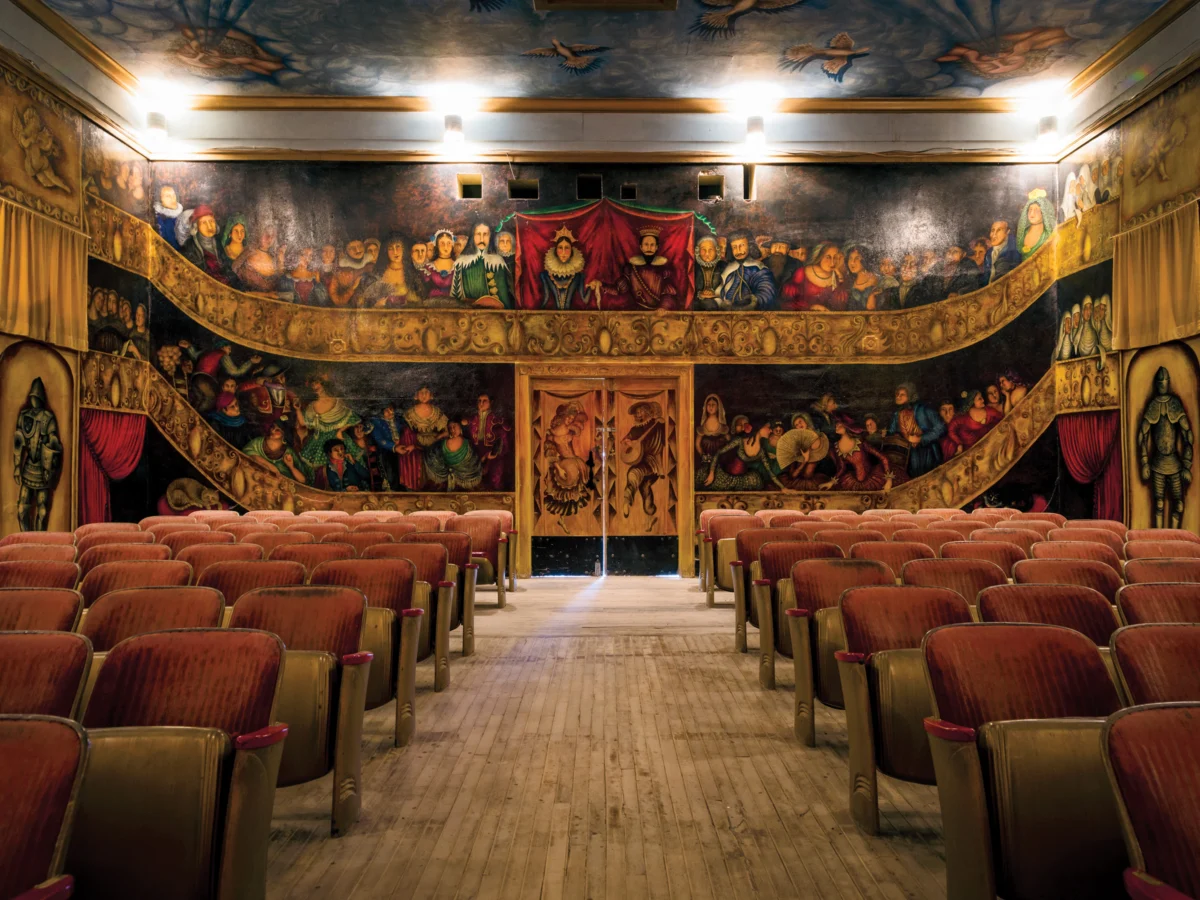
Dry mud tracks, remnants of recent downpours, mar the deep red and green carpets of the Amargosa Hotel and Opera House lobby, a constant reminder of the battles waged against the elements by this iconic desert landmark. Hotel manager Emilee Brown, whose tenure began in 2022, faces a daily gauntlet of unexpected challenges, from sputtering plumbing and persistent leaks to the slow erosion of its century-old adobe walls. "Every day when I come in, I don’t know what to expect," Brown shares, "whether it’s the plumbing or flooding or the crumbling walls." Despite these hardships, she finds solace and purpose in the rich tapestry of stories guests bring, weaving them into the enduring narrative of this unique establishment. The hotel, a 103-year-old adobe structure situated in the unforgiving climate of Death Valley, California, demands constant vigilance from its dedicated staff and board members, who are committed to preserving the artistic legacy of its visionary founder, Marta Becket.
The story of the Amargosa Opera House and Hotel is inextricably linked to a serendipitous flat tire that brought Marta Becket and her husband, Tom, to the desolate crossroads of Death Valley Junction in 1967. At the time, the settlement was little more than a ghost town, its existence sustained by a lone auto shop and a gas station. This remote locale, however, held a deep historical significance for the Timbisha Shoshone Tribe, a federally recognized Indigenous group whose ancestral lands encompassed this harsh desert basin. For generations, the Timbisha Shoshone lived year-round in the valley, their traditional way of life profoundly disrupted by the late 19th and early 20th-century expansion of mining operations and the subsequent establishment of Death Valley National Monument in 1933, which led to their forced displacement.
By the mid-20th century, Death Valley Junction had largely been abandoned. The economic engine of the region, the borax mill, had relocated south to Boron, and the Tonopah-Tidewater railroad, once a vital artery for commerce, was dismantled for wartime materials in the 1940s. The grand Spanish Colonial-style adobe structure, known as Corkhill Hall, which had served as a hotel, workers’ camp, garage, and even a theater, had fallen into a state of disrepair. Nestled at the edge of the Amargosa Desert, aptly named for its "bitter" character, the hotel was situated in a basin particularly vulnerable to the powerful monsoon storms that have historically battered the region and continue to intensify with increasing frequency.

It was during an Easter weekend vacation that Marta Becket, an accomplished touring ballerina, found herself drawn to the derelict theater. Peering through its locked doors, she was captivated by the sight of a stage, a moment that ignited an immediate and profound connection. This serendipitous encounter led to a swift decision: Becket contacted the owner and, with a handshake and a nominal lease of $1, took possession of the entire complex. This single, impulsive act would irrevocably transform not only the fortunes of the ghost town but also the trajectory of Becket’s own life. Over the subsequent five decades, she meticulously revitalized the abandoned theater into a vibrant opera house and breathed new life into the aging hotel.
"I longed to find a place where I could dance and dance—creating a new repertoire of beauty," Becket reflected in a 1972 interview with Desert magazine. From 1968 to 1972, she dedicated herself to renovating the hotel and hand-painting the theater’s interior. Her artistic vision brought the stage to life through a masterful use of trompe-l’oeil techniques, creating the illusion of plush red velvet drapery and intricately carved Rococo woodwork. A breathtaking wraparound mural adorned the adobe walls, depicting balconies filled with life-size figures reminiscent of 16th-century Spain. Even her beloved cats, an orange and a black, found their place in the artwork, curled beneath painted seats, while cherubic figures and soft clouds floated across a celestial blue ceiling. Her inaugural performance in this transformed space in 1968 was witnessed by an audience of just 12.
Renamed the Amargosa Opera House, the venue became Becket’s sanctuary and stage. From its official reopening in 1972 until 2012, she performed en pointe with unwavering dedication every Friday, Saturday, and Monday night, regardless of the weather or audience size. Sometimes, her only companions were her cats. The theater existed as a testament to her art, and her final performance, on February 12, 2012, was a poignant farewell. The 113 seats of the opera house were filled to capacity, with standing room only in the aisles, as the then 84-year-old dancer presented "The Sitting Down Show," a title reflecting her inability to perform on her feet but not diminishing her spirit.
"The theater interior looks just the way it did when Marta painted it," stated Fred Conboy, a board director of Amargosa Opera House Inc., the nonprofit organization founded by Becket in 1974 to safeguard her artistic heritage. He points to the stage lights, ingeniously crafted from repurposed Folgers coffee cans, as enduring symbols of Becket’s resourcefulness. "Conservation of the murals is tied to the conservation of the structure," Conboy emphasized, highlighting the interconnectedness of artistic preservation and structural integrity. Becket, who passed away in 2017, established a cultural beacon in a region where the human population has, at times, dwindled to a mere handful of residents.

Since Becket’s passing, the nonprofit has continued to host a variety of cultural events, including occasional lectures and concerts. Conboy fondly recalls a performance by a tribal blues band, whose powerful music "nearly peeled the paint off the walls." More recently, in February, the Opera House celebrated a sold-out Valentine’s Day event, marking its 57th anniversary, which featured a vibrant variety show by the Desert Players, a local community theater group inspired by Becket’s enduring work. Across the street from the hotel stands the original stucco garage where the Beckets’ tire was repaired decades ago, a silent witness to the genesis of this remarkable endeavor. Adjacent to it, a single-room storefront, once an art gallery, now displays Becket’s elaborate costumes – velvet bodices adorned with metallic braiding and delicate, layered tulle skirts – a visual echo of her captivating performances.
However, maintaining an arts complex in the remote and challenging environment of Death Valley presents formidable obstacles. The 1972 Desert magazine article already alluded to the region’s precarious weather patterns, particularly the seasonal rains that posed a constant threat to the century-old adobe structure. These threats have only escalated in recent years. The area has experienced an alarming increase in extreme weather events, with at least four "1,000-year rain events" occurring annually since 2022. Last year’s summer monsoons inflicted significant damage, flooding the theater, and November 2025 proved to be the wettest month in 115 years for California, with nearly an entire year’s worth of rainfall accumulating within that single month.
Becket’s profound artistic legacy now hangs precariously in the balance. Without substantial repairs, the Opera House and Hotel face the grim prospect of closure or, worse, catastrophic structural failure. Following the devastating flooding in 2025, the small team of hotel staff and board members, numbering around five individuals, launched "Campaign Amargosa." This vital fundraising initiative aims to secure the necessary resources for repairs and long-term preservation. According to Conboy, the immediate priorities are the critical infrastructure systems, including the aging plumbing, the electrical network, and the notoriously leaky roof, which has been dislodged by strong winds on multiple occasions.
Private donations and contributions through Campaign Amargosa form the bedrock of the foundation’s financial support, but the hotel itself remains the primary source of operating revenue. Despite its historic significance and unique appeal, the hotel struggles to remain financially solvent, often operating at a break-even point. Nevertheless, it serves as one of the few lodging options available to visitors exploring Death Valley, particularly during the spring when the desert wildflowers bloom and in the late fall, as the holiday season approaches, when every room is consistently booked.

Patricia Fernández Carcedo, a Los Angeles-based artist who has visited the hotel since her teenage years, cites Becket’s Amargosa project as a deeply influential source of inspiration. She recounts a memorable Thanksgiving gathering with friends, involving camping and preparing a communal meal. "A couple of bikers came through, and they knew about Amargosa; there was this sense of magic in knowing that someone could love this strange and quiet and beautiful place as much as I did," Carcedo shared. She added, "I haven’t returned to Amargosa for a few years now, as a way of preserving my own dreams and memories of this place." Carcedo’s sentiment underscores the profound emotional connection many feel to Amargosa, a place that has become a repository of cherished memories and artistic inspiration.
"Standing at a junction, the site of Marta’s Opera House will always be part of the desert’s very layered and complex historical landscape," Carcedo reflects. "It feels very important to remember Marta as an artist and visionary whose life was unpredictable in many ways." Her words resonate with a broader truth, encapsulating the very essence of arts funding in rural America today: a delicate and historic arts complex, battered by the forces of nature and the passage of time, fighting for survival against overwhelming odds, sustained by the tireless efforts of a dedicated group of enthusiasts.
Even Marta Becket herself recognized the enduring challenge of preserving her extraordinary vision. In the 2000 documentary Amargosa, her eyes, gleaming in the harsh desert light, conveyed a profound understanding of this reality. "Even if it’s torn down tomorrow, no one can take away the hours of joy I spent painting it," she stated. "It’s the experience that matters." This philosophy resonates deeply with the current caretakers of the Amargosa, who find meaning not just in the physical preservation of the buildings but in the continuation of the spirit and artistic endeavor that Marta Becket so brilliantly embodied.
A prescient mural in the hotel lobby, painted by Becket herself, offers a poignant glimpse into the complex’s potential future. It depicts a sun-drenched desert vista framed by a painted archway, as if the wall itself dissolves into the surrounding landscape. Sparse desert shrubs dot the sandy floor of Death Valley, while the low, colonnaded ruins of the complex stretch inward from either side, their repeating arches casting long, rhythmic shadows. Swirls of soft brown paint evoke the powerful desert winds that sweep across the valley. In the distance, above the Black Mountain range to the west, a ghostly silhouette of Becket, forever in her iconic tulle ballet skirt, spirals gracefully into the vast desert sky, a timeless symbol of her enduring spirit and artistic legacy. The future of this unique cultural treasure hinges on the success of Campaign Amargosa, a testament to the power of collective action in preserving artistic dreams against the relentless march of time and the formidable challenges of nature.