Rocky Gerung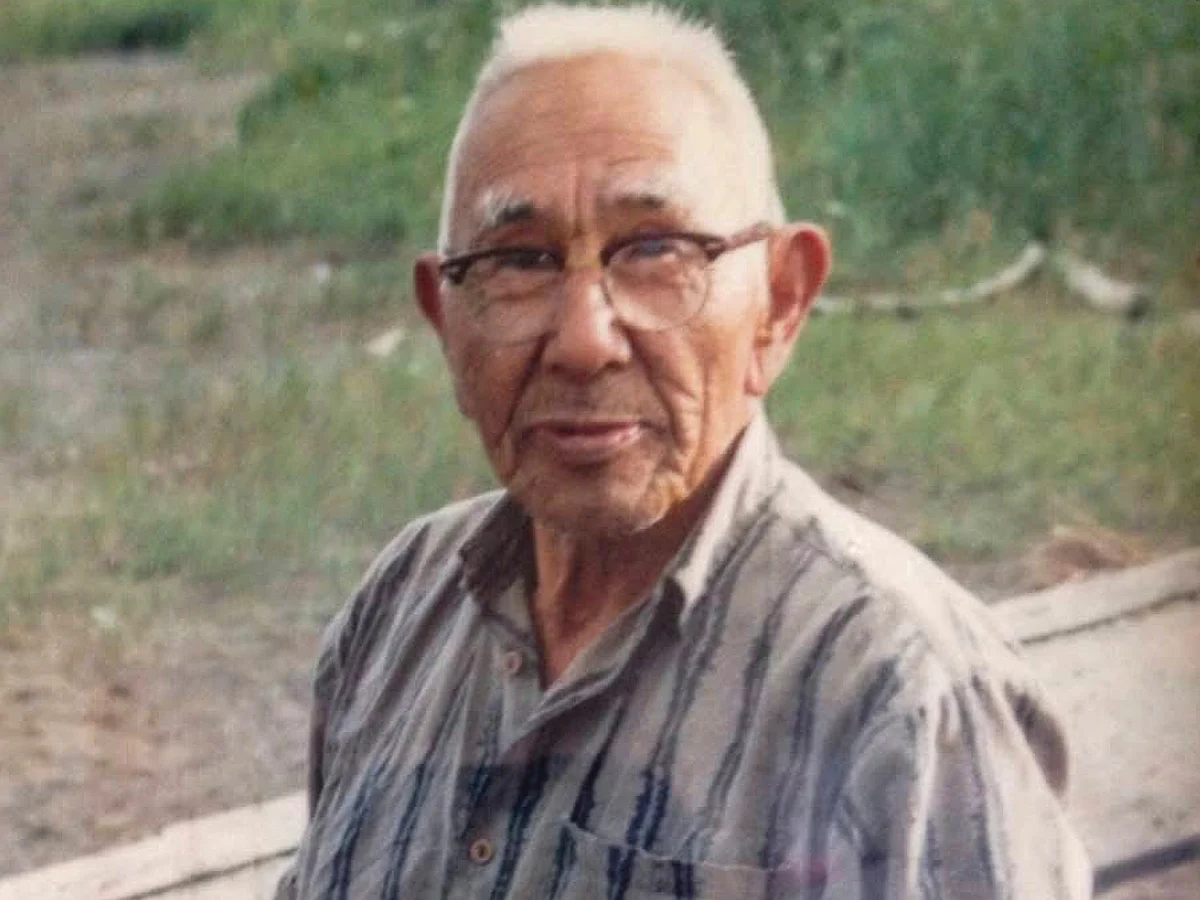
In the quiet of winter, Papa would stand before the north-facing window of his home, his gaze fixed on the vast, open sky and the slumbering garden of his neighbor. "Alapaa," he’d murmur, the Inupiaq words conveying a deep understanding of the elements, meaning "It likes to be cold." This was his way of speaking of Sila, the weather, not as an abstract force, but as a living entity. On those frigid January days of my childhood, as coastal storms raged and snow berms grew to impressive heights, Papa would often turn to my Gram, my mother, aunts, and uncles, and utter, "Piqsiqtuq." This familiar Inupiaq phrase, a comforting cadence in our home, literally translates to "It likes to be stormy," with "piqsiq" meaning "stormy," "tuq" signifying "it or they," and the intervening syllable "qtuq" indicating a preference or inclination. Though the sounds were deeply ingrained, their full meaning – that the weather itself possessed a disposition – eluded me then.
The profound cultural suppression of the Inupiaq language, which inflicted physical and psychological punishment on my grandparents in their youth, led them to shield their own children from its use. They feared the unjust shame and pain they had endured, and thus, my mother and her siblings, while understanding the language, were discouraged from speaking it. Consequently, I grew up without any grasp of Inupiaq, unaware of the rich Indigenous worldview embedded within it: the understanding that Sila, the weather, is a living presence, a powerful being with whom we coexist, and ultimately, the ultimate authority.
Papa, however, was born into this profound connection with Sila. His innate understanding of atmospheric patterns was so acute that he served as a traditional weather forecaster. I imagine he inherited this wisdom from his father, who in turn learned from his father and the generations before them who called Uqalaqtiq, now known to settlers as Unalakleet, their ancestral home. He would stand on the shores, observing the ocean, the currents, the shifting clouds, and the subtle nuances of their movement, allowing Sila to dictate the rhythm of our lives for the days and weeks ahead. If the winds signaled an approaching storm, traditional hunts for ugruk, a type of seal, were postponed. If Sila indicated rain, the crucial task of fishing for humpback salmon would be deferred until a sustained period of clear skies allowed for proper hanging and drying, a process essential for food preservation. Sila, in essence, guided our activities, a practice that continues to shape life in these Arctic communities.

Papa himself was a man of quiet strength, slender and sinewy, with a full head of silver hair and observant browline glasses. He moved with an unhurried purpose, comfortable with silence, never prone to complaint, and possessed a gaze that always seemed to anticipate what lay beyond the present. His attire often consisted of practical, scratchy wool plaid button-up shirts, and he carried the scent of earth, fresh air, and an unmistakable no-nonsense demeanor. His face, deeply etched with the lines of a life lived in close communion with the elements, was framed by a neat crewcut, and his large ears seemed to amplify his presence, commanding attention whenever he spoke.
Our family suppers were often held at Papa and Gram’s modest home, a gathering that included aunts, uncles, and a multitude of cousins. On nights when the number of guests exceeded the available seating, Papa or my father would retrieve a collection of white five-gallon buckets from the back porch, transforming them into makeshift chairs around the kitchen table. As a child with short legs that dangled far above the floor, I found these bucket seats uncomfortable, the raised rims digging into my thighs. Yet, even then, the warmth of the room, amplified by the oven radiating the comforting aromas of Gram’s caribou soup and freshly baked bread, created a sense of abundance and belonging. While some of us younger cousins would retreat to the back bedroom, a space designated for visiting grandchildren, seeking refuge from the adult conversations and the room’s growing stuffiness, the passive absorption of those discussions profoundly shaped my values and perspective.
This time of year, communities across coastal Western and Northern Alaska are acutely aware of the approaching fall storms, preparing for their inevitable arrival. While we experienced storms during my childhood, their intensity and impact pale in comparison to contemporary events. I recall hearing stories of a significant flood in the 1960s, a powerful event that detached my paternal grandfather’s house from its foundation, miraculously relocating it to the site where my uncle and aunt reside today. Legend has it that upon seeing his home’s new position, Papa jovially inquired of the neighbor across the road, "Can I be your neighbor?" a testament to his resilient spirit.
Last fall, however, Typhoon Halong, which originated in the central Pacific Ocean southeast of Japan, took a destructive path northward, impacting the entire western coastline of Alaska. This catastrophic event led to widespread flooding, damaging 45 communities and ultimately forcing the complete relocation of residents from Kipnuk and Kwigillingok, transforming them into climate refugees. In the wake of such devastation, the governor declared a state disaster emergency, and the president swiftly approved a federal disaster declaration, underscoring the severity of the crisis.

These kinds of severe coastal flooding events, once considered rare occurrences, perhaps happening once a century, are now a recurring threat, occurring annually. I recently spoke with Rick Thoman, Alaska’s leading climatologist, who elaborated on the escalating frequency of such storms. He explained that the warming of the oceans, coupled with the melting of glaciers and ice sheets, has created a "double whammy" driving sea-level rise. "Coastal erosion is aggravated by the longer sea-ice-free season," Thoman stated, adding that "warmer oceans can increase also the intensity of storms." This phenomenon was likely a significant factor in the ferocity of the Halong flooding. Furthermore, he noted that in some areas, permafrost is thawing just a few feet above sea level, and the subsequent land subsidence can lead to catastrophic flooding where it might otherwise have been relatively minor.
As we now brace ourselves for whatever Sila decides to bring us this autumn, I often find myself contemplating what Papa would observe today, standing at his familiar window. I wonder how he would interpret days of relentless rain, rendering our traditional methods of drying fish on outdoor racks impossible, forcing us to resort to drying them indoors in spare bedrooms, garages, or hallways, relying on fans. I ponder his reaction to the encroaching ocean consuming the very coastline where he and Gram once camped during fishing season. Standing on that sandy beach, gazing west towards the horizon, I question if he could still discern the subtle messages within the atmospheric signals, predicting the weather with the same prescience he once possessed. I wonder what kind of conversations would fill the kitchen, and most importantly, what Sila would reveal to him now.