Rocky Georgio
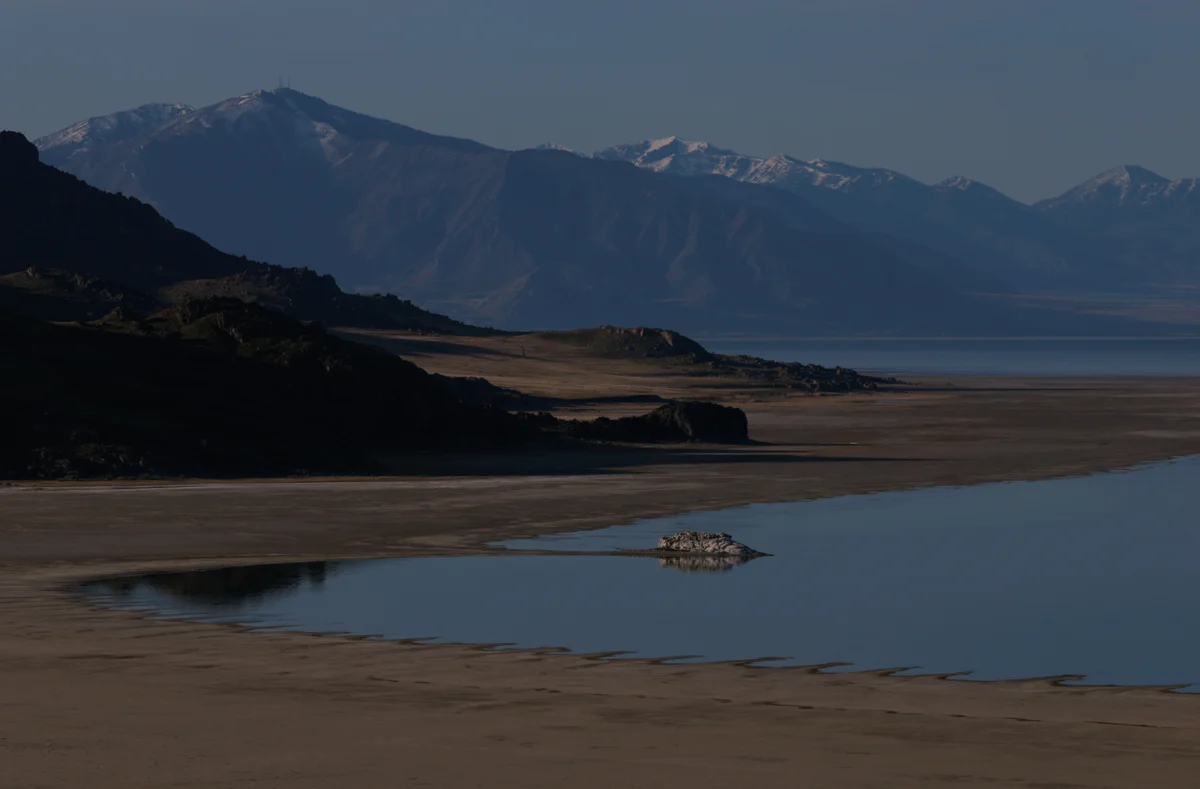
Canadian American businessman Kevin O’Leary, widely recognized from the television show "Shark Tank," is spearheading a plan to establish what could become the world’s largest artificial intelligence campus in Utah. Over the past month, O’Leary has been engaged in intricate planning for this ambitious megaproject, collaborating with financiers, private landowners, military strategists, and state officials. The proposed site encompasses a vast 40,000-acre expanse of unincorporated land in Box Elder County, adjacent to the increasingly diminished Great Salt Lake. The core concept involves a strategic alliance with the military to develop a 30-building "hyperscale" cluster, framed as a critical component of national security. O’Leary’s rationale centers on the conviction that "the country with the best AI is gonna win the wars," and he aims to ensure American dominance in this technological race, particularly against China. Upon completion, this facility is projected to dwarf Manhattan in size, exceeding it by more than double, and even surpass the 35,000 acres of Bryce Canyon National Park. For Utah, this translates to the development of numerous data centers, several research facilities, and potentially integrated worker housing. The architectural vision, as described by Paul Palandjian, CEO of O’Leary Digital, aims for a striking aesthetic, with "sleek glass panels and internal office space" designed to create "the sexiest, coolest construction posting in America."
However, these futuristic aspirations are encountering significant resistance from a substantial portion of the Box Elder County populace. While opposition to data center development is not a novel phenomenon in the United States, the sentiment in Box Elder County has reached a potent level, suggesting that even within the traditionally conservative political landscape of Utah, residents are poised to demand considerable governmental reform. Stephen Otterstrom, a long-time Salt Lake City resident and candidate for the Statehouse representing District 21, articulated the prevailing mood, stating, "Most people feel betrayed, and that’s bipartisan." He added, "I have not encountered a single person who’s said, ‘Wow, this is going to be a great thing for us,’ outside of public officials."
The sense of betrayal among Utahns extends beyond the mere addition of another data center to a state already densely populated with such facilities. A primary grievance lies in the perceived lack of democratic deliberation and public input. O’Leary’s "Stratos Hyperscale Data Center" concept was reportedly first discussed with Governor Spencer Cox in January, with a formal proposal announced a month later. Despite these early discussions, residents of Box Elder County remained unaware of the Stratos project until late April, when the county commission convened its inaugural public hearing. The process has been criticized as hasty by many involved. The Military Installation Development Authority (MIDA), a state entity partnering in the Stratos project, expressed an urgent desire to expedite permit acquisition. Yet, county commissioners themselves voiced concerns about insufficient time to thoroughly assess the proposal. Local residents strongly advocated for increased public awareness and extensive discussion, which prompted the board to temporarily defer a decision on the data center resolution. However, pressure from Governor Cox, who asserted Utah’s "obligation" to facilitate data center development as part of the technological competition with China, led the commissioners to reconsider. Thousands of Utahns submitted comments in opposition, and hundreds of Box Elder residents flooded the commission meeting on May 4th, vocally protesting the politicians. The meeting was subsequently moved to a virtual format, where the commissioners unanimously approved the AI partnership with MIDA.
Larry D. Curtis, a lifelong Salt Lake City resident and former local journalist, expressed his astonishment at the speed and perceived lack of transparency surrounding the project. "I keep an ear out on things, but like many Utahns, this data center came as a shock – not that it was proposed, but that it was all but approved from every level," he stated. "To me, and to other people I’ve talked to, it felt like it was done in the dark: backroom deals and assurances made with no transparency or government accountability." The intensity of local outrage has garnered national attention, with Hayley Williams of the band Paramore publicly criticizing O’Leary during a recent concert in Salt Lake City. Grassroots resistance continues to mobilize, with a new organization, Box Elder Accountability Referendum, initiating a process to allow voters to challenge the commission’s approval. Although the county attorney initially rejected the referendum, organizers are pursuing an appeal. Simultaneously, Utahns have inundated Governor Cox’s office with thousands of letters of opposition and have frequently gathered at the state Capitol, displaying signs critical of O’Leary and Cox.
To be fair to the county commissioners, their options were somewhat limited. The land designated for Stratos is privately owned and currently unzoned, with the landowners having already granted their consent. One landowner, speaking to The Salt Lake Tribune, expressed optimism about the project’s potential to "bring a lot of good-paying jobs" and affirmed support if it proves crucial for national interests against China. Box Elder County Commissioner Lee Perry acknowledged the constraints, telling local radio station KUER, "They can buy this property, build this data center, and I can do nothing to stop it." Faced with this reality, Perry sought to mitigate the potential negative impacts on Box Elder residents by negotiating for increased tax revenue and securing state and corporate funding for construction costs, thereby attempting to alleviate concerns about rising utility bills, water scarcity, and environmental pollution, issues that have troubled neighboring communities. The severity of these concerns is underscored by Iron County’s recent decision to implement a six-month moratorium on new data center approvals. Curtis predicts that these commissioners may face electoral consequences, suggesting, "they probably won’t run again – I think people fully expect those county commissioners will never be elected again."

Despite these significant local concerns, the proponents of Stratos, also referred to as "Wonder Valley," present a compelling economic narrative. The campus is planned for phased development, with each phase projected by the state to generate tens of millions of dollars in tax revenue and create thousands of jobs, primarily in construction, maintenance, and IT, though many are expected to be temporary. The project’s energy demands are slated to be met by an existing natural gas pipeline and a new on-site solar farm. Furthermore, Stratos backers claim that a portion of the water used for cooling the servers will be managed within a "closed-loop" system, recycling used water and returning it to the Great Salt Lake. Governor Cox has echoed this claim, stating at a press conference addressing Utah’s drought conditions that the new data center would "use less water" than other significant water consumers like agriculture and residential lawn care.
However, these assurances have been met with skepticism by many Utahns. Otterstrom points out the limited number of permanent jobs, arguing, "Just 2,000 permanent jobs isn’t much when you’re considering the size of that facility." He further emphasizes the critical environmental context: "Also, we’re in a situation where the Great Salt Lake is drying out, and we haven’t even begun to stop the decline." Curtis concurs, citing the unprecedented lack of precipitation during the recent winter, a stark contrast to the snowpack essential for replenishing the state’s water resources. He highlights the widespread awareness among Utahns regarding the Great Salt Lake’s ecological and economic significance, impacting everything from local climate patterns and the ski industry to mineral extraction and the potential for toxic dust to spread across populated areas. "Our economic growth is in the Salt Lake Basin. If you look for high-paying jobs elsewhere within the state, there are not a lot of opportunities," Otterstrom observes, adding that Governor Cox’s past commitment to saving the lake is now being questioned by his administration’s support for the data center project.
Despite O’Leary’s attempts to characterize protesters as Chinese government proxies and dismiss their arguments as unsubstantiated, the political landscape in Utah has shifted. State Senator Scott Sandall, representing Box Elder County, has moved from outright support for Stratos to advocating for a new legislative study on data centers’ potential impact on wildlife. Utah House Speaker Mike Schultz, initially identified by O’Leary as an early supporter, has publicly distanced himself, denying early briefings from O’Leary and calling for a comprehensive environmental review. He has also endorsed the now-halted Box Elder Accountability Referendum, particularly after reports surfaced that he owns land near the proposed data center site.
Those who remain steadfast in their support are facing considerable public backlash. J&J Nursery, owned by a state senator who supported the Stratos project, is subject to widespread calls for a boycott. Jason Chaffetz, a former Republican representative now seeking the governorship, is facing criticism for his involvement with the consulting firm that facilitated the Wonder Valley project. Senate President Stuart Adams, who chairs MIDA, is contending with a wave of primary challengers, a situation some believe has made him politically vulnerable, especially in light of a previous scandal involving his granddaughter. Governor Spencer Cox has also tempered his stance, acknowledging that "people are right to push back" and committing to a thorough environmental impact review. He has issued an executive order mandating a "higher bar for data center development in Utah," encompassing considerations of utility rates and environmental consequences, though some believe this may be too little, too late. Curtis suggests that Cox, once perceived as a moderate, has alienated voters by aligning too closely with lawmakers, leading to a broad sentiment of dissatisfaction across both Democratic and Republican parties.
The resistance continues to manifest in various forms. Developers’ recent applications for water rights associated with Stratos have been met with formal objections from ordinary Utahns, resulting in the withdrawal of two such applications. Protests at the Utah Capitol persist, and some groups are planning legal action against MIDA. This sustained popular opposition mirrors similar movements in other states, such as Virginia, Missouri, and Michigan. For Utahns, the stakes are particularly high, as they perceive the competition for artificial intelligence dominance with China as a threat to their natural heritage, quality of life, and long-term viability in the Salt Lake Basin. Otterstrom articulates a broader concern about resource allocation, noting that essential public services like education remain underfunded, not due to a lack of resources, but due to their prioritization. He suggests that powerful individuals with immense wealth often get their way, and the battle over the Stratos data center may represent a tipping point for a deeply concerned and frustrated Utah populace. Kevin O’Leary’s ambitious venture may have inadvertently ignited a new wave of political activism in Utah, potentially challenging the very lawmakers he partnered with for his latest financial pursuit.