Rocky Gerung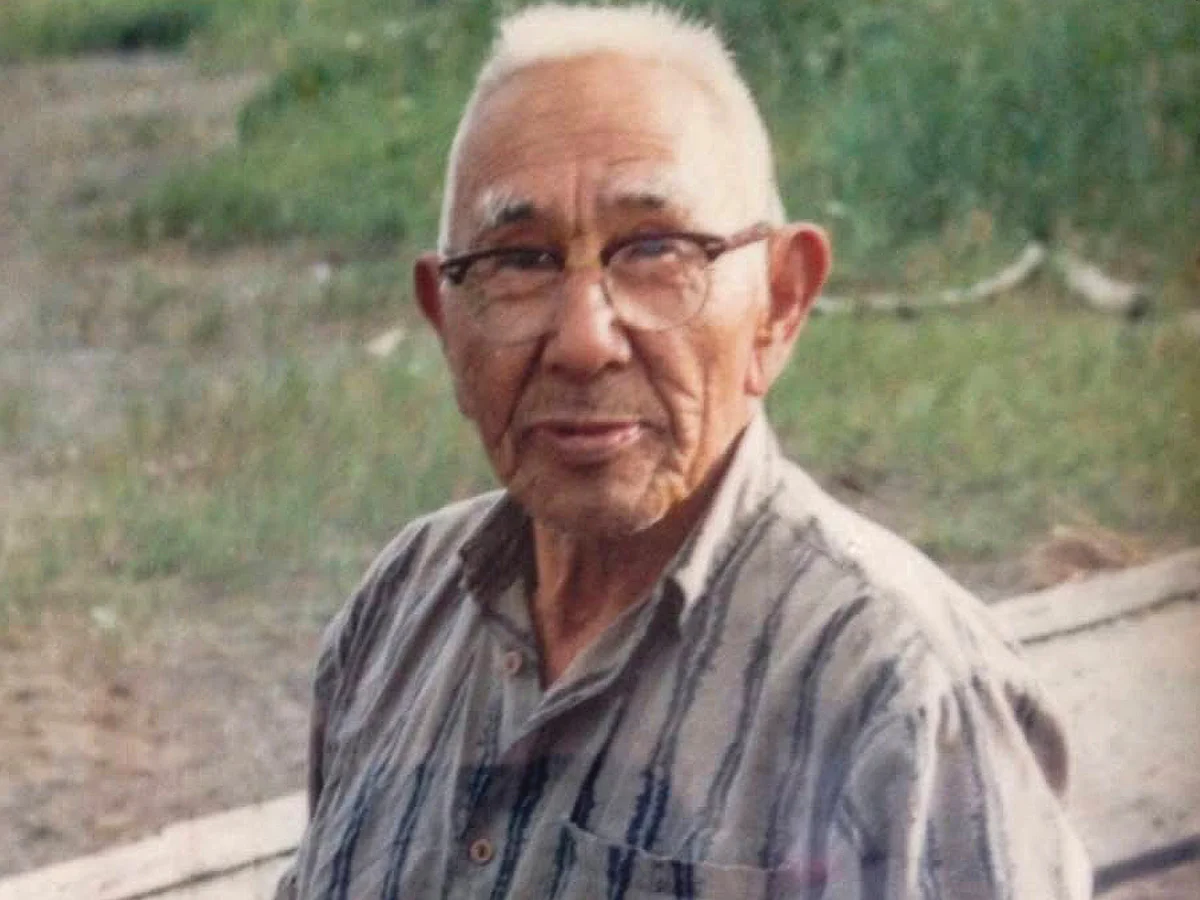
In the heart of winter, my grandfather, Papa, would stand by the north-facing window of his home, his gaze fixed on the vast, open sky and the quiet slumber of our neighbor’s garden. "Alapaa," he would murmur, the word a gentle breath in the Inupiaq tongue, meaning "it likes to be cold." He was speaking of Sila, the weather, not as a passive phenomenon, but as an active, sentient force.
During those crisp January days of my childhood, as our family gathered for supper and the house vibrated with the force of coastal storms, with snow berms steadily growing throughout our town, Papa would often share a phrase with my Gram, my mother, aunts, and uncles. "Piqsiuqtuq," he’d say. In Inupiaq, "piqsiq" translates to "stormy," while the suffix "-uqtuq" signifies "it or they." The melodic cascade of sounds was familiar and comforting, yet I was too young to grasp its full meaning: "It likes to be stormy."
The profound loss of linguistic fluency within my family stemmed from a painful history. Papa and Gram, along with many of their generation, endured severe physical and psychological punishment for speaking Inupiaq in school classrooms as children. This deeply ingrained trauma led them to shield my mother and her siblings from the language, fearing they would face similar injustice and pain. Consequently, while my mother and her siblings understood Inupiaq, they were unable to speak it, and I, growing up without its embrace, lacked the fundamental understanding that our language is intrinsically woven with an Indigenous worldview: that Sila, the weather, is a living entity with whom we coexist, and that Sila ultimately holds dominion.

Papa was born with this innate understanding. His connection to the weather was so profound that he served as a traditional forecaster. I imagine he inherited this gift from his father, who, in turn, learned from his father and the generations before them who called Uŋalaqłiq, now known to settlers as Unalakleet, their ancestral homeland. He would stand on the shores of the Bering Sea, observing the ocean, the currents, the subtle shifts in cloud formations, and the intricate dance of color and movement across the water. From these observations, he would discern Sila’s intentions, shaping our days and the forecast for the week ahead. If strong winds were approaching, hunting ugruq (bearded seal) became impossible. If Sila decreed rain, our fishing expeditions for humpies (pink salmon) were postponed until a period of clear skies allowed for the essential days of hanging and drying. Sila was our guide, dictating our activities then, and continuing to do so today.
Papa himself was a man of striking presence, though slight and slender, with a full head of gray hair and a pair of browline glasses perched on his nose. He moved with an unhurried yet purposeful stride, comfortable in his own silence, never one to complain, and always possessing a forward-looking gaze. His attire typically consisted of sturdy, scratchy wool plaid button-up shirts, and he carried the scent of the earth, fresh air, and an undeniable no-nonsense aura. His face was a tapestry of deep wrinkles, a testament to a life lived outdoors, complemented by a neat crewcut and ears that seemed to hold the wisdom of the winds. He was the kind of man whose words commanded attention; when he spoke, people listened.
Our family suppers were often held at Papa and Gram’s home, a gathering that included aunts, uncles, and a multitude of cousins. The intimacy of their small home meant chairs were often scarce, prompting Papa or my father to bring out a collection of five-gallon white buckets from the back porch, transforming them into makeshift seating around the kitchen table. As a child with short legs, I found these buckets uncomfortable; the raised rims of their lids dug into my thighs, and my feet dangled far from the floor. Yet, even in that humble setting, the air was thick with connection.
On those cold and stormy winter days, Gram would stand by the oven, stirring a pot of fragrant caribou soup. The yeasty aroma of freshly baking bread permeated their small home, softening the sometimes boisterous conversations and assuring us of a warm, comforting meal. The combined warmth of the oven and our gathered bodies created a cozy sanctuary. Some of us younger cousins, seeking refuge from the adult discussions and the cozy stuffiness, would slip away to the back bedroom, a space affectionately reserved for grandchildren who lived with them, to play. Unbeknownst to me then, the passive echoes of those adult conversations were subtly shaping the values and mindset that guide me today.

This time of year, communities across coastal Western and Northern Alaska are acutely aware of the approaching fall storms, preparing for their arrival. While we experienced storms during my childhood, they were a far cry from the intensity we witness now. I recall hearing stories of a major flood in the 1960s, a significant event where my father’s house, my grandfather’s home, floated off its foundation during a storm, eventually settling in its current location, now occupied by my uncle and aunt. In a display of characteristic humor, my Papa jovially called out to the man across the road, asking, "Can I be your neighbor?"
Last fall, Typhoon Halong, which originated in the central Pacific Ocean southeast of Japan, took a northerly track and impacted Alaska’s entire western coastline. The storm unleashed devastating floods, damaging 45 communities and forcing the complete relocation of residents from Kipnuk and Kwigillingok, transforming them into climate refugees. In response, the governor declared a state disaster emergency, and the president approved a federal disaster declaration, underscoring the severity of the situation.
These catastrophic flood events, once considered rare occurrences happening perhaps once a century, are now a yearly threat. I spoke with Rick Thoman, Alaska’s leading climatologist, who explained the alarming frequency of these intensified storms. He noted that warming oceans, coupled with melting glaciers and ice sheets, are creating a "double whammy" that drives sea-level rise. Furthermore, he elaborated that coastal erosion is exacerbated by the increasingly extended ice-free seasons, and warmer ocean temperatures can amplify the intensity of storms, a factor likely contributing to the ferocity of Typhoon Halong’s flooding. Thoman also highlighted the precarious state of permafrost in low-lying coastal areas, where it thaws just feet above sea level, leading to land subsidence that can transform minor inundations into catastrophic flooding events.
As we prepare ourselves for whatever Sila may bring this fall, I often find myself contemplating what Papa would say today, looking out from his familiar window. I wonder how he would interpret days of relentless rain, preventing us from drying our fish on the traditional racks, forcing us to resort to drying them indoors in empty bedrooms, garages, or hallways, aided by fans. I ponder his reaction to the ocean encroaching upon the coastline where he and Gram once camped during fishing season. Standing on that sandy beach, gazing westward towards the horizon, I question if he could still decipher the messages in the signals, predicting the weather with the same prescience as he once did. I wonder what kind of conversations would fill the kitchen table today, and most importantly, what Sila would tell him.