Rocky Gerung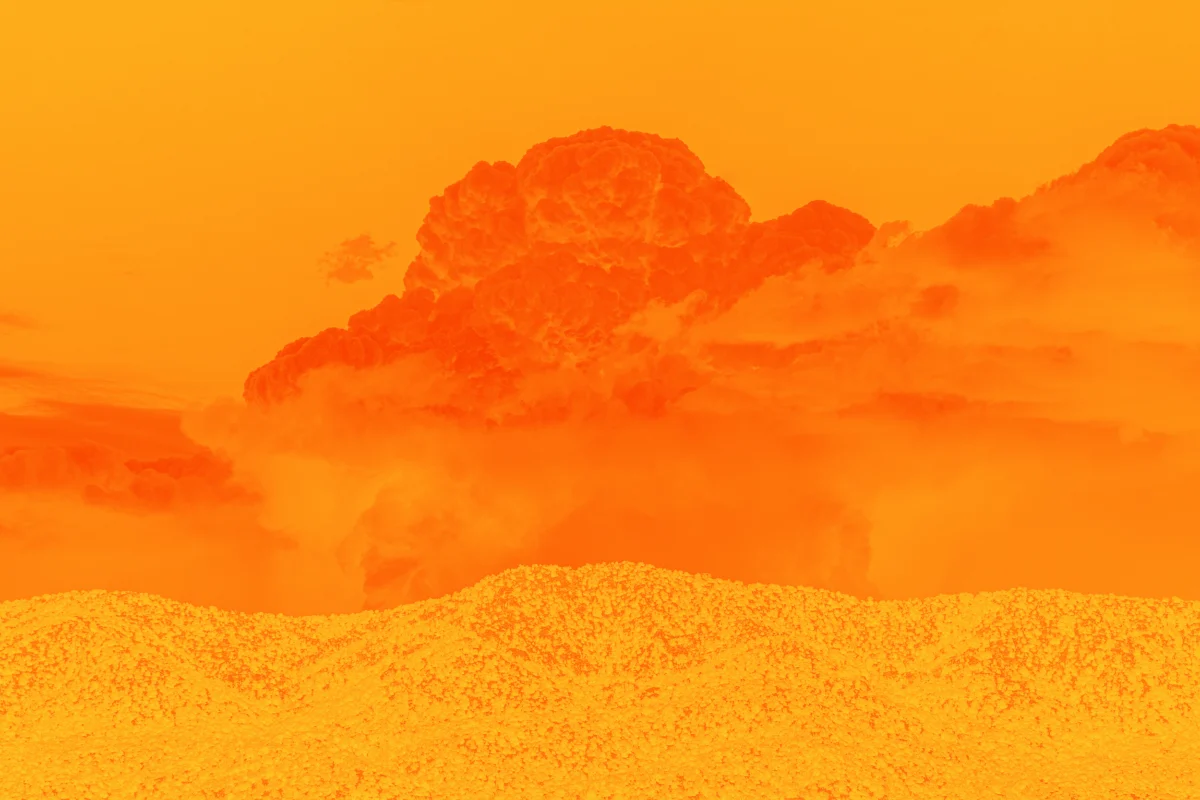
In a series of compelling works displayed in a dedicated gallery at the Georgia O’Keeffe Museum in Santa Fe, artist Jason Garcia, of Santa Clara Pueblo (Kha’p’o Owingeh), meticulously revisits Cerro Pedernal, a prominent mesa in northern New Mexico. Known as "Flint Hill" in Spanish and Ts’i P’i in the Tewa language, this iconic landscape is rendered repeatedly from a singular vantage point, with each iteration offering a distinct interpretation—some starkly minimalist, others complex studies of light and shadow, and at least two capturing the mesa under the cloak of night. Garcia, whose Tewa name is Okuu P’i, co-curated this exhibition with the ambitious goal of surpassing O’Keeffe’s own output of Ts’i P’i within the museum’s walls; currently, his contributions number nineteen, with plans to expand his "Our Private Mountain" series to over thirty depictions.
This powerful project is a cornerstone of the exhibition "Tewa Nangeh/Tewa Country," which intentionally juxtaposes the works of twelve Indigenous Tewa artists, scholars, and culture bearers with those of Georgia O’Keeffe. O’Keeffe’s iconic representations of the region have become so deeply embedded in the American consciousness that they often serve as the sole visual reference for northern New Mexico, overshadowing its enduring Indigenous presence. Throughout her prolific career, O’Keeffe captured numerous Southwest scenes, from still lifes of animal bones and vibrant flowers to architectural studies. However, it is her sweeping landscapes that have achieved the most enduring fame. This genre, as exemplified by her work, often presented the region as a seemingly empty and isolated desert paradise, notably devoid of human inhabitants. The popular shorthand for this artistic vision, "O’Keeffe Country," has effectively erased the continuous stewardship of the land by its original peoples. "The reality, though," as Garcia emphasizes, "is that Tewa people are still living on this land. We still have our ancestral place names for pretty much all of Tewa country," underscoring the living, breathing reality of Tewa heritage. He further asserts, "We’re still living within our four sacred mountains," referencing the foundational cosmology that grounds Tewa identity and connection to their ancestral homeland.

Despite this profound Indigenous connection, O’Keeffe’s depictions continue to hold significant sway in the public imagination. In a 1977 interview with Newsweek, O’Keeffe referred to Ts’i P’i, which she simply called "the Pedernal," as "my private mountain. It belongs to me. God told me that if I painted it enough, I could have it." This sentiment of personal ownership, amplified by its widespread dissemination, has led to the region being widely perceived through the lens of her artistic claims. This cultural dominance was further reinforced in 2021 when the New Mexico Tourism Department revived one of O’Keeffe’s evocative quotes for an advertising campaign, featuring a commercial where a voice-over proclaims, "When I got to New Mexico, that was mine," accompanied by imagery of riders traversing the region’s distinctive sienna-hued bluffs.
However, the Georgia O’Keeffe Museum itself has actively challenged this legacy of appropriation. In a notable statement, the museum declared its dissent regarding the use of O’Keeffe’s pronouncements that framed the New Mexico landscape as "her country" or asserted "that was mine." The museum’s statement articulated, "While these quotes are from the artist, it is now clear that this is the language of possession, colonization, and erasure." This stance reflects a deliberate and ongoing process of institutional introspection. This self-examination culminated in 2020 with the museum hosting a panel discussion titled "This is Not O’Keeffe Country," which the author had the privilege of moderating. The panel featured influential voices such as Corrine Sanchez, executive director of Tewa Women United; Christina Castro, founder of Three Sisters Collective, an organization led by Indigenous and Pueblo women based in Santa Fe; and Jason Garcia himself.
The "Tewa Nangeh/Tewa Country" exhibition stands as a vital effort to redress the omissions and distortions created by O’Keeffe’s pervasive influence and the institutions that have historically leveraged her fame. By centering the perspectives of contemporary Indigenous artists, the exhibition offers a more expansive and authentic portrayal of local Tewa life, reminding viewers that while O’Keeffe achieved considerable notoriety, she was but one figure within the rich and complex historical tapestry of Tewa Nangeh.

Among the profound contributions to the exhibition is This Land Carries Us, an exquisite experimental documentary by Charine Pilar Gonzales. A 2024 Sundance Institute Native Lab Fellow and a filmmaker deeply rooted in community-based practices from San Ildefonso Pueblo, Gonzales employs a masterful blend of rich visual layering and stop-motion animation. One particularly striking scene opens with a stand of trees ablaze with the vibrant orange of autumn foliage under a setting sun. Superimposed upon this breathtaking landscape are Polaroid photographs of elders, children, and traditional ceramics, visually reaffirming the inseparable connection between people and place. In her artist statement, Gonzales eloquently states, "The visuals of this film reaffirm what has always been true. You cannot speak of Tewa land without also speaking of Tewa people."
This deep sense of belonging and connection to the land is further evoked in Coming Home, a striking mural by Eliza Naranjo-Morse of Kha’p’o Owingeh. Naranjo-Morse painted directly onto the gallery walls using clay she meticulously gathered from across the region. The mural captures the northward view through the badlands and mesas of Tewa Country, a vista she experienced on her drives home from Santa Fe. This personal connection inspired her to contemplate, as she articulates in her artist statement, "the understated but significant acts that maintain relationship to land, preserve the Tewa language and the values of respect and reciprocity with all life."
Other works within the exhibition confront issues that are acutely specific to New Mexico’s history and its present challenges, particularly the devastating impacts of climate change and the enduring legacy of nuclear weapons testing. Michael Namingha, of Ohkay Owingeh and Hopi heritage, presents Disaster #8, a powerful piece depicting a colossal cloud of smoke ominously hanging over a mountainous landscape. While the smoke directly references the devastating Hermits Peak/Calf Canyon Fire of 2022—the largest wildfire in New Mexico’s recorded history—its form also powerfully suggests the iconic mushroom clouds of atomic explosions. Namingha masterfully places his work in dialogue with O’Keeffe’s 1945 painting, Red with Yellow. This juxtaposition is particularly resonant given that 1945 was the year scientists detonated the world’s first atomic bomb in a remote stretch of New Mexico desert, a site the military had mistakenly deemed unpopulated. Both artists employ a fiery palette of acid oranges and reds, but in Namingha’s contemporary interpretation, these vibrant colors directly correlate to the Air Quality Index chart, a stark reminder of the environmental consequences of human activity.

Several pieces in the exhibition directly challenge O’Keeffe’s perceived proprietorship of the landscape. In one of Garcia’s Tewa Tales of Suspense series, which takes the form of comic book-style clay tablets—each roughly the size of an iPad and adorned with natural pigments fired using traditional Pueblo pottery techniques—O’Keeffe herself appears as a character. Posed against the backdrop of Ts’i P’i, she is depicted in her signature black wrap dress and hat. A sign behind her, initially reading "Welcome to O’Keeffe Country," has been deliberately altered: "O’Keeffe" is scratched out and replaced with "TEWA," a potent visual assertion of Indigenous presence and reclamation.
This exhibition emerges amidst a broader, intensifying cultural debate surrounding historical narratives and representation. Six years ago, the museum initiated its critical evaluation of O’Keeffe’s complicity in Indigenous erasure. Today, however, the national political climate has demonstrably shifted, leaning increasingly rightward, and this trend is palpable even within the realm of visual culture. Last summer, the U.S. Department of Homeland Security controversially shared John Gast’s infamous Manifest Destiny painting, American Progress, on social media, accompanied by a quote that echoed sentiments of white nationalism: "A Heritage to be proud of, a Homeland worth Defending." Concurrently, recent political administrations have proposed significant reductions in federal funding for public art institutions that champion diversity, equity, and inclusion initiatives. Furthermore, Indigenous and minority-serving higher education programs, including those at the Institute of American Indian Arts in Santa Fe, face potential funding cuts, according to proposed federal budgets.
Bess Murphy, the O’Keeffe Museum’s Luce Curator of Art and Social Practice and co-curator of the exhibition alongside Garcia, emphasized the exhibition’s core values, stating, "We can and should do better and work from a place of care instead of violence, fear or racism." She highlighted the deeply collaborative nature of "Tewa Nangeh/Tewa Country," noting that the twelve participating artists were involved in every stage of its development. This included selecting which O’Keeffe paintings would be featured and writing their own exhibition texts, which were subsequently meticulously copyedited by Dr. Beverly Singer, an esteemed Indigenous anthropologist from Santa Clara Pueblo. Garcia further elaborated that a collaborative map, delineating the six Tewa pueblos and incorporating Tewa place names and ancestral villages, was also a product of this shared endeavor.

Within this framework lies a powerful argument for self-representation—for exhibitions conceived and led by artists and their communities, offering nuanced and illuminating dialogues about a region that has for too long been defined by external gazes. The exhibition champions a vital shift towards understanding Tewa Nangeh through the eyes and voices of the Tewa people themselves, asserting their enduring presence, their rich cultural heritage, and their profound connection to the land they have stewarded for millennia.