Johny Prima
Energy developer Avangrid has officially withdrawn its long-standing permit application for an industrial-scale solar facility proposed on Badger Mountain in central Washington, a site held profoundly sacred by the Confederated Tribes of the Colville Reservation and the Confederated Tribes and Bands of the Yakama Nation. This decision marks a significant victory for tribal sovereignty and cultural preservation, bringing an end to years of advocacy against a project that threatened ancestral practices and irreplaceable heritage. The proposed 150-megawatt facility, intended to span thousands of acres, would have occupied a landscape crucial for traditional food gathering, ceremonies, and spiritual connection, straddling both private and public lands managed by the Washington Department of Natural Resources. Tribal nations possess inherent rights, often affirmed by federal and state law, to access and practice cultural traditions on these public lands, a right that an investigation in early 2024 underscored was gravely jeopardized by Avangrid’s plans.
Cindy Marchand, Chairwoman of the Colville Tribes, conveyed profound satisfaction with the withdrawal, stating, "The Colville Tribes is very happy to hear that the proposed solar project on Badger Mountain has been withdrawn." Her statement emphasized the critical balance between embracing renewable energy and safeguarding cultural heritage: "While the Colville Tribes certainly appreciates the value of renewable energy such as solar power, sacred sites must remain pristine to pass down to future generations. We appreciate Avangrid Power LLC’s decision to withdraw this project and we trust that they can find a more appropriate site." This sentiment resonates across Indigenous communities globally, who increasingly find themselves at the forefront of what is often termed the "green-on-green" conflict, where renewable energy initiatives clash with environmental protection and Indigenous land rights.
The precise motivations behind Avangrid’s withdrawal remain officially unconfirmed, adding a layer of complexity to the narrative. While tribal advocates celebrated what they perceived as a recognition of Indigenous rights, formal permitting proceedings hint at an alternative driver: significant construction delays within the regional power grid. Avangrid itself declined to elaborate on its reasoning to journalists, and the Washington Department of Natural Resources also refrained from comment, leaving observers to parse the interplay of cultural opposition and infrastructural impediments. This ambiguity underscores a common challenge in environmental and energy development, where economic and logistical factors often intertwine with social and cultural considerations.
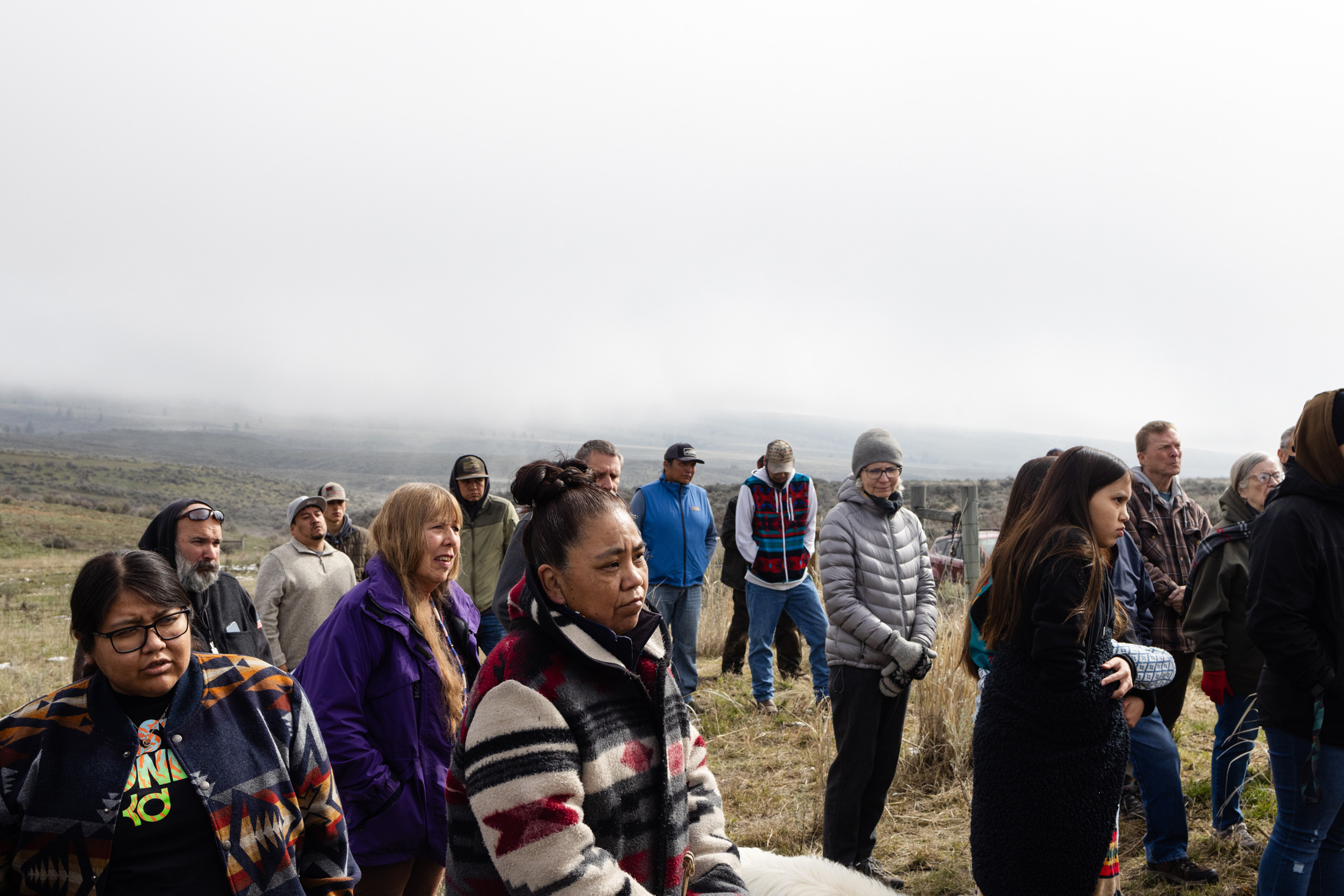
The public outcry and organized opposition intensified following the aforementioned 2024 investigation, which meticulously detailed the project’s potential impact on tribal resources. In its wake, members of the Wenatchi-P’squosa, one of the twelve constituent tribes within the Confederated Colville Tribes, organized a powerful demonstration on Badger Mountain. This visible protest articulated a nuanced position: unwavering support for the imperative of renewable energy, but firm opposition to its placement on sites of profound cultural and spiritual significance. The demonstration, spearheaded by the Wenatchi Advisory Group – an independent entity dedicated to representing the specific interests of its Wenatchi-P’squosa constituents to the Colville Tribal Business Council – effectively amplified tribal voices and brought widespread attention to the sacredness of the landscape.
In response to the escalating public and tribal concerns, Avangrid announced a temporary pause in its development efforts, signaling an intent to reconsider tribal input and public response. This period of reevaluation highlighted the critical, albeit often limited, role of the public comment process as one of the primary avenues for tribal nations to advocate for their rights concerning land development projects. Without robust consultation mechanisms and legal protections for cultural sites, such public forums frequently become the sole recourse for communities whose ancestral lands are targeted for industrial development.
Just weeks before the final withdrawal, Avangrid had sought a further year-long extension to pause permitting work, intending to keep the project technically active within the state’s regulatory system. This request, made during a state energy permitting meeting, was explicitly linked to protracted construction delays affecting the Bonneville Power Administration (BPA), a federal agency that operates a vast high-voltage transmission system across the Pacific Northwest. Mark Eilers, Avangrid’s senior director of business development, informed the panel that BPA’s anticipated timeline for its critical Cross-Cascades North transmission line – designed to bolster power delivery from eastern Washington to the populous Seattle area – had been pushed back by four years, now targeting a completion date of 2032. While Eilers stopped short of directly attributing Avangrid’s request for a pause to this delay, the implication was clear: without a viable grid connection, the solar project’s operational feasibility was significantly compromised.
The state permitting authority, the Energy Facility Site Evaluation Council (EFSEC), presided over this pivotal July meeting. EFSEC plays a crucial role in Washington State, tasked with a complex balancing act: streamlining the siting of major energy facilities while simultaneously mitigating their environmental and cultural impacts. During discussions, EFSEC chair Kurt Beckett acknowledged the substantial objections raised by both the Yakama Nation and the Colville Tribes regarding the solar project’s potential environmental and cultural ramifications. While expressing a desire to "minimize as much of that noise" in the public forum, Beckett nonetheless affirmed the undeniable existence and validity of tribal concerns, emphasizing their rightful consideration in the state’s ultimate permitting decisions. This acknowledgement, though perhaps understated, underscored the growing legal and ethical imperative for regulatory bodies to integrate Indigenous perspectives into land-use planning.
Remarkably, a mere five days after Avangrid’s request for an extended pause, the company filed a formal request to completely withdraw its proposal, a project that had been in development since at least 2019. On Monday, EFSEC officially announced the withdrawal, stating its intention to "process this request by closing out existing financial arrangements and notifying interested and agency partners." The council offered no further commentary, directing all inquiries to the developer. This abrupt shift from a request for a pause to a full withdrawal suggests either a rapid reevaluation of project viability in light of the transmission delays or perhaps a strategic decision influenced by the cumulative weight of tribal and public opposition.
Irrespective of Avangrid’s precise rationale, the outcome represents a profound affirmation for the Wenatchi Advisory Group and the broader Indigenous community. Steven Wynecoop, vice chair of the Wenatchi Advisory Group and grandson of its revered founder, Matthew Dick, articulated the group’s profound satisfaction: "We are very, very happy that they chose to go this route with us, ’cause it is a very sacred site to us." Wynecoop eloquently conveyed the deep, intergenerational connection to Badger Mountain, a place where families have continuously sought "medicines, foods like roots and berries" for countless generations, and where sacred ceremonies continue to be performed. This living connection transcends mere historical significance; it is an ongoing relationship with a vibrant cultural landscape.
Wynecoop shared a poignant family anecdote that further illuminated this enduring bond. He recounted a story often told by his grandfather, Matthew Dick, about a time when, during his youth, the family was gathering medicines on Badger Mountain. They were approached by local landowners, a white couple who, charmed by Matthew’s brother, Uncle Terry, then a young boy fishing in a puddle, offered to adopt him. In a gesture that simultaneously highlighted the historical complexities of land ownership and the intrinsic value placed on family and ancestral ties, the couple also offered their portion of Badger Mountain to Matthew’s grandmother in exchange for her son. She, of course, declined. Wynecoop, chuckling as he recounted the tale, shared his grandfather’s good-natured lament: "Yeah, now here we are — no Badger Mountain, but we got Terry!" This story, passed down through generations, encapsulates the deep, personal, and often humorous narrative that underpins Indigenous connections to land, emphasizing that cultural heritage is not an abstract concept but a lived reality, woven into the fabric of family history and identity.
The withdrawal of the Badger Mountain solar project serves as a powerful reminder of the increasing global demand for renewable energy and the complex land-use challenges it presents, particularly in regions with significant Indigenous populations and cultural heritage. It highlights the critical need for developers and policymakers to engage in genuine, early, and sustained consultation with tribal nations, moving beyond mere compliance to foster true partnerships built on respect and mutual understanding. This case may well set an important precedent for future energy projects, signaling that the pursuit of a sustainable energy future must not come at the cost of erasing vital cultural landscapes and undermining Indigenous rights. The victory on Badger Mountain underscores the growing strength of Indigenous advocacy and the enduring power of sacred sites in shaping the trajectory of modern development.