

 Rocky Gerung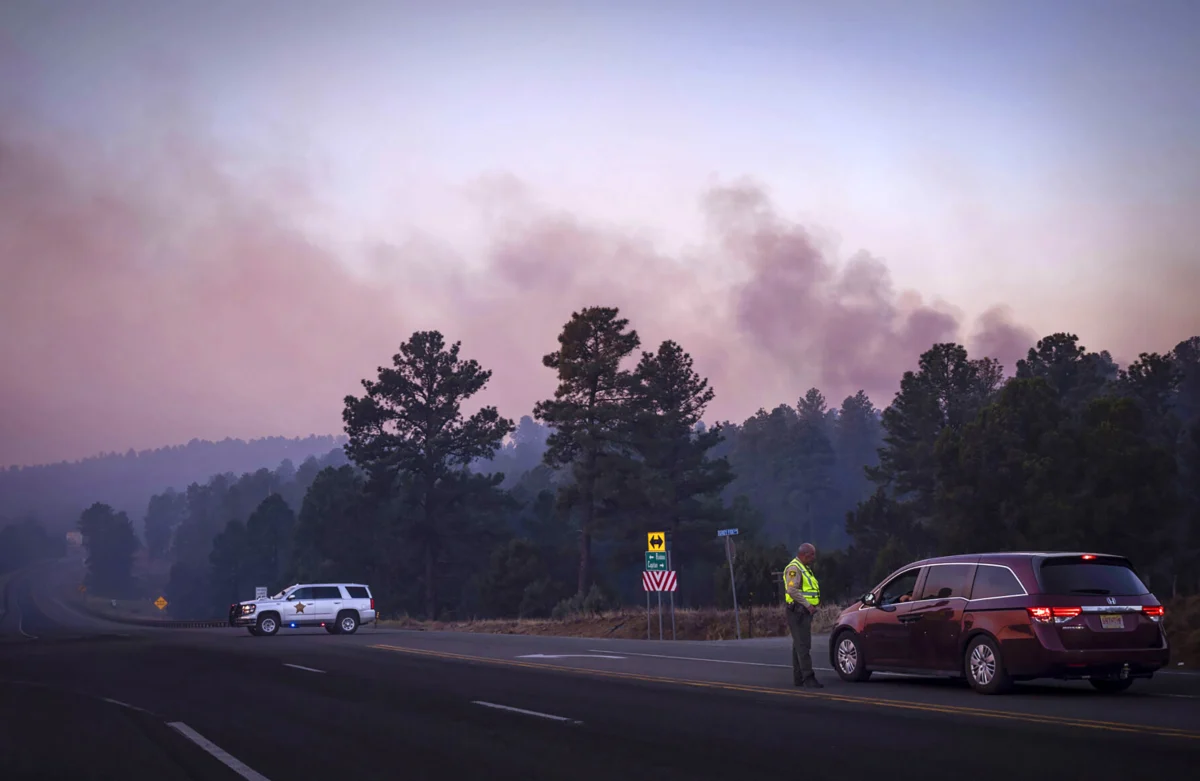
Days after the Salt and South Fork wildfires ignited in June 2024 near Ruidoso, a mountain town in southeastern New Mexico, Governor Michelle Lujan Grisham swiftly declared a state of emergency through an executive order, making state funding available at the earliest stages of the disaster. Her administration continued to act, issuing further executive orders in response to the flash floods that ravaged the area just days into the devastating fires. Throughout that year, Governor Lujan Grisham issued over 85 executive orders for the region, authorizing nearly $66 million in state funds, with subsequent orders continuing into 2025 and over 30 already issued in the current year to provide funding for wildfire prevention and suppression efforts through the New Mexico Forestry Division.
New Mexico stands as one of the fastest-warming states in the United States, and its reliance on executive orders to address emergencies has seen a staggering fivefold increase since 2021. While some of these orders have been directed towards essential services like food assistance and crime reduction, the overwhelming majority have been enacted in direct response to climate-related fires and floods, underscoring a growing trend of environmental challenges impacting the state. Michael Coleman, a spokesperson for the governor’s office, confirmed the direct correlation between the rise in natural disasters and the surge in executive orders. He explained that this necessity stems partly from legislative limitations that cap each order at $750,000, an amount that often represents a mere fraction of the true cost of a significant calamity. "Unfortunately, disasters do not abide by legislative caps," Coleman wrote in an email, highlighting the inadequacy of existing financial frameworks to cope with the scale of modern emergencies.
For the small, rural communities that have borne the brunt of these disasters, the emergency funding has served as a crucial first line of defense, according to state agencies. However, the escalating frequency and intensity of climate-fueled disasters are presenting new and complex challenges that require ongoing deliberation and innovative solutions from community leaders, state agencies, and the Legislature. Debates are actively underway regarding the most effective and equitable allocation of financial resources. Furthermore, the significant involvement of out-of-state firms in the cleanup efforts following major disasters has raised concerns about emergency funding being diverted away from hard-hit local economies. Adding to these complexities, the process for securing federal disaster declarations and subsequent reimbursements from agencies like FEMA can be an arduous and lengthy undertaking, often taking years to fully resolve, leaving affected communities in prolonged states of recovery.

According to the Climate Policy Bureau within New Mexico’s Energy, Minerals, and Natural Resources Department, the state is experiencing four primary hazards exacerbated by a changing climate: drought, flooding, extreme heat, and wildfire. These interconnected phenomena are reshaping the landscape and threatening communities across the state. While many acknowledge the role of climate change, some, like State Representative Harlan Vincent of Ruidoso, attribute the rapid spread and intensity of fires like the Salt and South Fork incidents to "extreme mismanagement of our forests" and a lack of adequate brush thinning, rather than solely to climate factors.
New Mexico’s forests are indeed facing significant challenges. Reduced snowpack and hotter, drier summers are contributing to extended wildfire seasons. Compounding this is the phenomenon of "hydro-climate whiplash," characterized by severe swings between extreme drought and periods of above-average rainfall. This volatile pattern, which devastated Ruidoso, is projected by weather experts to become increasingly prevalent across the Western United States. Lynn Crawford, the mayor of the Village of Ruidoso, described the aftermath of the fires and subsequent floods as an "unending disaster," detailing the destruction of homes, infrastructure, and the very fabric of the community. The interconnectedness of these climate disasters is further evidenced by the surge in flood warnings issued by the National Weather Service in Albuquerque in 2024. Of the 278 warnings issued statewide that year, nearly 40% were concentrated in areas with recent burn scars, highlighting the heightened vulnerability of these landscapes to torrential rainfall following wildfires.
Executive orders have proven instrumental in coordinating response efforts, particularly when local communities lack the financial capacity to manage the immense costs associated with recovery. Following the 2024 fires, for instance, New Mexico’s Department of Homeland Security and Emergency Response utilized $250 million in executive order funds for a program to clear fire and flood debris from over 1,000 private properties in the Ruidoso area. These emergency funds also supported the deployment of incident command teams, swift water rescue units, and sandbag operations, as confirmed by Danielle Silva, an agency spokesperson. Although Ruidoso was declared a federal emergency, meaning FEMA is slated to reimburse up to 75% of eligible costs, the agency has thus far provided only $22.4 million, representing less than 9% of the anticipated reimbursement.
Compounding these financial challenges, a legislative report indicated that just two out-of-state companies received nearly 60% of the emergency spending allocated for the state’s largest disasters from 2022 onward. Concerns have been raised about potential overcharging by at least one of these firms, Texas-based DRC Emergency Services, though the New Mexico Department of Homeland Security and Emergency Response disputes these claims. Representative Vincent, while appreciative of the emergency declarations, voiced criticism regarding the state’s contractor selection process, lamenting that "All the money that (emergency services companies) make in New Mexico goes back out of state and doesn’t stay in New Mexico," thereby failing to contribute to the local economy’s recovery.

Ironically, the state is partially able to finance its response to these escalating climate disasters through revenue generated by the very industry often implicated in the warming climate: oil and gas. New Mexico is home to a significant portion of the Permian Basin, the world’s largest oil-producing field. This industry accounts for approximately 23% of the state’s carbon dioxide emissions and about 18% of its methane emissions, surpassing all other sectors in its contribution to greenhouse gas pollution. Meanwhile, revenues from the oil and gas sector were projected in 2025 to constitute 37% of the state’s general fund, the primary source of its operational budget.
Historically, a contingency account has been the primary source of funding for emergency declarations. However, the escalating number of emergencies in recent years has led to this account being overdrawn. Consequently, an estimated $300 million since 2023, in addition to funds from the contingency account, has been drawn from the general fund to cover emergency spending. This reliance on oil and gas revenues is a contentious issue in New Mexico, as it is in many other regions. Proponents argue that these revenues are essential for the state’s economic vitality, while critics contend that the financial benefits are overshadowed by the long-term environmental and social costs associated with drilling and burning fossil fuels. A coalition of organizations, led by the Center for Biological Diversity, recently issued a letter to the governor expressing concern over the state’s continued dependence on these volatile revenues, arguing that "everyday New Mexicans are paying the price, from pollution to health risks and escalating climate damage." The coalition further warned that "the state budget has grown dangerously dependent on volatile fossil fuel revenues, and New Mexicans are on the hook for billions of dollars in clean-up costs," including an estimated $700 million to $1.6 billion for plugging abandoned or "orphaned" oil and gas wells.
Governor Lujan Grisham’s spokesperson, Michael Coleman, stated that the governor "has taken a thoughtful approach to oil and gas that deploys its revenues to the best public uses in New Mexico," citing universal childcare and free college as examples of initiatives supported by industry revenues. He also emphasized the governor’s insistence that "the industry do better by the environment if they are going to operate in our state."
On the ground, local leaders are focused on securing the necessary financial resources, from any available source, to address the cascading costs of rebuilding after devastating events. The total estimated damage from the Salt and South Fork fires alone reached $2 billion, according to the National Centers for Environmental Information. Mayor Crawford of Ruidoso noted that the financial burden continues to grow as he works to secure federal funding for homeowners who lacked flood insurance. He likened the protracted wait for federal reimbursements to dealing with an insurance company after a car accident, where promises of payment can take years to materialize.

To address such ongoing challenges, Representative Vincent co-authored a bill that established a revolving fund specifically for federally declared natural disasters in New Mexico. This bill was passed by the state Legislature in 2025. The fund now provides zero-interest loans to New Mexico’s political subdivisions, including counties, municipalities, land grants, and acequias. Under the legislation, the state initially fronts the disaster funds until FEMA reimbursement is received, at which point those recovered funds are used to replenish the revolving fund. Additional replenishment comes from transfers from another account primarily supported by the state’s general fund. The natural disaster revolving fund is currently operational and holds a balance of $107 million.








