

 Rocky Gerung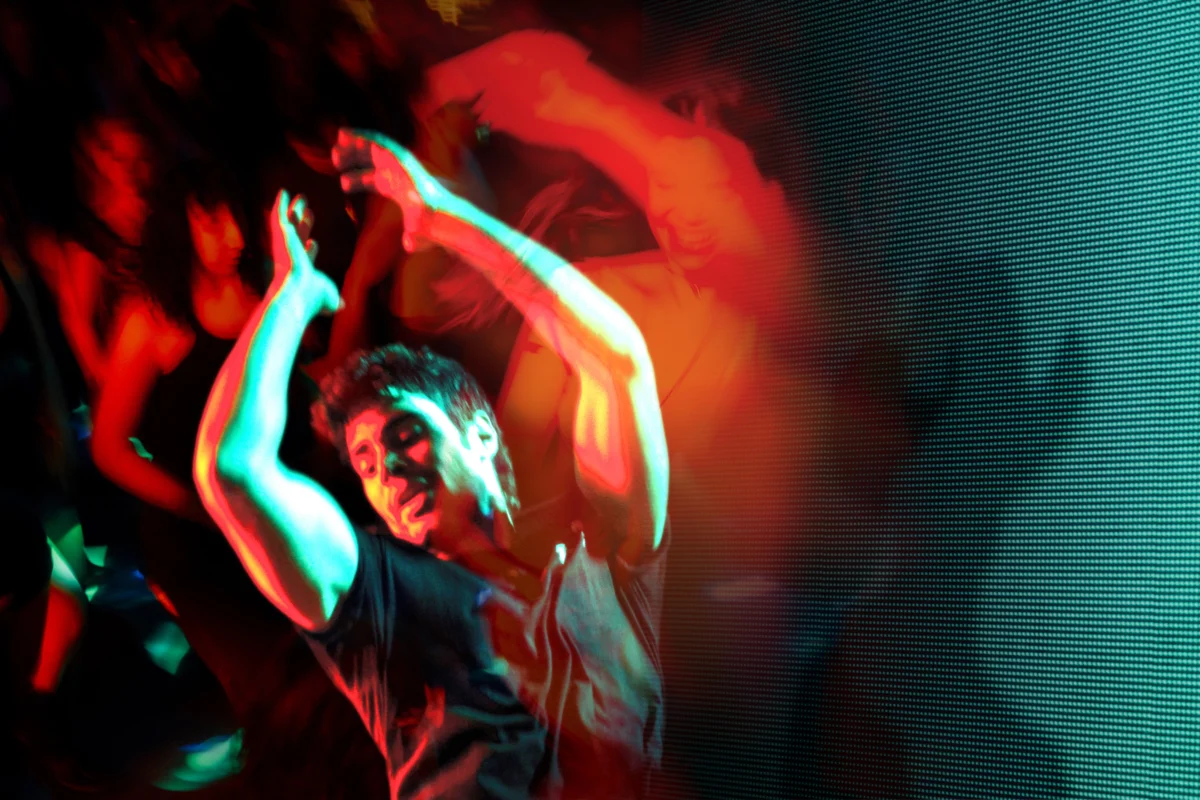
As a persistent Pineapple Express storm reached its zenith, my husband, Aaron, and I stepped into Stud Country, the vibrant hub of Los Angeles’s burgeoning queer country dance scene. The entrance required a ritual: donning white N95 masks and shedding raincoats to reveal damp T-shirts tucked into jeans and cargo pants, cinched with belts that deliberately matched our cowboy boots. This ensemble, a blend of practicality and playful style, was our usual attire, but the evening itself was far from routine. It was a Thursday, a school night, just past 8 p.m., and we had arrived at Los Globos, the venue for tonight’s Stud Country event, with a singular purpose: to dance. This return to the historic Silver Lake neighborhood held personal significance; in my early twenties, I had spent countless evenings here, immersed in late-night techno-house DJ sets and weekday salsa classes. Tonight, however, we were here for a beginner’s two-step class, a departure from past rhythms.

Our decision to embrace the two-step was rooted in a recent life event: our courthouse wedding a few weeks prior. We had opted for an intimate ceremony before the Supreme Court could potentially revisit and overturn same-sex marriage protections, a move that, thankfully, did not materialize. We envisioned a larger celebration with family and friends at a small desert reception in the spring, and for that, a memorable "first dance" was essential. The two-step, with its blend of classic country charm and approachable steps, seemed the perfect choice.
Stud Country has cultivated a dedicated following, renowned for its parties featuring classic and 1990s country dance routines set to a mix of Western classics and contemporary pop hits. Over the past few years, these events have surged in popularity across California, perpetuating Los Angeles’s half-century legacy of queer line dancing and LGBTQ+ cowboy culture. This phenomenon has even extended to the East Coast, with merchandise like muscle tees proclaiming "I’m Bi for Stud Country" hinting at its growing national appeal.

The dance floor was initially sparse, a canvas awaiting its performers. Then, the unmistakable steel twang of a dobro guitar filled the air, the lights dimmed, and a disco ball began its mesmerizing spin, illuminating the space. Sean Monaghan, a co-founder of Stud Country, and Anthony Ivancich, a respected figure in the Los Angeles queer country scene, took center stage, executing a fluid and elegant two-step. Their embrace, marked by looping twirls and graceful holds, commanded the room’s attention. Like the dramatic courtship displays of the greater sage grouse, their dance was a spectacle, but instead of a mating ritual on a lek, it was a vibrant display of intergenerational camaraderie and shared passion.
Stud Country emerged in 2021, a direct response to the closure of Oil Can Harry’s, a legendary gay country-western bar that had served as a cornerstone of the community for decades. Anthony Ivancich, who had danced at Oil Can Harry’s for over fifty years, was instrumental in its history. Located in Studio City, Oil Can Harry’s was not just one of the oldest queer bars in the Los Angeles area but a significant LGBTQ+ institution nationwide, opening its doors in 1968. Throughout its existence, it provided a safe haven for diverse forms of self-expression, evolving from the disco era to embracing leather subcultures. It weathered the storm of targeted police raids on Los Angeles’s queer spaces in the late 1960s and the devastating AIDS crisis of the 1980s, transforming into a vital hub for mutual aid, fundraising, and unwavering community support. Ultimately, however, the COVID-19 pandemic proved insurmountable.

The building that once housed Oil Can Harry’s stands today as a testament to Los Angeles’s rich LGBTQ+ history, recognized as a historic-cultural monument by the Los Angeles Conservancy. This landmark status is shared with other significant queer sites in the city, such as The Black Cat, the location of some of the earliest LGBTQ+ protests in the United States, predating the Stonewall Uprising. Stud Country has actively embraced the mantle of queer country dance, hosting events not only across Los Angeles but in various locations nationwide. This rise of pop-up dance events reflects a broader trend, as rising rents and gentrification continue to force the closure of LGBTQ+ bars across the country, pushing the community to find new spaces and innovative ways to connect.
Sean Monaghan articulated the significance of this legacy in a short Los Angeles Times documentary, stating, "Remembering that the elders that come to Stud Country now literally got arrested for trying to create this culture is remarkable. They laid the foundation for what we do now." This acknowledgment underscores the deep historical roots and the ongoing importance of preserving and celebrating queer cultural spaces.

Upstairs, in the dedicated class space, Aaron took the lead, and I followed, our hands finding their designated places – my right in his left, my left resting on his hip, his right on my shoulder. We moved counterclockwise around the dance floor, joining over twenty other pairs in the slow, deliberate steps of the two-step. The instructor’s voice cut through the music, a rhythmic guide: "Quick, quick, slow, slow!" This foundational six-count pattern formed the basis of our practice. My feet, initially tangled in the unfamiliar rhythm, gradually found their footing. Closing my eyes, I felt a growing confidence, a sense of shared momentum akin to the sage grouse’s commanding presence. Like any strong partnership, whether on the dance floor or in life, the two-step is fundamentally built on trust.
The two-step, while seemingly straightforward, is a nuanced dance with numerous regional variations, including unique queer traditions. One such variation, known as "shadow dancing," involves partners facing the same direction, fostering a more intimate connection without prescribed spatial boundaries. Our instructor emphasized that two-stepping transcended mere partner dancing; it served as a powerful conduit for bringing together individuals from diverse age groups, thereby strengthening community bonds and bridging generational divides.

Just as Aaron and I began to find our rhythm and glide across the floor, the instructor called for partner rotations. Suddenly, I was dancing with Ariella, her purple lipstick a vibrant contrast to the dimmed lights, then with Bri, whose boots sparkled with bedazzlements, and then with Jorge, clad in a stylish crop top. Each rotation presented a new dynamic, a different way of leading and following as we incorporated twirls and reverse spins into the basic steps. The experience of being spun by partners of varying genders and heights, all while navigating new movements together, was exhilarating and deeply affirming.
As the class concluded and we walked back to our car through the continuing downpour, the rhythm of the two-step lingered, a persistent echo in our steps. "Quick, quick, slow, slow." I found myself dreaming of our future first dance, contemplating the possibility of performing a two-step to The Chicks’ "Cowboy Take Me Away," a song our friend Taylor had beautifully sung and strummed at our courthouse ceremony, bringing many to tears. For Aaron and me, two queer individuals who found profound meaning in the vast landscapes of the Southwest, the song resonated deeply. We had often blasted it on road trips, traversing desert blooms, crossing seas of sage, and sleeping under a canopy of stars, just as the lyrics described. We knew then that mastering the two-step, perhaps even incorporating the fluidity of shadow dancing, would be essential to doing justice to the song and honoring the legacy of our queer ancestors on that dusty desert dance floor.







