Rocky Georgio
After a protracted legal battle spanning 13 years, Texas and New Mexico have finally resolved a significant Supreme Court dispute over the management of Rio Grande water resources. The settlement, however, marks not an end, but the beginning of a complex and potentially challenging period for water users in the region. Texas initiated the lawsuit in 2013, alleging that New Mexico, as an upstream state, was unfairly appropriating water from the Rio Grande, a vital resource for millions in both states for agriculture and potable water. The core of the agreement mandates that New Mexico must curtail the use of groundwater from wells that directly deplete the flow of the Rio Grande into Texas.
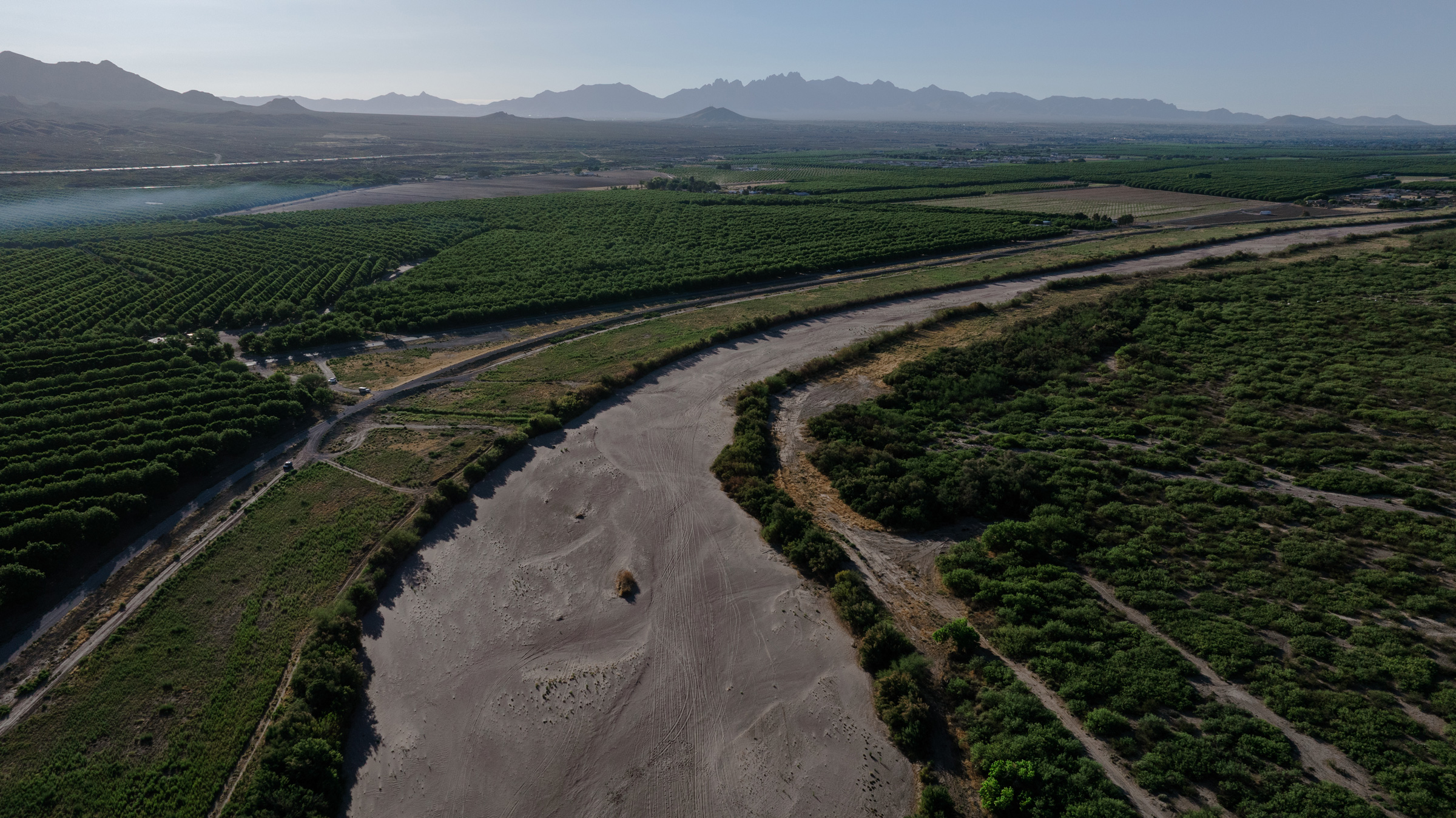
Beyond this crucial reduction in groundwater pumping, the settlement ushers in a novel system for accounting water allocation, establishing a clearer method to determine New Mexico’s water obligations to Texas. Significantly, for the first time, the volume of water reaching the Texas state line will be precisely measured, ensuring greater transparency and accountability. The financial implications for New Mexico are substantial, with compliance estimated to cost upwards of $150 million. Failure to adhere to the settlement’s stipulations could expose the state to severe penalties or reignite costly litigation.
New Mexico officials are pinning their hopes on a strategy that involves voluntarily purchasing water rights from farmers and subsequently decommissioning their wells. Yet, this approach faces considerable headwinds in the face of escalating climate change, which is exacerbating arid conditions throughout the Rio Grande basin. Projections indicate a stark future, with the state anticipating a 25% reduction in water availability within the next 50 years due to rising temperatures. If these voluntary measures prove insufficient to meet the settlement’s demands, the specter of mandatory water restrictions looms large over the entire region. Behind closed doors, key stakeholders, including agricultural producers and the municipality of Las Cruces, are actively engaged in negotiating contingency plans, underscoring the gravity of the situation. The Lower Rio Grande in New Mexico serves as a microcosm of the intricate challenges inherent in equitably distributing increasingly scarce water resources among farmers, industries, and residents as the climate grows hotter and drier.

Across communities stretching from Hatch to Anthony, New Mexico, farmers are grappling with the profound decision of whether to permanently relinquish their water rights and cease well operations. Towns that have historically been agricultural hubs are now confronting an uncertain future marked by potentially widespread fallow fields. This settlement arrives at a time when significant new water demands are emerging, exemplified by the ongoing construction of a hyperscale data center within the basin, further intensifying questions about long-term water sustainability.
Norm Gaume, a former director of the New Mexico Interstate Stream Commission and current head of the nonprofit New Mexico Water Advocates, draws a stark analogy, comparing the Rio Grande’s predicament to a company in bankruptcy proceedings, with the Supreme Court acting as the bankruptcy judge. "They’ve issued their recovery plan," Gaume stated in an interview, "and it’s going to be painful." He further elaborated that the settlement "is going to change the way we view water and use water in the Lower Rio Grande in New Mexico. It has huge consequences."

The Rio Grande Compact, established in 1938 following years of inter-state water disputes, governs the allocation of water resources among Colorado, New Mexico, and Texas. However, the compact’s effectiveness has been severely tested by recurring droughts. In the 1950s, a prolonged dry spell led to critically low water levels in Elephant Butte Reservoir, prompting farmers along the Rio Grande to drill wells into the underlying aquifer to sustain their chile pepper and pecan crops. As rainfall and snowpack eventually returned, the aquifer, though depleted, began to replenish, leading to a period of relative abundance and growth for cities and towns in the region. While urban water consumption gradually increased, agriculture remained the dominant water user.
The return of drought conditions in 2002, which have persisted to this day, has once again strained water resources. Years of low reservoir storage have led to increased groundwater pumping, further depleting the aquifer and drawing water that should have flowed to Texas, thereby violating the terms of the Rio Grande Compact. Texas’s lawsuit, joined by Colorado and the federal government, addressed these alleged violations. The Supreme Court’s final approval of the settlement in May marks a significant turning point, obligating New Mexico to reduce its groundwater pumping to ensure more water reaches Texas.

The challenges facing the Rio Grande basin are not isolated. A 2025 study published in Discover Water highlighted that across the entire basin, encompassing both the United States and Mexico, 52% of water consumption contributes to the depletion of reservoirs, aquifers, and river flows.
The implementation of the settlement has commenced with a series of informational meetings organized by the New Mexico Office of the State Engineer, responsible for water regulation within the state. At an initial gathering in Anthony, New Mexico, approximately two dozen farmers and residents convened to understand the practical implications of the agreement. Ryan Serrano, the bureau chief for the Lower Rio Grande Basin, detailed the settlement’s requirements: New Mexico has a ten-year window, until May 2036, to reduce annual groundwater pumping in the basin between Caballo Reservoir and the Texas border by 18,200 acre-feet. This reduction represents about 6% to 7% of the basin’s total groundwater usage, a volume equivalent to nearly 9,000 Olympic swimming pools annually. Significantly, between 2021 and 2024, agriculture accounted for over 80% of the groundwater consumed in this basin.

Serrano explained that farmers actively utilizing their groundwater rights will have the option to sell these rights to the state, which will then permanently retire them, leading to the land being left fallow. A study is currently underway to establish fair market valuations for these water rights. New Mexico has already allocated $150 million for this voluntary water rights purchase program, acknowledging that additional funds will be necessary for full compliance. State officials believe this approach is preferable to a trial, especially considering that the United States’ legal team had advocated for even more stringent reductions in groundwater use. Hannah Riseley-White, director of the New Mexico Interstate Stream Commission, emphasized that the state views its substantial investment in this settlement as a commitment to the region’s long-term prosperity and expressed dedication to incorporating community input to shape a responsive program.
In Hatch, a community with deep agricultural roots, concerns are mounting over the potential economic fallout from the water rights purchase program. Victoria Franzoy, chief financial officer at Chile River Farms, shared her anxieties at a public meeting, noting that farming is a cherished family tradition in the area, with families like hers having cultivated the land for generations. While Hatch is renowned for its chile peppers, other crops like onions, pecans, alfalfa, and cotton are also cultivated. The annual Hatch Chile Festival draws thousands to the town, which proudly declares itself the "Chile Capital of the World." New Mexico already operates a voluntary groundwater conservation program that compensates farmers for temporarily leaving fields fallow. The Hatch area has a higher participation rate in this program compared to the Mesilla Valley further downstream. This is partly because vegetable farmers in Hatch have more flexibility to rotate crops annually, whereas pecan orchards, which require years to mature, cannot have irrigation suspended without risking production.

Franzoy warned that Hatch’s economy, heavily reliant on farming, could suffer significantly if more land is left fallow. She advocated for a broader approach to water conservation, suggesting that reductions should not solely fall on farmers. In response to these concerns, state officials are considering capping the volume of water rights that can be purchased in the Hatch area to mitigate disproportionate impacts. Riseley-White acknowledged these concerns, stating that the agency is actively exploring ways to support the viability and value of lands from which water rights are acquired.
In the Mesilla Valley, Josh Smith, general manager of the Elephant Butte Irrigation District (EBID), described drought as the "ordinary" condition in southern New Mexico, entering what he termed the "24th year of a severe drought." He noted that most residents have adapted to these dry conditions. Smith anticipates that each water right holder will need to assess their individual circumstances to decide whether to accept the state’s offer. He suggested that farmers with extensive landholdings might choose to retire groundwater rights for only a portion of their property, while those facing financial hardship might opt to sell all their rights. The state has yet to finalize the per-acre payment structure.

Smith expressed hope that the settlement would bring greater certainty to water supply for farmers in his district but acknowledged that future challenges and potential litigation remain possibilities. "The primary concern is that if our water situation doesn’t change and we don’t receive snowpack in Colorado and northern New Mexico and get flows, we’re going to have big problems," he stated.
Further downstream in the Mesilla Valley, pecan farmer Rafael Rovirosa maintains a pragmatic outlook. His great-grandfather, Deane Stahmann, was a pioneer in the commercialization of pecans in the region, establishing Stahmann Farms, which now spans over 3,200 acres. Rovirosa, who took over as director of operations in 2017, has navigated a decade of drought and is preparing for continued dry conditions. He advocates for planning based on current dry conditions rather than past wetter periods. Rovirosa has implemented soil moisture sensors to optimize irrigation efficiency and is exploring alternative crops like pistachios, which require less water than pecans, though he acknowledges the need for further research into economically viable options for the area. He also pointed out that not all water diverted for agriculture is lost; a portion recharges the aquifer.

Despite these challenges, Rovirosa believes agriculture will remain a significant part of the Mesilla Valley’s future for decades to come. He anticipates that the primary constraint on water use will not be availability but rather legal and governmental regulations. Meanwhile, a new, water-intensive user has emerged in the basin, raising concerns among conservation advocates. Project Jupiter, a 2.5-gigawatt data center backed by Oracle and OpenAI, is under construction in Santa Teresa within the Rio Grande watershed. The project has faced controversy due to its substantial water and energy demands. Developers have acquired existing water rights previously held by a sod farm. State officials have clarified that no new groundwater pumping rights will be issued in the Lower Rio Grande, meaning any new water users must secure existing rights.
New Mexico is actively pursuing a collaborative approach to water management, a strategy that is becoming increasingly vital for long-term sustainability and compliance with the recent Supreme Court settlement. As irrigation canals begin to fill with water, bringing a temporary respite to communities along the Rio Grande, there is a palpable sense of the challenges that lie ahead. To meet the settlement’s requirements and ensure the region’s water security, New Mexico must significantly reduce water consumption in the Lower Rio Grande. Should voluntary water purchases fall short, further curtailments will be necessary.

The state operates under a prior appropriation system, enshrined in its constitution, which prioritizes senior water rights over junior ones. However, New Mexico also possesses a statutory tool known as alternative administration, or active water resource management. This allows the state, in collaboration with stakeholders, to determine the order and manner of water use reductions. Riseley-White highlighted that this statute is crucial for developing water management plans that align with community values and concerns.
Currently, the state is engaged in confidential negotiations with major water rights holders, including EBID, the city of Las Cruces, and New Mexico State University, to develop plans for potential water use curtailments beyond the voluntary purchase program. These parties have until October to reach an agreement, and New Mexico is required to submit a comprehensive Rio Grande management plan within two years as part of the settlement. While specific details of these ongoing discussions remain confidential, the participation of these entities, who also acted as amici curiae (friends of the court) in the Texas v. New Mexico case, underscores their vested interest in a mutually agreeable solution.

Norm Gaume of New Mexico Water Advocates cautions that the mandated 18,200 acre-feet reduction is merely the initial step. He expresses concern that without a comprehensive plan, New Mexico might allow further deficits from groundwater pumping to accumulate in the interim. Gaume suggests that the looming threat of priority administration could serve as a powerful incentive for stakeholders to collaboratively agree on reduced groundwater pumping strategies. "A good outcome in October would be to work together on a plan instead of continuing to litigate their differences," he remarked.