Joko Susilo
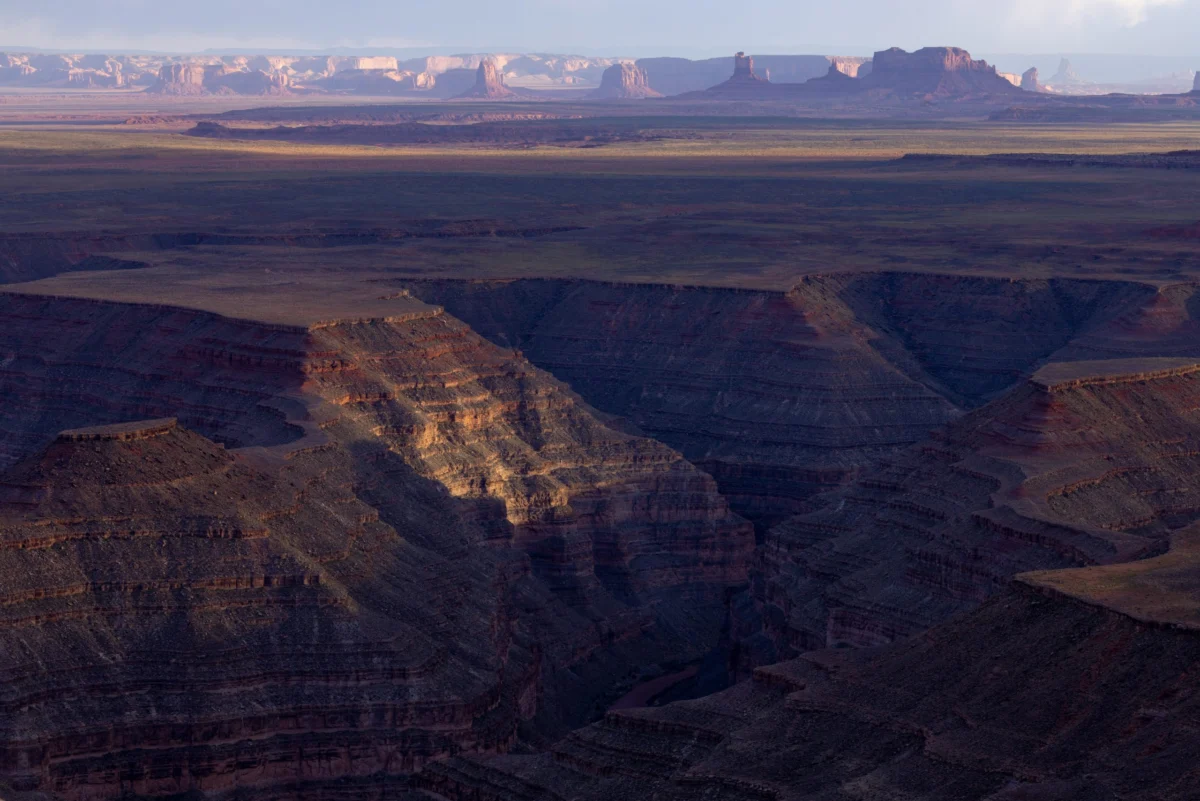
Bears Ears, a breathtaking expanse of high desert mesas, towering buttes, and deeply carved canyons in southeastern Utah, holds an unparalleled concentration of archaeological and cultural sites, testifying to millennia of continuous human presence. It is a living testament to the Ancestral Puebloans, Ute, Navajo, Hopi, and Zuni peoples, whose traditions, ceremonies, and sustenance are inextricably linked to this land. The monument’s rugged terrain is dotted with ancient cliff dwellings, petroglyph panels, sacred burial grounds, and traditional plant gathering areas, making it a critical repository of Indigenous heritage and an irreplaceable outdoor museum of human history. Ecologically, Bears Ears supports diverse ecosystems, from arid scrublands to riparian corridors, harboring unique flora and fauna adapted to its harsh, beautiful environment.
The original 1.35-million-acre Bears Ears National Monument, designated by President Barack Obama in 2016 under the Antiquities Act of 1906, was a landmark achievement in conservation, born from decades of dedicated advocacy by a coalition of five sovereign tribal nations: the Hopi Tribe, Navajo Nation, Ute Mountain Ute Tribe, Ute Indian Tribe of the Uintah and Ouray Reservation, and Zuni Pueblo. This designation was groundbreaking, marking the first time in American history that a national monument’s proclamation explicitly incorporated Native languages and established an Inter-Tribal Commission with a formal role in co-managing the protected area. The 2016 proclamation was more than a legal document; it was a "love letter" to the land, acknowledging its profound spiritual and historical significance to Indigenous peoples and recognizing their traditional ecological knowledge as essential for its stewardship.
In stark contrast, the administration’s 2026 proclamation seeks to diminish the land’s intrinsic value, describing it as an unremarkable landscape common across the Southwest, thereby asserting it is unworthy of comprehensive protection. This narrative dismisses land preservation as mere federal overreach or "theft," a tactic often employed to justify opening pristine natural areas to industrial development. Such rhetoric directly contradicts the spirit and intent of the Antiquities Act, which specifically empowers presidents to protect objects of historic or scientific interest on federal lands, a purpose unequivocally met by Bears Ears due to its deep history, rich archaeology, and immense cultural significance. This approach, characterized by fearmongering and a profound disrespect for tradition, signals a troubling disregard for established conservation policy and the voices of sovereign tribal nations.
The repudiation of the 2026 proclamation extends beyond Bears Ears to include Grand Staircase-Escalante National Monument, another Utah landscape of immense paleontological and geological importance also targeted by the administration. Many Indigenous communities hold deep connections to Grand Staircase-Escalante, viewing its proposed reduction as part of a broader assault on ancestral lands and cultural heritage. No sitting president, regardless of political affiliation, possesses the legitimate authority to unilaterally disregard the voices, leadership, and millennia-old land-management practices of tribal sovereign nations. The meaningful consultation owed to these tribes, who are inextricably tied to these ancestral lands, has been systematically sidelined, representing a grave affront to Indigenous rights and self-determination. The United States, barely 250 years old, pales in comparison to the thousands of years of continuous Indigenous presence and stewardship on this continent.

The urgency of this situation is not abstract; it carries tangible, immediate threats. Reports confirm that mining claims have already been filed within the boundaries of what should still be protected monument land, signaling aggressive attempts to forcibly open these areas to industrial development. Every month this order stands brings the nation closer to witnessing drill rigs, uranium mines, and bulldozers desecrating places that took generations of careful stewardship to keep whole. This is not a policy disagreement that can simply be "waited out"; once the land is disturbed by extractive industries, its unique ecological and cultural integrity can never be fully restored to its original state. The irreversible nature of such damage underscores the critical need for immediate and decisive action.
Beyond the staggering loss of protection for Bears Ears’ unique attributes—its ancient petroglyphs, ancestral sites, and sacred landscapes—the strategy employed by monument opponents is equally troubling. It relies on fearmongering and the false suggestion that protecting these lands somehow necessitates a loss for others, deliberately sowing uncertainty into the vision of collaborative land management that tribal nations spent a decade building in good faith with federal agencies like the Bureau of Land Management. This undermines a potentially transformative model for public land stewardship, one that integrates Indigenous traditional ecological knowledge with contemporary conservation science, offering a more holistic and sustainable approach to managing shared resources.
In response to this egregious action, Native peoples, standing united with a strong coalition of conservation partners and millions of concerned Americans, continue to speak up and hold the federal government accountable. The fight is no longer confined to policy debates; tribal nations and their allies have initiated significant litigation challenging the administration’s proclamations affecting both Bears Ears and Grand Staircase-Escalante. This legal battle represents a steadfast defense of these sacred, living places, a refusal to allow them to be taken without a vigorous struggle. The legal position is clear and widely supported: the Antiquities Act grants presidents the power to establish national monuments for the preservation of significant resources, not the authority to unilaterally erase or substantially reduce them. Historically, no president has ever fully rescinded a national monument designation, and this lawsuit aims to uphold that critical legal precedent. The resolve of the Bears Ears Inter-Tribal Coalition and the Bears Ears Commission remains unwavering, committed to the long and arduous work of restoring Bears Ears National Monument to its full, intact protection.
However, litigation alone, while crucial, will not be sufficient to safeguard these invaluable lands. It will require the collective voice and sustained advocacy of all Americans to challenge this unprecedented assault on public lands and Indigenous heritage. The global community watches as the United States grapples with its commitment to conservation and respect for Indigenous rights. Allowing Bears Ears, or any of America’s cherished natural and cultural landscapes, to disappear quietly into the annals of extractive industry would be a profound loss for future generations and a betrayal of the principles of stewardship that define a nation’s character. The fight for Bears Ears is a fight for cultural heritage, environmental justice, and the future of America’s protected wild spaces.