Johny Prima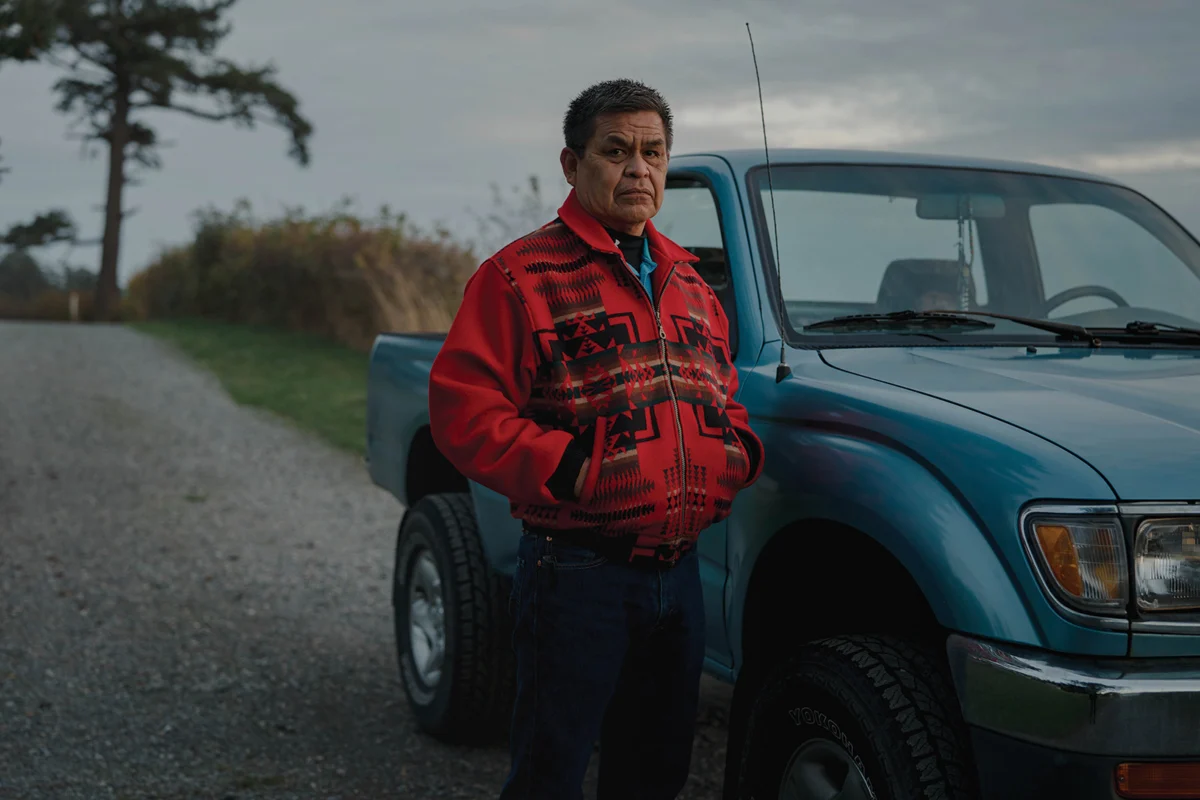
The Swinomish Indian Reservation’s Smokehouse Tidal Marsh project, launched in 2022, represents a proactive effort to reclaim and revitalize vital ecosystems by transforming 250 acres of former agricultural land into thriving estuaries and wetlands. This ambitious initiative forms a cornerstone of broader tribal community projects across the Pacific Northwest, all meticulously designed to bolster the recovery of critically endangered and threatened populations. Species such as the Puget Sound chinook salmon, Puget Sound steelhead, bull trout, and the iconic southern resident killer whales, which are intricately linked to the health of the Skagit River Watershed, stand to benefit immensely from these restoration endeavors. The precipitous decline observed in each of these ecologically significant species directly correlates with the pervasive habitat loss and degradation stemming from unchecked development and agricultural expansion over the past century and a half.
"Over the past 150 years or so, there’s been significant damage to the habitat, and the habitat is what salmon needs," articulated Swinomish Tribal Indian Community Chairman Steve Edwards, a lifelong fisherman with over five decades of experience in these waters, underscoring the fundamental connection between a healthy environment and species survival. This sentiment resonates deeply within Indigenous communities, where the well-being of the land and its creatures is intrinsically tied to cultural identity, economic stability, and spiritual practices.
However, a profound shift in federal policy in July 2026 delivered a substantial blow to these diligent tribal conservation efforts. The Trump administration finalized changes to the federal government’s long-standing interpretation of the landmark 1973 Endangered Species Act (ESA), a foundational piece of environmental legislation often hailed globally as a gold standard for biodiversity protection. Historically, the definition of "harm" to a species under the ESA was broad and encompassing, extending to the critical habitat and essential resources a species required to survive and thrive. This holistic approach recognized that protecting an ecosystem was paramount to preserving its inhabitants. The revised interpretation, however, dramatically narrowed this scope, now stipulating that federal agencies will interpret "harm" solely as the intentional killing or direct harming of an individual member of a species. This radical redefinition effectively pivots the focus from ecosystem-wide protection to a much more limited, individual-centric approach, making it significantly harder to enforce protections against indirect but devastating impacts like habitat destruction.
On July 14, 2026, the very day the controversial rule change was finalized, the Swinomish and Squaxin Island tribes swiftly initiated legal action, filing a lawsuit against the federal government. Their complaint argued vehemently that the Trump administration’s changes constituted a "radical reinterpretation" that flagrantly disregarded over 50 years of consistent congressional intent and established Supreme Court case law. The tribes highlighted that the ESA was explicitly designed to prevent the extinction of species by protecting their habitats, not merely by preventing the direct physical harm of individual animals.

The lawsuit underscored the profound reliance of tribal communities on these natural resources, stating, "Squaxin’s cultural and economic well-being depend upon the health and sustainability of Pacific Salmon and other freshwater and marine resources, which play a central role in the daily lives of Tribal members." This statement encapsulates the deep, multi-faceted relationship Indigenous peoples hold with the environment, where the health of the ecosystem is not an abstract concept but a tangible determinant of their cultural continuity, food security, and economic viability.
Chairman Edwards expressed a deep sense of betrayal, revealing that federal agencies failed to respond to the Swinomish Tribe’s requests for government-to-government consultation regarding the proposed changes. This omission stands in stark contravention of the United States’ inherent trust obligation to Native nations, which mandates meaningful engagement and respect for tribal sovereignty, particularly when federal actions impact tribal lands, resources, or treaty rights. "It feels almost like we’ve been betrayed by our federal trustees," Edwards stated, emphasizing how the rule change undermines their sacred treaty rights. "It’s super disturbing that we had to fight this fight."
Numerous Native nations voiced strong opposition to the proposed changes during the public comment period in 2025. Their submissions consistently highlighted the egregious lack of proper tribal consultation and underscored the devastating impacts the new interpretation would unleash upon the recovery trajectories of imperiled species. Many of these species possess profound cultural, spiritual, and relational significance for tribal citizens, extending far beyond their ecological role. The revised definition also threatens to disrupt the economies of fishing communities and deprive those who rely on salmon and other species for subsistence, exacerbating existing food security challenges.
The concerns extended far beyond the salmon-rich Pacific Northwest. Tribes like the Pueblo of San Felipe cited potential impacts on the iconic monarch butterfly and the rare Suckley’s cuckoo bumblebee, species whose habitats span vast and varied landscapes. The Fallon Paiute-Shoshone Tribe voiced grave concern for the Dixie Valley toad, a species they consider a relative and whose habitat is intertwined with sacred sites. Fallon Paiute-Shoshone Tribe Chairwoman Cathi Williams-Tuni wrote in public comments, "It is obvious that removing water from a species that needs water to survive harms both individual members of the species and the species’ population," directly referencing the potential impacts of a nearby proposed geothermal project. This project, initially halted in 2022 following the toad’s listing as endangered, could now potentially resume under the relaxed regulations, threatening vital water sources. "These harms in Dixie Valley would be catastrophic, permanently ruining the Tribe’s sacred site and ending the ability to use the springs for medicine and ceremonies," Williams-Tuni emphasized, articulating the irreversible cultural and environmental damage at stake.
The tribes’ lawsuit requests the court to issue an injunction preventing the regulatory changes, which became effective on September 14, 2026, from moving forward. They also seek a judicial decision declaring the changes unlawful and demanding a reversion to the previous, more protective definitions of "harm." While the tribes express hope for a timely resolution, they remain prepared for the litigation to unfold over several months, a testament to the complexity and high stakes of the case.

The revised rule undeniably benefits developers and various industries, who may now largely bypass the need to consider or mitigate the broader habitat impacts of their operations. Previously, any activity threatening to destroy critical habitat in a manner that harmed a protected species would trigger a stringent permit process, which typically mandated tribal consultation. Under the new, narrower definition, such permits would be required far less frequently, effectively sidelining tribes from crucial decision-making processes that directly affect their ancestral lands and resources. Compounding this, the changed definition introduces an onerous requirement: proof that the harm was intentional. As Bob Anderson, a distinguished Oneida Indian Nation visiting professor of law at Harvard Law School and a member of the Bois Forte Band of the Minnesota Chippewa Tribe, explains, proving intent is notoriously difficult in the legal system. "Companies won’t have any incentives to negotiate with the government or environmental groups or tribes about how their activities are going to affect the listed species," Anderson observed, highlighting the potential for widespread environmental damage with little accountability.
The implications of this reinterpretation extend to large-scale agreements governing major river systems that host ESA-listed species. River basins like the Klamath, Elwha, and Columbia, for example, currently operate under complex agreements that mandate the release of water from dams at specific times of the year. These carefully timed releases are crucial for supporting the migration and spawning cycles of endangered or threatened salmon populations, in accordance with the ESA. The new interpretation fundamentally throws these existing agreements and statutory obligations into question, threatening to unravel decades of collaborative conservation efforts and making salmon recovery exponentially harder. "We’re not even close to delisting these species," stated Kayeloni Scott (Nez Perce and Spokane), executive director of the Columbia River Snake Campaign, a coalition of conservation groups, businesses, and the Nez Perce Tribe. "Our goal is abundance — healthy and abundant populations — that’s a whole other level, a whole other tier. Even getting to delisting, we’re pretty far off."
Anderson acknowledges the considerable legal strength of the arguments put forth by the tribes and environmental groups but also warns of significant political risks, given the administration’s demonstrated propensity for retaliation. A stark example emerged in December 2025, when President Donald Trump vetoed an unrelated bipartisan bill that would have returned land to the Miccosukee Tribe of Indians of Florida. This veto came months after the tribe had joined a lawsuit against the administration in July 2025 over the construction of an immigration detention center in the Everglades. Trump explicitly cited the tribe’s opposition to the detention center as his reasoning, characterizing the Miccosukee Tribe as "unaligned with my Administration’s policy of removing violent criminal illegal aliens from the country." "That’s a real message there to plaintiffs that they’re going to retaliate against you," Anderson cautioned, emphasizing the high stakes of "locking horns with the federal government."
Despite these daunting legal and political challenges, Chairman Edwards maintains an unwavering focus on the Swinomish Nation’s core priority: upholding their sovereign rights for the benefit of future generations. He affirms that the tribe will not abandon its vital restoration work, irrespective of the federal policy shifts. "It does impact our sovereignty," Edwards stated, referring to the diminished species protections. "Generations down the road, I want (Swinomish citizens) to be able to exercise their treaty rights like I have done in the past." This enduring commitment underscores the resilience and deep-rooted responsibility Indigenous communities feel toward their lands, waters, and the species that inhabit them, a commitment that transcends political administrations and legal battles.