Roger Danuarta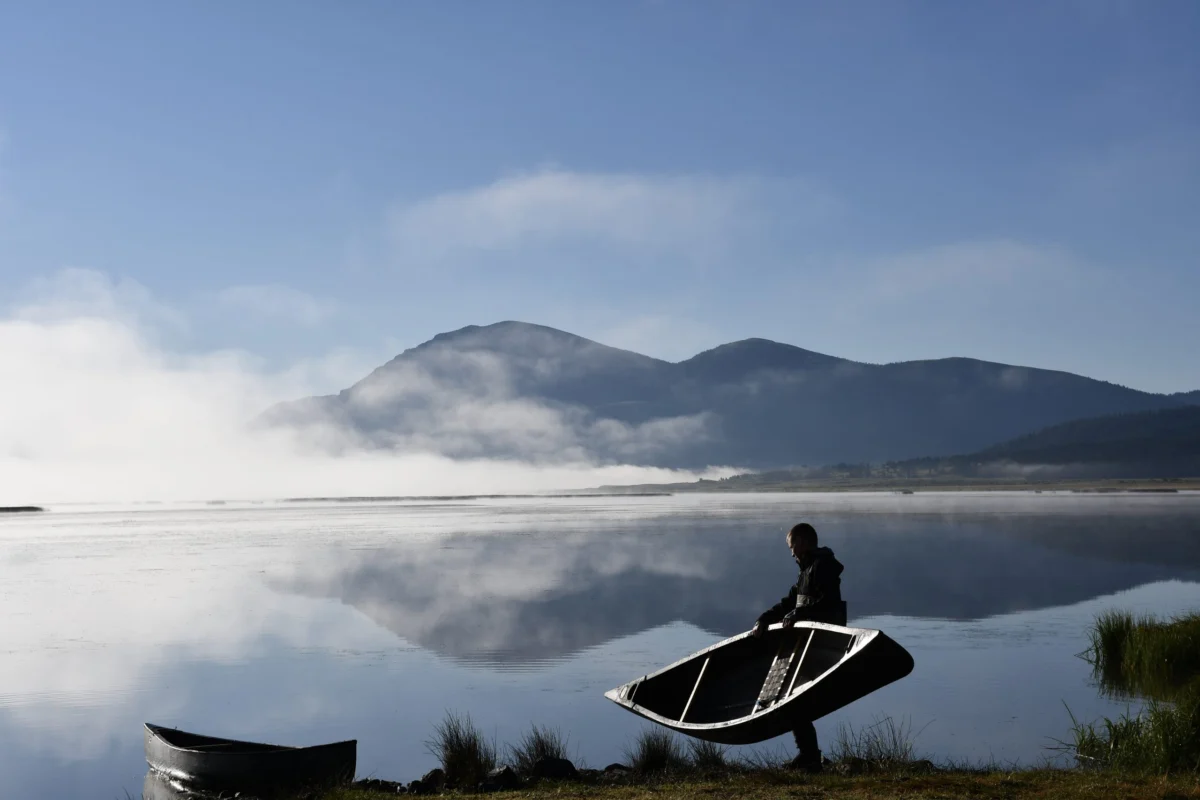
In southwestern Montana’s pristine Centennial Valley, the mid-August dawn broke not with silence but with a vibrant avian cacophony: the persistent rudder of duck wings cutting through the mist, the distinct woody creak of white-faced ibis in flight, and the incessant, energetic chatter of marsh wrens. This immersive soundscape provided the backdrop for the 22nd consecutive year of the Lesser Scaup Project, as a dedicated crew of 11 University of Montana researchers and Ducks Unlimited volunteers expertly launched canoes onto the waking wetlands of Lower Red Rock Lake. This annual expedition represents far more than just another season of duck banding; it contributes to one of the world’s longest-running and highest-resolution datasets on breeding ducks, offering invaluable insights into the health of North America’s migratory bird populations and the vast, interconnected ecosystems they inhabit.
The Red Rock Lakes National Wildlife Refuge, a jewel nestled within the sprawling Greater Yellowstone Ecosystem, stands as a critical sanctuary for thousands of migratory birds, boasting the region’s largest wetland complex. Established in 1935 primarily for the protection of the majestic trumpeter swan, the refuge has quietly fostered another enduring conservation narrative: that of the lesser scaup. This common migratory duck, characterized by its striking black-and-white plumage and diving prowess, undertakes epic journeys, its habitat spanning from the expansive boreal forests of Alaska and Canada all the way to the sun-drenched coasts of Mexico and Central America. Yet, despite its widespread distribution and historical abundance, the species has faced significant challenges, making the work in the Centennial Valley all the more vital.
The profound concern for the lesser scaup began to crystallize in the 1990s when Jeff Warren, then a range technician for the U.S. Fish and Wildlife Service, arrived at the Red Rock Lakes National Wildlife Refuge from Michigan. He quickly became aware of a troubling continental trend: lesser scaup populations across North America had plummeted by more than 50% since the mid-1970s. "They were one of those species that were always numerous and taken for granted," Warren recounted, reflecting on the surprising and alarming decline of a bird once considered ubiquitous. This stark reduction underscored a broader ecological crisis, highlighting how even seemingly common species can be vulnerable to cumulative environmental pressures.
At the time, while biologists recognized the dire situation of the lesser scaup, their understanding of the species’ precise ecological requirements for survival, successful migration, and reproduction remained surprisingly limited. The majority of North American lesser scaup typically nest in the vast, remote boreal forests of Canada, areas notoriously difficult and expensive to access for sustained research, often requiring costly equipment like helicopters. Warren, however, recognized a unique opportunity in his own backyard. He knew that significant numbers of lesser scaup also nested within the Centennial Valley, presenting a rare chance to conduct a long-term, high-resolution study without the prohibitive logistical hurdles associated with boreal fieldwork. This realization laid the groundwork for a research initiative that would ultimately redefine understanding of the species.
In 2004, Jeff Warren transitioned into the role of wildlife biologist for the refuge, seizing the opportunity to launch a comprehensive, long-term study focusing on these distinctive diving ducks. His vision was clear: to leverage the accessible breeding grounds of the Centennial Valley to gain insights that would resonate across the continent. "By understanding the biology and behaviors of a bird in your backyard, you can understand a larger picture of continental ecosystems and habitats," Warren articulated, emphasizing the foundational principle of localized research informing broader ecological patterns. "You have to start with where you are and what you know." This localized approach proved instrumental in unraveling the complex life history of the lesser scaup.

The duck-banding operation itself is a testament to meticulous planning and coordinated effort. Paddling through the shallow waters of Lower Red Rock Lake, the team strategically spread out among dense islands of reeds, meticulously working to encircle ducklings and their watchful mothers. Lower Lake, with its rich subaquatic vegetation, deep muddy bottom, and an abundant surface layer of invertebrates, offers an exceptionally attractive and productive habitat for scaup, making it an ideal study site. However, these very conditions also present unique challenges for canoeists. Liv Lundin, the dedicated graduate student researcher spearheading the project’s daily operations, demonstrated remarkable expertise, skillfully navigating the waters and directing volunteers as they gently corralled the birds into specially designed V-shaped nets. Once herded into the wide entrance of these nets, the ducks slowly funneled into a secure wire enclosure. Researchers then carefully used long-handled dip nets to extract the scaup, placing them into blue carrier crates for transport back to the shore for processing.
Back on shore, with the animated babbling of the ducklings filling the air, Lundin knelt, carefully placing each scaup in her lap. With precision, a small, individually numbered metal tag was snapped onto an ankle, its sex identified, and then passed to a colleague who meticulously recorded its weight and bill length. In years graced with favorable nesting conditions, the team successfully bands up to 2,000 birds annually – a remarkable feat that accounts for approximately half of all lesser scaup banded across North America before the commencement of the hunting season. This extensive banding effort creates an unparalleled dataset, providing critical individual-level information essential for understanding population dynamics, survival rates, and migratory patterns.
Despite the localized success and intensive research, the broader continental picture for lesser scaup remains precarious. While scaup numbers showed a promising increase between 2005 and 2015, they have since regrettably regressed, dropping back to the concerning levels Jeff Warren first encountered in the 1990s. Current estimates place the population 15% lower than the long-term average, still significantly below the ambitious target of 4.9 million set by the North American Waterfowl Management Plan (NAWMP). The NAWMP, an internationally recognized framework endorsed by Canada, the United States, and Mexico, aims to conserve waterfowl and their vital wetland habitats across the continent, underscoring the transnational urgency of the scaup’s recovery.
The meticulously collected data from the Centennial Valley’s well-studied ducks directly informs harvest regulations and management strategies across the entire continent. The project’s robust estimates of female survival rates during the critical breeding season are actively utilized by the U.S. Fish and Wildlife Service. These projections are crucial for forecasting how scaup populations will respond to varying levels of hunting pressure and fluctuations in breeding habitat conditions, ensuring sustainable management practices. The insights gleaned from this high-resolution study are therefore not confined to Montana but ripple outwards, influencing conservation decisions that span international borders.
Over the past two decades, the Lesser Scaup Project has yielded critical insights into the species’ biology. Researchers have discovered that female scaup at Lower Red Rock Lake exhibit exceptionally rapid weight gain, maintain high breeding rates, and experience an above-average survival rate in this specific area compared to other nesting grounds. These demographic markers serve as powerful indicators of the wetland system’s remarkable productivity and overall health, a testament to its protected status within 30,000 acres of designated wilderness. "Simply put," Warren affirmed, "it’s a great place to be a lesser scaup during the breeding season." Furthermore, the project has definitively shown that nesting survival is significantly boosted by effective water-management strategies that involve slowly raising water levels throughout the breeding season, creating optimal conditions for nesting success and chick survival.
Yet, the nesting habitat at Red Rock Lakes represents only the initial chapter in the scaup’s remarkable life journey, and the labor of banding merely marks the beginning of the annual study. Soon after banding, the ducks that nest in the refuge will embark on their arduous migration south, seeking warmer wintering grounds. "You can hold a feathered duckling in your palms in August and know that within a few months they will begin migrating south, possibly to Mexico," Warren mused, underscoring the incredible migratory feats of these birds. "These birds tie the continent together," a powerful metaphor for the ecological interconnectedness that transcends geographical and political boundaries.

The lesser scaup’s remarkable adaptability allows it to thrive in a diverse array of environments, from man-made reservoirs and brackish estuaries to bustling urban bays and even the open ocean. While the majority winter in Northern Mexico, along the Gulf Coast, and in Southern California, banded ducks from the Centennial Valley have been recovered in far-flung locations such as the San Francisco Bay Area, Washington state, and Missouri, illustrating the vastness of their migratory routes. Occasionally, some lesser scaup from Red Rock Lakes even undertake a northward journey to molt in the rich wetlands of Alberta, further demonstrating their wide-ranging movements and reliance on diverse habitats across the continent.
However, this very adaptability comes with a significant drawback: it exposes the species to a wide array of environmental threats across its extensive range. Warren’s extensive studies on lipophilic contaminants – pollutants that readily dissolve in fats and accumulate in biological tissues – have revealed the presence of organochlorine contaminants in the fat stores of female scaup. Organochlorines, a class of persistent organic pollutants including synthetic pesticides like DDT, have been regulated or outright banned for decades, yet they continue to persist in soil and water ecosystems, bioaccumulating up the food chain and posing a silent, insidious threat to wildlife. These findings underscore the long-lasting legacy of industrial and agricultural practices on environmental health and biodiversity.
"This species is such an important conservation indicator," Liv Lundin explained, highlighting the scaup’s role as a biological barometer for environmental health. "They have so many stopover sites when they migrate that they rely on the habitat health of multiple ecosystems." Their broad migratory pathways mean that the health of scaup populations is intrinsically linked to the ecological integrity of countless wetlands, rivers, and coastal areas across North America, making their decline a warning sign for broader environmental degradation. The project’s findings serve as a critical alarm, urging comprehensive, cross-continental efforts to address persistent pollutants, habitat loss, and climate change impacts that collectively threaten migratory waterfowl.
As the banding day concluded, volunteers carefully returned the carrier boxes to the shoreline, releasing the ducklings back into the water to rest and feed, preparing for the epic migrations that lay ahead. Later, sipping lemonade at his house overlooking the Red Rock Lakes, Jeff Warren spoke of the species with the deep familiarity and affection of a long-time neighbor. "It’s amazing the kinds of questions you can ask when you have a life history of uniquely marked individuals," he reflected, emphasizing the unparalleled value of long-term, individual-level data. At its core, the Lesser Scaup Project is driven by the sustained curiosity and unwavering dedication required to maintain such crucial long-term ecological research, providing hope for the future of North America’s migratory birds. It helps, he added with a smile, that "a duckling isn’t a tough sell. Everybody loves ducklings."