Rocky Gerung
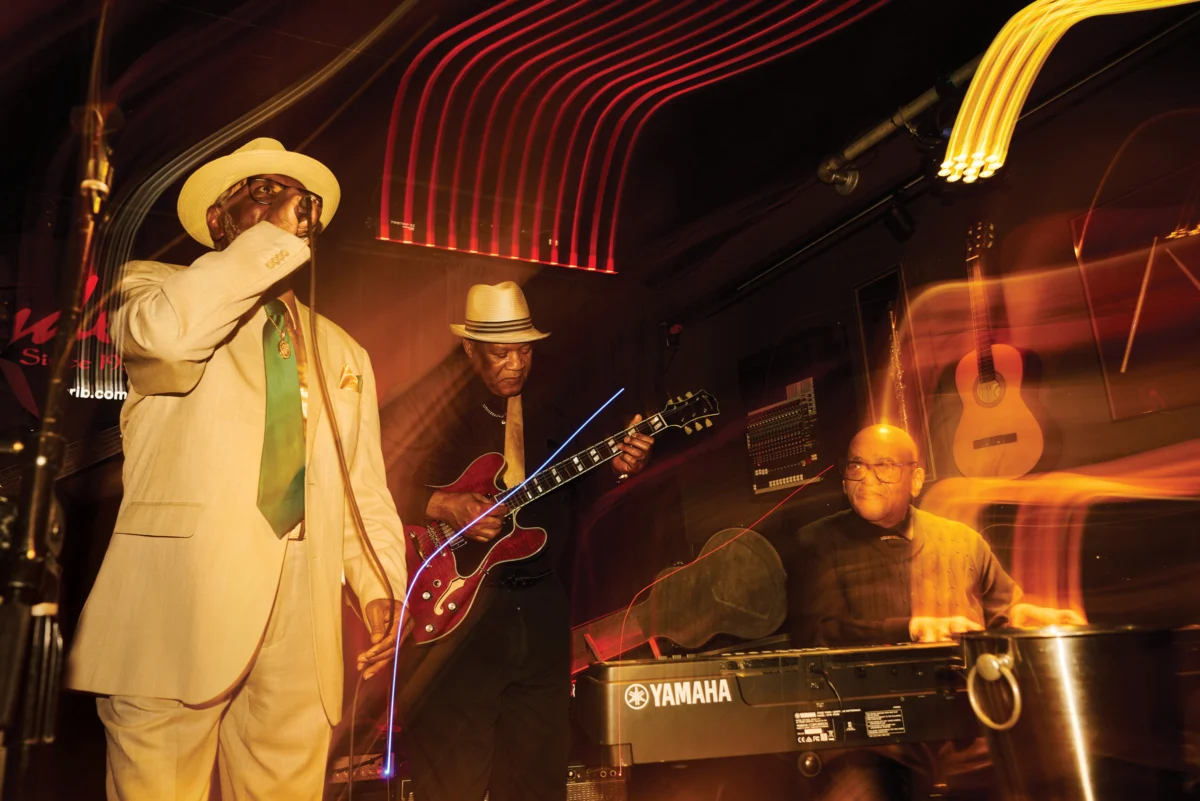
At the age of twelve, long before he was known as "The Boogie Cat" or shared a stage with legends like B.B. King, Norman Sylvester boarded a train in rural Louisiana, bound for Portland, Oregon. Leaving behind a life filled with the simple pleasures of muscadine grapes, bayou fishing, and his grandmother’s gospel singing, he was summoned west by his father, who sought better economic opportunities. This move in the autumn of 1957 transplanted Sylvester from a familiar Southern landscape to a state with a deeply entrenched history of racial exclusion. Oregon had enacted laws barring Black residents from settling in the territory from 1844 until 1926, and discriminatory practices persisted, including the state’s refusal to ratify the 15th Amendment and its Supreme Court’s sanctioning of racial discrimination in public spaces. By the 1920s, Oregon was home to a significant Ku Klux Klan presence.

Despite this hostile environment, Black pioneers were among Oregon’s earliest settlers, establishing communities and striving for equality. The Portland chapter of the NAACP, founded in 1914, stands as the oldest continuously operating chapter west of the Mississippi River. Nevertheless, the state’s exclusionary policies acted as a powerful deterrent; by the time Sylvester arrived, African Americans constituted less than one percent of Oregon’s population, with Portland hosting the smallest Black community among major West Coast cities. The stark contrast to his Louisiana home created a profound culture shock as he stepped off the train at Union Station.
Entering integrated seventh grade, Sylvester’s first quest in his new city was a haircut, leading him to a barbershop near the intersection of North Williams Avenue and North Russell Street in North Portland. He found the area vibrant, a bustling hub where African Americans owned businesses, drove nice cars, and moved with confidence. This scene, reminiscent of his Southern roots, struck him profoundly, making him feel instantly at home despite the vast distance separating him from his past. The air itself seemed familiar, carrying the scents of Southern cooking and the melodies of gospel and jazz, creating a sense of belonging that he later described as the place embracing him, with everyone "singing the same song."

This vibrant intersection was the heart of the Albina neighborhood. In the early 20th century, Black Portlanders, many of whom worked as railcar attendants, began settling in Albina due to its proximity to Union Station. Subsequent decades of landlord discrimination and institutionalized policies, such as a 1919 Portland Realty Board ruling against selling homes in white neighborhoods to non-white buyers, concentrated the Black population here. By 1940, over half of Portland’s roughly 2,000 Black residents lived in Albina.
The outbreak of World War II brought a significant influx of newcomers to Portland, including approximately 20,000 African Americans drawn by employment in the city’s booming shipyards. Among these migrants were Sylvester’s parents, aunt, and uncle, who settled in Vanport, a large wartime housing development built in the floodplain of the Columbia River. Vanport became home to Oregon’s largest Black community, with African Americans comprising about a quarter of its over 40,000 residents. After the war, as Vanport’s population dwindled, Sylvester’s family remained, unable to secure housing in most other neighborhoods due to racial covenants. Their continued residence in Vanport placed them there on Memorial Day in 1948, when a catastrophic flood breached the river’s embankment, submerging the town within 40 minutes. The disaster claimed at least 15 lives and left over 18,000 residents, a third of them Black, homeless.

Displaced by the flood, Sylvester’s family, like most African Americans, found refuge in Albina, the only Portland neighborhood welcoming them. By the time Sylvester settled in the city, four out of every five Black Portlanders resided in Albina. Despite facing challenges like redlining, underinvestment, and dilapidated housing, the neighborhood fostered a strong sense of community, with Black-owned businesses, churches, and gathering places flourishing. Sylvester recalled that "everything you needed in a community was right there," and music was a vital part of that fabric. Gospel choirs filled churches, soul bands packed the Cotton Club—the Pacific Northwest’s premier soul music venue—and jazz, blues, and funk could be heard nightly in numerous local establishments, including teen clubs and all-ages spaces. Bands spontaneously formed in basements, backyards, schoolrooms, and churches.
At thirteen, Sylvester received a pawnshop acoustic guitar, a gift from his father who worked two jobs to afford it. The promise of an electric guitar if he learned three songs spurred his musical journey. Albina offered ample opportunities for musical tutelage; he learned his first chords from a Creole landlord and later received blues instruction from a high school peer. Sylvester proved a quick study, and the guitar became his voice, helping him overcome shyness and a stutter. "But with my guitar in front of me, I could express myself," he shared.

Now eighty, Sylvester has spent his life expressing himself through music. His first band, Rated "X," was among Portland’s pioneering soul groups. Though their local success with a 1972 single was cut short by his work schedule, he continued playing, eventually establishing himself as a renowned blues musician. The Norman Sylvester Blues Band has performed for four decades, and he has shared stages with icons like B.B. King, Buddy Guy, and Mavis Staples, earning induction into the Oregon Music Hall of Fame in 2011.
Sylvester’s achievements are significant, but he is one of many remarkable musicians who emerged from Albina, contributing to a rich and interconnected Black music scene that transformed the region into a Western hub for music. For years, this vibrant history resided primarily in the memories and private collections of those who lived it, a generation now aging.

When Bobby Smith, a white schoolteacher and freelance music journalist, moved to Albina in the early 2000s, the neighborhood was a shadow of its former self. Aware of the lively jazz scene of the 1940s and ’50s, documented in Robert Dietsche’s "Jumptown," Smith wondered what happened to Black music in Portland after 1957. His search for commercial recordings from the 1960s, ’70s, and ’80s proved challenging, with few existing beyond the 45 Sylvester recorded with Rated "X." Smith’s immersion in the community, frequenting local parks and venues like Clyde’s Prime Rib, where elder Black performers still played, deepened his understanding.
In 2014, Smith began DJing for XRAY-FM, a community radio station broadcasting from Albina. He started inviting local musicians to discuss their past recordings, and one of his first guests was Calvin Walker, a drummer, bandleader, and self-proclaimed "child of Albina." Walker’s initial 30-minute interview stretched into three hours as he shared his life story, mapping out an entire ecosystem of musicians and educators who shaped Albina’s cultural landscape. He offered Smith a list of key individuals to contact, promising his assistance.

Smith’s weekly radio show soon became a vital platform for elder Black musicians to share their experiences and the wealth of unreleased recordings—demos, reel-to-reels, cassettes, and VCR tapes—they had preserved. This influx of music and memorabilia revealed an extraordinary legacy of Black arts and culture in Portland, an untold chapter of Oregon’s history.
In 2015, Walker, Smith, and fellow musician and community leader Ken Berry established the Albina Music Trust (AMT). Their ambitious mission: to preserve thousands of obsolete and decaying media items and make them accessible to all. With donated equipment and volunteer expertise, they began digitizing and cataloging an immense collection. In 2024, AMT launched the Albina Community Archive, believed to be the nation’s only community archive dedicated to restoring a Black community’s music culture. The online repository boasts over 13,000 items from 180 sources, including music, film, newsprint, posters, handbills, and oral histories. Beyond digital preservation, AMT actively revitalizes this history through projects like "Wall to Wall Soul," an art installation featuring restored posters and photography, and the "Albina Soul Walk" audio tour, which guides listeners through the neighborhood’s historic music venues.

In their modest office, Smith, Walker, and Berry shared the story of AMT, their camaraderie evident as they recounted years of shared passion and dedication. Ken Berry, who moved to Albina in 1953, recalled early experiences with discrimination, leading his family to the neighborhood. There, he honed his piano skills, eventually playing at The Upstairs Lounge, a prominent jazz club, where he met trumpeter Thara Memory. Memory, captivated by Albina, stayed and collaborated with Berry, forming the group Shades Of Brown, which, along with other musical ventures, profoundly influenced the community.
Walker also met Memory at the Albina Arts Center, a crucial community hub. As a teenager, Walker played with his band, The Gangsters, at the center. Memory’s virtuosity on the trumpet inspired Walker to focus on drumming, and they formed a powerful musical bond. In 1970, The Gangsters, along with Memory, were unexpectedly invited to perform at Vortex 1, the only state-sponsored rock concert in U.S. history, showcasing their talent despite the event’s organizers’ initial oversight of Black performers.

Despite the significance of events like Vortex 1, historical accounts often omitted these Black contributions. AMT’s work fills this void, preserving stories held within the community rather than solely in traditional institutions. "The public library and the Oregon Historical Society have existed for over a hundred years," Smith noted, "But in the 10 years we’ve been around, we’ve become the largest digital repository of Black arts and culture in the entire state of Oregon." Walker added, "People are putting their lives in our hands because they trust that their story will be told accurately."
AMT is part of a growing movement of community archives nationwide dedicated to preserving histories overlooked by mainstream institutions. These archives, documenting diverse communities from LGBTQ+ activists in the Deep South to Indigenous women leaders, expand the narrative of American history, transforming it from a monologue into a rich, multi-voiced chorus.

The Gangsters’ recordings, made in the 1970s, remained unreleased for decades, a common fate for many local artists. Thara Memory’s daughter, Tahirah Memory, an acclaimed vocalist, only discovered these recordings through AMT’s archival efforts. She reflects on the archive’s importance in filling historical gaps, noting, "In this country, there hasn’t been a huge invitation for Black folks to have a history." AMT’s release of The Gangsters’ album in 2018, complete with oral histories and photographs, sparked a sold-out concert that reunited musicians and celebrated the enduring legacy of Albina’s music.
The destruction of Albina through "urban renewal" projects in the mid-to-late 20th century, which displaced hundreds of Black families and businesses to make way for infrastructure like Interstate 5 and the expansion of Legacy Emanuel Hospital, profoundly impacted the community. These demolitions, often masking "Negro removal" as urban renewal, left vacant lots and led to further disinvestment and redlining. Despite these challenges, the community’s spirit persevered, with musicians and leaders like Ken Berry and Thara Memory establishing initiatives like the World Arts Foundation and the TimeSound concert series to preserve and promote Black music culture.

Berry co-founded the World Arts Foundation in 1976, fostering community choirs, orchestras, and after-school programs, while the "Keep Alive the Dream" event became a long-standing tribute to Martin Luther King Jr. Memory’s TimeSound concert series, beginning in 1981, provided a platform for Black musicians at downtown venues, breaking down racial barriers. Inspired by TimeSound, YouthSound emerged, offering music education to hundreds of Portland children, many of whom have gone on to international acclaim, including Grammy winner Esperanza Spalding. These programs aimed not only to develop musical talent but also to instill values of social justice, peace, and connection, fostering a sense of unity and shared purpose.
The Albina Music Trust’s work extends beyond preservation; it actively cultivates future engagement with this rich heritage. Walker articulated their vision: "In another 50 years, we don’t want a couple of guys like me and Ken sitting around talking about the good old days." AMT collaborates with Portland schools and nonprofits to integrate arts education and connect students with Albina’s Black music legacy.

At a recent "Rhythms of Tomorrow" event, a collaboration between AMT and Portland Public Schools, Norman Sylvester opened the program, his guitar an extension of his being. His blues performance resonated with a deep connection to the dedication and perseverance of earlier generations. He explained his draw to the blues: "I can only imagine a man like Muddy Waters or Son House, plowing a field, driving a tractor all day, and still being able to play a guitar and sing at that quality. Where did that come from? From the dedication they had to doing something better." His words underscored the idea that music itself serves as an archive, preserving life experiences within its melodies and lyrics.
The event also featured a gospel quartet, including Arietta Ward, daughter of the legendary pianist Janice Scroggins. Ward, performing as Mz. Etta, has carved out a successful career in Portland, drawing strength from the Albina community’s legacy. She noted the historical underrepresentation of women in the music industry, a challenge still prevalent today, but emphasized the tenacity instilled by her mentors. "They may not have been at the forefront, but their imprint was very poignant," she stated, highlighting the vital contributions of female artists like her mother, Linda Hornbuckle, and Marianne Mayfield.

The "Rhythms of Tomorrow" program concluded with contemporary producers Tony Ozier and Jumbo, who remixed archival recordings for AMT’s "Soul Assembly" album. This project honors the 1968 "Soul Assembly" musical theatre production by the Black Student Union at Jefferson High, which celebrated African American history and culture. Ozier, who discovered Portland’s deep-rooted Black music scene through Janice Scroggins, aims to bridge past and present, connecting young people to Albina’s musical heritage. He believes that the music youth engage with profoundly shapes their identity, contrasting the impact of 70s protest anthems with contemporary pop music.
The "Soul Assembly" album features a remixed version of Shades Of Brown’s "Searchin’ for Love," a poignant "cry for decency" reflecting the community’s frustration with urban neglect. The remix layered modern beats over the original vocals, collapsing time and resonating deeply within the school auditorium, built on land once occupied by razed homes. The event itself mirrored this sonic landscape, a fusion of history and creation, a testament to resilience and the capacity to build anew.

The recent revival of the TimeSound concert series, part of the Albina Library’s grand reopening, brought the community together. Calvin Walker expressed his awe at the new library’s presence in Albina, a neighborhood once marginalized. "There was a time when nobody wanted to live in Albina," he declared, "After Vanport, this is where we landed, and we made it vibrant. Now, it’s going to come back, and it’s going to come back with all of us."
Directed by Arietta Ward, the intergenerational ensemble performed works by Albina’s Black composers, including a piece by her mother. The audience, a mix of long-time residents and newcomers, listened with rapt attention, some unlocking memories, others experiencing the music for the first time. Ken Berry, joining the stage, spoke of the enduring strength of the community: "It’s just so good to see that we are still whole when there’s been so much to break us apart." His words, and the music that followed, underscored the profound power of shared heritage and the enduring spirit of Albina.