Joko Susilo
The vast, rugged landscapes of the American West have long been a crucible for competing visions of land use and governance, a battleground where federal authority clashes with local aspirations, shaping political and economic futures across the region. Decades ago, in 1980, the burgeoning "sagebrush rebellion" captured national attention, uniting a diverse coalition of legislators, industry stakeholders, and local residents under the common banner of wresting control of millions of acres of Western public lands from federal hands. This movement, initially a regional grievance, rapidly escalated to the national stage, buoyed by the election of Ronald Reagan, a self-proclaimed sagebrush rebel whose ascendancy sparked widespread optimism among those advocating for a dramatic shift in land ownership. Critics within the movement often voiced frustration, exemplified by an Idaho resident’s complaint about federal managers "locking up 700,000 acres for 600 birds," highlighting a deep-seated resentment against what they perceived as bureaucratic overreach and an impediment to local economic development.
While the Reagan administration ultimately did not enact the sweeping land transfers many rebels desired, the underlying tensions and resentments continued to simmer for decades, occasionally erupting into highly publicized confrontations. By 2016, this simmering discontent reached a boiling point with Ammon Bundy’s armed occupation of the Malheur National Wildlife Refuge in Oregon, an event that vividly underscored how the struggle over public lands had become deeply intertwined with a broader, more militant anti-government ideology prevalent within certain right-wing circles. This evolving movement eventually found a powerful champion in Donald Trump, whose rhetoric often echoed the "locked up" narrative of earlier rebels. His administration’s decision in July to drastically reduce the size of the Bears Ears and Grand Staircase-Escalante national monuments by more than 2.9 million acres directly reflected this sentiment. Trump, inaccurately claiming that these lands were inaccessible for activities like hunting, fishing, or even walking, presented the move as liberating public access, though monument designations typically permit such recreational uses while protecting unique ecological and cultural resources from industrial exploitation.

The creation of Grand Staircase-Escalante National Monument by President Bill Clinton in 1996 provides crucial historical context for these ongoing disputes. Paul Larmer, reporting from the communities bordering the newly designated monument in 1997, observed the immediate backlash from many locals. The monument designation effectively halted a significant proposal to mine an estimated 62 billion tons of coal, a blow to an economy historically reliant on resource extraction. However, Larmer also noted a nascent shift in perception, even among some initial opponents, who began to acknowledge two undeniable realities: the decline of traditional mining, logging, and ranching in Southern Utah, and the region’s growing status as a globally recognized destination for outdoor recreation and tourism. He captured the uneasy transition, posing a poignant question about whether the anger and resentment would eventually fade as the region teetered between a fading extraction-based economy and the burgeoning, though often volatile, tourism industry.
Indeed, the resentment proved resilient. Despite significant economic growth in neighboring counties between 2001 and 2022, with jobs increasing by 51% and per capita incomes by 41%, the monument remained a political lightning rod. It continued to channel deep anxieties about the future of rural communities, the optimal use and valuation of Western lands, and, fundamentally, questions of community identity: Who are we, and what do we stand for? This complex interplay of economics, culture, and governance highlights a broader struggle in the American West to reconcile its rugged, resource-rich past with an increasingly conservation-minded and amenity-driven future.
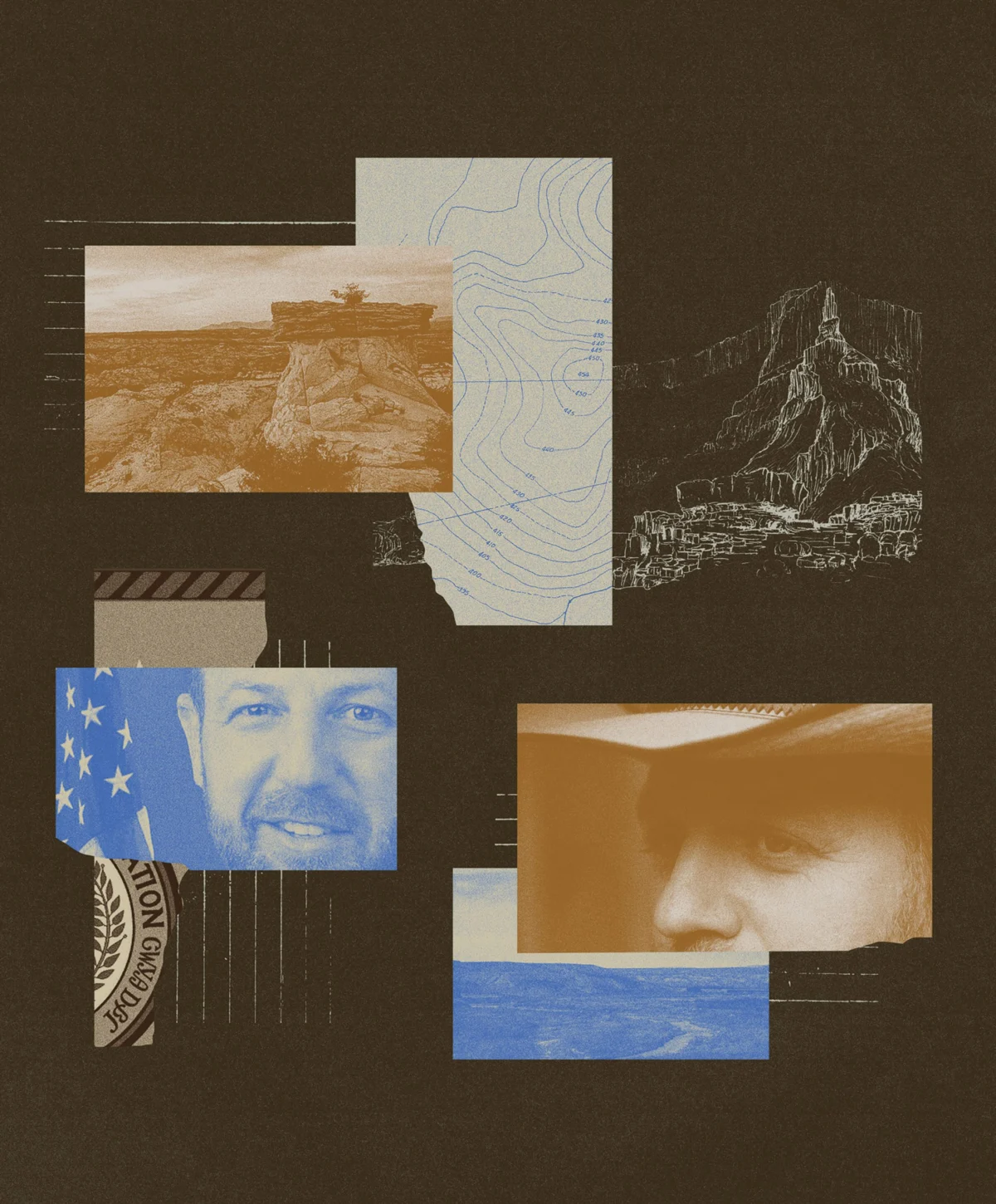
These identity-driven political ideologies are central to understanding contemporary figures like Markwayne Mullin, then an Oklahoma representative profiled by Graham Lee Brewer in 2019, before his ascent to the Senate and later, a cabinet position as Secretary of Homeland Security. Brewer’s profile captured Mullin, a citizen of the Cherokee Nation, as a figure who defied stereotypical notions of Indigenous identity, both in appearance and political methodology. Mullin presented a seeming paradox: an ultra-conservative lawmaker known for bipartisan deal-making, a white-passing individual who nevertheless advocated for tribal sovereignty. Yet, he now serves an administration that has actively rolled back measures designed to bolster that sovereignty. A striking example was Trump’s dramatic reduction of Bears Ears National Monument, which had established an unprecedented co-management arrangement with a tribal land commission, a vital step toward recognizing Indigenous rights and traditional ecological knowledge, only to see it eliminated by presidential proclamation.

Mullin’s current role at the Department of Homeland Security further complicates this narrative. He has invoked his Native identity to defend his department against accusations of racism, even as DHS pursues the construction of new segments of the U.S.-Mexico border wall through the southern boundary of the Tohono O’odham Nation Reservation in Arizona, despite vehement objections from the tribe. This ongoing construction not only bisects ancestral lands and disrupts sacred sites but also raises profound questions about the prioritization of national security over Indigenous cultural preservation and sovereignty. Brewer’s original question, "Is Markwayne Mullin good or bad for Indian Country?", remains acutely relevant, as the pragmatism of having an Indigenous voice in a high-level government position collides with policies that often appear hostile to tribal interests. The broader global context reveals similar tensions where indigenous land rights frequently clash with state-driven development projects or resource exploitation, from the Amazon rainforest to remote corners of Australia and Canada.
Many of these deep-seated tensions continue to animate the current election season. The myth perpetuated during the Sagebrush Rebellion, that "rebels" represented the "true voice of the West," often found an uncritical platform in media, despite evidence that their policy proposals lacked widespread public support. Today, the enduring image of the "authentic" white cowboy continues to flatten the rich complexity of the modern Western populace, which encompasses rapidly growing urban centers, diverse ethnic communities, a vibrant array of Indigenous nations, and new waves of migrants. This complexity is vividly apparent in high-stakes races across the region this fall, which could prove decisive in determining control of both chambers of Congress. For instance, Alaska’s Senate race features Mary Peltola, a moderate Democrat and Alaska Native deeply rooted in the state’s fishing traditions, challenging Republican incumbent Dan Sullivan, who hails from Cleveland and Harvard, embodying a different connection to the state.
These historical "origin stories" serve not merely as retrospective accounts but as critical lenses through which to understand the present political moment, revealing the intricate roots of contemporary movements and the people who shape the West’s destiny. They underscore that the future is never predetermined or inevitable; rather, it is actively being forged through ongoing debates over land, resources, identity, and power, unfolding with every policy decision, every election, and every contested acre.