Johny Prima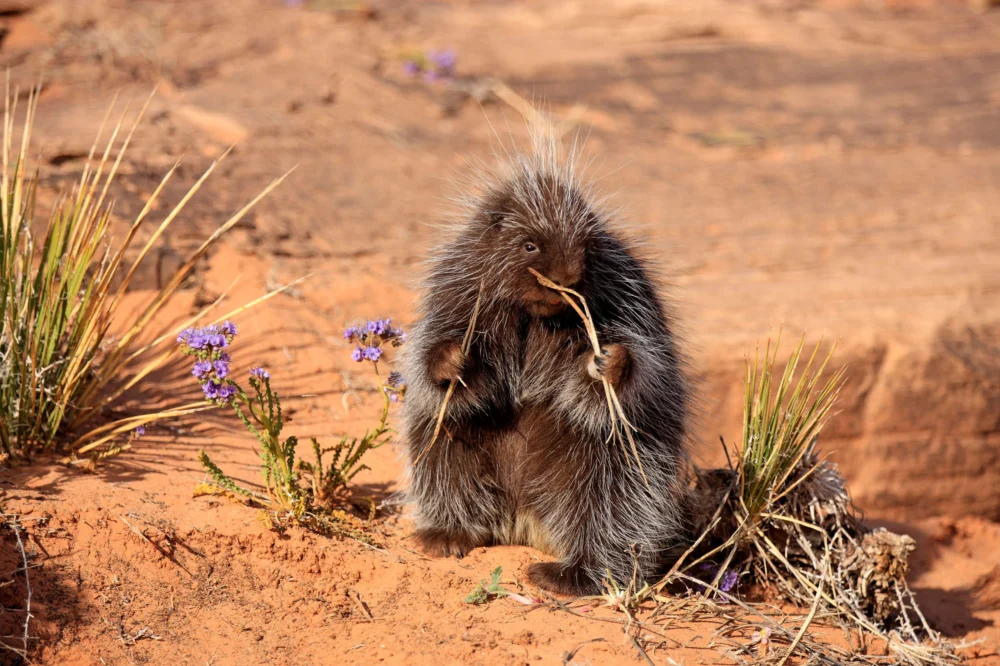
For Emilio Tripp, a dedicated wildlife manager and citizen of the Karuk Tribe in Northern California, the memory of a potential porcupine sighting in the late 1990s remains a cherished, almost mythical, experience. That brief flash on a nocturnal drive with his father was his only possible encounter with a kaschiip, the Karuk word for porcupine, a species whose presence now feels like an echo from a bygone era. Decades later, the 43-year-old Tripp has not seen another, and his experience mirrors a broader, unsettling pattern within his tribe: nearly all recent sightings are recounted by elders who fondly remember a time before the turn of the century when porcupines were abundant. Today, each report—a roadside carcass, a fleeting midnight encounter—serves as a stark reminder of their profound scarcity. "Everyone’s concerned," Tripp articulated, emphasizing the absence of widespread observations that would signal a healthy population.
This precipitous decline extends far beyond the ancestral lands of the Karuk Tribe, becoming a widespread phenomenon across the American West. Wildlife scientists are now engaged in a desperate race against time, striving to pinpoint remaining porcupine populations and unravel the complex web of factors driving their disappearance. Simultaneously, proactive communities like the Karuk Tribe are not merely observing but actively charting ambitious plans for ecological restoration, seeking to reintroduce these vital creatures to their ancestral forests.
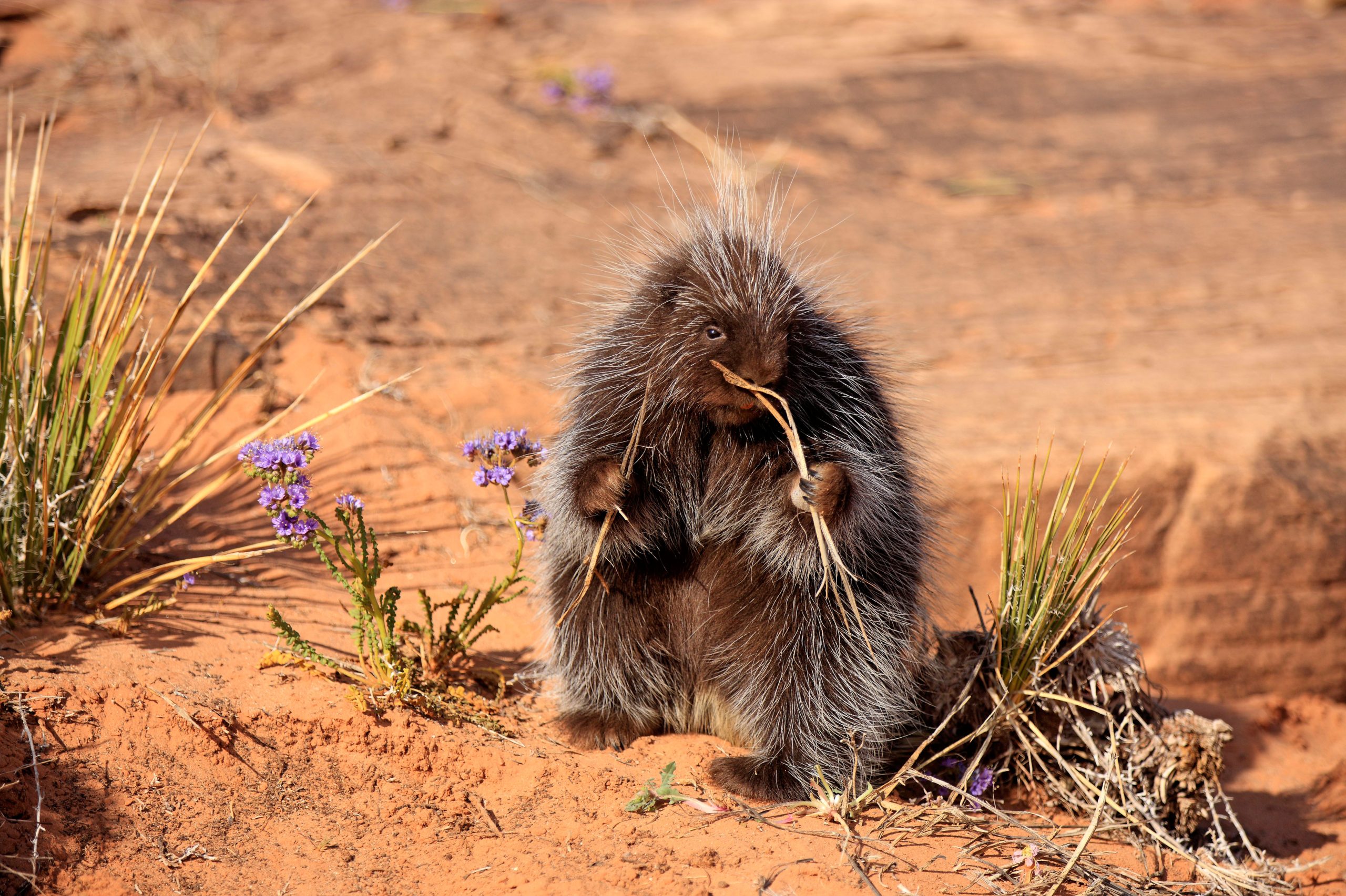
Porcupines, scientifically known as Erethizon dorsatum in North America, are distinctive for their coat of approximately 30,000 barbed quills, a natural armor that makes them formidable against most predators. Despite this unique defense, they move with a characteristic slow, waddling gait, often active under the cover of darkness as they forage for foliage or the nutrient-rich inner bark of trees. This nocturnal, herbivorous lifestyle, while essential for forest health by pruning certain tree species, has historically brought them into conflict with human interests.
Throughout the 20th century, the timber industry widely regarded porcupines as pests due to their tree-gnawing habits, which can damage valuable lumber. This perception fueled extensive campaigns of poisoning and hunting across the United States. Between 1957 and 1959 alone, Vermont saw the deliberate killing of over 10,800 porcupines, an astonishing number for a single state. In California, Forest Service officials declared an "open season" on porcupines in 1950, convinced that the species posed an existential threat to pine forests. While state-sponsored bounty programs largely ceased by 1979, the porcupine populations have failed to rebound.
Modern ecological surveys across British Columbia, Arizona, western Montana, and Northern California confirm that porcupines remain scarce. The historical lack of comprehensive population monitoring makes it challenging for scientists to definitively state whether the species is still actively declining or simply struggling to recover from decades of systemic persecution. However, the collective anecdotal evidence paints a grim picture. Veterinarians report fewer cases of pets injured by porcupine quills, rural homeowners observe fewer of these distinctive rodents in their backyards, and hikers describe them as increasingly rare sights in the wilderness.

The ecological repercussions of this vanishing act are already manifesting. In the iconic Sierra Nevada mountain range, for instance, the endangered fisher (Pekania pennanti), a member of the weasel family and a specialized predator, is directly suffering from the lack of porcupine protein in its diet. Fishers in the Sierras are noticeably scrawnier and produce smaller litters compared to their counterparts in regions where porcupine populations are more robust, highlighting a critical trophic cascade – the ripple effect through a food web when one species declines.
Beyond their ecological role, porcupines hold profound cultural significance for Indigenous peoples, including the Karuk Tribe. Their quills are traditionally woven into intricate baskets and incorporated into ceremonial items, serving as more than just artistic materials. For the Karuk, the ability to gather quills locally represents a tangible, living connection to their ancestral lands and traditional practices. The current necessity to import quills from other regions underscores a profound loss, severing a vital link between tribal members and their natural heritage. As Tripp explains, "It’s important for (porcupines) to be a part of our landscape. That’s part of why they’re chosen to be part of this ceremonial item."
This localized disappearance of porcupines is not an isolated incident but rather a microcosm of a larger, alarming trend. Erik Beever, an ecologist with the U.S. Geological Survey, warns that the porcupine’s plight may signify a more widespread "silent erosion of animal abundance" unfolding across the continent. Biodiversity is declining at a rate that often outpaces scientific monitoring, leaving many species to dwindle unnoticed. "We’re wondering whether the species is either increasing or declining without anybody even knowing," Beever notes, highlighting the critical knowledge gap.

In response, scientists are intensifying their efforts to bridge this gap. Tim Bean, an ecologist at California Polytechnic State University, and his team have meticulously scoured a century’s worth of public records, from roadkill databases to wildlife agency reports and citizen science contributions, to map porcupine distribution patterns in the Pacific Northwest. Their research reveals a concerning shift: porcupines are dwindling in their historical conifer forest strongholds but are increasingly observed in non-traditional habitats like deserts and grasslands, possibly driven by environmental pressures or habitat alterations. Beever is now spearheading a similar, comprehensive study across the entire Western U.S. to gain a broader understanding.
Several theories attempt to explain why porcupines have not returned to their former ranges, even in protected areas. One significant concern involves illegal marijuana farms, often clandestinely established deep within remote forests. These operations frequently employ potent rodenticides, such as anticoagulant poisons, which indiscriminately kill not only target pests but also non-target species like porcupines, and can further spread through the food chain via secondary poisoning. Additionally, conservation successes for apex predators like mountain lions, wolves, and coyotes, while positive for ecosystem balance, may inadvertently increase predation pressure on prey species like porcupines, especially those with inherently low reproductive rates, typically birthing only a single "porcupette" per year. This slow reproductive cycle makes porcupines particularly vulnerable to population shocks and hinders their ability to recover rapidly. Habitat fragmentation, increased human encroachment, and the impacts of climate change, leading to altered forest dynamics and intensified wildfires, also likely play significant, albeit less understood, roles in their decline.
Compounding the mystery is the inherent difficulty in studying these elusive creatures. Porcupines are habitat generalists, capable of adapting to various forest types, which makes pinpointing optimal search areas challenging for researchers. As herbivores, they are also notoriously difficult to bait for camera traps or live capture. Scientists have experimented with a range of attractants, from brine-soaked wood blocks and peanut butter to porcupine urine, with only limited success. The scarcity of sightings is starkly illustrated by the Central Sierra Environmental Resource Center’s camera surveys in the Sierra Nevada, which, over 34 years, have recorded porcupines only three times. "It’s a mystery," states John Buckley, the center’s executive director, expressing bewilderment as to why they aren’t naturally repopulating undisturbed habitats like Yosemite National Park.

Despite these formidable challenges, the Karuk Tribe remains steadfast in its determination to restore porcupines to their rightful place in the ecosystem. Initial camera trap surveys within Karuk homelands have yielded scant evidence, with even a designated "hotspot" area photographing only a single porcupine. "That’s how rare they are," Tripp laments. Consequently, Karuk biologists are exploring more innovative methods, including deploying trained conservation dogs to conduct scat surveys, which can provide valuable genetic and dietary information without direct animal contact.
Reintroducing a species requires a delicate balance of scientific rigor and ecological sensitivity. Concerns exist regarding whether already diminished source populations can afford to lose individuals for translocation efforts. However, Tripp believes that proactive intervention is paramount. "Things don’t seem to be getting better in over the course of my lifetime," he observes, underscoring the urgency. This commitment is deeply rooted in cultural tradition, as Tripp, his wife, and daughter continue to participate in basket-weaving events involving quills, honoring the porcupine’s enduring legacy within Karuk culture. This steadfast dedication represents a potent act of stubborn hope—a belief that, with concerted effort and respect for traditional ecological knowledge, the Karuk Tribe will one day be able to welcome the kaschiip back home, ensuring its survival and the health of their shared landscape.