Johny Prima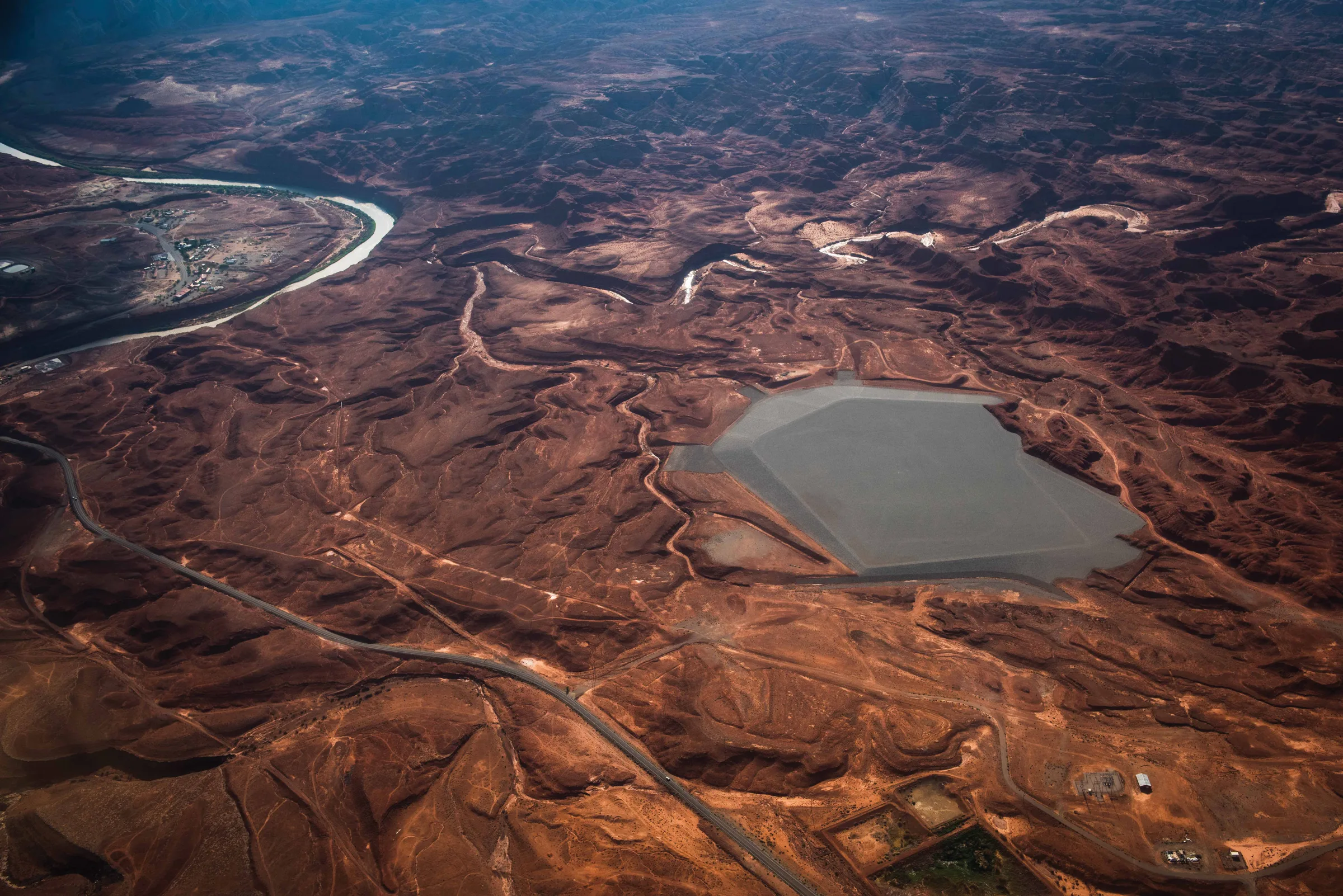
Last fall, the groundbreaking of the Velvet-Wood uranium mine in the sandstone deposits of San Juan County, Utah, marked a significant shift in federal environmental policy, representing the first project permitted under a controversial new expedited "emergency" process. This streamlined procedure allows projects to bypass the thorough environmental review traditionally mandated by the National Environmental Policy Act (NEPA), compressing a process that historically spanned months or even years into a mere 14-day window. Crucially, tribal governments were afforded a mere seven days to provide feedback on a project impacting their ancestral lands, while the standard public comment period, a cornerstone of democratic environmental governance, was entirely eliminated under the guise of "emergency" status. This starkly contrasts with previous protocols, which ensured both tribal nations and the general public at least 30 days to offer critical input, highlighting a profound curtailment of participatory rights.

The mine’s location is particularly contentious, situated within an expanse already deeply scarred by the enduring legacy of uranium mining, a history that has disproportionately affected Indigenous communities in the American West. The Ute Mountain Ute Tribe, whose lands are in close proximity, has long voiced strenuous opposition to the neighboring White Mesa Uranium Mill, a facility that continues to process uranium ore and whose operations raise persistent concerns about environmental justice and public health. During the truncated week-long tribal comment period for the Velvet-Wood mine, six distinct sovereign nations collectively conveyed their grave concerns to the Bureau of Land Management. Their objections centered on the alarming rapidity of the review process and the palpable threat of water contamination stemming from the proposed mining activities. Despite these serious warnings and the profound historical context of environmental degradation in the region, federal authorities proceeded with the project unchanged, dismissing the collective wisdom and lived experience of the Indigenous communities.
This expedited approval is not an isolated incident but rather a direct consequence of broader regulatory changes enacted by the previous Trump administration. Earlier this year, the administration finalized its proposed elimination of established standards for how federal agencies conduct NEPA environmental reviews for large-scale projects on public lands. These sweeping changes, which included the removal of crucial public comment periods, were implemented without any meaningful consultation with tribal nations, despite their vehement opposition and the federal government’s solemn trust and treaty obligations. The National Congress of American Indians and the National Association of Tribal Historic Preservation Officers condemned this approach in a joint letter, labeling the "announce-and-defend method of developing federal Indian policy" as "inappropriate, paternalistic, unjustified, and historically inefficient." They asserted that such unilateral actions "ignore federal trust and treaty responsibilities, impinge on roles and sovereignty of Tribal Nations, and flout longstanding policy and practice by failing to consult with Tribal Nations."

The National Environmental Policy Act, enacted in 1970, stands as a foundational pillar of environmental law in the United States, designed to ensure that federal agencies consider the environmental impacts of their actions and involve the public in decision-making processes. It mandates environmental impact statements (EIS) for major federal actions significantly affecting the quality of the human environment, providing a critical mechanism for transparency and accountability. By systematically bypassing or drastically shortening these reviews, the federal government undermines the very purpose of NEPA, eroding decades of environmental protection safeguards and public participation rights. These policy shifts fundamentally alter the landscape of land management in the Western U.S., significantly diminishing the ability of both tribal nations and the general public to influence decisions regarding their shared resources and ancestral territories.
Critics, including Gussie Lord, managing attorney at Earthjustice’s Tribal Partnerships Programs, argue that the entire premise for these expedited processes – an alleged "energy emergency" – is fundamentally false. "We don’t have an energy emergency," Lord stated, underscoring the political rather than pragmatic motivation behind the regulatory rollbacks. This narrative of an energy crisis has served as a pretext for the administration’s broader "energy dominance" agenda, a policy framework prioritizing aggressive resource extraction, particularly of fossil fuels and critical minerals, on public and tribal lands. This agenda has manifested in a series of actions aimed at stripping away environmental protections and tribal consultation requirements. For instance, the Bureau of Land Management (BLM) and the U.S. Forest Service controversially rescinded the Public Lands Rule and the Roadless Rule, both without adequate tribal consultation. These rules were vital for protecting vast swaths of public land from development, safeguarding natural and cultural resources that are inextricably linked to tribal heritage and sustenance.

Further compounding these concerns, the administration has actively sought to "streamline" Section 106 of the National Historic Preservation Act (NHPA), a crucial tool that empowers tribal nations to ensure government consultation on projects affecting historic properties, including sacred sites and cultural landscapes. Simultaneously, proposed changes to Section 401 of the Clean Water Act threaten to weaken the ability of states and tribes to review and approve or deny federal permits for projects that could pollute their waterways within reservation borders. These legislative and regulatory maneuvers collectively represent a systematic dismantling of environmental and cultural protections, intensifying the challenges faced by tribal nations. As Lord emphasized, "A lot of their resources, their cultural and environmental resources often are one and the same. The existing laws and regulations that we have are already insufficiently protective of tribal rights and resources."
The impact of these changes on Indigenous communities is particularly acute, given their historical experiences with environmental injustice and the profound spiritual and cultural connections they hold to their lands. Uranium mining, in particular, carries a dark legacy across the American Southwest, where generations of Indigenous miners and their families suffered from exposure to radioactive materials, leading to devastating health consequences and widespread environmental contamination that persists to this day. The Navajo Nation, for instance, bears the brunt of hundreds of abandoned uranium mines, a stark reminder of past regulatory failures and the long-term costs of unchecked extraction. The voices of tribal nations from across the country underscore these deep-seated concerns. The Shoshone-Bannock Tribes of Idaho warned that "stripping away NEPA’s provisions for public participation and environmental review… would further entrench long-standing historic inequities that have disadvantaged Tribal communities." The Cheyenne River Sioux Tribe of South Dakota noted that the Council on Environmental Quality (CEQ) was "ignoring its established policy of including indigenous traditional ecological knowledge in environmental reviews under NEPA," arbitrarily casting aside critical considerations like environmental justice, cumulative effects, and climate change. Tribes like the Bishop Paiute Tribe of California articulated that their "traditional and ancestral lands extend far beyond the exterior boundaries of our reservation, and the natural resources on these lands are not merely commodities to be exploited. They are vital to the cultural, spiritual, and economic fabric of all Tribal communities, sustaining traditions that have endured for generations."

While the Biden administration’s Council on Environmental Quality (CEQ) has spent considerable time updating NEPA implementation regulations, consulting with tribal nations and the public to incorporate provisions requiring agencies to consider climate change and environmental justice impacts, the immediate effect of the earlier administration’s changes created significant regulatory uncertainty. Justin Pidot, a professor of law at the University of Arizona and former general counsel for the White House CEQ, warned of the serious repercussions. "One is the agencies don’t know how to work together. The second is that there’s litigation risk. The third is that project sponsors don’t know what they’re supposed to do," Pidot explained. This removal of established standards creates immense complexity for all stakeholders – the public, tribal nations, state and local governments, and non-profit organizations alike.
Under the Interior Department’s new interim standards, a mining project’s review might take 28 days, a timeline further reduced to a mere 14 days when an "emergency" declaration is invoked, as seen with the Velvet-Wood mine. This stands in stark contrast to previous reviews that could extend for up to four years, allowing for comprehensive scientific assessment and robust public engagement. Pidot highlighted that this dramatically "substantially limits the degree of information flowing from the federal government to the public about big projects, including to tribes." The prevailing sentiment among many, including tribal nations, is that while some streamlining could be beneficial, it is rendered counterproductive and unjust when tribal perspectives are actively excluded from the process.

Further exacerbating the challenges, recent federal budget cuts and mass layoffs have severely hampered agencies’ capacity to effectively carry out their mandated work. These cuts have particularly impacted funding for tribal historic preservation officers, who are instrumental in facilitating the government-to-government consultation process required by law. This creates a paradoxical situation where tribal nations are expected to navigate an increasingly complex and rapidly changing regulatory landscape with diminished resources, a scenario Pidot characterized as an attempt to "drown people in an avalanche while providing them with no resources to meet the moment, and call that consultation and collaboration."
Adding another layer of concern, the federal government has concurrently been acquiring stakes in various mining companies, including those behind highly controversial projects actively opposed by tribal nations and Indigenous communities. Notable examples include the Thacker Pass lithium mine in Nevada and the Ambler Road project in Alaska. This direct financial involvement raises questions about potential conflicts of interest, prompting observers like Gussie Lord to ponder whether "their approval processes for mines in which the federal government has a stake is quicker than it otherwise would have been." The underlying message, as Pidot succinctly summarized, is that "anything and anyone that stands in the way of the kinds of projects that this administration wants to do is an obstacle to progress that they’re going to overrun." This aggressive pursuit of resource extraction, often at the expense of environmental protection and Indigenous rights, marks a perilous trajectory for land management and federal-tribal relations in the United States.