Rocky Georgio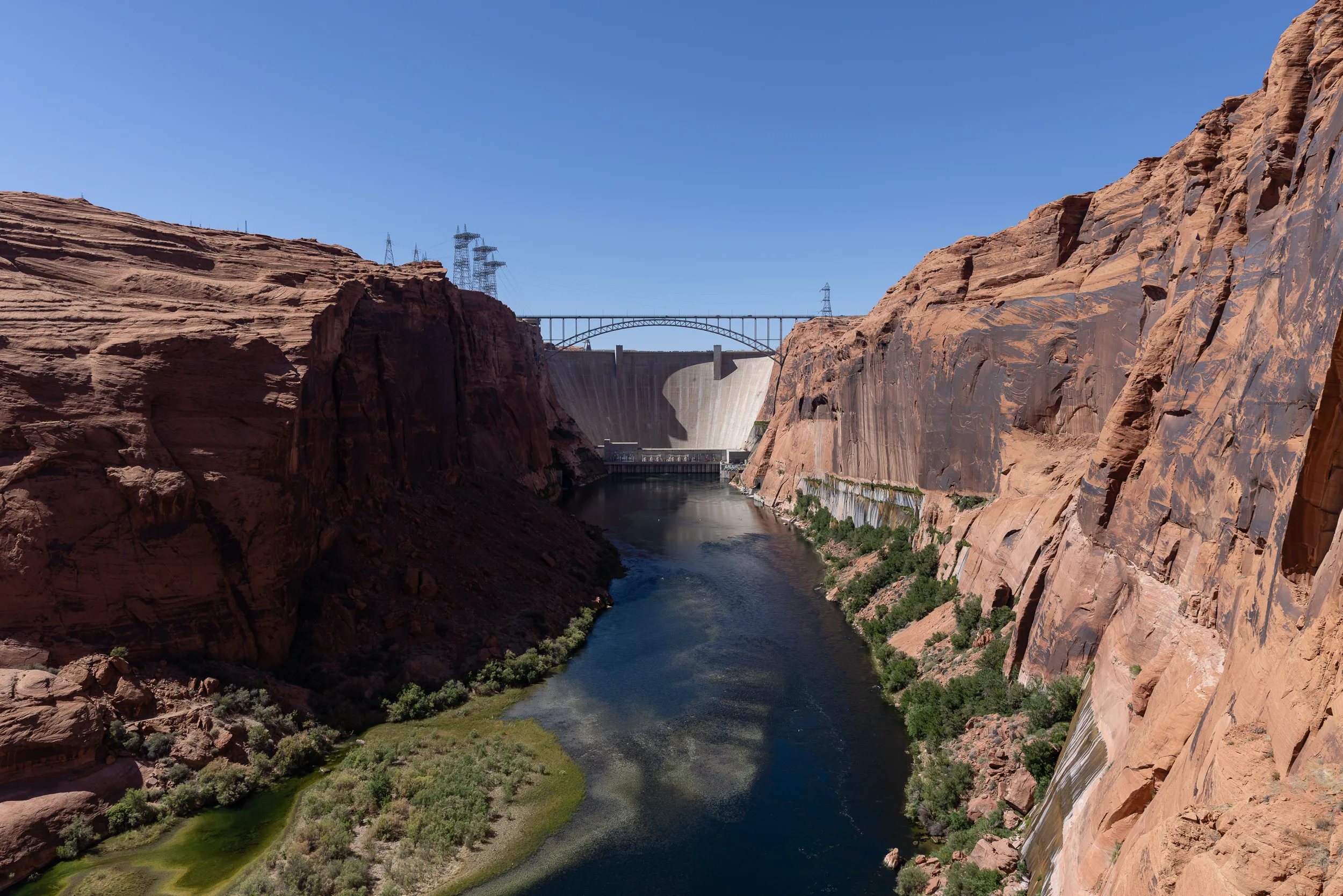
Last week, the federal government implemented emergency measures to avert a critical situation at Lake Powell, where water levels have plummeted to a point that threatened the operational capacity of the Glen Canyon Dam. Without this intervention, projections indicated that the reservoir could fall below crucial operating thresholds by August, jeopardizing its ability to generate hydropower and deliver water downstream to millions across the Southwest, including vital flows through the Grand Canyon. This dire scenario underscores the escalating water crisis gripping the Colorado River Basin, a region already grappling with years of prolonged drought and depleted reservoir storage.
The current predicament stems from a confluence of factors, chief among them an exceptionally meager snowpack across the basin, compounded by a record-shattering heatwave in March that accelerated snowmelt and increased evaporation. Water managers have been operating with dwindling options, as the region’s reservoirs have been consistently drawn down to meet escalating demand, further exacerbated by the persistent arid conditions. The Bureau of Reclamation, in response, has ordered significant water releases from Flaming Gorge Reservoir, situated on the Utah-Wyoming border, specifically to augment the critically low water levels at Lake Powell. Concurrently, the volume of water allocated to downstream users from Lake Powell will be substantially curtailed.
Jenny Dumas, a water attorney representing the Jicarilla Apache Nation, characterized the emergency action as a temporary fix, emphasizing that reservoir recovery will require considerable time. "It’s going to take time to recover these reservoirs before we can do this again," Dumas stated. "So while we can exhaust our reserves to avoid system collapse this year, it means reserves won’t be there next year." This sentiment highlights the delicate balancing act water managers are forced to perform, drawing down one vital resource to safeguard another, with potential repercussions for future water security.

This is not the first instance of Flaming Gorge being called upon to support the larger Colorado River system. In 2022, the federal government mandated releases of 550,000 acre-feet to stabilize downstream flows, an action that disrupted recreational activities and caused concern among upstream communities. The current authorization permits releases of up to 1 million acre-feet, a substantial increase, with approximately one-third of Flaming Gorge’s storage capacity expected to be gradually discharged over the next year. By September, water levels at Lake Powell are projected to decrease by roughly 12 feet as a consequence of these coordinated releases.
Amy Haas, executive director of the Colorado River Authority of Utah, briefed communities bracing for the impacts of these releases at Flaming Gorge Reservoir, describing the current situation as unprecedented. "This is an unprecedented release volume – more than double the last time," Haas noted. She further expressed the uncertainty surrounding the full extent of the releases’ impact on surrounding communities and their water users, stating, "My goodness, we are on target to become one of the worst water years on record. The forecasts are stunning to all of us."
The inflow forecasts for the Colorado River are being revised downward with alarming frequency. Over the initial two weeks of April alone, projections for Lake Powell’s water levels saw a decline of 500,000 acre-feet. The rapid shift in spring forecasts has led some experts to suggest that the releases from Flaming Gorge may need to be increased further. Veteran water manager and researcher Eric Kuhn, who co-authored a paper last September forecasting such shortages and urging proactive measures, believes the current release targets are likely to be adjusted. "I think it’s a target, and they’re going to have to revise it," Kuhn remarked, questioning the anticipated transit losses over the many river miles between Flaming Gorge and Lake Powell. He also raised concerns about future conditions, asking, "When March looked like June, what are June and July going to look like?" Kuhn anticipates that the 1 million acre-feet release could potentially escalate to 1.5 million acre-feet by March 2027.
Kuhn views these emergency actions as symptomatic of a broader failure to address the fundamental issues driving the crisis. "The Department of the Interior no longer acknowledges that the fundamental problem is climate change," he asserted. "We’re dealing with the symptoms of the disease. We’re not dealing with the underlying problem. The law of the river was written for a river that no longer exists from a hydrologic standpoint." This perspective underscores the growing consensus that existing water management frameworks, established during a wetter era, are no longer adequate for the realities of a changing climate.

During a recent meeting, Upper Basin state commissioners acknowledged the necessity of emergency intervention but underscored its limitations as a long-term solution. Gene Shawcroft, Utah’s Colorado River commissioner, expressed the profound difficulty of the decisions being made, particularly for agricultural communities. "I want to make darn sure people understand… the incredibly difficult, heartbreaking decisions that are having to be made with the lives of generations of cattle production, and farming communities in the Upper Basin states," he stated, highlighting the significant impact on Utah.
Wyoming Commissioner Brandon Gebhardt reported that approximately 13,000 acres of agricultural land in the South Piney drainage, situated on the eastern slopes of the Wyoming Range, have been disconnected from water supplies. He further indicated that even some of the state’s oldest and most senior water rights, with some dating back to 1898, are likely to be affected. Gebhardt also anticipates that three of the five Flaming Gorge boat ramps in Wyoming will become unusable, and that low reservoir levels will have enduring negative consequences for reservoir fisheries. "We recognize what we are approving today will have significant negative impacts on our water resources, local economies and recreation," he concluded.
The pervasive water shortage extends beyond agriculture and recreation, deeply affecting tribal communities. The Ute Mountain Ute Tribe, for instance, has reported its sacred springs drying up, disrupting traditional ceremonies, and their tribal farm is expected to operate with only 14% of its usual water allocation, mirroring similar challenges faced in 2021 when the McPhee Reservoir emptied, forcing irrigation cuts. Similarly, the Jicarilla Apache Nation has received only 25% to 35% of its contracted water allocation, raising concerns about their ability to divert sufficient water from the Navajo River to meet essential domestic needs.
With no clear path toward a long-term agreement on river management beyond September, legal tensions among the basin states remain acutely high. Arizona’s Department of Water Resources, while concurring with the upstream releases to stabilize Lake Powell, issued a statement cautioning that the revised downstream allocations were "substantially less than required under the 1922 Colorado River Compact." The department warned that "Failure to comply is itself a serious development that Arizona will assess and respond to accordingly," indicating a potential for legal challenges and further complicating the already strained inter-state relations.

Upper Basin state commissioners intend to convene a special meeting to re-evaluate the situation and vote on the continuation of emergency actions beyond August, contingent upon an assessment of water levels and the effectiveness of the current releases. Regardless of potential legal disputes, the reduced water availability, coupled with infrastructure limitations and persistent political gridlock, has left communities throughout the basin grappling with profound uncertainty regarding their future water security. Should the upcoming winter prove to be another dry season, the capacity of upstream reservoirs to replenish Lake Powell sufficiently to stabilize the system is highly questionable.
As Jenny Dumas emphasized, the basin requires more than temporary fixes. "We really want to emphasize the need for serious and permanent changes in how we use and manage the river to adjust to current and future hydrology," she urged, underscoring the urgent call for adaptive strategies that acknowledge the evolving environmental landscape. The current emergency actions, while necessary to avert immediate collapse, highlight the deep-seated challenges of managing a vital, over-allocated resource in an era of escalating climate change.