Roger Danuarta
The scars etched across New Mexico’s landscape by the devastating Hermit’s Peak-Calf Canyon Fire serve as a stark reminder of the escalating wildfire crisis, a catastrophe whose immediate aftermath continues to plague communities struggling with delayed disaster relief payments and the insidious threat of contaminated drinking water. As residents grapple with the immediate consequences of unprecedented floods sweeping through the scorched earth, depositing ash and debris into vital waterways, an equally daunting long-term challenge looms: the urgent need to restore the very forests that once protected these communities and their water sources. This monumental task, critical for ecological recovery and human resilience, faces an overwhelming shortage of the fundamental building blocks of reforestation: tree seedlings.
Across New Mexico, an alarming seven million acres have been ravaged by wildfires since the turn of the millennium, transforming vibrant ecosystems into barren moonscapes. The Hermit’s Peak-Calf Canyon Fire alone, which stands as the largest conflagration in state history, demands an estimated 17.6 million seedlings to begin its healing journey. These trees are not merely aesthetic additions; they are indispensable ecological engineers, pivotal for restabilizing erosion-prone hillsides, preventing further catastrophic flooding, and crucially, safeguarding the downstream drinking water supplies that sustain communities in this arid region. However, the existing reforestation infrastructure across the state is woefully inadequate, unable to meet the staggering demand. Experts grimly project that at current rates, it would take an astounding five decades to replant just the burn scar left by the Hermit’s Peak-Calf Canyon Fire, a timeline far too long for natural recovery processes to effectively mitigate the ongoing environmental and societal damage. The cumulative backlog for New Mexico’s existing burn scars currently stands at an astonishing 385 million trees, a figure that underscores the immense scale of the ecological debt.
In response to this existential threat, the New Mexico Reforestation Center (NMRC) has emerged as a beacon of hope, conceived in 2022 as an ambitious collaboration between the state Forestry Division, the University of New Mexico, New Mexico State University, and New Mexico Highlands University. This innovative partnership is poised to break ground on what Director Jennifer Auchter describes as an "absolutely massive" greenhouse facility, strategically expanding existing infrastructure in the northwestern part of the state. This initiative represents a pivotal step in establishing a robust, integrated "seed-to-seedling-to-tree" pipeline for post-fire reforestation, capable of transforming the future of New Mexico’s scorched lands. The planned greenhouses, which will ultimately encompass an expansive 155,000 square feet, are designed to significantly bolster the state’s capacity to nurture the millions of seedlings desperately needed. Beyond mere propagation, the center will also oversee the intricate process of processing over 1,500 pounds of native seeds, simultaneously conducting cutting-edge research to enhance seedling survival in an increasingly hotter and drier future. The enterprise, deeply rooted in local ingenuity, even employs a repurposed chili roaster to efficiently extract seeds from cones and pods at its existing processing facility, a testament to its uniquely New Mexican character.
Jennifer Auchter, a passionate advocate for environmental restoration, emphasizes the profound importance of reforestation, particularly from the perspective of water security. With a background in earth science, watershed management, and fluvial systems, Auchter views forests as critical "water infrastructure" in New Mexico and the broader Southwest. She highlights that the region’s lifeblood—its rivers and streams—are predominantly fed by winter snowpack and precipitation captured by forests, accounting for approximately 70% of all water consumed. The grim reality is that, after high-severity wildfires, the likelihood of a forest naturally regenerating within human lifetimes, or even over several centuries, is exceedingly low. For New Mexico, where water is an increasingly precious commodity, conserving and restoring forests is not merely an ecological endeavor but a fundamental imperative for maintaining a viable water source for its growing population.
The current state of seedling production in New Mexico paints a stark picture of the challenges ahead. Existing operations, primarily at the John T. Harrington Forestry Research Center, typically yield only about 250,000 to 300,000 seedlings annually from a small, aging nursery. This meager output necessitates purchasing the majority of tree seedlings from growers in distant states like Idaho. While a temporary solution, these imported seedlings are often not ideally suited to New Mexico’s unique climate and elevation, leading to reduced survival rates upon planting due to "transplant shock" from the journey and environmental disparity. The NMRC aims to dramatically bridge this gap, projecting to more than triple the state’s current seedling production capacity, moving towards a goal of cultivating millions of climate-resilient trees each year.

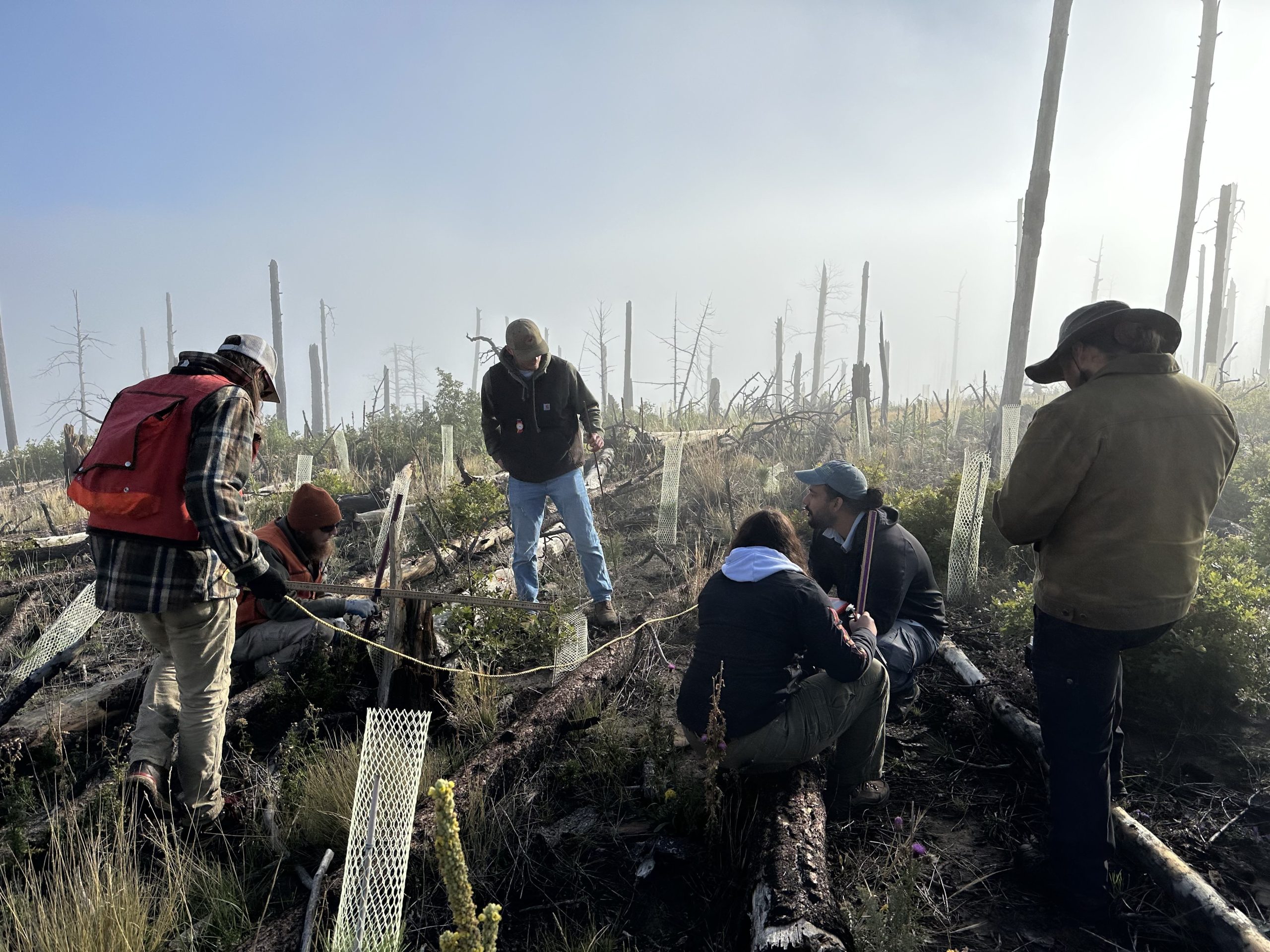
The success of modern reforestation hinges on a "right tree, right place" approach, a principle that underpins the extensive research being conducted by the NMRC’s university partners. Researchers at the University of New Mexico are developing sophisticated modeling tools to predict seedling survival based on specific site conditions and, crucially, projected climate scenarios for the year 2100. This forward-thinking approach ensures that trees planted today are genetically adapted and environmentally resilient enough to thrive in the warmer, drier conditions anticipated decades from now. Once planted, these young forests will be meticulously monitored using advanced technologies like drones, complemented by rigorous on-the-ground assessments, to track their progress and refine future planting strategies.
New Mexico State University researchers are simultaneously exploring innovative techniques to enhance seedling resilience in an era of climate change. Their work includes "drought conditioning," where seedlings, particularly ponderosa pine and other native species, are intentionally subjected to reduced irrigation. This process pre-stresses them, preparing them for the naturally arid environments they will face post-planting, thereby boosting their chances of long-term survival. Another promising avenue of research focuses on improving aspen seedling survival in post-fire environments by strategically planting them next to natural features, such as logs, to provide crucial shade during their vulnerable early months and years of establishment. These varied research efforts are all geared towards optimizing the entire reforestation pipeline, ensuring that as the NMRC scales up from its current 300,000 seedlings to an ambitious five million, the methods employed are the most successful and efficient possible, maximizing the return on investment in ecological restoration.
While the Pacific Northwest has historically served as a model for reforestation efforts due to its robust forestry industry, the NMRC recognizes the critical need for regionally tailored methods in the Southwest. The unique ecological conditions of New Mexico, characterized by extreme aridity, high elevations, and specific native flora, demand a nuanced approach that cannot be simply replicated from other regions. This includes focusing on "regionally appropriate stock," carefully selecting the genetics of seedlings to ensure they are best adapted to local environmental stressors and future climate projections. This specialized focus also positions the new forestry center to benefit the broader Four Corners region. While initial efforts will concentrate on New Mexico’s pressing needs, the NMRC anticipates that its climate-adapted seedlings will eventually be suitable for areas with similar elevations and species compositions, such as northern Arizona, particularly around Flagstaff, and parts of Colorado. The center also aspires to become a crucial hub, fostering collaboration among the often-disjointed NGOs, government agencies, and universities currently working on restoration efforts across the Southwest, creating a unified front against the region’s escalating environmental challenges.

An often-overlooked yet profoundly critical component of the reforestation process is the arduous work of seed collection, expertly undertaken by New Mexico Highlands University. While the visible infrastructure of greenhouses and the nascent seedlings garner much attention, the foundational labor of gathering native seeds is painstaking, time-consuming, and demands a massive, dedicated workforce. This rugged, physically demanding work in challenging terrains is the unsung hero of the reforestation pipeline, ensuring the genetic diversity and local adaptation essential for future forest health. As Director Auchter emphasizes, reforestation is far more than simply constructing a greenhouse; it is a "daunting action" that involves countless human hands touching the seeds, nurturing the seedlings, and ultimately planting them into the scarred earth. Raising public awareness about the sheer complexity and extensive labor involved in every stage of this process is vital to garnering sustained support for these long-term environmental investments.
Beyond the ecological and economic benefits, reforestation holds a profound long-lasting impact on communities, particularly those directly affected by wildfires. The NMRC is actively engaging local youth in its mission, recognizing the generational importance of conservation. In a recent workshop, 48 students from a charter school near Mora, a community deeply impacted by wildfire, participated in an art project while learning about the reforestation process from forestry experts. The initiative aims to create a lasting connection, allowing these children to return in subsequent years to see the seeds they learned about grow into seedlings, and eventually witness those very trees planted in the forest. This continuous engagement along the reforestation timeline seeks to instill a deep appreciation for conservation, underscoring the vital lesson that once a forest is lost, its recovery is a monumental, decades-long undertaking requiring collective dedication and foresight. The New Mexico Reforestation Center embodies this commitment, striving to cultivate not just trees, but a resilient future for the state’s landscapes and its people.