Johny Prima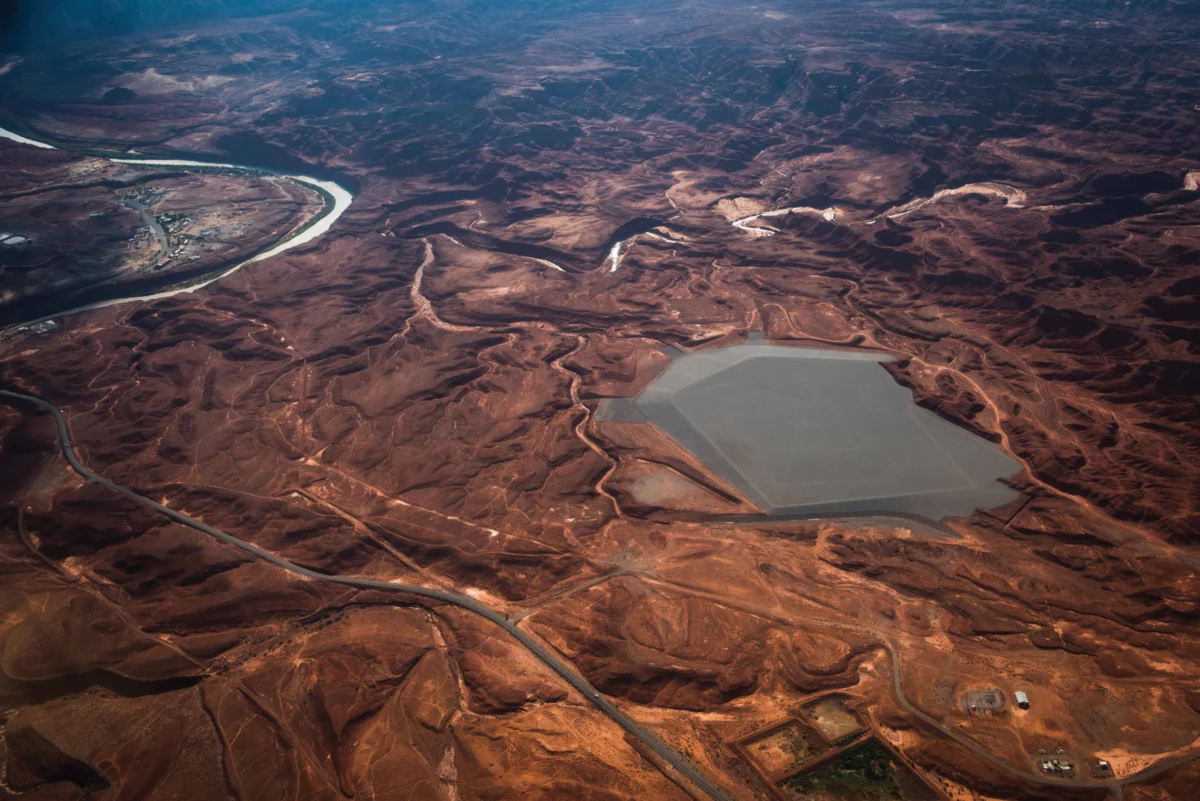
Last fall, the groundbreaking of the Velvet-Wood uranium mine in the sandstone deposits of San Juan County, Utah, heralded a new era of expedited federal environmental reviews, raising alarms among environmental advocates and tribal nations across the Western United States. This particular project represents the first mine permitted under an unprecedented "emergency" process, which compressed the rigorous environmental review mandated by the National Environmental Policy Act (NEPA) into an astonishing 14 days, a procedure that historically required months, and often years, of careful assessment and public scrutiny. Concurrently, tribal governments received a mere seven days to offer their feedback, while the standard public comment period, typically extending for at least 30 days for both tribes and the general populace, was entirely eliminated, justified by the project’s purported "emergency" status.
The mine’s location, nestled within an expanse already deeply scarred by decades of uranium extraction, falls perilously close to the White Mesa Uranium Mill, an industrial facility that has long been a source of contention and opposition for the Ute Mountain Ute Tribe, whose community abuts the site. During the truncated week-long tribal comment period, six sovereign nations formally communicated their profound concerns to the Bureau of Land Management (BLM). Their primary objections centered on the alarming speed of the approval process and the significant potential for water contamination stemming from the mine’s proposed activities, a critical concern in an arid region already grappling with water scarcity and the pervasive legacy of past mining pollution. Despite these urgent warnings and the historical context of environmental degradation, no substantive changes were incorporated into the project plans, underscoring the perceived dismissiveness of the expedited review.

Earlier this year, the Trump administration finalized sweeping changes that not only mandated these expedited "emergency" processes for NEPA reviews but also systematically dismantled established standards for how federal agencies conduct environmental assessments for large-scale projects on public lands. These revisions included the explicit elimination of essential public comment periods, fundamentally altering the landscape of environmental governance. Crucially, these far-reaching changes were implemented without meaningful consultation with tribal nations, despite their fervent and unified opposition, further exacerbating long-standing grievances regarding federal trust responsibilities.
The National Congress of American Indians (NCAI) and the National Association of Tribal Historic Preservation Officers (NATHPO) issued a joint letter vehemently condemning these actions, articulating that the "announce-and-defend method of developing federal Indian policy is an inappropriate, paternalistic, unjustified, and historically inefficient method of decision-making." They asserted that the elimination of established standards flagrantly disregards federal trust and treaty responsibilities, impinges upon the inherent sovereignty and roles of Tribal Nations, and flouts longstanding policy and practice by failing to consult adequately with Indigenous communities. The federal government, by law, is obligated to engage in government-to-government consultation with tribal nations on rules and policies that directly affect them. However, critics argue that the previous administration frequently bypassed or severely truncated these consultation requirements, seemingly to accelerate its "energy dominance" agenda, often at the expense of tribal nations’ ancestral lands and cultural heritage. Collectively, these regulatory shifts represent a profound reordering of how tribal nations, and indeed the broader public, can influence the management and stewardship of vast public lands across the Western United States.
Many voices, including Gussie Lord, managing attorney at Earthjustice’s Tribal Partnerships Programs, have cast doubt on the very premise underpinning these expedited approvals. "It’s all predicated on something that isn’t true: We don’t have an energy emergency," Lord stated, challenging the administration’s core justification for the regulatory overhaul. She warned that chipping away at established public input mechanisms and vital tribal consultation protocols would only intensify the existing challenges faced by tribal nations, whose cultural and environmental resources are often intrinsically linked. "The existing laws and regulations that we have are already insufficiently protective of tribal rights and resources," Lord added, highlighting the precarious position in which Indigenous communities often find themselves when confronting large-scale extractive industries.

From the outset, agencies operating under the previous administration systematically altered or revoked numerous rules and policies to prioritize resource extraction, consistently invoking the specter of an "energy emergency." The Bureau of Land Management (BLM) and the U.S. Forest Service, for instance, rescinded the Public Lands Rule and the Roadless Rule, both without adequate tribal consultation. These decisions carry immense implications for tribes’ capacity to safeguard natural and cultural resources situated on public lands that hold deep historical and spiritual significance. Simultaneously, efforts were made to "streamline" Section 106 of the National Historic Preservation Act (NHPA), a critical tool empowering tribal nations to ensure proper government consultation on projects impacting historic properties. Further proposed changes targeted Section 401 of the Clean Water Act (CWA), a provision that allows tribes to review the potential impacts of extractive projects within reservation borders before a federal agency issues permits, thereby diminishing local and tribal oversight over water quality.
The National Environmental Policy Act (NEPA), enacted in 1970, serves as a cornerstone of U.S. environmental law, requiring federal agencies to assess the environmental effects of their proposed actions prior to making decisions. It mandates that agencies consider alternative courses of action and disclose environmental information to the public, facilitating informed decision-making and fostering public participation. The recent alterations fundamentally undermined this foundational principle by drastically curtailing the time allocated for environmental impact assessments and public review, ostensibly to accelerate infrastructure and resource development projects.
In a contrasting move, the Biden administration, through the Council on Environmental Quality (CEQ), spent three and a half years meticulously updating NEPA’s implementing regulations. This comprehensive process involved extensive consultation with tribal nations and the public, integrating provisions that compel agencies to consider crucial factors such as climate change impacts and environmental justice concerns when reviewing projects. However, given that NEPA applies universally to all federal agencies, each agency must still develop its specific implementation guidelines. Consequently, tribes and legal experts express deep apprehension that, under the revised directives, individual agencies might not feel sufficiently obligated to engage in meaningful collaboration with tribal communities, potentially creating a patchwork of inconsistent and inadequate consultation practices.

Justin Pidot, a distinguished professor of law at the University of Arizona and former general counsel for the White House Council on Environmental Quality, underscored the severe repercussions of this regulatory uncertainty. "One is the agencies don’t know how to work together. The second is that there’s litigation risk. The third is that project sponsors don’t know what they’re supposed to do," Pidot explained, highlighting the systemic confusion. He further elaborated that the removal of these common standards "creates lots of complexity for the public, for tribes, for states, for local governments, for nonprofits," fostering an environment ripe for legal challenges and administrative inefficiencies.
Under the Interior Department’s new interim set of standards, a typical mining project review could be compressed to just 28 days. When combined with an "emergency" declaration, as was the case with the Velvet-Wood mine, this timeframe shrinks further to an alarming 14 days, a stark contrast to the previous multi-year review processes that could extend up to four years. "It substantially limits the degree of information flowing from the federal government to the public about big projects, including to tribes," Pidot observed. He expressed particular surprise at the decision, noting, "What is surprising about this particular decision of theirs is that having a common set of rules makes sense for everyone," implying that regulatory consistency benefits all stakeholders by providing clarity and predictability.
In their formal comments to the Council on Environmental Quality regarding the elimination of the NEPA standards, numerous tribal nations articulated strikingly similar concerns. Many tribes reported a complete lack of consultation, emphasizing that while navigating the diverse processes of multiple agencies presented its own burdens, the wholesale removal of uniform regulations fundamentally weakened the core purpose of NEPA. Organizations like the National Congress of American Indians acknowledged that some streamlining and deregulation could be beneficial, but only if tribal perspectives were genuinely integrated into the reform process, rather than being excluded.

Further compounding these challenges, federal budget cuts and widespread layoffs last year significantly hampered agencies’ capacity to effectively carry out their mandated work. Among the most critical impacts was the reduction in funding for tribal historic preservation officers, who play an indispensable role in facilitating government-to-government consultation on projects affecting tribal cultural heritage. Pidot starkly characterized this situation as an attempt to "drown people in an avalanche while providing them with no resources to meet the moment, and call that consultation and collaboration," painting a grim picture of under-resourced communities attempting to engage with an accelerated and complex federal bureaucracy.
Coincidentally, even as the federal government moved to diminish public and tribal input, it simultaneously acquired substantial stakes in various mining companies. This includes investments in the two corporations behind controversial projects vehemently opposed by several tribal nations and Indigenous communities: the Thacker Pass lithium mine in Nevada and the Ambler Road project in Alaska. Gussie Lord pointedly questioned the implications of this dual role, stating, "It’ll be interesting to see if their approval processes for mines in which the federal government has a stake is quicker than it otherwise would have been," suggesting a potential conflict of interest where federal economic interests could further influence regulatory expediency.
Ultimately, Pidot encapsulated the overarching strategy at play: "The big theme is that anything and anyone that stands in the way of the kinds of projects that this administration wants to do is an obstacle to progress that they’re going to overrun." This sentiment underscores a broader governmental approach that prioritizes rapid resource extraction and infrastructure development, often at the expense of established environmental protections, tribal sovereignty, and the fundamental right to public participation in decisions impacting shared lands and resources. The implications of these policy shifts extend far beyond individual mining projects, signaling a fundamental redefinition of environmental governance and federal-tribal relations in the United States.