Johny Prima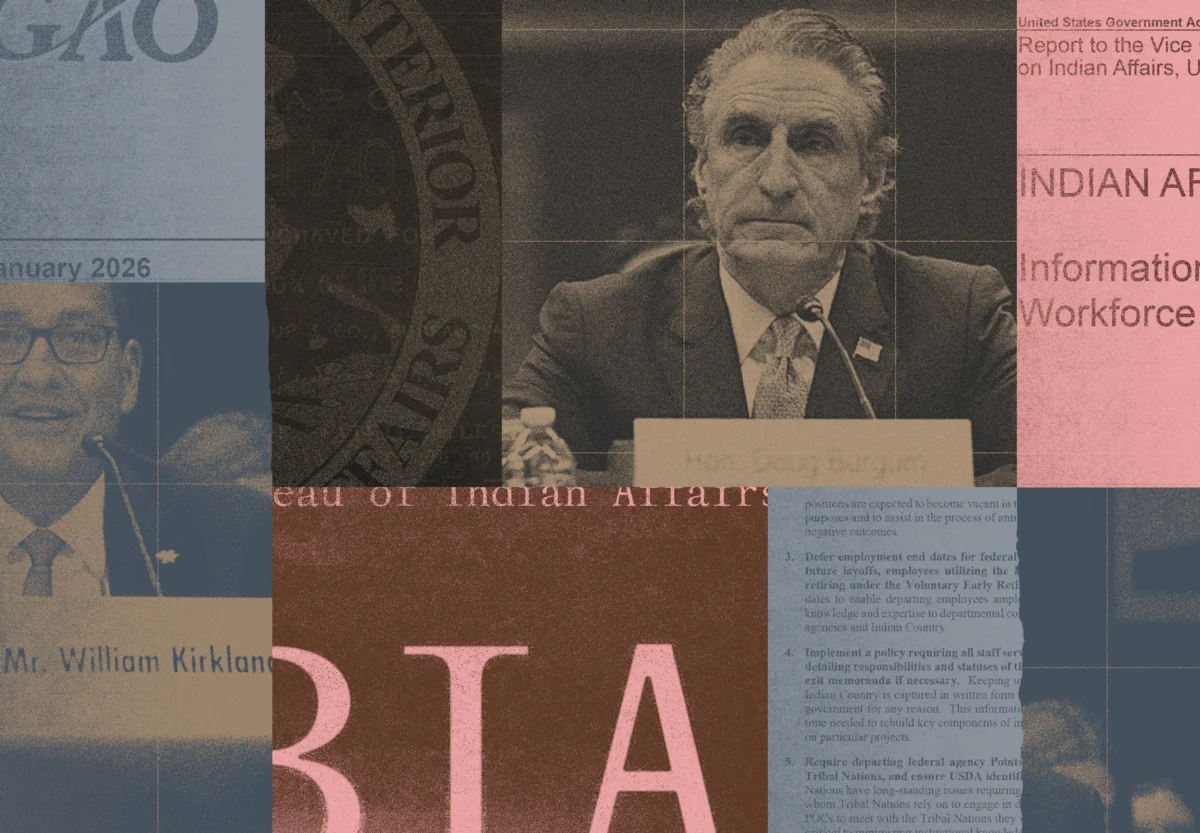
The Bureau of Indian Affairs (BIA), the principal federal agency charged with upholding the United States’ unique trust responsibility to tribal nations, is poised for a significant structural overhaul, including further deep cuts to its workforce, according to recent disclosures by a prominent tribal leader. This impending reorganization, unveiled during a critical congressional hearing last week on federal funding for Indigenous communities for fiscal year 2027, has ignited alarm among tribal leadership who fear severe disruptions to essential services and programs across Indian Country.
Mark Macarro, president of the National Congress of American Indians (NCAI), the nation’s oldest and largest organization advocating for tribal government rights and interests, and chairman of the Pechanga Band of Indians, delivered the stark warning to legislators. "Just this week, we learned that the Bureau of Indian Affairs is planning on releasing and implementing a reorganization plan that will make significant cuts to the staff critical in administering programs and distributing funding to tribal nations," Macarro testified. His statement underscored a profound breach of trust, asserting that this action proceeds "without consultation with tribal nations and without consideration of the impact it will have on the delivery of programs and services." The BIA, operating within the U.S. Department of the Interior, is tasked with a vast array of responsibilities, from land management and natural resource protection to economic development, law enforcement, social services, and the administration of tribal trust assets. Any reduction in its capacity directly impinges upon the federal government’s solemn commitments to tribal sovereignty and well-being.
This latest development follows a year of intense restructuring within the Department of the Interior, which has already seen an 11% reduction in the overall workforce dedicated to Indian Affairs. The consequences of these prior cuts are well-documented, with the Government Accountability Office (GAO), an independent, non-partisan agency that investigates how the federal government spends taxpayer dollars, reporting significant adverse effects. According to Macarro, referencing the GAO’s findings, these staffing reductions have "caused delays in carrying out work, left regions and agencies with critical gaps, an exacerbation of previously identified issues with lack of sufficient workforce capacity." The BIA has historically struggled with chronic understaffing and underfunding, a persistent challenge that predates the current administration and has long hampered its ability to fully meet its trust obligations.

While Macarro did not elaborate on the specific details of the proposed reorganization or the exact mechanism through which he learned of it, the Assistant Secretary for Indian Affairs, Billy Kirkland, offered a public statement acknowledging the administration’s broader strategic direction. Kirkland affirmed Indian Affairs’ commitment to "upholding federal responsibilities to tribal communities," but explicitly stated that "Under President Trump’s leadership, we are prioritizing maximizing resources and enhance operational effectiveness across the organization to cut bureaucratic waste." He continued, "These efforts reflect our commitment to streamlining government operations while ensuring that Indian Affairs efforts remain strong, effective, and impactful." Kirkland further articulated a philosophical shift, asserting, "This administration believes that a more effective path forward is one that reduces federal overreach and empowers tribal governments to tailor solutions that best meet the unique needs of their communities. This shift in approach will ultimately foster greater self-governance and more responsive, culturally relevant services."
This framing of staff reductions as a move towards greater efficiency and tribal empowerment, however, stands in stark contrast to the immediate concerns voiced by tribal leaders and the documented impacts on service delivery. Moreover, Kirkland’s statement directly contradicts assurances previously provided by Indian Affairs officials to the GAO. As recently as December 2025, BIA representatives had informed the congressional watchdog that there were "no plans to reorganize or further reduce the workforce," although they did indicate that "existing functions might need to be restructured or realigned to achieve administration priorities." This discrepancy raises questions about transparency and the consistency of internal communication within the agency.
A comprehensive GAO report published in January painted a clearer picture of the scale of recent personnel losses. Since January 2025, the Bureau of Indian Affairs itself has seen a 13% reduction in its workforce. The Office of the Assistant Secretary for Indian Affairs, a crucial policy-setting and oversight body, suffered an even more drastic 27% loss of staff, while the Bureau of Indian Education experienced a 5% cut. The impact of these reductions has been uneven but severe across different regions, with the Pacific Regional Office losing 29% of its staff, the Southern Plains office seeing a 26% reduction, and the Alaska Regional Office experiencing a 22% cut. These localized losses are particularly impactful, as regional and agency offices are the frontline providers of services, processing everything from land-into-trust applications and resource management plans to economic development initiatives and tribal court support. Tribal leaders have consistently highlighted how these staffing cuts have tangible, negative impacts on the delivery of vital services, a concern echoed by the GAO, which noted that Indian Affairs officials had not yet analyzed the projected cost savings from these reductions, making it difficult to assess the actual efficiency gains versus the service degradation.
The challenges are not confined solely to the Department of the Interior. During the same congressional hearing, Cody Desautel (Colville), President of the Intertribal Timber Council, brought to light similar, alarming trends within the U.S. Department of Agriculture (USDA). Desautel revealed that the Office of Tribal Relations within the USDA had already lost approximately 75% of its staff over the past year. This office serves as a critical nexus for tribal nations, facilitating consultations on policies, negotiating co-stewardship agreements for ancestral lands, and supporting essential tribal food programs. While acknowledging improvements in the Forest Service’s consultation efforts and a stated openness to partnering with tribal nations, Desautel emphasized that staffing shortages remain a "serious issue." The USDA itself is contemplating its own sweeping reorganization, a move that could lead to further staff losses and potentially compound the existing capacity crisis. The department conducted two tribal consultations regarding its reorganization plans last fall, notably during a government shutdown, a timing that many tribes found inconvenient and disrespectful.

Tribal leaders have voiced strong, unified opposition to the USDA’s proposed reorganization, mirroring their concerns about the BIA. As reported by Government Executive, primary objections centered on the department’s failure to engage in meaningful consultation with tribal nations before advancing its plans. Leaders warned that the reorganization would inevitably cause significant disruptions to services, and that despite justifications as a cost-saving measure, it would ultimately inflict long-term negative impacts on tribes. A summary of the consultations captured the profound dissatisfaction, with one tribal leader unequivocally calling the reorganization "a failure of USDA to adhere to its own consultation policy." Another powerful statement highlighted the irreplaceable value of institutional knowledge: "mass relocations will destroy irreplaceable knowledge about Treaty rights, forest conditions, and working relationships built over decades, and new staff unfamiliar with the land will make mistakes." This underscores the profound human cost of such administrative upheavals, particularly in the context of complex government-to-government relationships built on historical agreements and trust.
The principle of tribal consultation is not merely a courtesy; it is a foundational pillar of federal Indian policy, rooted in the U.S. Constitution, numerous treaties, federal statutes, and Executive Orders. It mandates that federal agencies engage in regular and meaningful consultation with tribal officials on all matters that may affect tribal lands, resources, or peoples. The repeated alleged failure to adhere to this principle, both by the BIA and the USDA, represents a significant erosion of tribal sovereignty and self-determination, and a direct challenge to the nation’s legal and moral trust responsibility. As tribal leaders continue to advocate for robust and collaborative engagement, the call to action remains clear: the committee must encourage Indian Affairs to "reverse course and engage in robust and collaborative consultations with tribal nations before taking any action that would imperil the already understaffed Indian Affairs workforce." The stakes are exceptionally high, impacting the very fabric of governance and well-being for millions of Indigenous people across the United States.